Now in a revised edition, this book is the only published study devoted to Larry Cohen and his significance as a great American filmmaker. The first edition is long out of print and often sought after. This edition covers all the director's films, television work and screenplays, and contains an updated interview with the director as well as interviews with his colleagues Janelle Webb Cohen, Michael Moriarty and James Dixon. The filmography and bibliography are also updated.
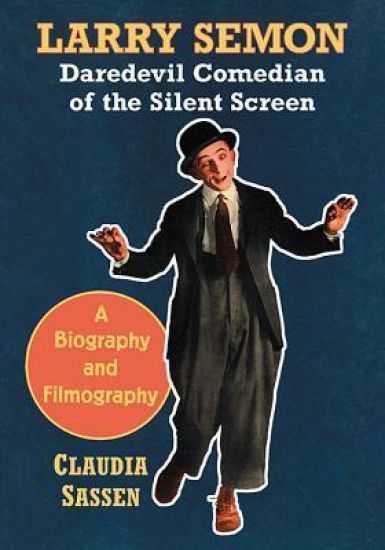
Prior to his premature death from tuberculosis in 1928, Larry Semon was one of the most popular comics on the silent screen. For a time he rivaled comedy legends Charlie Chaplin, Harold Lloyd and Buster Keaton for fame and fortune. The son of magician Professor Zera the Great, Semon participated in many of his father's early performances. A talented youth, he worked as an illustrator and cartoonist before going into motion pictures with the Vitagraph Company. He soon became a Hollywood legend, responsible for his own stories, gags, acting and direction. The result of 30 years of research, this long overdue biography recognizes one of Hollywood's most overlooked auteurs. The author draws on numerous articles and contacts with Semon's family and friends, and screens many films previously believed to be lost.
Larry Poons (b. 1937) shot to fame while still in his twenties, on the strength of his “dot paintings,” in which dots or ellipses were meticulously arranged on brightly coloured fields, creating a rhythmic, pulsating effect. But within a few years, Poons first loosened the hard-edged precision of the dot paintings and then abandoned them entirely for an organic mode of abstraction based on vertical drips of flung paint. This marked the beginning of an uncompromising five-decade evolution that has finally led the artist back to a more intimate mode of painting with brushes — and his own hands. At every stage, Poons's career has compelled the attention of critics and, in particular, other artists. This handsome volume, the first full-length biocritical monograph on Poons, reproduces more than 140 of his most important works in full colour, some as spectacular gatefolds. The incisive text — a collaboration between four leading critics and historians — traces the development of the artist’s extraordinary career. Larry Poons is a necessary addition to the library of anyone with an interest in American art.
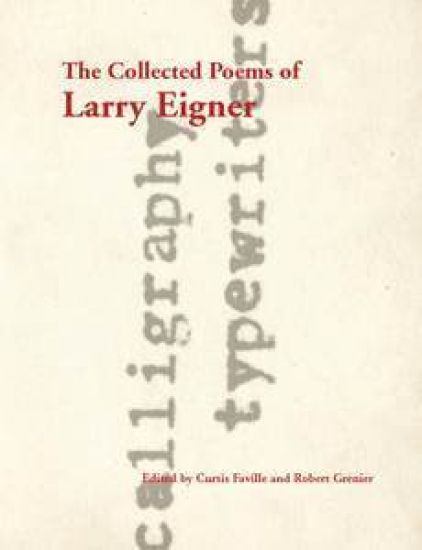
The Collected Poems of Larry Eigner brings together, for the first time, all of the approximately 3,072 published and unpublished poems composed by Larry Eigner (1927-1996), a prominent American poet of the second half of the twentieth century and one of the principal figures of the influential Black Mountain School. Scrupulously edited by Robert Grenier and Curtis Faville from the extensive archives of Eigner typescripts at the University of Kansas and Stanford University, this monumental, four-volume, 8 1/2 by 11 inch edition sets forth in chronological sequence the story of Eigner's achievement, from his modest beginnings as the boy-author of traditional rhymes to his highly original (and often profoundly moving) constructions made of letters in the space of his typewriter page, which have gained him widespread recognition and placed him in the forefront of the literary avant-garde. For over 40 years, beginning in the early 1950's, Larry Eigner's writing was a wonder and a delight to readers of contemporary poetry, appearing in countless little magazines and in over 75 books and pamphlets. With the publication of The Collected Poems—faithfully reproducing the precise visual and aural relationships envisioned by the author in an equivalently spaced Courier computer font which preserves typewriter spacing—the fact of Eigner's amazing accomplishment can finally be known, appreciated and appraised by a much-better-informed, wider audience. Palsied from hard birth, growing up in a close-knit, nurturing household in Swampscott, Massachusetts, Eigner courageously overcame a series of physical obstacles and limitations to achieve a mastery over the material text, producing his typescripts on his 1940 Royal manual typewriter using only his right index finger and thumb to create shifting constellations of words in space whose musical and visual designs are realized in a language at once immediate and highly abstract. Perhaps the best realization to date of the idea of "composition by field" proposed by Charles Olson in his landmark essay "Projective Verse," The Collected Poems of Larry Eigner is a literary event of the first order.
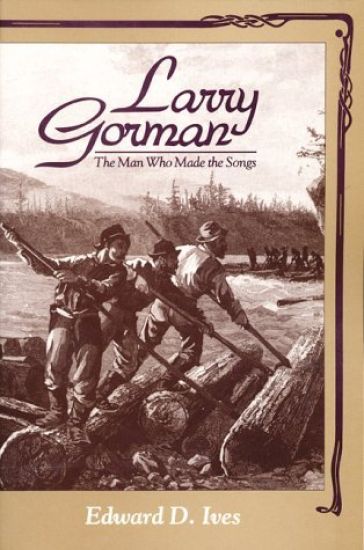
Lumberman Larry Gorman was no respecter of borders -- nor of anything else, it seems. From the time he was a young man growing up on Prince Edward Island until his death in Brewer, Maine in 1917. Larry Gorman composed satirical songs about friend and foe, relative and stranger, without fear or favour. This new edition of Sandy Ives's celebrated book features more than 70 of Gorman's songs, 29 with music.
From the archives of the Southwestern Writers Collection at Southwest Texas State University, former curator Richard Holland has selected from among thousands of Larry L. King's letters dealing with the daily warp and woof of an American writer alternately giddy with success and doubting his own talents. The result is a crazy ride of almost fifty years on a roller coaster of many dips, loops, and steep climbs. As a Texas farm boy, young Lawrence Leo King wrote postcards or tablet-paper letters of advice and/or instruction to--among others--FDR, Winston Churchill, quarterback Sammy Baugh, writer James M. Cain, upcoming football opponents, pen pals in distant lands, and relatives. As a young newspaperman, his complaints of "jackass rules" so bedeviled J. Edgar Hoover that the top G-man handed him off to subordinates and, ultimately, "The Bureau" quit responding. King has feuded in public print with Burt Reynolds, Norman Podhoretz, Tommy Tune, his own book editors and publishers, Universal Picture moguls, his collaborators in writing projects, professional critics, and some "fans" who had the temerity to write less than admiring letters. Norman Mailer, William Styron, Willie Morris, Dan Jenkins and Bud Shrake are just a few of the many writers with whom King long has corresponded. Politicians include former Speaker of the House Jim Wright, Congressman Mo Udall, and Senator Ralph Yarborough. Show-biz types count directors Mike Nichols and Peter Masterson and actors Dan Blocker and Henderson Forsythe. But it is to old Texas friends that King truly lets his hair down in telling intimate secrets of the salts and sours of the literary life that has been his for almost forty years.
A mature poet, Larry Thomas has an extraordinary gift which has evolved through decades at his craft. Thomas explores the natural world of Texas - its animal icons like the Hereford or hawk or rattlesnake, the larger-than-life geography, which is the stuff out of which legends are made.Thomas captures the spirit of place within larger truths that ""travel well,"" as editor Billy Bob Hill explains in his introduction. Hill also takes careful note of the poet's deft alliteration and just-right compression of language as he urges readers to enjoy Thomas' poems for their Texas elements but also the worldly art therein.
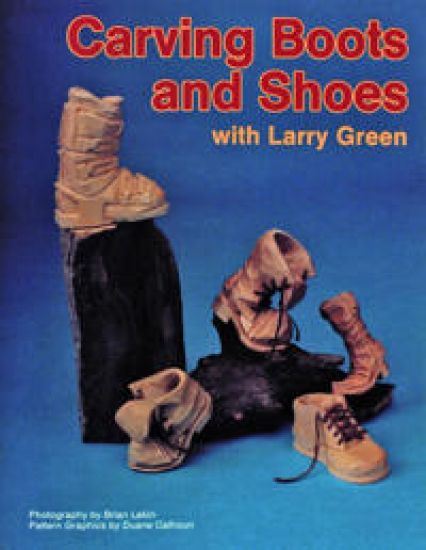
Working as a part time wood carver at the Dollywood Theme Park in Pigeon Forge, Tennessee, Larry Green often has the opportunity to demonstrate carving to visitors from around the nation. hardly a day goes by without at least one visitor asking, "Why carve shoes?" The main reason, according to Larry, is the challenge of transforming a block of wood into a boot or shoe, giving it a unique design, character and personality. The shoes become works of art to which most people can relate. With step-by-step, color illustrated instructions, Larry gets the reader started on the "right foot." Five boot and shoe projects are described in detail, including a baby shoe, a work book, a cowboy boot, a "Storm" boot, and a ski boot. A gallery includes several other styles, including the Old Lady in the Shoe's shoe.
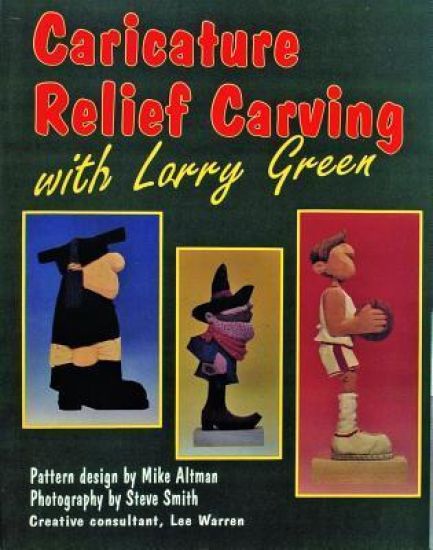
The "Misty Creek Carvers" have combined their talents to create a host of original caricatures to give beginning and experienced carver hours of carving enjoyment. The caricatures are carved in the relief style from 3/4" wood. The carver will benefit from Mike's expertise in caricature design, Steve's full-color photograph and helpful description. The book features 22 additional patterns, including a nurse, tourist, salesman, Uncle Sam, bride and groom, preacher, scuba diver, hunter, golfer, and more. A pictorial gallery includes completed carvings of all patterns featured in the book.
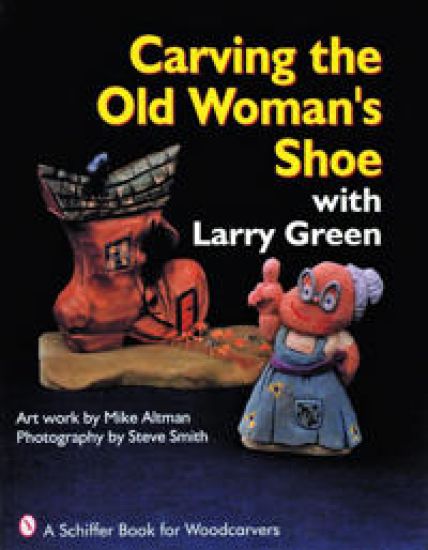
A Mother Goose nursery rhyme comes to life when you open the pages of Carving The Old Woman's Shoe. With over 20 years of shoe carving experience, Larry's step-by-step instructions will lead you through carving his concept of this famous shoe. He even wrote his own poem. He helps you construct a scene for the shoe with a carved yard and flowers carved from round toothpicks! The book gives suggestions on tools which you will need and provides complete instructions on painting and finishing the shoe. The patterns and full-color photos combine to make this an excellent instructional book. Larry's first book, Carving Boots and Shoes has helped many carvers to get started on the "right foot" in their boot and shoe carving.
Although millions have read Larry McMurtry's novels, few really understand the subtle underlying themes that characterize his fiction. In this intriguing study of the popular author, Roger Walton Jones examines McMurtry's lifelong interest in Victorian authors and their influence on his novels. Emphasizing the common sense of displacement McMurtry shared with the Victorians, Jones identifies three Victorian themes by which McMurtry reconciles the reader to experience and gives his art a religious function: the individual's importance to society, the conflict between civilization and nature in an industrial age, and the attempt to find a basis for spirituality in a world without God or faith in organized religion. Jones explores these themes as they are played out in all of McMurtry's fiction, paying particular attention to The Last Picture Show and Lonesome Dove. Unpublished letters and an early, unpublished short story shed light on the interpretation. For example, Jones traces the way McMurtry's early alienation from his hometown, Archer City, determined the style of The Last Picture Show, and he identifies a telling moment when McMurtry overcame past tensions and found a balance between society and the individual. In this thought-provoking analysis, Jones helps correct the injustice done McMurtry when his work has been ignored or treated with condescension by literary critics charmed by the convolutions of postmodernism. Readers seeking a fuller understanding of McMurtry and his fiction, as well as students of Victorian literature, will find Jones's treatment stimulating, insightful, and perhaps unexpectedly positive and will benefit from seeing a new moral and spiritual dimension inthe work of one of the most interesting contemporary authors.
Letters back and forth between two friends - Ann Quin British novelist and traveler, and Larry Goodell poet rooted in New Mexico. Honest close friends open their hearts and their minds to each other with a certain joie de vivre in spite of the increasing mental anguish that finally takes its toll. Quin died at only 37, a tragic loss to energetically creative fiction and a great loss to her friends and admirers.
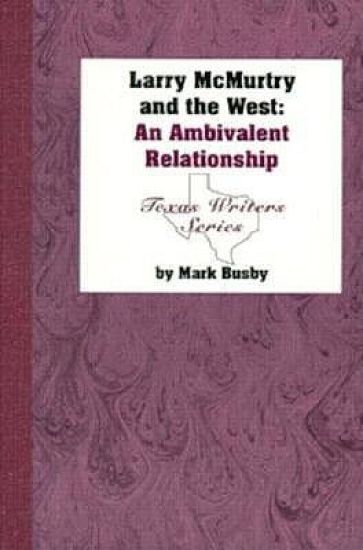
This is the first major single-authored book in almost twenty years to examine the life and work of Texas' foremost novelist and to develop coherent patterns of theme, structure, symbol, imagery, and influence in Larry McMurtry's work. The study focuses on the novelist's relationship to the Southwest, theorizing that his writing exhibits a deep ambivalence toward his home territory. The course of his career demonstrates shifting attitudes that have led him toward, away from, and then back again to his home place and the "cowboy god" that dominates its mythology. The book utilizes original materials from five library special collections, as well as interviews with McMurtry, his family, and his friends, such as Ken Kesey.
This book should be a reference source for all anglers who fish or wish to fish in the future, the waters of South Florida, This region has three of the state's five largest lakes. Each chapter focuses on the name lakes and rivers in the region that almost always produce good bass fishing and on many overlooked waters that quietly produce good bass fishing as well.