This first-ever study of Swedish experimental film represents the results of a Swedish Research Council initiative in 2006–2008. The essays address the institutions, filmmakers, and films important to the history of experimental film in Sweden, and place this history in larger artistic and socio-cultural contexts. The authors look at the work of the Independent Film Group, regional Fluxus groups, E.A.T., and figures such as Viking Eggeling, Rune Hagberg, Pontus Hultén, Öyvind Fahlström, Leo Reis, Bo Jonsson, and Åke Karlung.
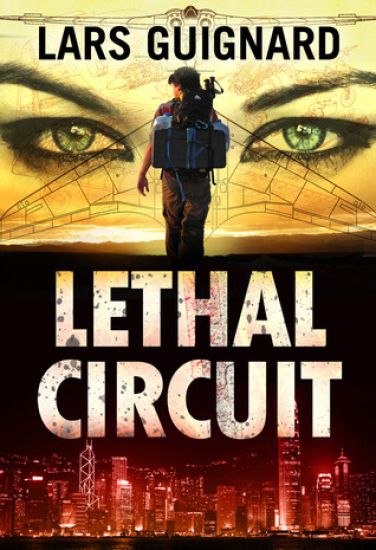
BESTSELLING AMAZON THRILLER -- LETHAL CIRCUITA Chinese satellite is on crash course with Earth. It contains enough plutonium to irradiate a large city.And that's the good news...In the tradition of Tom Clancy, Lee Child, and Robert Ludlum, comes a new hero.Michael Chase is a twenty-six year old backpacker, a recent college grad, an amateur. He flew to Hong Kong to find his missing father. Four hours later, he's running for his life. The Chinese Secret Police want him dead. The Conspiracy wants him dead. And the one person who he thinks is on his side, may want him dead too. If Michael is going to live, he'll need to find a hidden piece of Nazi technology lost since World War II. And he'll have to do it before anyone else. Because if he doesn't, a little plutonium is going to be the least of his problems.Praise for Bestselling Amazon Thriller, LETHAL CIRCUIT: "This is thriller entertainment par excellence "Jeffrey Vanke -- author of the Berlin Deception - 5 stars"Rockin' fast-paced thriller Strap yourself in for a wild ride as backpacker Michael Chase gets caught up in the world of spies and secret agents."Connaisseur -- 5 Stars"A Pulse Racing Thriller "Soundograph -- 5 Stars"Lars Guignard keeps you hanging at the end of each chapter "David Trail --5 Stars"A high-octane spy thriller with a great twist ending." E.J. Whalen -- 5 StarsLETHAL CIRCUIT takes the reader on a street-level journey through the Chinese countryside where nothing is what it seems. Hidden in a perfect world of emerald-green limestone karsts and bucolic rivers is an advanced energy technology that could prevent a disaster. It could also change the world. But only if it can be found. If it can't, the results will be unthinkable. Michael's friends are eight thousand miles away, but his enemies are everywhere. To even have a chance of finding what he's looking for, Michael will need to join forces with a beautiful, but deadly MI6 agent. He'll need to remain calm, he'll need to improvise, but most importantly, he'll also need to ask himself a question. Who can he trust in a world where nothing is what it seems? And if the answer is nobody, he'll need to live, or more likely die, with the result.LETHAL CIRCUIT is the first in the Michael Chase thriller series. It has been on the Amazon Bestselling Technothriller List since its release. If you like Dan Brown and Tom Clancy, you'll love LETHAL CIRCUIT. Book Two in the series, BLOWN CIRCUIT, will be released in 2012.
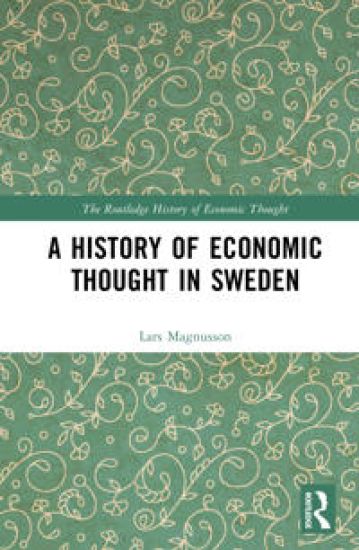
Situating key texts and writers in their proper historical context, this book presents a history of Swedish economic thinking from early modern times to the present day.Highlighting key elements of Swedish political, economic and social history allows the book to shed new light on important parts of the story including the development of neo-classical economics from the late 19th century - associated with leading names such as Knut Wicksell, Gustav Cassel and Eli Heckscher – and the rise of the so-called Stockholm school in the 1920´s and 30´s. But the book also goes back further to explore the Swedish economic literature of the 18th century, particularly its more “liberal” version of mercantilism and cameralism, as well as early modern and medieval developments. Throughout, the book emphasizes the unique nature of much of the economic thinking emanating from Sweden. Emulation and adaption of political economic thinking imported from abroad – primarily the UK, France and German speaking countries - is an important part of this story, but this is shown to be an active process which has resulted in great originality in Swedish economic thought.This book will be of interest to readers in the history of economic thought, economic history, the history of ideas and Swedish history.
Analyzing long-cycle patterns during the twentieth century, this book presents novel findings on how core features of financialization are interconnected across advanced economies. It proposes that, since the late nineteenth century, international macroeconomic policy regimes have favored either capital or labor, giving rise to corresponding cycles of financialization and de-financialization: a liberal phase of financialization (1896–1929), a regulated phase of de-financialization (1946–1973), and a neoliberal phase of financialization (1983–2019). The book argues that these cycles can be explained through underconsumption theory in 13 advanced economies. During financialization, the study suggests inequality created a savings glut that stimulated liquidity for credit expansion, which in turn led to financial instability. Meanwhile, the lack of aggregate demand due to inequality depressed economic growth. By contrast, during the de-financialization of the regulated Bretton Woods era, credit formation did not lead to financial crises, and economic growth was high. Nevertheless, both the liberal and regulated phases succumbed to structural crises caused by internal frictions. These crises transformed not only the economy, but also the political landscape – and at times, even democracy itself. The question remains whether the neoliberal regime is also undergoing an existential crisis, and what lessons we can learn from history to avoid the pitfalls ahead. The book is primarily aimed at scholars and students of global political economy.
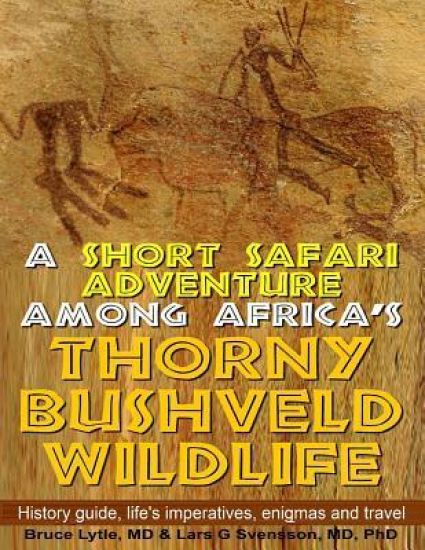
A short safari adventure among Africa's thorny Bushveld wildlife: Part Two - Hunting, Ecosystem Challenges, Wildlife Restorancy." This is the second book in the series of true African travel and adventure safari that passionately deals with sensitive environmental, past political and wildlife management issues that face Africa today. "This book is not just another hunting story. It is the story of discovery, of brutally harsh realities - in short, an epic tale of Africa," summarized Don Heath, former Chief Ecologist for the Zimbabwe Parks Department, "you have the rediscovery of Africa by an ex African and a native American as they make their way through the thorny issues if not downright slippery shibboleths of consumptive conservation - 'wise use' was the Zimbabwean term I coined for the CITES COP 10 to argue for conservation through hunting." The format for the first part of this second book in the series relates Bruce's impressions of the day's hunt and thoughts in Bubye Conservancy and then around a campfire and dinner Bruce, PH Brent Hein, and Lars discuss their Perceptions of the Day, world events, mankind's struggles, Paleolithic behavior, diets, climate, environment, sports, conservation, hunting, reflections of hunting in modern society, rifles, and Africa. Based on their experience and reading, this would be like Teddy Roosevelt, Ernest Hemingway, Harry Selby, Al Gore, Jarred Diamond, Michael DeBakey and Jane Goodall gathering around an African campfire to discuss matters of interest to them. The authors tell of the random thrilling and dangerous events that occur to them when confronted by charging rhino, wild bush-pigs, elephants, giraffe and buffalo daka Tsotsie (gangsters) in the hot midday sun. Lars delves into the ecosystem challenges, the threat of diminishing wildlife populations in many game reserves and conservation areas, and the mounting problem of over population of elephants in Southern African countries leading to the devastation of habitats. Can ecotourism alone save Africa's wildlife or is hunting part of the financial equation or as Henry Thoreau said, is it true "The hunter is the greatest friend of the animals"? Do we need the biodiversity of distant Africa for Mankind's survival? Is a dead mamba the only good mamba or is there more to snakes? Who were the strong wild bulls of Bashan (aurochs or Pelorovis antiquus or Caper buffalo), and the giant race of Rephaim and Nephilim? Game managers have limited tools to manage wildlife populations, namely: fire, water, fencing, and culling or "off take", like selling of animals. Recent auctions have brought in over $2.3 million for a buffalo, and $0.5 million dollars for a rhino but the prices for the latter are paradoxically falling because of poaching and the cost of protection. The Kruger Park challenges and management is used to illustrate these aspects but also raises the problem of financing large wild life areas and how pressure from surrounding poverty stricken communities needs to be addressed and encompassed in any solution. The issues of harvesting wildlife for meat for local community populations, restaurants and the biltong trade, subsistence hunting, and trophies for tourist recreational hunters, and the ethics, are reviewed. Wild life restorancy is discussed in the broader context of Africa's rising, politics, potential agricultural resources, and future overpopulation food requirements, especially since growth will occur in Africa. Their hope is that African advancing higher education, the growth of the new middle class, African "ubuntu", and strong moral fiber based on religious beliefs will overcome the challenges of corruption and mismanagement. Ultimately, the question is whether one has the faith in Mankind to do the right thing and whether we will be able to resolve the issues? Bruce adds an Epilogue on the stunning turn of events after their return.
"Lars Gustafsson has an uncompromising vision of the utter complexity of modern life."--The New York Times Book ReviewGustafsson's A Time in Xanadu, his third translated collection of poems, manages to be personal and quirky while also deeply philosophical. --ForeWordFew poets today can so easily without overwriting bridge 'centuries and minutes, ' to use the title of one of Gustafson's poems.--Harvard ReviewFrom the moment it begins, Lars Gustafsson's A Time in Xanadu throws open questions of geography and narration. Where are we? How do we know? Throughout the book, the speaker's voice proves a powerful one as it muses on questions of travel, war, philosophy, and thought itself. The language of Gustafsson's poems is sparse, and his lines are compact and taut. But beneath the neat surfaces of these poems lie surreal and sometimes eerie landscapes: a castle in Cremona, Italy; "those white, strangely meaningless / days between Christmas and New Year;" a library which is "a kind of subway." There are strains of Ezra Pound in this work, and allusions to great continental thinkers--Goethe, Fichte, Nietzsche, Einstein--drift across it. Yet tracing those allusions to their source is neither desirable nor, ultimately, possible. For in the wake of Gustafsson's highly evocative poems, we can only wonder just how much time we have spent, or lost, in Xanadu, or where we went from there.The Khan leaves Xanadu and milkfrom white goats onlyis hurled high into the air on his departureto nourish the spirits of the air.So says Marco Polo, our Venetian witness.Lars Gustafsson is a renowned Swedish poet, novelist, and philosopher who has written dozens of books. He taught philosophy for many years at the University of Texas, Austin. He now lives in Sweden.
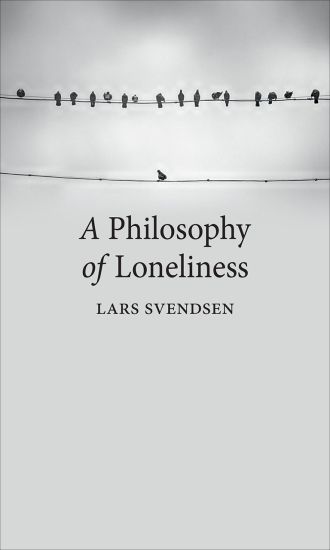
Loneliness is a difficult subject to address, because it has such negative connotations. But the truth is that wherever there are people, there is loneliness: everyone is lonely at some point in their lives. You can belonely in a crowd or at home, outdoors or in an empty church, and countless songs have been written about the condition. For many people, loneliness can significantly impact their quality of life and their physical and mental health. At the same time, our best moments can come when we are alone, and this can tell us something important about our place in the world. But what exactly is loneliness? Who does it affect? Why does it occur, linger and disappear? Lars Svendsen investigates both the positive and the negative sides of loneliness in this thoughtful new book.Drawing on the latest research in the fields of philosophy, psychology and the social sciences, A Philosophy of Loneliness explores the different kinds of loneliness, the philosophy of emotions, why some people are lonelier than others, and the psychological and social characteristics that dispose people to loneliness. Svendsen looks at the role of friendship and love in our lives and argues that our main problem is not that there is too much loneliness in modern societies, but rather that there is too little solitude. This hugely important book is essential reading for all those who want to know more about this complex and profound state of being.
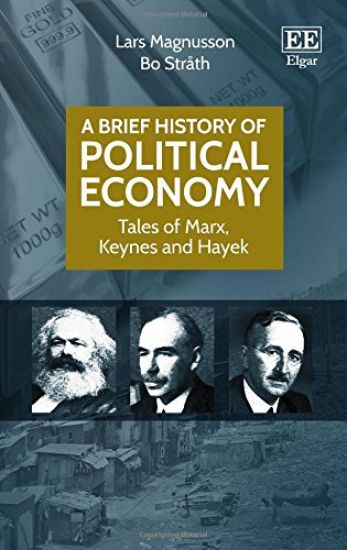
This book examines the three historical master tales and questions their validity and relevance in today's moment of global disorientation and lack of convincing and dominant economic narrative. Investigating the ideological dimension and exploring the continued impact of Marx, Keynes and Hayek, the authors demonstrate how these three economic narratives became entangled over time and under increasing complexity, overlapping and competing with each other. The book reflects on the meaning of the historical legacy of the three narratives and investigates their significance today. All three outlined the prospects of a better and more economically efficient world with increased social justice, Magnusson and Strath argue that they constitute a legacy on which a new economic tale must be based, a legacy to draw on or confront. A concise and engaging work, this is an ideal resource for students and academics interested in economics, political science, history and global studies. A Brief History of Political Economy presents a powerful economic history of the last 170 years as a basis for economic reconsideration.
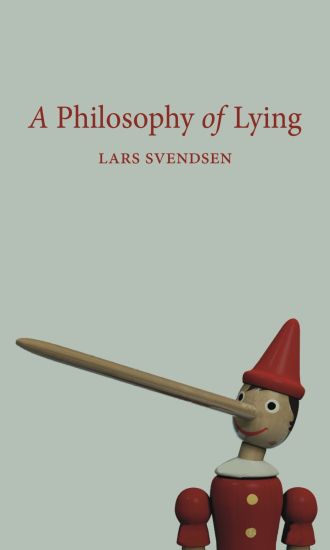
This book is a comprehensive investigation of lying in everyday life. What exactly is a lie, and how does lying differ from related phenomena such as ‘bullshit’ or being truthful? Lars Svendsen also investigates the ethics of lying – why is lying almost always morally wrong, and why is lying to one’s friends especially bad? The book concludes by looking at lying in politics, from Plato’s theory of the ‘noble lie’ to Donald Trump. Svendsen’s conclusion is that, even though we all occasionally lie, we are for the most part trustworthy. Trusting others makes you vulnerable, and you will be duped from time to time, but that is – all things considered – preferable to living in a constant state of distrust.
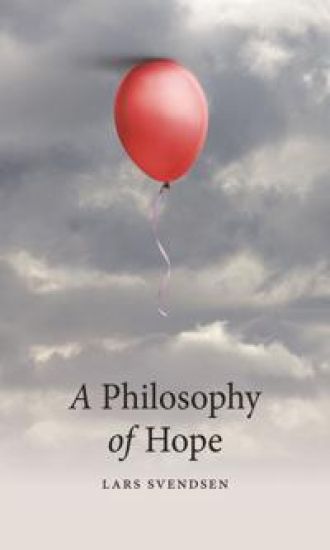
In this book Lars Svendsen embarks on a profound exploration of the nature of hope, asking what exactly hope is and how it differs from related phenomena such as wishful thinking. He argues that hope is rooted in the ability to shape one’s own future, crucial for a society built on freedom instead of fear. Svendsen highlights hope’s vital role in giving life meaning, and its intimate connection to identity. He shows that, while hope cannot magically transform the world, it can empower individuals to focus on achievable goals rather than pressing challenges. Ultimately, A Philosophy of Hope demonstrates the capacity of hope to propel both individuals and the world in a positive direction.