"This book is a report on the major effort made to establish a breadfruit germplasm collection at the University of the West Indies, at St Augustine, Trinidad and Tobago, and to describe each cultivar in the collection. Cultivars are from the Pacific islands and the Caribbean. This effort is highly commendable because breadfruit, among its various attributes, can be a valuable and staple source of food, yet information on this tree crop is sparse. This is not surprising as it takes several years to collect reliable data on tree crops, and breadfruit has been a neglected, underutilized crop."As with any other crop, certain breadfruit cultivars grow better under some environmental conditions, are more resistant to pests and diseases, and are more suitable for various types of processing, than other cultivars. The detailed descriptions of the morphology and other characteristics made by Laura Roberts- Nkrumah are essential steps for identifying and selecting suitable cultivars for the desired purpose - for use as fresh or frozen food, for processing into flour or chips, for soil conservation and so on."This book is useful in making any Ministry of Agriculture in the tropics, other agricultural-related organizations and institutions, and individuals aware of the diverse characteristics of breadfruit and thus select cultivars which are suitable for the intended purpose. In addition, if persons would like to have already-established cultivars identified, until DNA profiles are available, this book explains how relevant measurements can be taken, and observations made, which can then be submitted to the author for identification of the cultivar. The clearly described methods and the accompanying high-quality photographs greatly facilitate the collection of the data." --Phyllis L. Coates-Beckford, Professor Emeritus of Plant Pathology, the University of the West Indies, Mona, Jamaica.
The social fund has become one of the main tools of community-led poverty reduction. A departure from traditional central government-led approaches to development, social funds encourage communities and local institutions to take the lead in identifying, generally in social infrastructure such as schools and health clinics. Drawing on a range of methodologies - from randomized control designs to propensity score matching - this study examines the welfare impact of social fund investments in education, health and water and sanitation across six countries. The study, through comparison with the counterfactual, measures the net effect of social fund investments beyond existing levels of service provision in comparator communities, which often received investment from non-governmental organizations, public sector agencies other than social funds, or the private sector. The results establish a benchmark against which the welfare impact of alternative approaches can and should be evaluated. The study also marks the first cross-country incidence analysis of social fund beneficiaries. Using household survey data, it compares the poverty levels of social fund beneficiaries with national poverty levels.
This book is a cutting-edge, provocative discussion of the coming transformation in education. A revolution is taking place in classrooms today, based on the cross-fertilization of three major instructional innovations, the ôthree sisters:ö differentiated instruction, RTI, and technology. Each of these has, or soon will, impact classrooms drastically, but the ôwhole is greater than the sum of the parts:ö that is, the whole impact of these three is many times as influential as the impact of any one of these factors individually. Because of the increasing emphasis on differentiation, RTI, and technology-based instruction, teachers are teaching in new and different ways. These innovations all address the ever-present pressures on teachers at all grade levels to meet/exceed AYP, and teachers are hungry for innovative instructional ideas that will assist them to do so. The authors draw on the growing 21st Century Skills movement to address these three instructional innovations together.
Make the painless transition from low tech to tech friendly! Are you struggling to embrace technology that advances at lightning speed? Or are you just plain perplexed? With new developments announced almost on a daily basis, many teachers don't know where to start. If you're one of those teachers making the transition to tech—willingly or not—Cool Tech Tools for Lower Tech Teachers is the resource for you. In understandable language, it describes how exactly you can use tools like webquests, wikis, social networking apps, and podcasts to enhance your lessons and keep kids engaged. William Bender and Laura Waller put technology within your reach by: Framing each tool in the context of what you need to know Defining the tool in easy-to-understand language; there's no tech-speak Guiding you through implementation step by step Providing sample lesson plans to get you started Explaining how some tools can also be used for professional development With Cool Tech Tools for Lower Tech Teachers, Bender and Waller prove that technology can be painless and productive. What's more, you'll even come to love it!
Don't have time to make your own vocabulary flashcards for those all-important standardized tests, like the SAT and the ACT? No worries We've done all the hard work for you Simply tear apart this book and cut apart the flashcards to have tons of full-color and easy-to-understand flashcards We also left room for you to write a helpful sentence and to draw a funny picture so that you can remember these words better. We also included a difficult synonym for each word, and those synonyms are also great SAT/ACT words.
Executive Transitions is volume three in the Museum Trustee Association’s Templates for Trustees series. The book and customizable web-based templates feature tools that help boards to consider their options, identify their priorities, and plan their actions at this critical moment in a museum’s life cycle. In addition to the manual and on-line website, purchasers have access to the ongoing assistance of MTA staff. Executive Transitions encourages board and staff members to see leadership transitions as opportunities for strategic growth. Whether a director’s departure stems from a carefully crafted succession plan or is a completely unanticipated event, the text and accompanying templates will be useful to museums of all types and sizes. They guide the search committee through each step of the executive search process: announcing the previous director’s departure and considering interim leadership options, conducting an institutional audit that will serve as the basis for identifying professional skills and personal qualities needed in the new leader, writing and posting the position announcement, screening initial candidates and interviewing finalists, conducting reference and background checks, and extending an offer. And because it is the board’s responsibility to not only hire the new director but to facilitate his or her success, the final chapter focuses on the all-important transition year.
The Leadership Partnership is volume two in the Museum Trustee Association’s Templates for Trustees series. The book and customizable web-based templates feature tools that help boards to consider their options, identify their priorities, and plan their actions at this critical moment in a museum’s life cycle. In addition to the manual and on-line website, purchasers have access to the ongoing assistance of MTA staff. As nonprofit management becomes more challenging, thinking about the relationship between the board and the director is evolving. The bright line between the board’s responsibility for policy and the staff’s responsibility for management is blurring. The Leadership Partnership explores and supports this critical partnership between the executive director and the board and helps leadership develop strategies and approaches appropriate for the individual institution. A series of online surveys allows board members to look at their own performance, that of the board as a whole and that of the executive director across ten critical areas of museum management: mission, vision and strategy; professional development, board operations, individual relationships, oversight, finances and fundraising, collections, facilities, and public engagement. The final template guides users into turning the findings from the surveys into a leadership plan, to be presented and discussed with the board.
Templates for Trustees is a four-part series designed by the Museum Trustee Association to focus attention on key processes and tasks of governance. The books and web-based customizable templates include tools that collect information and then guide the board in using that information to organize their thoughts, identify their priorities, and plan their actions. All templates in the series have two parts: a printed guide and an on-line website. Purchasers of the books have access to the ongoing assistance of MTA staff. Building Museum Boards examines emerging practices in nonprofit governance including diversifying board composition, improving board effectiveness, and strengthening the governance committee. The text and templates guide the governance committee through every step of the nomination and board-building process including identifying and cultivating board prospects; crafting job descriptions for members, officers, and committees; ensuring compliance with conflict of interest standards; and orienting and activating new board members. The entire process is summarized in an interactive calendar.
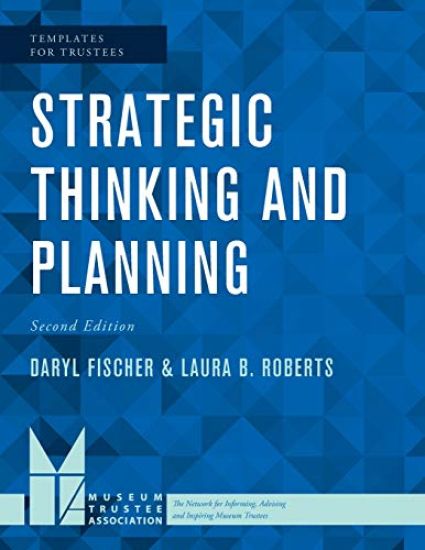
Strategic Thinking and Planning, Second Edition is volume four in the Museum Trustee Association’s Templates for Trustees series. The book and customizable web-based templates feature tools that help boards to consider their options, identify their priorities, and plan their actions at this critical moment in a museum’s life cycle. In addition to the manual and on-line website, purchasers have access to the ongoing assistance of MTA staff. This book and the accompanying templates models the kind of thinking that is required not only to create a strategic plan that is tailored to each institution, but also to stay focused on the strategic aspects of governance while implementing that plan. Planning teams are introduced to exercises and tools that will help them focus on what’s most important to the future of their institution. In using the templates, they will adopt new ways of analyzing information and thinking about their museum’s mission that will make them more effective leaders.
Voters do not always choose their preferred candidate on election day. Often they cast their ballots to prevent a particular outcome, as when their own preferred candidate has no hope of winning and they want to prevent another, undesirable candidate’s victory; or, they vote to promote a single-party majority in parliamentary systems, when their own candidate is from a party that has no hope of winning. In their thought-provoking book The Many Faces of Strategic Voting, Laura B. Stephenson, John H. Aldrich, and André Blais first provide a conceptual framework for understanding why people vote strategically, and what the differences are between sincere and strategic voting behaviors. Expert contributors then explore the many facets of strategic voting through case studies in Great Britain, Spain, Canada, Japan, Belgium, Germany, Switzerland, and the European Union.
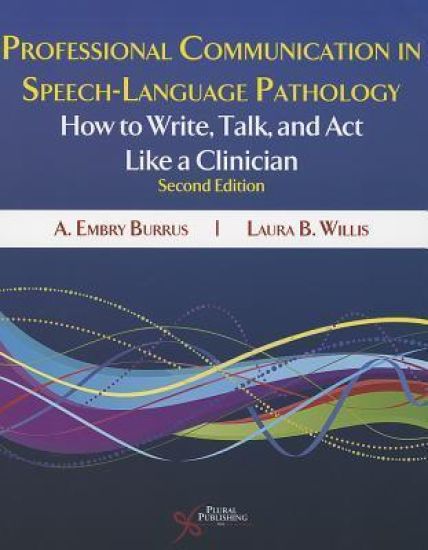
In this practical textbook, now in its second edition, the authors introduce student clinicians to the various types of written and verbal communication they will encounter across three different clinical settings: university clinics, medical settings, and public schools. The text is written in a student-friendly manner, with appendices that provide examples of correspondence, diagnostic and treatment reports from all three settings, a professional term generator, and IEP paperwork. Chapters cover verbal interactions with families, allied professionals, and supervisors. Also included are scenarios written in the form of vignettes that address issues of ethics, confidentiality, and safeguarding clinical communications. For the second edition, the authors have added a new chapter on working with multicultural clients and their families.The second edition also includes expanded coverage of: Basic counseling of families, caregivers, and patients with regard to diagnostic results, recommendations, referrals, therapy goals, home programs, and progress Chart of common grammatical errors Writing measurable short-term objectives Diagnostic Protocols Documentation of data collection and cueing hierarchies Short and long-term graphing examples Report examples to include prognoses Certification procedures to become licensed in speech-language pathology Appendix of medical abbreviations
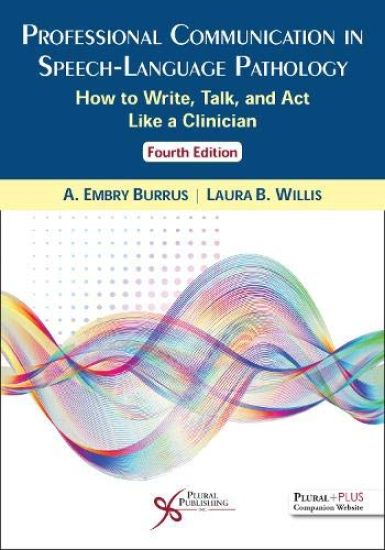
In Professional Communication in Speech-Language Pathology: How to Write, Talk, and Act Like a Clinician, Fourth Edition, the authors introduce student clinicians to the various types of written and verbal communication they will encounter across three different clinical settings: university clinics, medical settings, and public schools. The text is written in a student-friendly manner, with appendices that provide examples of diagnostic and treatment reports, data sheets, and important acronyms in medical and school settings. Chapters cover verbal interactions with families, allied professionals, and supervisors, as well as written and verbal communication across the university, medical, and school settings. Also included are scenarios written in the form of vignettes that address issues of ethics, interviewing, and procedures for managing protected health information. New to the Fourth Edition: New pedagogical features (chapter learning outcomes and reflection questions). References and content updated throughout to reflect the current state of research and evidence-based practice. Updated information regarding current requirements and policies for written documentation. Expanded information regarding HIPAA and the ASHA Code of Ethics. Expanded content regarding interacting with supervisors and generational differences. Material on methods for improving writing and editing Numerous additional examples to further clarify the content and portions reorganized for greater flow of information. Content has been edited to be more concise and reader friendly. A PluralPlus companion website which includes PowerPoint lecture slides, reflection questions, and active learning activities.
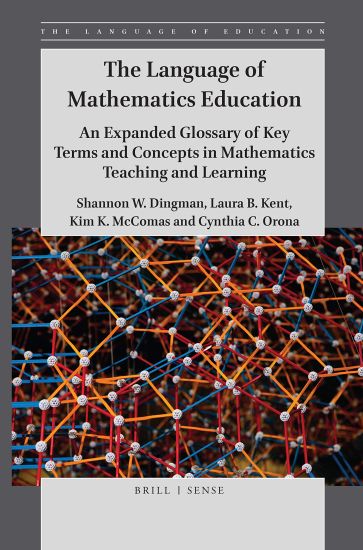
The Language of Mathematics Education: An Expanded Glossary of Key Terms and Concepts in Mathematics Teaching and Learning offers mathematics teachers, mathematics education professionals and students a valuable resource in which common terms are defined and expounded upon in short essay format. The shared vocabulary and terminology relating to mathematics teaching and learning, and used by mathematics educators is an essential component of work conducted in the field. The authors provide an overview of more than 100 terms commonly used in mathematics teaching and learning. Each term is defined and is followed by a short overview of the concept under discussion that includes several bibliographic references the reader can use for further investigation. In addition to terms specific to the domain of mathematics education, select key terms common across all fields of education (e.g., curriculum, epistemology, metacognition) are included. The goal for this book is to serve as a resource for those entering the field as they navigate the language and terminology of mathematics education and as an asset for more established professionals who wish to gain additional insights into these ideas.
The Language of Mathematics Education: An Expanded Glossary of Key Terms and Concepts in Mathematics Teaching and Learning offers mathematics teachers, mathematics education professionals and students a valuable resource in which common terms are defined and expounded upon in short essay format. The shared vocabulary and terminology relating to mathematics teaching and learning, and used by mathematics educators is an essential component of work conducted in the field. The authors provide an overview of more than 100 terms commonly used in mathematics teaching and learning. Each term is defined and is followed by a short overview of the concept under discussion that includes several bibliographic references the reader can use for further investigation. In addition to terms specific to the domain of mathematics education, select key terms common across all fields of education (e.g., curriculum, epistemology, metacognition) are included. The goal for this book is to serve as a resource for those entering the field as they navigate the language and terminology of mathematics education and as an asset for more established professionals who wish to gain additional insights into these ideas.
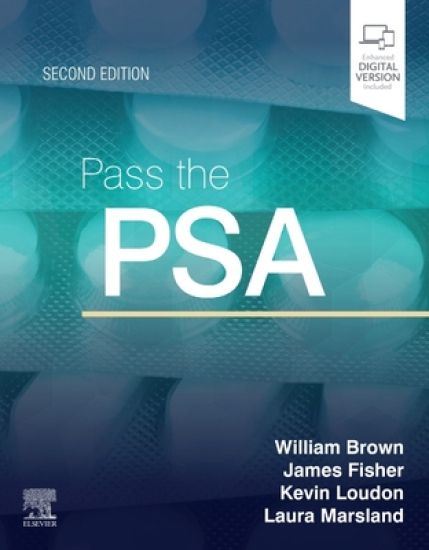
Fully updated for its second edition, Pass the PSA is written specifically for the Prescribing Safety Assessment (PSA) exam, with one chapter dedicated to each PSA exam section.This latest edition: Introduces a simple, memorable and failsafe approach to prescribing (the 'PReSCRIBER' mnemonic) Specifies the universal basic principles of prescribing for all sections Examines each section's question structure and how to approach it questions (structured identically to the exam) that conclude each chapter Covers all scenarios suggested for questioning in the PSA blueprint Highlights common traps throughout Contains two mock exams Includes finals-level sections on data interpretation and management
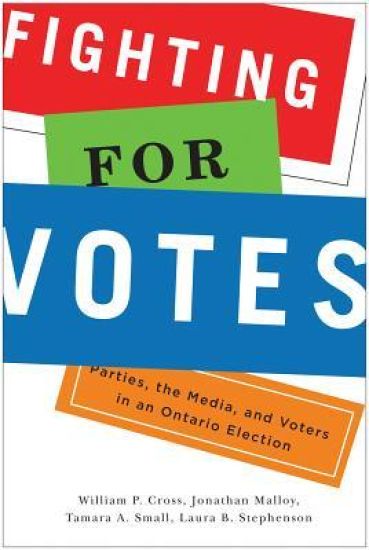
Elections are not just about who casts ballots – they reflect the citizens, parties, media, and history of an electorate. Fighting for Votes examines how these factors interacted during a recent Ontario election.The authors begin by examining the province's political culture and history. They then delve deeply into the campaign by exploring three lines of enquiry that help define representative democracy: How do parties position themselves to appeal to voters? How is information from and about parties transmitted to voters? And how do voters respond to the information around them?Looking at information from a wealth of sources – from political party websites and debate transcripts to Twitter feeds – they provide a sophisticated analysis of the interplay between voters and political parties in an era of new media. The most complete account of a provincial election available, Fighting for Votes illuminates the evolving electoral landscape.
Elections are not just about who casts ballots – they reflect the citizens, parties, media, and history of an electorate. Fighting for Votes examines how these factors interacted during a recent Ontario election.The authors begin by examining the province's political culture and history. They then delve deeply into the campaign by exploring three lines of enquiry that help define representative democracy: How do parties position themselves to appeal to voters? How is information from and about parties transmitted to voters? And how do voters respond to the information around them?Looking at information from a wealth of sources – from political party websites and debate transcripts to Twitter feeds – they provide a sophisticated analysis of the interplay between voters and political parties in an era of new media. The most complete account of a provincial election available, Fighting for Votes illuminates the evolving electoral landscape.
This book offers an accessible introduction to the topic of impact evaluation and its practice in development. While the book is geared principally towards development practitioners and policymakers designing prospective impact evaluations, we trust that it will be a valuable resource for students and others interested in using impact evaluation. Prospective impact evaluations should be used selectively to assess whether or not a program has achieved its intended results, or to test alternatives for achieving those results. We consider that more and better impact evaluation will help strengthen the evidence base for development policies and programs around the world. If governments and development practitioners can make policy decisions based on evidence - including evidence generated through impact evaluation - our hope is that development resources will be spent more effectively, and ultimately have a greater impact on reducing poverty and improving people’s lives. The three chapters in this handbook provide a non-technical introduction to impact evaluations, including “Why Evaluate” in Chapter 1, “How to Evaluate” in Chapter 2 and “How to Implement Impact Evaluations” in Chapter 3. These elements are the basic ‘tools’ needed in order to successfully carry out an impact evaluation. From a methodological standpoint our approach to impact evaluation is largely pragmatic: we think that the most appropriate methods should be identified to fit the operational context, and not the other way around. This is best achieved at the outset of the program, through the design of prospective impact evaluation that can be built into the project’s implementation. We argue that gaining consensus between key stakeholders and identifying an evaluation design that fits the political and operational context is as important as the method itself. We also believe strongly that impact evaluations should be upfront about their limitations and caveats. Finally, we strongly encourage policymakers and program managers to consider impact evaluations in a logical framework that clearly sets out the causal pathways by which the program works to produce outputs and influence final outcomes, and to combine impact evaluations with monitoring and selected complementary evaluation approach to gain a full picture of performance.
This book offers an accessible introduction to the topic of impact evaluation and its practice in development. While the book is geared principally towards development practitioners and policymakers designing prospective impact evaluations, we trust that it will be a valuable resource for students and others interested in using impact evaluation. Prospective impact evaluations should be used selectively to assess whether or not a program has achieved its intended results, or to test alternatives for achieving those results. We consider that more and better impact evaluation will help strengthen the evidence base for development policies and programs around the world. If governments and development practitioners can make policy decisions based on evidence - including evidence generated through impact evaluation - our hope is that development resources will be spent more effectively, and ultimately have a greater impact on reducing poverty and improving people's lives. The three chapters in this handbook provide a non-technical introduction to impact evaluations, including "Why Evaluate" in Chapter 1, "How to Evaluate" in Chapter 2 and "How to Implement Impact Evaluations" in Chapter 3. These elements are the basic 'tools' needed in order to successfully carry out an impact evaluation. From a methodological standpoint our approach to impact evaluation is largely pragmatic: we think that the most appropriate methods should be identified to fit the operational context, and not the other way around. This is best achieved at the outset of the program, through the design of prospective impact evaluation that can be built into the project's implementation. We argue that gaining consensus between key stakeholders and identifying an evaluation design that fits the political and operational context is as important as the method itself. We also believe strongly that impact evaluations should be upfront about their limitations and caveats. Finally, we strongly encourage policymakers and program managers to consider impact evaluations in a logical framework that clearly sets out the causal pathways by which the program works to produce outputs and influence final outcomes, and to combine impact evaluations with monitoring and selected complementary evaluation approach to gain a full picture of performance. This book builds on a core set of teaching materials developed for the "Turning Promises to Evidence" workshops organized by the office of the Chief Economist for Human Development (HDNCE) in partnership with regional units and the Development Economics Research Group (DECRG) at the World Bank.