Kirjojen hintavertailu. Mukana 11 699 587 kirjaa ja 12 kauppaa.

Kirjahaku

Etsi kirjoja tekijän nimen, kirjan nimen tai ISBN:n perusteella.

1000 tulosta hakusanalla Lawrence A. Barrett

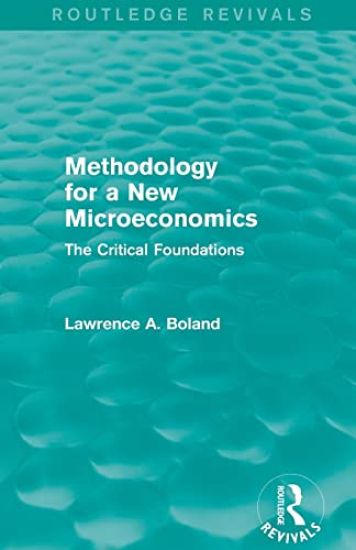
Methodology for a New Microeconomics (Routledge Revivals)
First published in 1986, this title argues that the successful development of a new microeconomics requires a deeper understanding of methodological individualism and its role in stability analysis.Lawrence Boland expounds a critique of neoclassical models, which, he contends, often fail to include an explicit stability analysis. He demonstrates that much of the sophisticated theoretical literature over the past thirty years can be understood as ad hoc attempts to overcome the deficiencies of such models in the absence of cogent stability analyses. In conclusion, he explains the need to update the theory taught at universities, and to develop a truly individualist version of microeconomics that is consistent with the methodological principles of major neoclassical models. An important contribution to economic methodology, this work is a highly valuable resource for all students and teachers of economics at the undergraduate level.
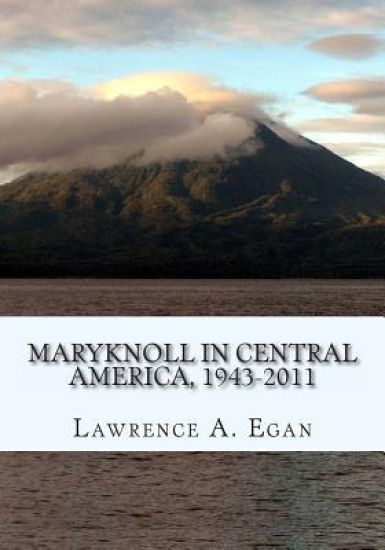
Maryknoll in Central America, 1943-2011: A Chronicle of U.S. Catholic Missionaries

Maryknoll in Central America, 1943-2011: A Chronicle of U.S. Catholic Missionaries

Lawrence a. Egan

Createspace Independent Publishing Platform
2012
nidottu
In 1942 the Catholic Foreign Mission Society (Maryknoll) decided to expand its work from Asia to Latin America. In 1943 the first two Maryknoll missioners arrived in Guatemala. They eventually started work in the northwestern Maya highlands in the Department of Huehuetenango. The Maryknoll Sisters and Maryknoll Lay Missioners joined them in 1953 and 1975, respectively. In Guatemala Maryknollers attempted to reconcile orthodox Christianity with the syncretism practices of the majority of the Maya. Today all the clergy of the diocese of Huehuetenango are Guatemalan and over half are Maya. Later in the sixties Maryknoll expanded to El Salvador and then to Nicaragua, Honduras, and Costa Rica. MARYKNOLL IN CENTRAL AMERICA, 1943-2011 chronicles the fascinating story of these North American men and women who first undertook traditional parish work, then under the influence of Vatican II (1963-67) and the Latin American Bishops' Meeting in Medellin Colombia, undertook to carry out the new approach of the "option for the poor." They worked in Guatemala, El Salvador, and Nicaragua during the thirty long years of civil wars. Some were tortured and/or expelled; others were murdered by government forces. Maryknollers played a small but significant role in assisting the local Central American Catholic Church revitalize the life of its constituents. They assisted the local churches in their commitment to promoting social justice and a better life for the poor. They helped in the empowerment of the rural poor in their quest to improve their lives. They started schools, supplied basic medical care, and launched literacy education. Above all they helped develop local structures so that the Central American churches could become more self sustaining in personnel. This book is the first systematic attempt to chronicle the successes and failures of their work in Central America. Perhaps it will encourage others to write a more definitive study.
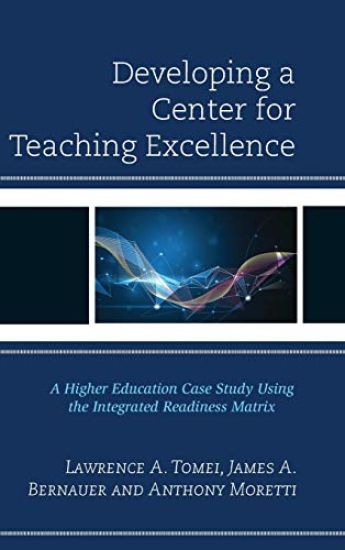
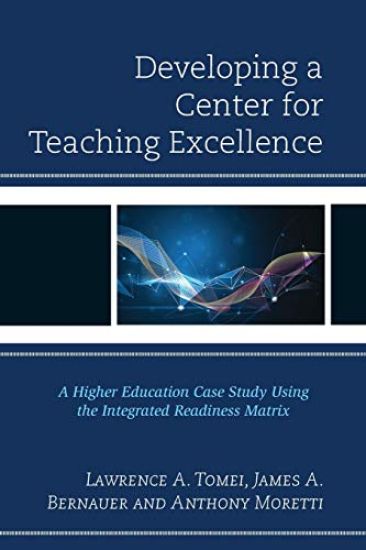
Developing a Center for Teaching Excellence

Developing a Center for Teaching Excellence

Lawrence A. Tomei; James A. Bernauer; Anthony Moretti

Rowman Littlefield
2016
sidottu
Developing a Center for Teaching Excellence: A Case Study Using the Integrated Readiness Matrix builds on the 2015 text, Integrating Pedagogy and Technology: Improving Teaching and Learning in Higher Education with a focus on teaching in higher education. Developing a Center for Teaching Excellence is premised on our contention in the first book that, while individual faculty members can independently begin to use the IRM to improve their pedagogical and technological skills in their content areas, an organizational structure is needed to sustain ongoing improvement. In addition, while the first book provided a primer on learning theory as it relates to pedagogy, Developing a Center for Teaching Excellence plumbs this topic more deeply from the perspective of the college instructor. Further, the second book is dedicated to demonstrating how the IRM can be institutionalized as the foundation for providing the structure and support to faculty and how they can help shape centers for teaching excellence by becoming more familiar with relevant learning theories and related pedagogical and technological approaches.
Developing a Center for Teaching Excellence

Developing a Center for Teaching Excellence

Lawrence A. Tomei; James A. Bernauer; Anthony Moretti

Rowman Littlefield
2016
nidottu
Developing a Center for Teaching Excellence: A Case Study Using the Integrated Readiness Matrix builds on the 2015 text, Integrating Pedagogy and Technology: Improving Teaching and Learning in Higher Education with a focus on teaching in higher education. Developing a Center for Teaching Excellence is premised on our contention in the first book that, while individual faculty members can independently begin to use the IRM to improve their pedagogical and technological skills in their content areas, an organizational structure is needed to sustain ongoing improvement. In addition, while the first book provided a primer on learning theory as it relates to pedagogy, Developing a Center for Teaching Excellence plumbs this topic more deeply from the perspective of the college instructor. Further, the second book is dedicated to demonstrating how the IRM can be institutionalized as the foundation for providing the structure and support to faculty and how they can help shape centers for teaching excellence by becoming more familiar with relevant learning theories and related pedagogical and technological approaches.
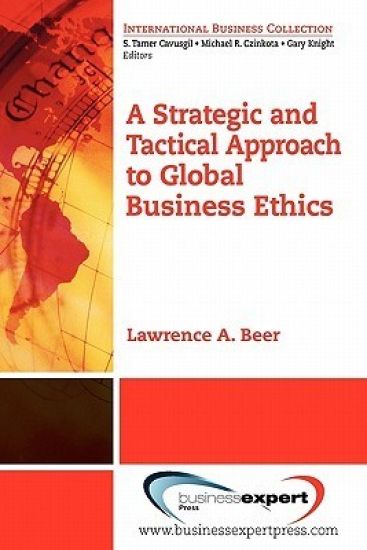
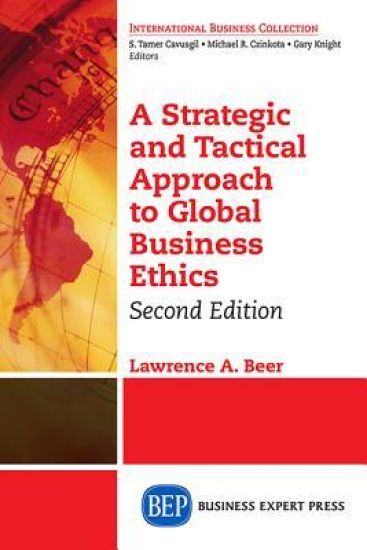
A Strategic and Tactical Approach to Global Business Ethics
In the modern era of globalization Multi-National Corporations (MNCs) have expanded their operational reach to the far corners of the world to a degree and scope never before encountered. Their activities across the global supply chain, both vertically and horizontally, touch numerous societies. Their influential impact is larger than ever before and is growing. One of the key issues facing MNC senior executives at the home office, and trickling down to embedded managers abroad, is moral decision making via the construction of a code of ethics that can universally be applied.Ethics is a compendium of moral interpretations steeped in a multitude of religious and philosophical applications. It is subject to various cultural intrusions as well as independent personal interpretation. The study of international business and all related managerial disciplines usually includes ethical content. The majority of global management textbooks offer a chapter on ethics, and its often misaligned cousin, social responsibility. They tend to cover the subject matter by stating the problem and then reciting laws enacted to combat social injustice as well as including philosophical theories intended to provide generic direction. This iceberg approach, a topical view of the issues, leaves the average MBA student along with executive cadre longing for more specific guidelines.This book is intended to provide templates for ethical decision making within a globalized commercial arena. It presents more detailed direction on how to arrive at universal standards with the construction of patterns of application. It aims to provide more exacting models of resolution for the building of corporate codes of conduct while offering guidance for foreign managers in everyday ethical matters.
A Strategic and Tactical Approach to Global Business Ethics
The subject of ethics within the commercial environment has gone beyond its traditional application due to three primary factors and a host of additional elements. Existing and potential global managers need to be aware of the ramifications of limiting the conventional vision of ethical applications to their operations as the scope of the modern rendition of the term has changed. It has morphed into a wider more extensive meaning having a greater effect on the successful performance of transnational companies than ever before. Although a good start, international firms can no longer be satisfied with simply orchestrating a code of conduct to combat laps in ethical considerations – a historical defensive or reactive approach. It has become a judgment mechanism, part of the applied criteria that both consumers use to measure a company alongside the quality and price of the products and services they offer. Even potential employees question the ethical standing of the firms they wish to join. Managers need to get positively proactive as ethical related areas have exploited in importance as value added elements in the corporate mix. The peripheral limbs on the morality tree, corporate social responsibility and responsible management, have matured into major branches eclipsing the issues fundamental ethical roots from which they grew. They have to be more deeply integrated into strategic determinations and tactical actions. Decent acceptable conduct is not a sideline issue any more. It is a major contributor while also remaining as a significant deterrent to managing a successful sustainable global enterprise.
Israel—A Spiritual Travel Guide (2nd Edition)

Israel—A Spiritual Travel Guide (2nd Edition)

Lawrence A. Hoffman

Turner Publishing Company
2005
pokkari
Be spiritually prepared for your journey in Israel. The only travel guide to Israel that will help you to prepare spiritually for your visit. Combining, in quick reference format, ancient blessings, medieval prayers, biblical references, and modern poetry, it helps today’s pilgrim tap into the deep spiritual meaning of the ancient—and modern—sites of the Holy Land. For each of 25 major tourist destinations—from the Western Wall to Masada to a kibbutz in the Galilee—it gives guidance in sharply focused, four-step sections: Anticipation: To read in advance. Information to help orient you in the site’s historical context. Approach: To read on the way there. Readings from traditional and modern sources to orient you in the site’s spiritual context. Acknowledgment: To read at the site. A prayer or blessing to integrate the experience into your spiritual consciousness. Afterthought: Journaling space for writing your own thoughts and impressions. More than a guidebook: It is a spiritual map of the Holy Land.
Israel—A Spiritual Travel Guide (2nd Edition)

Israel—A Spiritual Travel Guide (2nd Edition)

Lawrence A. Hoffman

Turner Publishing Company
2005
sidottu
Be spiritually prepared for your journey in Israel. The only travel guide to Israel that will help you to prepare spiritually for your visit. Combining, in quick reference format, ancient blessings, medieval prayers, biblical references, and modern poetry, it helps today’s pilgrim tap into the deep spiritual meaning of the ancient—and modern—sites of the Holy Land. For each of 25 major tourist destinations—from the Western Wall to Masada to a kibbutz in the Galilee—it gives guidance in sharply focused, four-step sections: Anticipation: To read in advance. Information to help orient you in the site’s historical context. Approach: To read on the way there. Readings from traditional and modern sources to orient you in the site’s spiritual context. Acknowledgment: To read at the site. A prayer or blessing to integrate the experience into your spiritual consciousness. Afterthought: Journaling space for writing your own thoughts and impressions. More than a guidebook: It is a spiritual map of the Holy Land.
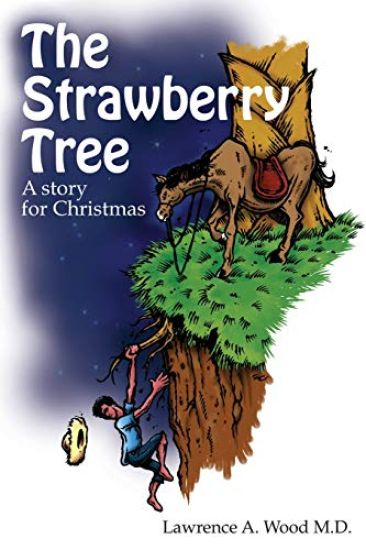
The Strawberry Tree: A Story For Christmas

The Strawberry Tree: A Story For Christmas

Lawrence A. Wood MD

Createspace Independent Publishing Platform
2012
nidottu
Josephus "Thatch-hut" Thomas was familiar with a different Christmas story, before he knew of Santa Claus. Before he knew of a Christmas tree, he knew the story of another Christmas tree. His mother, Amelia, entertained him every holiday season with a story of joy and hope.Josephus' troubled and fascinating journey to his mother's homeland, in the Caribbean, with will fill the reader with new discovery for happiness.
Reclaiming a Scientific Anthropology

Reclaiming a Scientific Anthropology

Kuznar Lawrence A.

AltaMira Press,U.S.
1997
nidottu
A strong advocate for anthropology as a science, Lawrence Kuznar reviews the recent challenges to this ideology from creationists and 'scientific' racists on one side and postmodernists, marxists and feminists on the other. Moreover, Kuznar provides a brief review of anthropology as a science, summarizes major theoretical works in anthropology and other fields on the science/humanism debate, and offers several important case examples from cultural anthropology and archaeology showing science in action. An interesting, provocative book for anthropologists and ideal for advanced undergraduate and graduate classes in theory and method.
Becoming a Congregation of Learners

Becoming a Congregation of Learners

Isa Aron; Lawrence A. Hoffman

Jewish Lights Publishing
2000
sidottu
How can my congregation transform itself? How can we re-dedicate ourselves to learning? Improving spiritual connection in our communities takes work Combining expert advice and experience garnered from congregations throughout North America, Becoming a Congregation of Learners shows us how transformative change is possible. A complete resource full of ideas, information and support, this is a guide for those of us involved in, or interested in, energizing our spiritual communities.Isa Aron, director of Hebrew Union College's Experiment in Congregational Education (ECE), offers concrete, practical information on how to bring about change and revitalization, and helps us make learning a vibrant, integral part of congregational life.
What Is Value Investing?

What Is Value Investing?

Lawrence A. Cunningham

McGraw-Hill Inc.,US
2004
pokkari
Today's most easy-to-understand introduction to value investing - how it works, and how to make it work for you. Value investing is one of today's most talked-about investing strategies, with everyone from "The Wall Street Journal" to TheStreet.com weighing in on its proven track record of success. But what exactly is value investing? And what do you need to know to start putting it to work in your portfolio? Lawrence Cunningham is one of today's leading authorities on value investing.In "What Is Value Investing?" he provides you with the knowledge and tools you need to make value investing a profitable part of your financial strategy, showing you how to: measure the true value of a stock, not the value given to it by an emotion-driven marketplace; uncover and avoid companies that look impressive but hide serious problems; invest only in companies that fall within your "circle of competence" - products and companies you truly understand; and, use the eight key rules of value investing to screen every stock for value before you add it to your portfolio.Value investors don't simply buy low-priced shares; they invest in solid, proven companies. "What is Value Investing?" will give you the knowledge to become a successful value investor who insists on investing only in high-quality, time-proven companies and getting them for pennies on the dollar.Lawrence Cunningham is a professor of law and business at Boston College. The author of "Outsmarting the Smart Money" and "How to Think Like Benjamin Graham and Invest Like Warren Buffett", Professor Cunningham has been featured in publications from Forbes to Money and on networks including CNBC, CNN, and PBS.
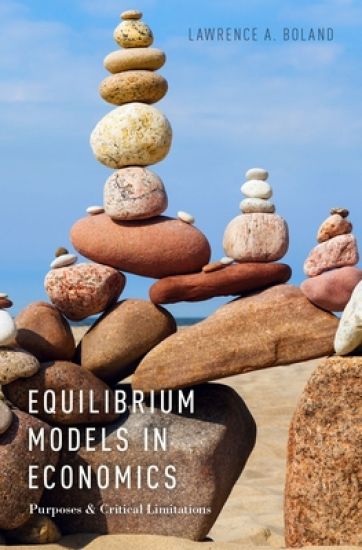
Equilibrium Models in Economics

Equilibrium Models in Economics

Lawrence A. Boland

Oxford University Press Inc
2017
sidottu
The concept of equilibrium is fundamental to economic theory, according to which, it exists when supply and demand are balanced. Equilibrium Models in Economics critically examines the major problematic assumptions employed to build equilibrium models. It gives particular attention to the assumptions used to characterize learning, knowledge and expectations. Lawrence Boland here explores whether equilibrium models can provide a realistic explanation of economic events and objects such as prices, market demands and market supplies. He traces how the different perspectives on equilibrium models represented by such creators as Kenneth Arrow, Robert Clower, and George Richardson influenced subsequent developments in economics. A key debate is about the comparative importance of whether equilibrium refers to a state of an actual economy or a property of a formal mathematical model. Another is the extent that the distinction between a model's exogenous vs. endogenous variables involves causality. Also explored are more recent efforts provided by behavioral, evolutionary, and complexity economics-whether they might change how economics is practiced in the future and how they could. Equilibrium Models in Economics is a trenchant exploration of how the discipline has grappled with attempts to understand and explain the way information, knowledge, and the expectations of actors participating in the economy influence outcomes and behavior. It presents a realistic, workable theory of knowledge and learning, simulating how decision makers and other actors operate in fast-changing equilibrium conditions.