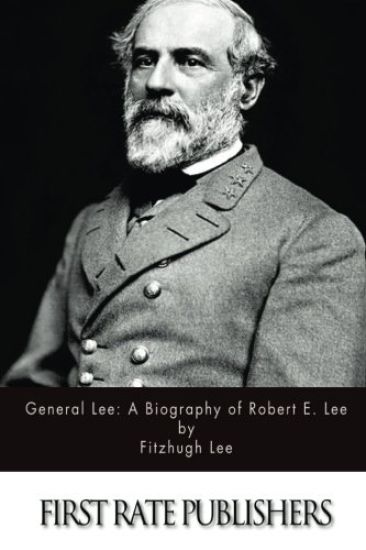
One of the most famous generals in American history is one that fought against the Union during the Civil War. Robert E. Lee is still remembered and even praised even though he led the Confederate Army of Northern Virginia against the Union for about 3 years of the war. Lee is celebrated for giving the Union Army of the Potomac trouble for most of the war, forcing Lincoln to fire several generals and defending Richmond until April 1865. As a result, the South loved him, and even today many Southerners look at him as the perfect leader. However, Lee wasn't perfect, as evidenced by his defeat at Gettysburg. And ultimately, he wasn't working with enough to win the war; both of his invasions of the North ended with strategic defeats, including at Antietam. Despite his defeats, Lee was revered by Confederate veterans, and this biography was written by his nephew Fitzhugh, who was a cavalry officer in Lee's army for much of the war. Naturally, Fitz Lee defends his uncle against most of the perceived criticisms.
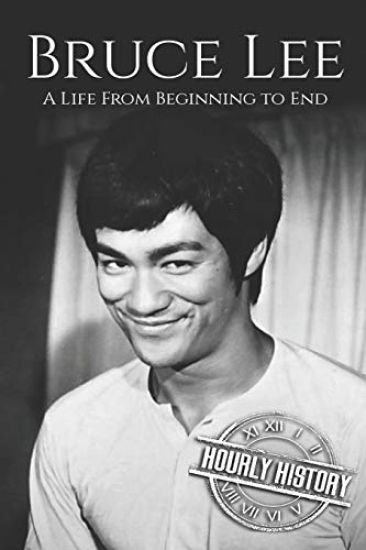
The "definitive" (The New York Times) biography of film legend Bruce Lee, who made martial arts a global phenomenon, bridged the divide between eastern and western cultures, and smashed long-held stereotypes of Asians and Asian-Americans. Forty-five years after Bruce Lee's sudden death at age thirty-two, journalist and bestselling author Matthew Polly has written the definitive account of Lee's life. It's also one of the only accounts; incredibly, there has never been an authoritative biography of Lee. Following a decade of research that included conducting more than one hundred interviews with Lee's family, friends, business associates, and even the actress in whose bed Lee died, Polly has constructed a complex, humane portrait of the icon. Polly explores Lee's early years as a child star in Hong Kong cinema; his actor father's struggles with opium addiction and how that turned Bruce into a troublemaking teenager who was kicked out of high school and eventually sent to America to shape up; his beginnings as a martial arts teacher, eventually becoming personal instructor to movie stars like James Coburn and Steve McQueen; his struggles as an Asian-American actor in Hollywood and frustration seeing role after role he auditioned for go to a white actors in eye makeup; his eventual triumph as a leading man; his challenges juggling a sky-rocketing career with his duties as a father and husband; and his shocking end that to this day is still shrouded in mystery. Polly breaks down the myths surrounding Bruce Lee and argues that, contrary to popular belief, he was an ambitious actor who was obsessed with the martial arts--not a kung-fu guru who just so happened to make a couple of movies. This is an honest, revealing look at an impressive yet imperfect man whose personal story was even more entertaining and inspiring than any fictional role he played onscreen.
Fourteen miles east of Peachtree, Alabama, a secret is hidden. The secret's name is Annabel Lee. She doesn't know why her enigmatic uncle has stowed her deep underground in a military-style bunker. He's left her with a few German words, a barely controlled guard dog, and a single command: "Don't open that door for anybody, you got it? Not even me." Miles away in Atlanta, private investigator Trudi Coffey is visited by a mysterious older man calling himself Dr. Smith. He's been trailing a man for a decade -- a man she met through her ex-partner Samuel Hill -- and the trail has led him to her office. The last thing Trudi wants to do is to contact Samuel. But it will take both of them to unravel this mystery -- before it's too late.
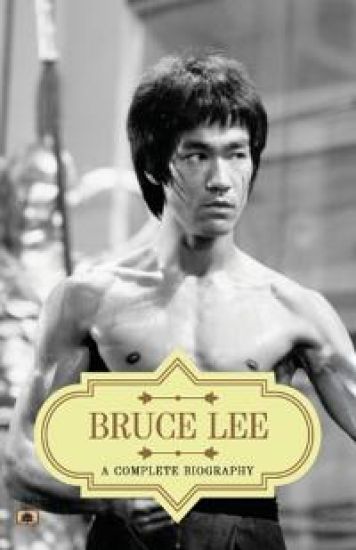
Bruce LeeThe name Bruce Lee is synonymous with martial arts superstar. Lee's movie career was cut tragically short by his death aged just 32 years. Starring in six big release feature movies, Lee revolutionized martial arts movie making and challenged western prejudices against the east. Inside you will read about...✓ Growing Up in Post-War Hong Kong✓ A New Life in America✓ The One-Inch Punch✓ Jeet Kune Do, the Way of the Intercepting Fist✓ Enter the Dragon✓ Health Issues and Sudden DeathAnd much more Challenging the status quo of martial arts practice, Lee created his own unique system, Jeet Kune Do. More than a martial art, Jeet Kune Do is a philosophy for life that is founded on the art of fighting without fighting. Lee's life may have been short, but it burned bright and continues to illuminate today.
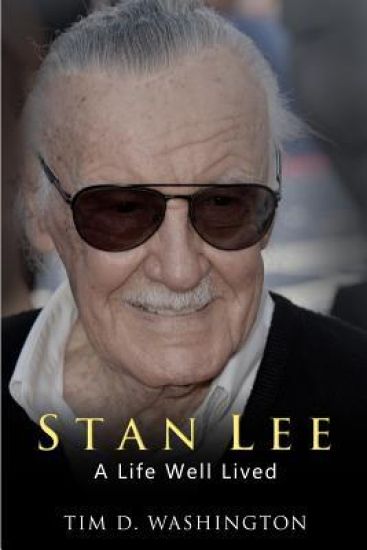
The Biography of Stan LeeIn this book, you will learn more about one of the greatest comic book writers of all time - Stan Lee (Stanley Martin Lieber). Stan Lee was a famous American editor, comic book writer, producer, and publisher. He is responsible for creating the most captivating superhero characters we know today, and these include Spider-Man, Fantastic Four, X-Men, Iron Man, Hulk, and Black Panther. Stan also contributed to the creation of famous villains in the history of comics. His stories feature unique characters with incredible superpowers that allow them to survive and fight for everyone's good in society. Stan Lee is also one of the leading creatives who helped in the establishment of Marvel Comics. In fact, he was the company's creative leader for two decades.This book focuses on Stan's origin, family life, professional life, and the accomplishments that he managed to achieve before he passed away in 2018. It describes the experiences of Stan's immigrant parents from Romania, his first-generation family, and his parents' experiences in America during the Great Depression. In addition, this book provides a detailed history of superheroes and comic books. For those looking for Stan's greatest achievements, there is a whole chapter about the superheroes he created or co-created as well as his cameos in films featuring his own characters. Get a copy of this book NOW if you want to know more about the life of Stan Lee.
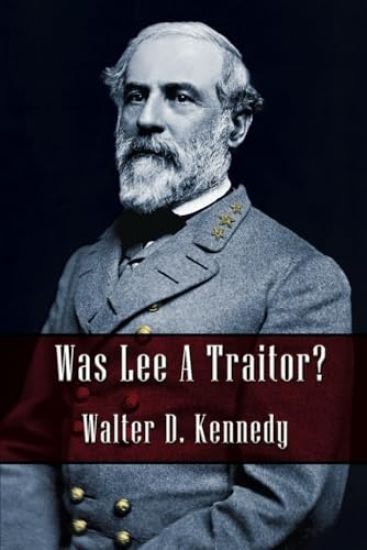
UNTIL VERY RECENTLY, Robert E. Lee was widely considered one of the greatest Americans, admired worldwide as a major and positive historical figure. That is certified by statements of at least five 20th century American Presidents and Winston Churchill. In present Woke America, Lee is now portrayed as a "traitor" and a bad man. So claim leftists, establishment "conservatives," and even some high-ranked generals who are bureaucrats, not soldiers. With his usual knowledge and sharp reasoning, Walter Kennedy disposes of the ignorant, shallow historical claims of the "Lee Traitor," school. Americans are required to take an oath to support the Constitution, an oath which Lee conscientiously obeyed, not whatever politicians are temporarily in federal power. And the Constitution defines treason as making war against "them," the United States, of which Lincoln, not Lee, was grievously guilty.
Bruce Lee, son of Cantonese opera star Lee Hoi-Chuen, was one of the biggest names in Hollywood of his time. He is credited with introducing the East to the silver screens of the West. His greatest passion in life was Kung Fu-an ancient Chinese martial art unknown in the West until 1965, the year he made his first television appearance. A Kung Fu master, an actor, and a philosopher, Bruce Lee embodied the idea of a complete human one with a strong body and a critical mind. He studied a system of Chinese Kung Fu for nine years called Wing Chun. Apart from this, he was an ardent reader of Confucius. He tried to incorporate Confucian philosophy and teachings into his life. He taught Americans about Chinese philosophy and culture for six years. He detested mediocrity and always pushed his limits, both physically and mentally. He inspired generations of youngsters worldwide through his work and continues to do so even today. On July 20, 1973, the world lost this most influential martial artist of all time.
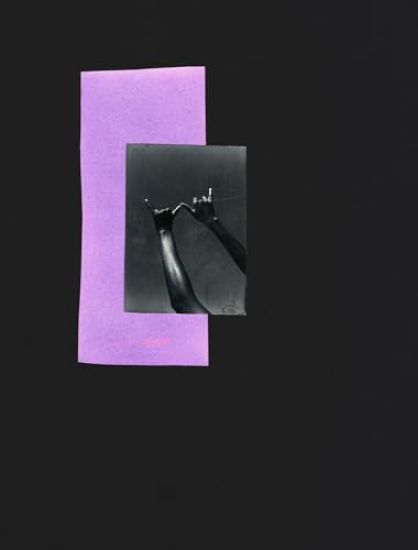
Dionne Lee (born in New York) works across photography, video, and collage to examine interwoven histories of land, power, survival, and Black identity in the American landscape. Lee’s formal interventions and innovative darkroom techniques—including rephotographing found imagery from wilderness survival manuals and using graphite pencils to create inscriptions on her photographs of the landscape—weave together new narratives that address themes of dispossession, loss, survival, and resilience. Dionne Lee: Currents, the artist’s first monograph, brings together key works from over a decade of Lee’s career alongside essays by award-winning poet Camille T. Dungy and curator Eric Booker, as well as an interview with the artist Gabrielle L’Hirondelle Hill, offering a deeper look at a visionary artist reshaping how we see—and choose to imagine—the great outdoors.
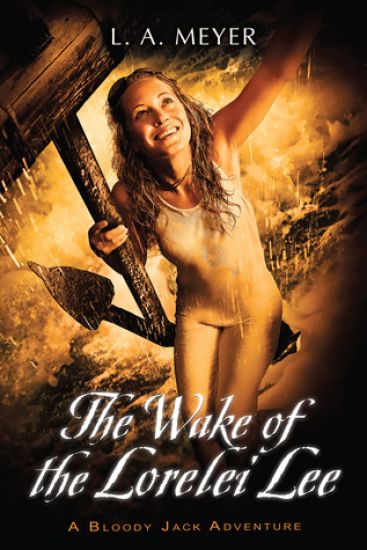
Jacky Faber, rich from her exploits diving for Spanish gold, has purchased the Lorelei Lee to carry passengers across the Atlantic. Believing she has been absolved of past sins against the Crown, Jacky docks in London to take on her crew, but is instead arrested and sentenced to life in the newly formed penal colony in Australia. To add insult to injury, the Lorelei Lee is confiscated to carry female convicts to populate New South Wales. Not one to give in to self-pity, Jacky rallies her sisters to "better" their position - resulting in wild escapades, brushes with danger, and much hilarity.
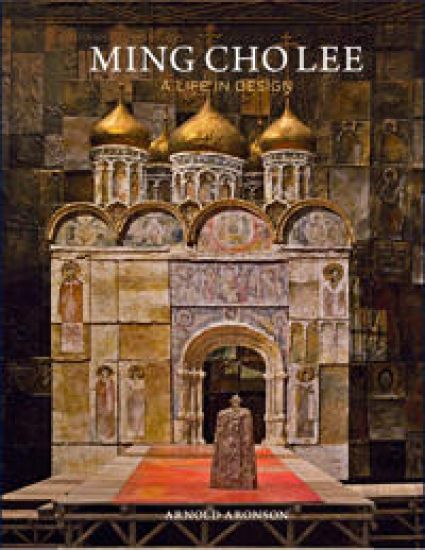
Ming Cho Lee is considered to be the most influential stage designer in the United States in the past forty years, and one of the most respected designers in the world. His work with theater, opera, and dance companies in the 1960s, particularly the New York Shakespeare Festival, the New York City Opera, and the Joffrey Ballet, transformed the very nature of the design in America and introduced a scenic vocabulary and spatial aesthetic that underlies scenographic styles to the present day.Lavishly illustrated with over five hundred images in both color and black and white, this book chronicles Lee's career from his early training as a water-colorist in China, his designs for over three hundred productions, and his esteemed forty-year career at the Yale School of Drama as a mentor to an entire generations of scenic designers. A recipient of the National Medal of Arts, the highest national award given in the arts awarded by the President of the United States, Lee's work has been showcased at the New York Public Library for the Performing Arts, and in fall 2013, the Yale School of Architecture will host a major retrospective of his work. His other awards include a Tony Award, Outer Circle Critics' Award, and three Drama Desk Awards.Arnold Aronson has taught at Columbia University since 1991 and has previously worked in the theater departments at Hunter College, The University of Michigan, Cornell University, and The University of Virginia. He served as the editor of "Theatre Design & Technology" from 1978 to 1988 and is the author of "American Set Design." In 2007, he served as the first non-Czech General Commissioner of the Prague Quadrennial of Stage Design and Theatre Architecture.