Kirjojen hintavertailu. Mukana 12 390 323 kirjaa ja 12 kauppaa.

Kirjahaku

Etsi kirjoja tekijän nimen, kirjan nimen tai ISBN:n perusteella.

1000 tulosta hakusanalla Lewis a Howard

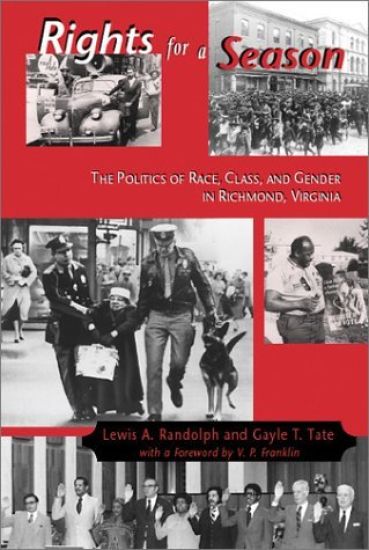
Rights For A Season

Rights For A Season

Lewis A. Randolph

University of Tennessee Press
2003
sidottu
The struggle for black empowerment in Richmond, Virginia, neither began nor ended with the civil rights movement. In Rights for a Season, Lewis A. Randolph and Gayle T. Tate explore the many facets and stages of black political mobilization in Richmond, tracing the rise and decline of black political power in the city. They demonstrate the centrality of race, class, and gender dynamics as determining factors in the evolution of Richmond’s political landscape. Focusing on the social and political forces that shaped the civil rights movement in Richmond, Randolph and Tate chart the transformation in the black community’s response as it moved from resistance to mobilization and from protest politics to electoral politics. At the heart of the book is the story of the historic election of a black-majority city council in 1977 and its subsequent collapse in 1982. The authors’ rich analysis shows that white resistance to both African American political leadership and the politics of inclusion contributed to the breakdown of the city council, as did the class and gender divisions among council members. These divisions mirrored those in the African American community as a whole. Moreover, Randolph and Tate argue that the biracial alliances formed by black conservatives ultimately shifted political power back to the white elite. Based on a historical analysis of the roots of Richmond’s political evolution as well as on interviews and quantitative data, Rights for a Season places events in Richmond in a broader regional and national context of urban political development. The Authors: Lewis A. Randolph is associate professor of political science at Ohio University. Gayle T. Tate is associate professor of political science in the Africana Studies Department at Rutgers University. They coedited Dimensions of Black Conservatism in the United States.
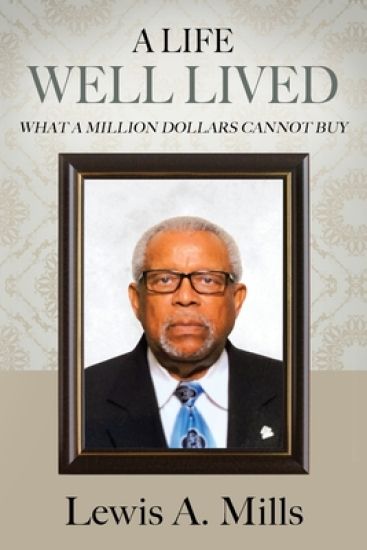
A Life Well Lived

A Life Well Lived

Lewis a Mills

Outskirts Press
2023
pokkari
A Life Well Lived is the sequel to the biography of Dr. Lewis A. Mills What A Million Dollars Cannot Buy. Dr. Mills has distinguished himself in life by overcoming many obstacles that could have hindered him from being the man that he is today, .in this sequel he takes us back through his life from Union South Carolina the United States Navy and his life in Spartanburg, South Carolina. His life story reveals what can happen when one is living a purpose driven life, not afraid to do what he felt was right, acknowledging his weakness and making use of his strengths, the results is A LIFE WELL LIVED,
Cornell University, a history (Volume IV)

Cornell University, a history (Volume IV)

Frank R Holmes; Lewis A Williams

Alpha Edition
2019
pokkari
This book has been considered by academicians and scholars of great significance and value to literature. This forms a part of the knowledge base for future generations. So that the book is never forgotten we have represented this book in a print format as the same form as it was originally first published. Hence any marks or annotations seen are left intentionally to preserve its true nature.
Functions of Social Conflict

Functions of Social Conflict

Lewis A. Coser

The Free Press
1964
pokkari
Lewis Coser presents an examination of the concept of social conflict and its use in empirical sociological research in this “lucid, comprehensive essay in social theory” (American Journal of Sociology).The positive values of conflict for all societies come to light in this study that reveals how conflicts fulfill social functions such as the maintenance of group boundaries and the prevention of the withdrawal of members of a group. Lewis Coser is critical of the view that conflict is dysfunctional and works to demonstrate its inadequacies. In a series of basic propositions distilled primarily from the theories of Georg Simmel, Coser clarifies the function of social conflict. Beyond this, Functions of Social Conflicts extends these propositions and relates them to psychoanalysis and empirical research theories.
Choose Your Medicine

Choose Your Medicine

Lewis A. Grossman

Oxford University Press Inc
2021
sidottu
A comprehensive history of the concept of freedom of therapeutic choice in the United States, presents a compelling look at how persistent but evolving notions of a right to therapeutic choice have affected American policy and law from the Revolution through the Trump Era. Throughout American history, the medical establishment has successfully backed laws limiting the range of treatments available to patients. The country's history is also, however, brimming with social movements that have condemned such restrictions as violations of fundamental American liberties. This fierce conflict is one of the defining features of the social history of medicine in the United States. In Choose Your Medicine, Lewis A. Grossman presents a compelling look at how persistent but evolving notions of a right to therapeutic choice have affected American health policy, law, and regulation from the Revolution through the Trump Era. Grossman grounds his analysis in historical examples ranging from unschooled supporters of botanical medicine in the early nineteenth century to sophisticated cancer patient advocacy groups in the twenty-first. He vividly describes how activists and lawyers have resisted a wide variety of legal constraints on therapeutic choice, including medical licensing statutes, FDA limitations on unapproved drugs and alternative remedies, abortion restrictions, and prohibitions against medical marijuana and physician-assisted suicide. Grossman also considers the relationship between these campaigns for desired treatments and widespread opposition to state-compelled health measures such as vaccines and face masks. From the streets of San Francisco to the US Supreme Court, Choose Your Medicine examines an underexplored theme of American history, politics, and law that is more relevant today than ever.
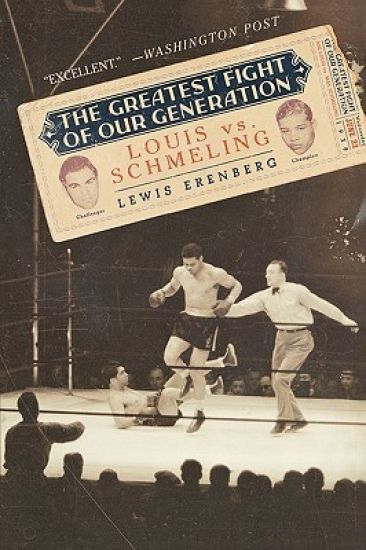
The Greatest Fight of Our Generation

The Greatest Fight of Our Generation

Lewis A. Erenberg

Oxford University Press Inc
2007
nidottu
Held on June 22, 1938, in Yankee Stadium, the second Louis-Schmeling fight sparked excitement around the globe. For all its length--the fight lasted but two minutes--it remains one of the most memorable events in boxing history and, indeed, one of the most significant sporting events ever. In this superb account, Lewis A. Erenberg offers a vivid portrait of Joe Louis, Max Schmeling, their individual careers, and their two epic fights, shedding light on what these fighters represented to their nations, and why their second bout took on such international importance. Erenberg shows how in the first fight Schmeling shocked everyone with a dramatic twelfth-round knockout of Louis, becoming a German national hero and a (unwilling) symbol of Aryan superiority. In fact, the second fight was seen around the world in symbolic terms--as a match between Nazism and American democracy. Erenberg discusses how Louis' dramatic first-round victory was a devastating blow to Hitler, who turned on Schmeling and, during the war, had the boxer (then serving as a paratrooper) sent on a series of dangerous missions. Louis, meanwhile, went from being a hero of his race--"Our Joe"--to the first black champion embraced by all Americans, black and white, an important step forward in United States race relations. Erenberg also describes how, after the war, the two boxers became symbols of German-American reconciliation. With Schmeling as a Coca Cola executive, and Louis down on his luck, the former foes became friends, and when Louis died, Schmeling helped pay for his funeral. Here then is a stirring and insightful account of one of the great moments in boxing history, a confrontation that provided global theater on an epic scale.
Handbook of Pediatric Physical Diagnosis

Handbook of Pediatric Physical Diagnosis

Lewis A Barness; Enid Gilbert-Barness

Oxford University Press Inc
2010
nidottu
Despite the advent of powerful technological advances, the cornerstone of patient care remains the history and physical examination. In this era of lab tests and, in a system dominated by "adult medicine," the special approach to the unique examination of infants and children is often lost. In the Handbook of Pediatric Physical Diagnosis, the highly respected pediatrician Lewis Barness, and noted pediatrician and pathologist, Enid Gilbert-Barness, present clear descriptions and guidelines for the examination of the pediatric patient in an objective, analytical, and humanistic manner. With concise, clearly written text covering both common and difficult diagnoses, and aided by a wealth of tables, charts, and illustrations, this new edition includes more information on differential diagnosis, and has a new fresh look.
The Rumble in the Jungle

The Rumble in the Jungle

Lewis A Erenberg

University of Chicago Press
2019
sidottu
The 1974 fight between Muhammad Ali and George Foreman, staged in the young nation of Zaire and dubbed the Rumble in the Jungle, was arguably the biggest sporting event of the twentieth century. The bout between an ascendant undefeated champ and an outspoken master trying to reclaim the throne was a true multimedia spectacle. A three-day festival of international music--featuring James Brown, Miriam Makeba, and many others--preceded the fight itself, which was viewed by a record-breaking one billion people worldwide. Lewis A. Erenberg's new book provides a global perspective on this singular match, not only detailing the titular fight but also locating it at the center of the cultural dramas of the day. TheRumble in the Jungle orbits around Ali and Foreman, placing them at the convergence of the American Civil Rights movement and the Great Society, the rise of Islamic and African liberation efforts, and the ongoing quest to cast off the shackles of colonialism. With his far-reaching take on sports, music, marketing, and mass communications, Erenberg shows how one boxing match became nothing less than a turning point in 1970s culture.
Steppin' Out

Steppin' Out

Lewis A. Erenberg

University of Chicago Press
1984
nidottu
Traces the evolution of New York City nightlife from the Gay Nineties to the Jazz Age, and discusses changes in spending, behavior, and social barriers
Swingin' the Dream

Swingin' the Dream

Lewis A. Erenberg

University of Chicago Press
1998
sidottu
During the 1930s, swing bands combined jazz and popular music to create dreams for a depression generation. This book explores that world, taking a look into the musical and racial integration. Long before organized baseball or the armed forces experienced racial integration, the fan culture that surrounded these big bands had broken down many barriers that separated people from different racial backgrounds. The author aims to show how a dance subculture forged in the late 1920s and early 1930s, became a music genre that symbolized American society. The book tells the story of swing's rapid rise and the music and culture that bolstered a nation during one of its lowest periods.
Swingin' the Dream

Swingin' the Dream

Lewis A. Erenberg

University of Chicago Press
1999
nidottu
During the 1930s, swing bands combined jazz and popular music to create large-scale dreams for the Depression generation, capturing the imagination of America's young people, music critics and the music business. This book explores that world, looking at the racial mixing-up and musical swinging-out that shook the nation and has kept people dancing ever since. The text is a study of the big band era, chiefly during its golden hours in the 1930s; Lewis A. Erenberg places the music within a larger context and makes his case for its importance.
The Rumble in the Jungle

The Rumble in the Jungle

Lewis A. Erenberg

University of Chicago Press
2021
nidottu
The 1974 fight between Muhammad Ali and George Foreman, staged in the young nation of Zaire and dubbed the Rumble in the Jungle, was arguably the biggest sporting event of the twentieth century. The bout between an ascendant undefeated champ and an outspoken master trying to reclaim the throne was a true multimedia spectacle. A three-day festival of international music—featuring James Brown, Miriam Makeba, and many others—preceded the fight itself, which was viewed by a record-breaking one billion people worldwide. Lewis A. Erenberg’s new book provides a global perspective on this singular match, not only detailing the titular fight but also locating it at the center of the cultural dramas of the day.TheRumble in the Jungle orbits around Ali and Foreman, placing them at the convergence of the American Civil Rights movement and the Great Society, the rise of Islamic and African liberation efforts, and the ongoing quest to cast off the shackles of colonialism. With his far-reaching take on sports, music, marketing, and mass communications, Erenberg shows how one boxing match became nothing less than a turning point in 1970s culture.
Refugee Scholars in America

Refugee Scholars in America

Lewis A. Coser

Yale University Press
1984
sidottu
What were the contributions to American scholarship and culture made by European refugees from Nazi persecution? How did these émigrés react to the experience of being strangers in the land of their refuge? In this engrossing book, Lewis Coser examines the impact of refugee intellectuals on the social sciences and the humanities in America, painting a collective portrait that sheds light not only on the accomplishments of the Europeans but also on the development of the several disciplines in America that either welcomed or rejected them.Coser explains, for example, why the émigrés had more influence in the field of psychoanalysis than in psychology; why Austrian economists were more successful in America than were German economists; why only a few European sociologists made significant contributions in America. Discussing such luminaries as Bruno Bettelheim, Jacob Marshak, Hannah Arendt, Thomas Mann, Vladimir Nabokov, Roman Jacobson, Erwin Panofsky, and Paul Tillich, Coser describes their backgrounds, personalities, and careers in America, providing revealing anecdotes that help to bring these figures to life. His accounts of those who were famous in the country of their birth but never achieved eminence or a feeling of adjustment in America provide a poignant contrast. Coser concludes that the refugee intellectuals were most influential in areas of study where they filled a perceived need not previously met or in fields where they could build on already established traditions. His perceptive analysis of the European-born men and women who altered American intellectual history is an absorbing and memorable story.