Kirjojen hintavertailu. Mukana 11 244 527 kirjaa ja 12 kauppaa.

Kirjahaku

Etsi kirjoja tekijän nimen, kirjan nimen tai ISBN:n perusteella.

1000 tulosta hakusanalla Library of Congress

History of the Library of Congress. Volume 1, 1800-1894
This work has been selected by scholars as being culturally important, and is part of the knowledge base of civilization as we know it. This work was reproduced from the original artifact, and remains as true to the original work as possible. Therefore, you will see the original copyright references, library stamps (as most of these works have been housed in our most important libraries around the world), and other notations in the work.This work is in the public domain in the United States of America, and possibly other nations. Within the United States, you may freely copy and distribute this work, as no entity (individual or corporate) has a copyright on the body of the work.As a reproduction of a historical artifact, this work may contain missing or blurred pages, poor pictures, errant marks, etc. Scholars believe, and we concur, that this work is important enough to be preserved, reproduced, and made generally available to the public. We appreciate your support of the preservation process, and thank you for being an important part of keeping this knowledge alive and relevant.

Catalogue Of The Library Of Congress. Index Of Subjects (Volume I)
This book has been considered by academicians and scholars of great significance and value to literature. This forms a part of the knowledge base for future generations. So that the book is never forgotten we have represented this book in a print format as the same form as it was originally first published. Hence any marks or annotations seen are left intentionally to preserve its true nature.
Handbook of the new Library of Congress

Handbook of the new Library of Congress

Herbert Small; Charles H Caffin

ALPHA EDITION
2022
pokkari
This book "" Handbook of the new Library of Congress "" has been considered important throughout the human history. It has been out of print for decades.So that this work is never forgotten we have made efforts in its preservation by republishing this book in a modern format for present and future generations. This whole book has been reformatted, retyped and designed. These books are not made of scanned copies and hence the text is clear and readable.
The Reorganization of the Library of Congress, 1939-44,

The Reorganization of the Library of Congress, 1939-44,

Archibald 1892-1982 MacLeish

Hassell Street Press
2021
nidottu
This work has been selected by scholars as being culturally important and is part of the knowledge base of civilization as we know it.This work is in the public domain in the United States of America, and possibly other nations. Within the United States, you may freely copy and distribute this work, as no entity (individual or corporate) has a copyright on the body of the work.Scholars believe, and we concur, that this work is important enough to be preserved, reproduced, and made generally available to the public. To ensure a quality reading experience, this work has been proofread and republished using a format that seamlessly blends the original graphical elements with text in an easy-to-read typeface.We appreciate your support of the preservation process, and thank you for being an important part of keeping this knowledge alive and relevant.
Murder at the Library of Congress

Murder at the Library of Congress

Margaret Truman

Fawcett Books
2001
pokkari
In the depths of the U.S. Library of Congress toil thousands of researchers, chasing down obsessions, breakthroughs, and new contributions to human wisdom. But when amateur D.C. sleuth Annabel Reed-Smith enters this stately American institution, she discovers a hornet's nest of intrigue and murder. After a renowned scholar is bludgeoned to death among the scholarly stacks, an ambitious TV reporter links the case to the heist of a Spanish painting from a Miami museum and a killing in Mexico City. Annabel suspects that buried in the Library are secrets some people will do anything to keep silent-the secret of a rich man's ambition, a researcher's disappearance, and a mysterious diary of Christopher Columbus's journey written five hundred years ago. . . .
Guide to the Library of Congress Classification

Guide to the Library of Congress Classification

Lois Mai Chan; Sheila S. Intner; Jean Weihs

Libraries Unlimited Inc
2016
nidottu
Like earlier editions, this thoroughly updated sixth edition of the classic textbook provides readers with a basic understanding of the Library of Congress Classification system and its applications.The Library of Congress Classification system is used in academic, legal, medical, and research libraries throughout North America as well as worldwide; accordingly, catalogers and librarians in these settings all need to be able to use it. The established gold standard text for Library of Congress Classification (LCC), the sixth edition of Guide to the Library of Congress Classification updates and complements the classic textbook's coverage of cataloging in academic and research libraries.Clear and easy to understand, the text describes the reasoning behind assigning subject headings and subheadings, including use of tables; explains the principles, structure, and format of LCC; details notation, tables, assigning class numbers, and individual classes; and covers classification of special types of library materials. The last chapter of this perennially useful resource addresses the potential role of classification in libraries of the future.
A Practical Guide to Library of Congress Classification
A Practical Guide to Library of Congress Classification is a hands-on introduction to LC Classification. The book examines each part of the LCC call number and how it is assembled and guides the reader through each step of finding and constructing LCC class numbers in Classification Web (the primary resource used to access LCC). Chapter coverage is complete: 1. Introduction 2. Library of Congress Classification in a Nutshell 3. Breaking Down the Library of Congress Call Number 4. Dates 5. Cutters 6. LCC in Classification Web 7. Basic LCC Call Number Building 8. Advanced Call Number Building 9. Classifying Fiction in LCC 10. Finding and using LCC Resources Exercises at the end of most chapters give readers immediate practice with what they just learned. Answers to the exercises are provided at the end of the book. By the end of the book readers will be able to build an LCC call number on their own.
A Practical Guide to Library of Congress Classification
A Practical Guide to Library of Congress Classification is a hands-on introduction to LC Classification. The book examines each part of the LCC call number and how it is assembled and guides the reader through each step of finding and constructing LCC class numbers in Classification Web (the primary resource used to access LCC). Chapter coverage is complete: 1. Introduction 2. Library of Congress Classification in a Nutshell 3. Breaking Down the Library of Congress Call Number 4. Dates 5. Cutters 6. LCC in Classification Web 7. Basic LCC Call Number Building 8. Advanced Call Number Building 9. Classifying Fiction in LCC 10. Finding and using LCC Resources Exercises at the end of most chapters give readers immediate practice with what they just learned. Answers to the exercises are provided at the end of the book. By the end of the book readers will be able to build an LCC call number on their own.
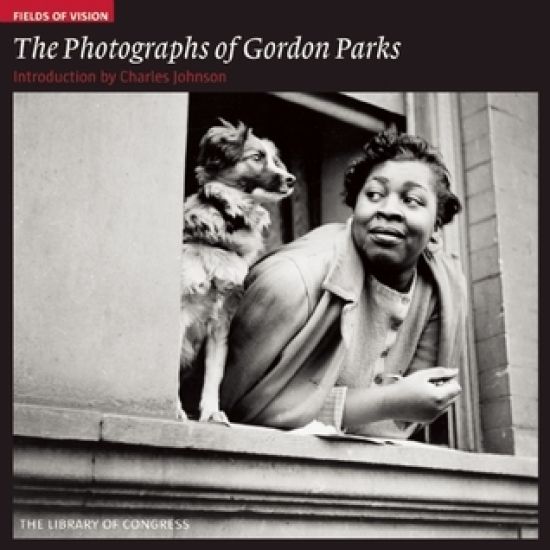
Photographs of Gordon Parks: the Library of Congress
Following on from the publication of the first six titles featuring The Library of Congress' internationally renowned collection of Farm Security Administration (FSA) and Office of War Information (OWI) photographs, the 'Fields of Vision' series continues with images showcasing the work of Arthur Rothstein, Gordon Parks and Carl Mydans. Providing a unique view of American life during the Great Depression and Second World War, each 'Fields of Vision' volume includes an introduction to the life of the photographer by a leading author or journalist, and 50 evocative images selected from their work. Transporting the viewer to American homes, farms and streets in the 1930s and 1940s, they also offer a glimpse of a new narrative and intimate style that was later to blossom on the pages of 'LOOK' and 'LIFE' magazines. For many Americans of the pre-television age, the diversity and complexity of their country was defined by the lenses of these men and women. Gordon Parks was born in 1912 in Fort Scott, Kansas, the youngest of fifteen children in a poor tenant-farming family. He was working odd jobs in Minnesota when he saw the work of FSA photographers in a magazine and was inspired to buy a camera. Parks early pictures landed him a position as Roy Stryker's apprentice in 1942. Among his extraordinary FSA photos is American Gothic, which shows charwoman Ella Watson posed with mop and broom against an American flag. After the FSA, Parks worked at Life magazine. He also became a respected writer and film director. He died in 2006.
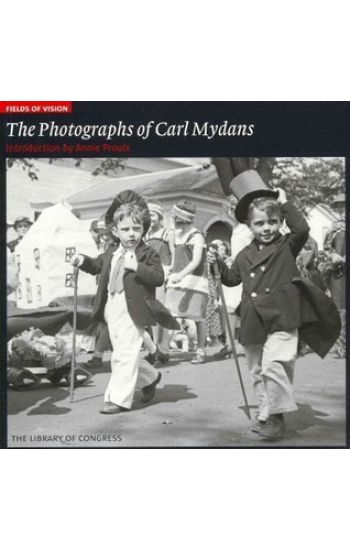
Photographs of Carl Mydans: the Library of Congress
Following on from the publication of the first six titles featuring The Library of Congress' internationally renowned collection of Farm Security Administration (FSA) and Office of War Information (OWI) photographs, the 'Fields of Vision' series continues with images showcasing the work of Arthur Rothstein, Gordon Parks and Carl Mydans. Providing a unique view of American life during the Great Depression and Second World War, each 'Fields of Vision' volume includes an introduction to the life of the photographer by a leading author or journalist, and 50 evocative images selected from their work. Transporting the viewer to American homes, farms and streets in the 1930s and 1940s, they also offer a glimpse of a new narrative and intimate style that was later to blossom on the pages of 'LOOK' and 'LIFE' magazines. For many Americans of the pre-television age, the diversity and complexity of their country was defined by the lenses of these men and women. Carl Mydans was born in Boston in 1907 and earned a degree in journalism from Boston University in 1930. In 1935 he joined the Resettlement Administration (which became the FSA) as a photographer. Mydans traveled in the South, documenting agricultural workers and rural poverty, and toured New England towns hard-hit by the Depression. His work was distinguished by his ability to tell an entire story in a single image. After sixteen months with the government, Mydans left to work at 'LIFE' magazine, where he stayed until the magazine closed in the early 1970s. He died in 2004.