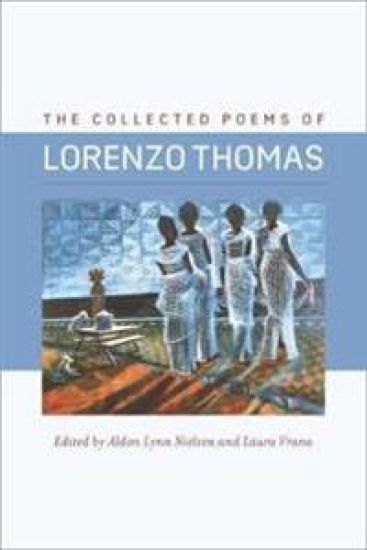
Lorenzo Thomas (1944-2005) was the youngest member of the Society of Umbra, predecessor of the Black Arts Movement. The Collected Poems of Lorenzo Thomas is the first volume to encompass his entire writing life. His poetry synthesizes New York School and Black Arts aesthetics, heavily influenced by blues and jazz. In a career that spanned decades, Thomas constantly experimented with form and subject, while still writing poetry deeply rooted in the traditions of African American aesthetics. Whether drawing from his experiences during the war in Vietnam, exploring his life in the urban north and the southwest, or parodying his beloved Negritude ancestors, Thomas was a lyric innovator.
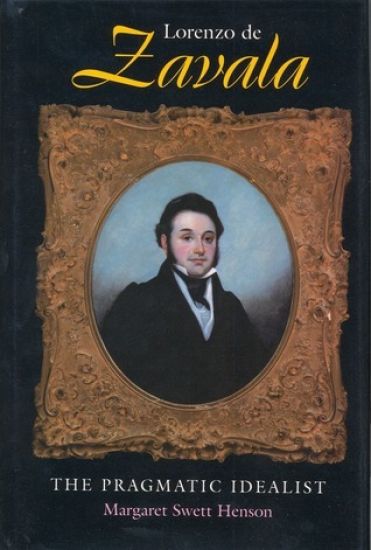
In Mexico Lorenzo de Zavala was a reformer striving to empower the middle class; in Texas, he sought economic stability and hoped to restore his political career. His early death defeated both plans. Some Mexican historians praise Zavala's efforts to create a republic in Mexico and to improve the conditions of the lower classes, but most see him as a traitor because he signed the Texas Declaration of Independence. Anglo historians have generally ignored Zavala except for brief references. A few contemporary Texans admired his political talents, but most suspected his motives. Between 1822 and 1824, Zavala, a native of Yucatan, served in the first Congress of the Mexican republic. He went on to become governor of the State of Mexico and the first Mexican minister to France. When President Santa Anna rose to power, Zavala resigned in protest. Fearful for his life, he moved his family to Mexico's frontier state of Texas where he owned land. Elected a delegate to the convention at Washington-on-the-Brazos, he signed the Texas Declaration of Independence - the only delegate who had previous experience writing a constitution and who had held office at both national and state levels. Fellow delegates unanimously named him vice president of the new Republic of Texas. Forced to flee when Santa Anna approached San Jacinto, Zavala was increasingly frustrated by the new Texas government and its interim president, David Burnet. Shortly after resigning office, he died at his home opposite the San Jacinto battleground, his death attributed to recurring bouts of fever. He was only forty-eight years old.
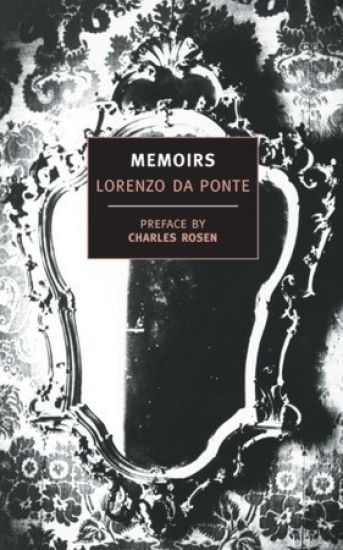
Plot and counterplot lie at the heart of Don Giovanni, Cosi fan tutte, and The Marriage of Figaro, the three brilliant libretti that Lorenzo Da Ponte prepared for Mozart. They were also central to Da Ponte's own extraordinary life. His Memoirs record a fantastic variety of romantic, political, and professional intrigues, and tell of meetings with a host of remarkable men. In a life that took him from the canals of Venice to the streets of New York, Da Ponte was at different times priest, professional gambler, proprietor of a bordello, political agitator, court poet, impresario, grocery store owner, and the first professor of Italian literature at Columbia University. His Memoirs, a minor classic of Italian literature, are the picaresque and engrossing story of a man of enormous talent and unsurpassed flair who was, above all, an indefatigable survivor.
This work has been selected by scholars as being culturally important and is part of the knowledge base of civilization as we know it.This work is in the public domain in the United States of America, and possibly other nations. Within the United States, you may freely copy and distribute this work, as no entity (individual or corporate) has a copyright on the body of the work.Scholars believe, and we concur, that this work is important enough to be preserved, reproduced, and made generally available to the public. To ensure a quality reading experience, this work has been proofread and republished using a format that seamlessly blends the original graphical elements with text in an easy-to-read typeface.We appreciate your support of the preservation process, and thank you for being an important part of keeping this knowledge alive and relevant.
This work has been selected by scholars as being culturally important and is part of the knowledge base of civilization as we know it.This work is in the public domain in the United States of America, and possibly other nations. Within the United States, you may freely copy and distribute this work, as no entity (individual or corporate) has a copyright on the body of the work.Scholars believe, and we concur, that this work is important enough to be preserved, reproduced, and made generally available to the public. To ensure a quality reading experience, this work has been proofread and republished using a format that seamlessly blends the original graphical elements with text in an easy-to-read typeface.We appreciate your support of the preservation process, and thank you for being an important part of keeping this knowledge alive and relevant.
Escuela Espa ola De Sordomudos, " Arte Para Ense arles Escribir Y Hablar El Idioma Espa ol, by Lorenzo Herv s y Panduro, is a landmark work in the history of deaf education. Originally published in the late 18th century, this two-volume set details a comprehensive approach to teaching deaf individuals to read, write, and speak Spanish. Herv s y Panduro's methods, reflecting the enlightened thinking of his time, emphasize the importance of language acquisition and integration into society. This historical text offers valuable insights into the evolution of special education and the understanding of linguistic development. This edition allows modern readers to engage with the original text and appreciate the historical context of deaf education. The work remains a significant contribution to the field, showcasing the dedication and innovative spirit of early educators like Herv s y Panduro. This work has been selected by scholars as being culturally important, and is part of the knowledge base of civilization as we know it. This work was reproduced from the original artifact, and remains as true to the original work as possible. Therefore, you will see the original copyright references, library stamps (as most of these works have been housed in our most important libraries around the world), and other notations in the work. This work is in the public domain in the United States of America, and possibly other nations. Within the United States, you may freely copy and distribute this work, as no entity (individual or corporate) has a copyright on the body of the work. As a reproduction of a historical artifact, this work may contain missing or blurred pages, poor pictures, errant marks, etc. Scholars believe, and we concur, that this work is important enough to be preserved, reproduced, and made generally available to the public. We appreciate your support of the preservation process, and thank you for being an important part of keeping this knowledge alive and relevant.