

Kirjahaku
Etsi kirjoja tekijän nimen, kirjan nimen tai ISBN:n perusteella.
1000 tulosta hakusanalla Louis Beauregard Pendleton

Louis is a French Bulldog who enjoys spending time with his family, but even the happiest of families can go through troubles. Join Louis as he recounts his family life and the great hurdles this little Frenchie has to overcome. Be ready to fall in love with Louis the Lovebug

Louis is a French Bulldog who enjoys spending time with his family, but even the happiest of families can go through troubles. Join Louis as he recounts his family life and the great hurdles this little Frenchie has to overcome. Be ready to fall in love with Louis the Lovebug



Louis Round Wilson. Librarian and Administrator
Maurice F. Tauber
Columbia University Press
2022
sidottu
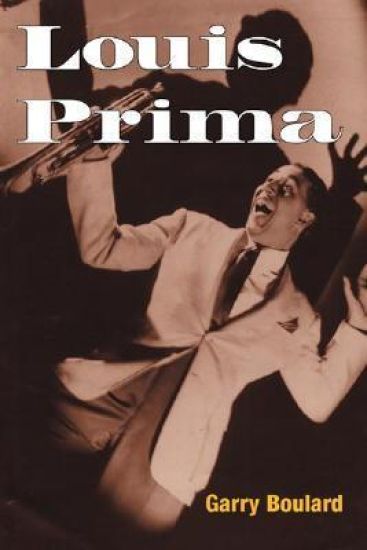
Louis Prima infused the grit and grace of Dixieland jazz with swing and big band sounds, the first whiffs of rock 'n' roll, and a vaudevillian stage presence. Garry Boulard pens the biography of the underrated jazz musician, Las Vegas mainstay, and popular entertainer.A native of New Orleans, Prima was a Guy Lombardo protégé known as "The Italian Satchmo" who became the country's new jazz sensation at New York's Famous Door in the 1930s. He went on to success as a big band leader before virtually creating the lounge act as a Las Vegas nightclub staple. Employing and later marrying singer Keely Smith, Prima rode high with a series of hit songs and smash albums in the Fifties. But Boulard also looks past the over-the-top stage antics to restore Prima's legacy as an overlooked jazz musician and vocalist, and as a bandleader with an uncanny ability to fuse disparate styles into music that kept audiences cheering and dancing for decades.

Louis Johnson and the Arming of America
Keith D. McFarland; David L. Roll
Indiana University Press
2005
sidottu
"Without question this is an important new addition to World War II and Cold War historiography. . . . Highly recommended." —Douglas Brinkley, author of Dean Acheson: The Cold War Years and The Unfinished Presidency: Jimmy Carter's Journey beyond the White House "A remarkably objective, yet sympathetic, study of Louis Johnson's life and career. Now only half-remembered, . . . Johnson was a major national figure. Colorful, aggressive, independent-minded, egotistical, his strong views and conflicts with Dean Acheson proved to be his undoing. All in all, a fascinating tale." —James R. Schlesinger, former Secretary of Defense "McFarland and Roll have performed a real service in rescuing from obscurity this Democratic mover and shaker. Their account of the rise and fall of Louis Johnson provides us with the fullest depiction yet of an important Washington figure employed for better or worse as a blunt instrument of policy change by both Franklin Roosevelt and Harry Truman." —Alonzo L. Hamby, author of Man of the People: A Life of Harry S. Truman and For the Survival of Democracy: Franklin Roosevelt and the World Crisis of the 1930s "[Johnson's] career is a cautionary tale of how even the most ruthlessly effective men can become pawns in the Washington power game. McFarland and Roll bring Johnson to life in this thorough and well-told history." —Evan Thomas, Newsweek, author of Robert Kennedy: His Life and The Very Best Men: The Early Years of the CIA Louis Johnson was FDR's Assistant Secretary of War and the architect of the industrial mobilization plans that put the nation on a war footing prior to its entry into World War II. Later, as Truman's Secretary of Defense, Johnson was given the difficult job of unifying the armed forces and carrying out Truman's orders to dramatically reduce defense expenditures. In both administrations, he was asked to confront and carry out extremely unpopular initiatives—massive undertakings that each president believed were vital to the nation's security and economic welfare. Johnson's conflicts with Henry Morganthau, Secretary of War Harry H. Woodring, Winston Churchill, Harry Hopkins, Dean Acheson, Averell Harriman, and Paul Nitze find contemporary parallels in the recent disagreements between the national defense establishment and the State Department.

In this biography, Louis Massignon is introduced to an English-speaking audience as an eminent French Orientalist who dominated the field of Islamic studies for over 60 years. The account covers many aspects of his complex life (1883-1962) which parallelled great changes in the Muslim world.

Louis XVI détrôné avant d'être roi, ou tableau des causes nécessitantes de la Révolution françoise, ... Par M. l'abbé Proyart.
Abbé Proyart
Wentworth Press
2018
sidottu

Pièces Inédites Sur Les Règnes De Louis Xiv, Louis XV Et Louis Xvi
Louis XIV; Louis François Armand Du Ple Richelieu; Claude Louis Hector Villars
Wentworth Press
2018
pokkari

The reign of Louis XVI, which ended with the guillotining of Louis and his wife, Marie Antoinette, in 1793, is a dramatic and crucial part of French history. This book presents the first complete and authoritative biography of Louis XVI, a poignant tale that recounts how the King's stature grew as his power declined.
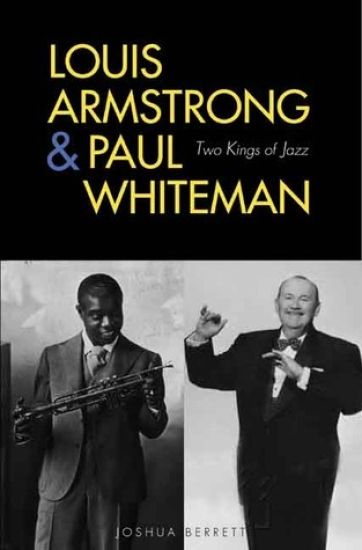
A dual biography of two great innovators in the history of jazz. One was black, one was white—one is now legendary, the other nearly forgotten. In Louis Armstrong and Paul Whiteman thejazz scholar Joshua Berrett offers a provocative revision of the history of early jazz by focusing on two of its most notable practitioners—Whiteman, legendary in his day, and Armstrong, a legend ever since. Paul Whiteman’s fame was unmatched throughout the twenties. Bix Beiderbecke, Bing Crosby, and Jimmy and Tommy Dorsey honed their craft on his bandstand. Celebrated as the “King of Jazz” in 1930 in a Universal Studios feature film, Whiteman’s imperium has declined considerably since. The legend of Louis Armstrong, in contrast, grows ever more lustrous: for decades it has been Armstrong, not Whiteman, who has worn the king’s crown. This dual biography explores these diverging legacies in the context of race, commerce, and the history of early jazz. Early jazz, Berrett argues, was not a story of black innovators and white usurpers. In this book, a much richer, more complicated story emerges—a story of cross-influences, sidemen, sundry movers and shakers who were all part of a collective experience that transcended the category of race. In the world of early jazz, Berrett contends, kingdoms had no borders.
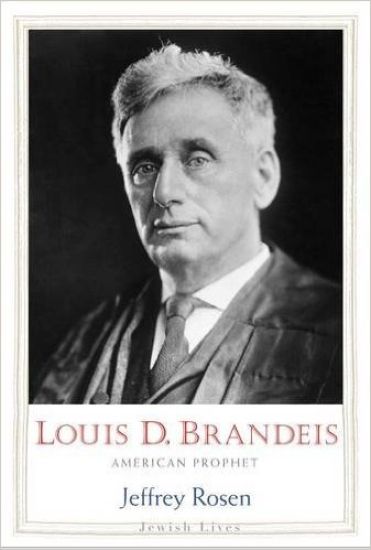
From the prizewinning Jewish Lives series, a riveting new examination of Supreme Court Justice Louis D. Brandeis, the leading progressive justice of his era "Concise and sympathetic. . . . Mr. Rosen persuasively makes his case that recognizing Brandeis as an 'American prophet' . . . 'seems more important today than ever.'"—Adam Cohen, New York Times "An ideal introduction to Brandeis’ life for general readers."—Booklist (starred review) According to Jeffrey Rosen, Louis D. Brandeis was “the Jewish Jefferson,” the greatest critic of what he called “the curse of bigness,” in business and government, since the author of the Declaration of Independence. Published to commemorate the hundredth anniversary of his Supreme Court confirmation on June 1, 1916, Louis D. Brandeis: American Prophet argues that Brandeis was the most farseeing constitutional philosopher of the twentieth century. In addition to writing the most famous article on the right to privacy, he also wrote the most important Supreme Court opinions about free speech, freedom from government surveillance, and freedom of thought and opinion. And as the leader of the American Zionist movement, he convinced Woodrow Wilson and the British government to recognize a Jewish homeland in Palestine. Combining narrative biography with a passionate argument for why Brandeis matters today, Rosen explores what Brandeis, the Jeffersonian prophet, can teach us about historic and contemporary questions involving the Constitution, monopoly, corporate and federal power, technology, privacy, free speech, and Zionism. About Jewish Lives: Jewish Lives is a prizewinning series of interpretative biography designed to explore the many facets of Jewish identity. Individual volumes illuminate the imprint of Jewish figures upon literature, religion, philosophy, politics, cultural and economic life, and the arts and sciences. Subjects are paired with authors to elicit lively, deeply informed books that explore the range and depth of the Jewish experience from antiquity to the present. In 2014, the Jewish Book Council named Jewish Lives the winner of its Jewish Book of the Year Award, the first series ever to receive this award. More praise for Jewish Lives: "Excellent" –New York Times "Exemplary" –Wall Street Journal "Distinguished" –New Yorker "Superb" –The Guardian

Louis I. Kahn in Conversation
Yale University Press
2014
sidottu
In 1969 and 1970, Louis I. Kahn (1901–1974)—one of America’s greatest 20th-century architects—participated in a series of interviews with a young German architectural historian, Heinrich Klotz, then a visiting professor at Yale University, and John W. Cook, who was teaching architecture at the Yale Divinity School. Louis I. Kahn in Conversation provides the first full edited transcript of these candid, illuminating interviews, which provide remarkable insights into Kahn’s philosophy of architecture. The conversations touch on many of his iconic works, including the unbuilt City Tower Project for Philadelphia, the Yale University Art Gallery, the First Unitarian Church in Rochester, and major international projects then under construction, as well as the Yale Center for British Art, Kahn’s final building, on which he was beginning work at the time. Illustrated with dozens of plans, drawings, and photographs, the book also features an introduction by Jules David Prown, the first director of the Yale Center for British Art, who recommended Kahn as its architect. Distributed for the Yale Center for British Art, in association with Manuscripts and Archives, Sterling Memorial Library, Yale University and the Architectural Archives of the University of Pennsylvania

Louis Vuitton: The Complete Fashion Collections
YALE UNIVERSITY PRESS
2018
sidottu
Two decades of fashion history in the making at Louis Vuitton, told through a sumptuous array of images straight from the catwalk " A] stylish coffee table book . . . to liven up your living space."--Lauren Eggertsen, Who What Wear Founded as a luxury leather goods house in 1854, Louis Vuitton was for many decades one of the world's leading trunk and accessories makers. It was through the launch of its first fashion collections, however, that the house reached unprecedented fame, becoming one of the most influential and valuable luxury brands in the world. This definitive publication is the first to provide an overview of Louis Vuitton's influential designs. It opens with a concise history of the house, followed by brief profiles of designers Marc Jacobs and Nicolas Ghesqui re, before exploring the collections themselves. Organized chronologically, each collection is introduced by a short text unveiling its influences and highlights, illustrated with carefully curated catwalk images. The volume showcases hundreds of spectacular clothes, details, accessories, beauty looks, and set designs--and, of course, the top fashion models who wore them on the runway. An essential book for anyone interested in fashion, Louis Vuitton offers a complete and unrivaled picture of the collections of the world's top fashion house through original catwalk photography.
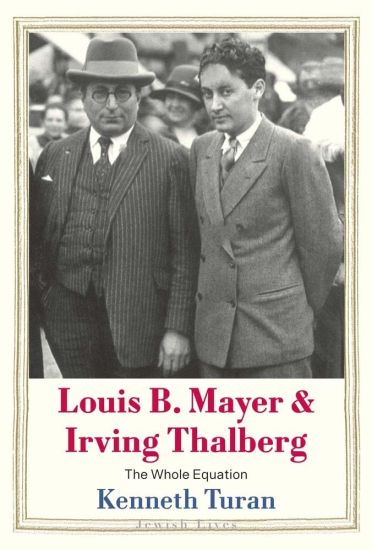
Kenneth Turan brings to life the extraordinary partnership of Louis B. Mayer and Irving Thalberg and their role in creating the film industry as we know it “Sharply observant.”—Farran Smith Nehme, Wall Street Journal One was a tough junkman’s son, the other a cosseted mama’s boy, but they dreamed the same mighty dream: that the right movies could make a profit and change both the culture and individual lives. Sharing a religion and an evangelical zeal for film, Louis B. Mayer (1884–1957) and Irving Thalberg (1899–1936) were unlikely partners in one of the most significant collaborations in movie history. Over the course of their decade-long relationship, as key players at Metro-Goldwyn-Mayer and major players in Hollywood, they joined forces in redefining and mastering the template for the film industry. Mayer, older by more than a dozen years, was the business-minded face of the studio, while Thalberg worked closely with the creative corps, especially writers; together they rarely set a foot wrong. And while Mayer initially viewed Thalberg as the son he never had, the two would go from passionate friends to near enemies before Thalberg’s shocking death at the age of thirty-seven. In the first joint biography of the two men in fifty years, film critic Kenneth Turan traces their fraught relationship while examining the complicated history of Jewish identity in Hollywood.