Kirjojen hintavertailu. Mukana 12 016 292 kirjaa ja 12 kauppaa.

Kirjahaku

Etsi kirjoja tekijän nimen, kirjan nimen tai ISBN:n perusteella.

1000 tulosta hakusanalla Louis J. Slovinsky

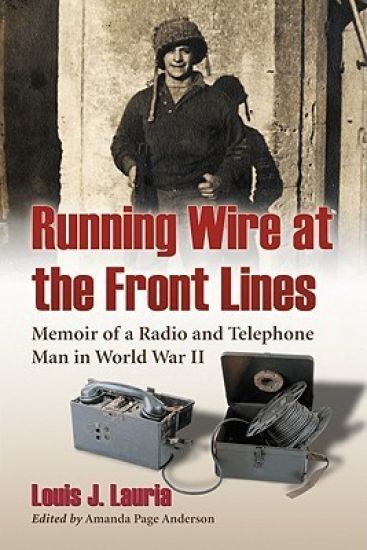
Running Wire at the Front Lines

Running Wire at the Front Lines

Louis J. Lauria

McFarland Co Inc
2010
pokkari
This compelling memoir tracks the war experiences of a radio wireman in the 11th Infantry Regiment of the Fifth Infantry Division. Born in Brooklyn and having left school in the sixth grade to work, the author enlisted at the age of 17. The book explores his time in combat, when he laid down wire for radio communications, often along the front lines and during battles, always alert for German troops. Featured are his sketches of the scenes of his work with fellow soldiers. Particular attention is paid to the role of the wireman and the history of the Fifth Infantry Division.
Encyclopedia of DNA and the United States Criminal Justice System
Forensic DNA analysis was first introduced to the American criminal justice system in the mid-1980s. Since then, DNA testing has become the leading forensic tool both for obtaining sexual assault criminal convictions and for establishing the innocence of criminal suspects and wrongfully convicted defendants. This encyclopedia provides straightforward information on the role of DNA in the American courts. Entries explain the relationship of forensic DNA analysis to microbiology, population genetics, statistics, and the legal rules of the admissibility of scientific evidence. Full texts, preceded by summaries, are presented of all the statutes created by the states and the federal government that address the forensic use of DNA analysis, and the edited text of judicial case opinions that address specific DNA issues. There are many entries on organizations that use DNA testing to free wrongly convicted defendants and on individuals who were released from prison (many from death row) after DNA tests proved their innocence.
The Death Penalty in the United States

The Death Penalty in the United States

Louis J. Palmer

McFarland Co Inc
2013
pokkari
The death penalty landscape has changed considerably since the 1998 first edition of this book. For example, six states that had the death penalty--Connecticut, Illinois, Maryland, New Jersey, New Mexico and New York--no longer impose the punishment. Some of the changes set out in this second edition involve discussions of all of the significant cases decided by the United States Supreme Court after 1998, including Roper v. Simmons, 543 U.S. 551 (2005); Atkins v. Virginia, 536 U.S. 304 (2002); Schriro v. Smith, 126 S.Ct. 7 (2005); Harbison v. Bell, 129 S.Ct. 1481 (2009); Holmes v. South Carolina, 126 S.Ct. 1727 (2006); Kansas v. Marsh, 126 S.Ct. 2516 (2006); Ring v. Arizona, 536 U.S. 584 (2002); Sattazahn v. Pennsylvania, 537 U.S. 101 (2003). This new edition includes 13 new chapters. They cover such topics as capital felon's defense team; habeas corpus, coram nobis and section 1983 proceedings; the Innocence protection act and post-conviction DNA testing; challenging the death sentence under racial justice acts; inhabited American territories; and the costs of capital punishment.
Organ Transplants from Executed Prisoners

Organ Transplants from Executed Prisoners

Louis J. Palmer

McFarland Co Inc
2014
pokkari
In a revised and updated edition, this book continues the debate on whether transplantable organs of executed capital felons should be used to save lives. It provides the reader with relevant data and information necessary for making an informed and intelligent judgment of the matter. Every conceivable constitutional argument on behalf of capital felons and their families is discussed, along with all of the societal pros and cons. Based on precedents by the United States Supreme Court, the author argues that the constitution supports the removal of transplantable organs from executed capital felons.
Computers in the Delivery of Special Education and Related Services
Use computer technology to complement and strengthen your special education program!This book provides practical information, case examples, theory, and a critical summary of applied research about how computer technology can be used to support and improve special education and related services. With Computers in the Delivery of Special Education and Related Services, you'll learn how technology can be used to facilitate an individualized and collaborative approach to learning. Topics of discussion include innovative instruction, consultation, family collaboration, curriculum-based assessment, and professional development.Computers in the Delivery of Special Education and Related Services is a valuable resource in which special services providers can find ways to use computers to enhance individualized instruction and the problem-solving skills of their students, as well as avenues of professional collaboration and support.Computers in the Delivery of Special Education and Related Services presents thoughtful discussions that examine: how computer software can be used in the assessment of students’progress within specific curricula how students can use the Internet to discuss class projects with experts in a process known as ”telementoring” how software can help a school-based consultation team through specific aspects of the problem-solving process, including data collection, intervention selection, team decision documentation, and follow-up ways to use the Internet to create new types of learning communities for students and professionals, extending Vygotsky's notion of ”zone of proximal development” (ZPD) to the community level the advantages and disadvantages of using email with the intention of complementing and strengthening face-to-face collaboration the aspects of home computer use that address a student's special needs the importance of understanding the family's values, expectations, and cultural background Computers in the Delivery of Special Education and Related Services reflects the editors’hope that creative applications of technology will soon transcend the nagging stereotypes of computers (they isolate students, they're too difficult to use, that they lack the flexibility to treat people as individuals). Then computers will be viewed as partners in the process of special education--machines that enhance current practices and open new vistas for learning and education.
Computers in the Delivery of Special Education and Related Services
Use computer technology to complement and strengthen your special education program!This book provides practical information, case examples, theory, and a critical summary of applied research about how computer technology can be used to support and improve special education and related services. With Computers in the Delivery of Special Education and Related Services, you'll learn how technology can be used to facilitate an individualized and collaborative approach to learning. Topics of discussion include innovative instruction, consultation, family collaboration, curriculum-based assessment, and professional development.Computers in the Delivery of Special Education and Related Services is a valuable resource in which special services providers can find ways to use computers to enhance individualized instruction and the problem-solving skills of their students, as well as avenues of professional collaboration and support.Computers in the Delivery of Special Education and Related Services presents thoughtful discussions that examine: how computer software can be used in the assessment of students’progress within specific curricula how students can use the Internet to discuss class projects with experts in a process known as ”telementoring” how software can help a school-based consultation team through specific aspects of the problem-solving process, including data collection, intervention selection, team decision documentation, and follow-up ways to use the Internet to create new types of learning communities for students and professionals, extending Vygotsky's notion of ”zone of proximal development” (ZPD) to the community level the advantages and disadvantages of using email with the intention of complementing and strengthening face-to-face collaboration the aspects of home computer use that address a student's special needs the importance of understanding the family's values, expectations, and cultural background Computers in the Delivery of Special Education and Related Services reflects the editors’hope that creative applications of technology will soon transcend the nagging stereotypes of computers (they isolate students, they're too difficult to use, that they lack the flexibility to treat people as individuals). Then computers will be viewed as partners in the process of special education--machines that enhance current practices and open new vistas for learning and education.
Mechanism and Mysticism

Mechanism and Mysticism

Louis J. Zanine

University of Pennsylvania Press
1993
sidottu
In Mechanism and Mysticism, Louis J. Zanine provides the first full-length study of Theodore Dreiser's interest in modern scientific research and of the impact of scientific ideas on the thought and work of a writer who would gain fame as a deterministic naturalist, but who would end his life as a mystic pantheist. Dreiser was raised in a household dominated by the fanatical Catholic faith of his father and the superstitious beliefs of his mother. In 1894, having rejected the orthodox Christianity of his upbringing, he underwent a significant intellectual and spiritual revolution, precipitated by his discover y of the evolutionary writings of Darwin, Huxley, and Spencer. The concept of an evolutionary universe provided Dreiser with the philosophical framework for the pessimistic naturalism of his early novels (Sister Carrie, Jennie Gerhardt, The Financier). In the next decades, his discovery of scientific mechanism would reveal a universe that was a well-ordered machine, and it is in the context of Dreiser's reading of the mechanistic philosophy of Jacques Loeb and others that Zanine examines An American Tragedy and The Hand of the Potter. The philosophy of mechanism, combined with his under standing of evolutionary thought, provided Dreiser with a scientific world view that gave him a coherent system of beliefs about human beings' place in the universe, their origins, and the bases of their behavior. Yet Zanine demonstrates that Dreiser never fully adopted the stark materialism or atheism of the mechanists. He continued to have a deeply superstitious side, and a number of experiences with fortune tellers, séances, Ouija boards, and spirit apparitions convinced him of the existence of some controlling supernatural force in the universe. During the same years that he was espousing the principles of mechanistic philosophy in correspondence and conversation with Jacques Loeb, Zanine shows Dreiser was also drawn into speculations about the supernatural through his friendship with the eccentric investigator and author, Charles Fort. In an effort to further his understanding of mechanistic philosophy and to reconcile his faith in the supernatural with the facts of modern science, Dreiser began an intensive period of scientific study in 1927. For the next ten years, he befriended many of America's most eminent scientists, and read numerous works on biology, chemistry, physics, and astronomy. In 1937, at the Carnegie Biological Laboratory at Cold Spring Harbor, he experienced a spiritual epiphany in which he was suddenly able to intuit a Divine Being's presence in all of nature. Dreiser's scientific quest had culminated in a mystical conversion that would dominate the remaining eight years of his life. Mechanism and Mysticism offers substantial insight into the character of one of America's leading literary figures. With its unique brand of interdisciplinary research data, it will be of interest to students and scholars of American studies and literature, twentieth-century history, and history of science and religion.
Church, Faith, Future

Church, Faith, Future

Louis J. Cameli; Blase J. Cupich

Liturgical Press
2017
pokkari
In this challenging but hopeful new book, Church, Faith, Future: What We Face, What We Can Do, Father Louis J. Cameli renders a carefully composed portrait of the church in North America today. Drawing on philosophy, history, cultural analysis, and sociology, he offers a sobering picture of where church and faith stand in our society and where they seem to be headed. Identifying several possible ways forward, Fr. Cameli points out the way he sees as the most promising and most faithful to Catholic tradition.In a fascinating afterword to the book, Cardinal Blase Cupich enters into dialogue with Fr. Cameli’s thinking, describing how the Archdiocese of Chicago has begun to address the issues and the directions indicated.
History, Philosophy, and Foreign Relations

History, Philosophy, and Foreign Relations

Louis J. Halle

University Press of America
1987
sidottu
One of the few works to set forth a philosophy of history and international relations with implications for the formulation of foreign policy. The book also presents a conceptual framework for the understanding of international relations in their secular development.
History, Philosophy, and Foreign Relations

History, Philosophy, and Foreign Relations

Louis J. Halle

University Press of America
1987
nidottu
One of the few works to set forth a philosophy of history and international relations with implications for the formulation of foreign policy. The book also presents a conceptual framework for the understanding of international relations in their secular development.
Mark Twain

Mark Twain

Louis J. Budd

University of Missouri Press
2001
nidottu
A comprehensive study of Mark Twain's social and political attitudes. The author traces the growth of Twain's political and social convictions and thus shows his relationship to the age in which he lived. The work is based on research in the newspapers of the day, personal letters, and other little-known material, as well as intensive analysis of the most relevant works by Twain. The material is presented in a forthright style that moves at a springy pace.
The Spiritual Exercises of St. Ignatius: Based on Studies in the Language of the Autograph
"The intention is to produce a clear, idiomatic, and readable translation." --LOUIS J. PUHL, SJ Louis J. Puhl's translation of The Spiritual Exercises of St. Ignatius Loyola has been a standard in the Jesuit community and the world of Ignatian spirituality since its initial publication in 1951. The Exercises contain instructions for spiritual directors, prayer practices and meditations, principles for spiritual progress, and the timeless Rules for Discernment. The classic and trusted translation of St. Ignatius's seminal work returns with a new layout and a foreword from Kevin O'Brien, SJ. This fresh presentation of Puhl's translation offers the classic text unchanged yet redesigned for ease of reading. The new foreword from Kevin O'Brien, acclaimed author of The Ignatian Adventure, contextualizes the Exercises while emphasizing their enduring relevance.
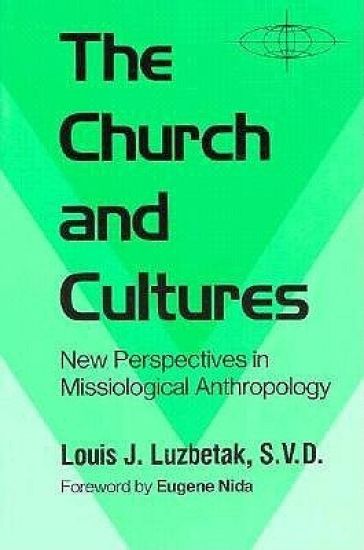
The Church and Cultures

The Church and Cultures

Louis J. Luzbetak; Eugene Nida

Orbis Books (USA)
1989
nidottu
Why should the church be concerned about cultures? Louis J. Luzbetak began to answer this question twenty-five years ago with the publication of The Church and Cultures: An Applied Anthropology for the Religious Worker. Reprinted six times and translated into five languages, it became an undisputed classic in the field. Now, by popular demand, Luzbetak has thoroughly rewritten his work, completely updating it in light of contemporary anthropological and missiological thought and in face of current world conditions. Serving as a handbook for a culturally sensitive ministry and witness, The Church and Cultures introduces the non-anthropologist to a wealth of scientific knowledge directly relevant to pastoral work, religious education social action and liturgy - in fact, to all forms of missionary activity in the church. It focuses on a burning theological issue: that of contextualization, the process by which a local church integrates its understanding of the Gospel ("text") with the local culture ("context").
The Texas Economy

The Texas Economy

Louis J. Rodriquez; Yoshi Fukasawa

University Press of America
1996
sidottu
The Texas economy has gone through considerable changes during the past decade. Many of these developments resulted from the changing role of the oil industry in the state. The Texas Economy: 21st Century Economic Challenges covers economic developments in the Texas economy. Louis J. Rodriguez and Yoshi Fukasawa have edited a collection addressing agriculture, natural resources, human resources, education, technology, manufacturing, tourism, health and medical services, finances, and trade. The Texas Economy will interest educators, students, business leaders, and policymakers involved in the Texas economy. Contents: Introduction, Louis J. Rodriquez; Texas Agriculture, Kary Mathis; Texas Natural Resources and the Environment, Dudley Burton and Radhika Balasubrahmanya; Population Change and the Human Resource Base of the Texas Economy, Steve H. Murdock and MD. Nazrul Hoque; The Role of Education in the 21st Century Texas Economy; O. Emerson Capps and John F. Dowd; Higher Education in Texas, Don W. Brown; Manufacturing Change in Texas, 1970-90; Boom, Bust, and Restructuring, Bernard L. Weinstein and Harold T. Gross; Health and Medical Services in the 21st Century Texas Economy, Antonio Furino; Tourism by Jerome A. Olson; Financial Sector, Robert Clair, Kelly Klemme, and Susan P. Teltey; The Current and Future Condition of Texas State Finance, Mike Reissig; NAFTA and the Texas Economy, Yoshi Fukasawa and Mary Jo Johnson; Conclusions, Louis Rodriguez.