

Kirjahaku
Etsi kirjoja tekijän nimen, kirjan nimen tai ISBN:n perusteella.
1000 tulosta hakusanalla Louis MacNeice

So who is Louis van Gaal? An inflexible ex-PE teacher who only knows how to act like a dictator or a footballing visionary that has made him one of the greatest ever European managers? Wherever he has gone, Van Gaal has been accused of being a domineering disciplinarian and a control freak. He is certainly, by his own admission, a man who leaves nothing to chance. A disciple in the 1970s of Rinus Michels’ Total Football philosophy, he is a fascinating contradiction – an ultra-individualist utterly devoted to the collective effort. He believes in the team over the individual, in always having a plan and a team prepared to follow it. Van Gaal led the young Ajax team he moulded to Champions League glory in 1995, went on to win titles across Europe with Barcelona, AZ Alkmaar and Bayern Munich and served two stints as national coach of Holland. It is a career that has never been short on colour and drama – from fallouts with players to rants at the media wherever he has managed. Dutch football commentator Maarten Meijer’s has written the definitive biography of van Gaal – both the man and his methods. It offers the best psychological insight so far – from his earliest roots to his greatest triumphs – into the man given the task of returning the glory days to Manchester United.**New chapter on Louis van Gaal's first season with Manchester United**
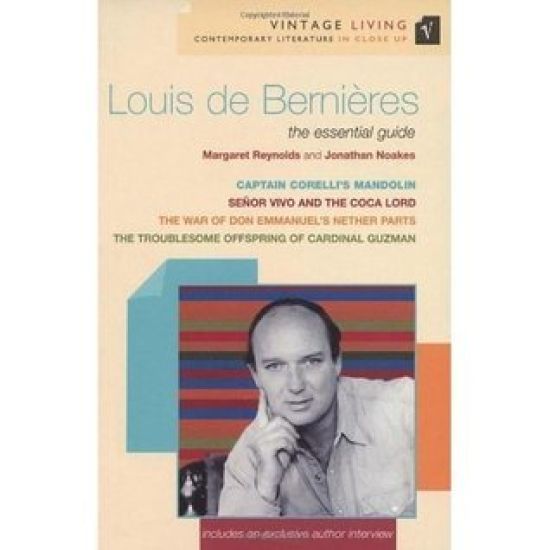
In Vintage Living Texts teachers and students will find the essential guide to the works of Louis de Bernières. Vintage Living Texts is unique in that it offers an in-depth interview with Louis de Bernières, relating specifically to the texts under discussion.This guide will deal with de Bernières' themes, genre and narrative technique, and a close reading of the texts will be accompanied with likely exam questions, and contexts and comparisons - as well as providing a rich source of ideas for intelligent and inventive ways of approaching the novels.Also included in this guide are detailed reading plans for all four novels, questions for essays and discussion, contextual material, suggested texts for complimentary and comparative reading, extracts from reviews, a biography, a bibliography and a glossary of literary terms.

France eagerly awaits the day the young King, Louis XV, comes of age and breaks free from the rule of his ministers. From the gentle persuasions of Madame de Mailley to her overtly ambitious sister, Madame Vintimille, France stands by and watches a King ruled by his women...
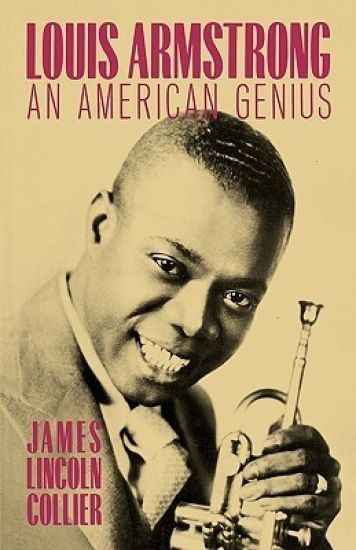
Louis Armstrong. "Satchmo". Tomillions of fans, he was just a great entertainer. But to jazz aficionados, he was one of the most important musicians of our times-not only a key figure in the history of jazz but a formative influence on all of 20th-century popular music. Set against the backdrop of New Orleans, Chicago, and New York during the "jazz age", Collier re-creates the saga of an old-fashioned black man making it in a white world. He chronicles Armstrong's rise as a musician, his scrapes with the law, his relationships with four wives, and his frequent feuds with fellow musicians Earl Hines and Zutty Singleton. He also sheds new light on Armstrong's endless need for approval, his streak of jealousy, and perhaps most important, what some consider his betrayal of his gift as he opted for commercial success and stardom. A unique biography, knowledgeable, insightful, and packed with information, it ends with Armstrong's death in 1971 as one of the best-known figures in American entertainment.
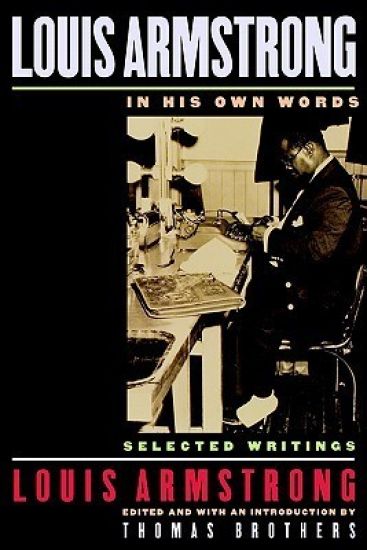
Louis Armstrong, In His Own Words
Oxford University Press Inc
2001
nidottu
Louis Armstrong has been the subject of countless biographies and music histories. Yet scant attention has been paid to the remarkable array of writings he left behind. Louis Armstrong: In His Own Words introduces readers to a little-known facet of this master trumpeter, band leader, and entertainer. Based on extensive research through the Armstrong archives, this important volume includes some of his earliest letters, personal correspondence with one of his first biographers in 1943-44, autobiographical writings, magazine articles, and essays. Here are Armstrong's own thoughts on his life and career—from poverty in New Orleans to playing in the famous cafes, cabarets, and saloons of Storyville, from his big break in 1922 with the King Oliver band to his storming of New York, from his breaking of color barriers in Hollywood to the infamous King of the Zulus incident in 1949, and finally, to his last days in Queens, New York. Along the way Armstrong recorded touching portraits of his times and offered candid, often controversial, opinions about racism, marijuana, bebop, and other jazz artists such as Jelly Roll Morton and Coleman Hawkins. Indeed, these writings provide a balanced portrait of his life as a musician, entertainer, civil rights activist, and cultural icon. Armstrong's idiosyncratic use of language and punctuation have been preserved to give the reader an unvarnished portrayal of this compelling artist. This volume also includes introductions to the writings, as well as an annotated index of names and places significant to Armstrong's life.

Louis Armstrong's Hot Five and Hot Seven Recordings
Harker Brian
Oxford University Press Inc
2011
nidottu
For jazz historians, Louis Armstrong's Hot Five and Hot Seven recordings mark the first revolution in the history of a music riven by upheaval. Yet few traces of this revolution can be found in the historical record of the late 1920s, when the records were made. Even black newspapers covered Armstrong as just one name among many, and descriptions of his playing, while laudatory, bear little resemblance to those of today. For this reason, the perspective of Armstrong's first listeners is usually regarded as inadequate, as if they had missed the true significance of his music. This attitude overlooks the possibility that those early listeners might have heard something valuable on its own terms, something we ourselves have lost. If we could somehow recapture their perspective-without abandoning our own-how might it change our understanding of these seminal recordings? In Louis Armstrong's Hot Five and Hot Seven Recordings, Harker selects seven exceptional records to study at length: "Cornet Chop Suey," "Big Butter and Egg Man," "Potato Head Blues," "S.O.L. Blues"/"Gully Low Blues," "Savoy Blues," and "West End Blues." The world of vaudeville and show business provide crucial context, revealing how the demands of making a living in a competitive environment could catalyze Armstrong's unique artistic gifts. Technical achievements such as virtuosity, structural coherence, harmonic improvisation, and high-register playing are all shown to have a basis in the workaday requirements of Armstrong's profession. Invoking a breadth of influences ranging from New Orleans clarinet style to Guy Lombardo, and from tap dancing to classical music, this book offers bold insights, fresh anecdotes, and, ultimately, a new interpretation of Louis Armstrong and his most influential body of recordings.
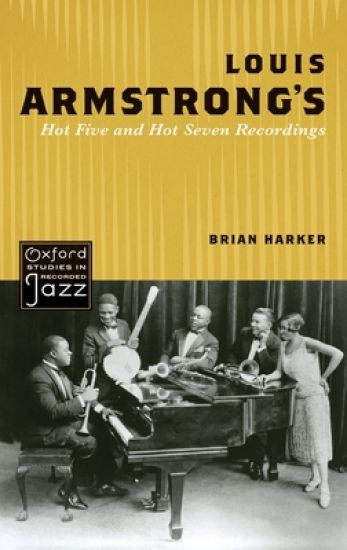
Louis Armstrong's Hot Five and Hot Seven Recordings
Harker Brian
Oxford University Press Inc
2011
sidottu
For jazz historians, Louis Armstrong's Hot Five and Hot Seven recordings mark the first revolution in the history of a music riven by upheaval. Yet few traces of this revolution can be found in the historical record of the late 1920s, when the records were made. Even black newspapers covered Armstrong as just one name among many, and descriptions of his playing, while laudatory, bear little resemblance to those of today. For this reason, the perspective of Armstrong's first listeners is usually regarded as inadequate, as if they had missed the true significance of his music. This attitude overlooks the possibility that those early listeners might have heard something valuable on its own terms, something we ourselves have lost. If we could somehow recapture their perspective-without abandoning our own-how might it change our understanding of these seminal recordings? In Louis Armstrong's Hot Five and Hot Seven Recordings, Harker selects seven exceptional records to study at length: "Cornet Chop Suey," "Big Butter and Egg Man," "Potato Head Blues," "S.O.L. Blues"/"Gully Low Blues," "Savoy Blues," and "West End Blues." The world of vaudeville and show business provide crucial context, revealing how the demands of making a living in a competitive environment could catalyze Armstrong's unique artistic gifts. Technical achievements such as virtuosity, structural coherence, harmonic improvisation, and high-register playing are all shown to have a basis in the workaday requirements of Armstrong's profession. Invoking a breadth of influences ranging from New Orleans clarinet style to Guy Lombardo, and from tap dancing to classical music, this book offers bold insights, fresh anecdotes, and, ultimately, a new interpretation of Louis Armstrong and his most influential body of recordings.

The rise and fall of Louis Riel (1844-85) spanned only fifteen years, yet he is one of the most controversial and colourful people in Canadian history. The central figure in two rebellions, which he led on behalf of the French-speaking half-breeds called Metis, Riel has caught the imagination of Canadians as few other historical personalities have done. His career began with the acts of resistance at the Red River Settlement in 1869, and continued through the formation of a Provisional Government and the notorious shooting of Thomas Scott in 1870, through years of mental illness and exile in the United States, to the North West Rebellion of 1885. It reached an inevitable climax with his surrender and trial and the passionate outpouring of feeling that rocked the country when he was found guilty of treason and executed. The religious and racial emotions of the time, the bigotry and opportunism of politicians, and Riel's own unstable mental condition all combine to make of his life a Canadian tragedy, one that had profound consequences for Confederation.

Louis J. Robichaud, the first elected Acadian premier of New Brunswick, transformed an inward-looking province with an ingrained aversion to change into a vibrant modern society now home to strong political, administrative, and educational institutions. Donald Savoie draws a portrait of adroit political leadership and of a man who, recognizing his province's need for modernization, rose unwaveringly to the demands of office and ushered in profound and enduring change for Acadians and for all New Brunswickers. In a timely biography informed by a long friendship between fellow Acadians, Savoie contrasts the challenges of governing New Brunswick in the 1960s with those faced by governments and political leaders today to better understand the magnitude of Robichaud's accomplishments over a ten-year span. Leading a province with a long history of intolerance towards minority groups, notably Acadians, Robichaud's Liberal government confronted the dominant Anglo-Protestant political class and introduced reforms that included the Official Languages Act, broader access to education for francophones, the establishment of the Université de Moncton, and initiatives in regional and natural resource development, health care, and equitable public services across the province's disparately funded urban and rural counties. Seismic changes at the time, these reforms are now woven into the social fabric of New Brunswick. Informative and lively, Louis J. Robichaud argues convincingly that while the premier's achievements can be viewed as specific to his era, his political fortitude and vision are a model for politicians, legislators, and civil servants today.



Louis is a French Bulldog who enjoys spending time with his family, but even the happiest of families can go through troubles. Join Louis as he recounts his family life and the great hurdles this little Frenchie has to overcome. Be ready to fall in love with Louis the Lovebug
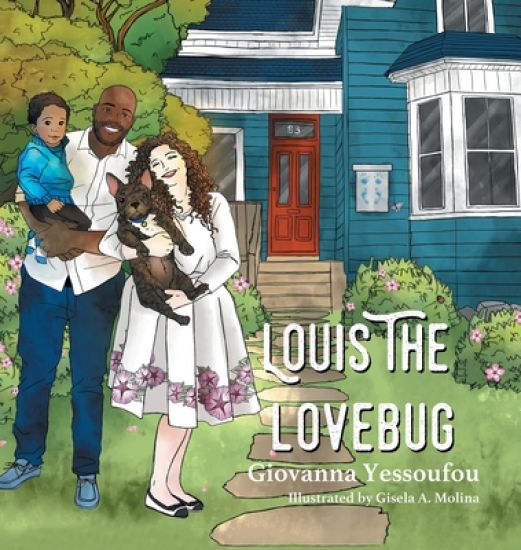
Louis is a French Bulldog who enjoys spending time with his family, but even the happiest of families can go through troubles. Join Louis as he recounts his family life and the great hurdles this little Frenchie has to overcome. Be ready to fall in love with Louis the Lovebug



Louis Round Wilson. Librarian and Administrator
Maurice F. Tauber
Columbia University Press
2022
sidottu
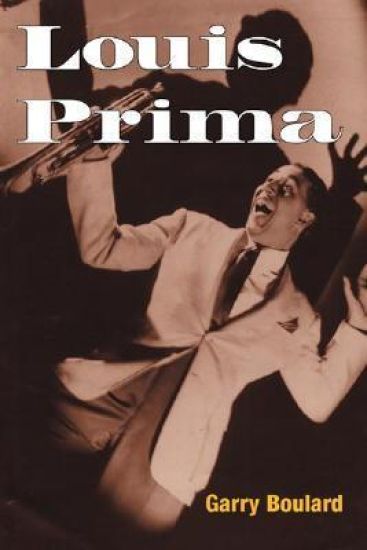
Louis Prima infused the grit and grace of Dixieland jazz with swing and big band sounds, the first whiffs of rock 'n' roll, and a vaudevillian stage presence. Garry Boulard pens the biography of the underrated jazz musician, Las Vegas mainstay, and popular entertainer.A native of New Orleans, Prima was a Guy Lombardo protégé known as "The Italian Satchmo" who became the country's new jazz sensation at New York's Famous Door in the 1930s. He went on to success as a big band leader before virtually creating the lounge act as a Las Vegas nightclub staple. Employing and later marrying singer Keely Smith, Prima rode high with a series of hit songs and smash albums in the Fifties. But Boulard also looks past the over-the-top stage antics to restore Prima's legacy as an overlooked jazz musician and vocalist, and as a bandleader with an uncanny ability to fuse disparate styles into music that kept audiences cheering and dancing for decades.

Louis Johnson and the Arming of America
Keith D. McFarland; David L. Roll
Indiana University Press
2005
sidottu
"Without question this is an important new addition to World War II and Cold War historiography. . . . Highly recommended." —Douglas Brinkley, author of Dean Acheson: The Cold War Years and The Unfinished Presidency: Jimmy Carter's Journey beyond the White House "A remarkably objective, yet sympathetic, study of Louis Johnson's life and career. Now only half-remembered, . . . Johnson was a major national figure. Colorful, aggressive, independent-minded, egotistical, his strong views and conflicts with Dean Acheson proved to be his undoing. All in all, a fascinating tale." —James R. Schlesinger, former Secretary of Defense "McFarland and Roll have performed a real service in rescuing from obscurity this Democratic mover and shaker. Their account of the rise and fall of Louis Johnson provides us with the fullest depiction yet of an important Washington figure employed for better or worse as a blunt instrument of policy change by both Franklin Roosevelt and Harry Truman." —Alonzo L. Hamby, author of Man of the People: A Life of Harry S. Truman and For the Survival of Democracy: Franklin Roosevelt and the World Crisis of the 1930s "[Johnson's] career is a cautionary tale of how even the most ruthlessly effective men can become pawns in the Washington power game. McFarland and Roll bring Johnson to life in this thorough and well-told history." —Evan Thomas, Newsweek, author of Robert Kennedy: His Life and The Very Best Men: The Early Years of the CIA Louis Johnson was FDR's Assistant Secretary of War and the architect of the industrial mobilization plans that put the nation on a war footing prior to its entry into World War II. Later, as Truman's Secretary of Defense, Johnson was given the difficult job of unifying the armed forces and carrying out Truman's orders to dramatically reduce defense expenditures. In both administrations, he was asked to confront and carry out extremely unpopular initiatives—massive undertakings that each president believed were vital to the nation's security and economic welfare. Johnson's conflicts with Henry Morganthau, Secretary of War Harry H. Woodring, Winston Churchill, Harry Hopkins, Dean Acheson, Averell Harriman, and Paul Nitze find contemporary parallels in the recent disagreements between the national defense establishment and the State Department.

In this biography, Louis Massignon is introduced to an English-speaking audience as an eminent French Orientalist who dominated the field of Islamic studies for over 60 years. The account covers many aspects of his complex life (1883-1962) which parallelled great changes in the Muslim world.