

Kirjahaku
Etsi kirjoja tekijän nimen, kirjan nimen tai ISBN:n perusteella.
1000 tulosta hakusanalla Luciana Veit


Raytoons Cartoon Avenue
Luciana Fidelis; Owen Heitmann; Paul Fini
Createspace Independent Publishing Platform
2009
nidottu
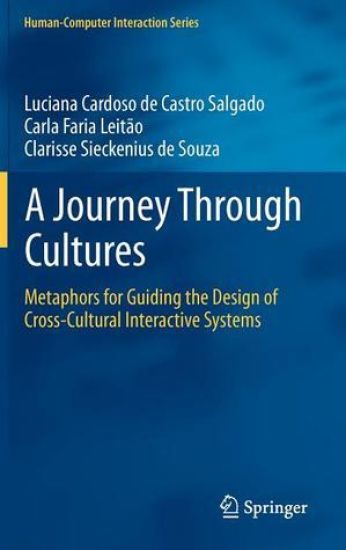
A Journey Through Cultures
Luciana Cardoso De Castro Salgado; Carla Faria Leitão; Clarisse Sieckenius de Souza
Springer London Ltd
2012
sidottu
A Journey Through Cultures addresses one of the hottest topics in contemporary HCI: cultural diversity amongst users. For a number of years the HCI community has been investigating alternatives to enhance the design of cross-cultural systems. Most contributions to date have followed either a ‘design for each’ or a ‘design for all’ strategy.A Journey Through Cultures takes a very different approach. Proponents of CVM – the Cultural Viewpoint Metaphors perspective – the authors invite HCI practitioners to think of how to expose and communicate the idea of cultural diversity. A detailed case study is included which assesses the metaphors’ potential in cross-cultural design and evaluation. The results show that cultural viewpoint metaphors have strong epistemic power, leveraged by a combination of theoretic foundations coming from Anthropology, Semiotics and the authors’ own work in HCI and Semiotic Engineering.Luciana Salgado, Carla Leitão and Clarisse de Souza are members of SERG, the Semiotic Engineering Research Group at the Departamento de Informática of Rio de Janeiro's Pontifical Catholic University (PUC-Rio).

A Journey Through Cultures
Luciana Cardoso De Castro Salgado; Carla Faria Leitão; Clarisse Sieckenius de Souza
Springer London Ltd
2014
nidottu
A Journey Through Cultures addresses one of the hottest topics in contemporary HCI: cultural diversity amongst users. For a number of years the HCI community has been investigating alternatives to enhance the design of cross-cultural systems. Most contributions to date have followed either a ‘design for each’ or a ‘design for all’ strategy.A Journey Through Cultures takes a very different approach. Proponents of CVM – the Cultural Viewpoint Metaphors perspective – the authors invite HCI practitioners to think of how to expose and communicate the idea of cultural diversity. A detailed case study is included which assesses the metaphors’ potential in cross-cultural design and evaluation. The results show that cultural viewpoint metaphors have strong epistemic power, leveraged by a combination of theoretic foundations coming from Anthropology, Semiotics and the authors’ own work in HCI and Semiotic Engineering.Luciana Salgado, Carla Leitão and Clarisse de Souza are members of SERG, the Semiotic Engineering Research Group at the Departamento de Informática of Rio de Janeiro's Pontifical Catholic University (PUC-Rio).


Le lucciole stavano arrivando sempre pi numerose, vorticando attorno alla quercia. In una spirale che si annodava agli anfratti del tronco, ai rami, alle fronde generose. E le stelle? Eccole l , lontane e tenui nell'assenza della luna. Immote e meste a confondersi fra i pensieri.

Yummy In My Tummy: Fruit and Vegetables Baby Book, in Real high definition images- Babies Love IT!
Luciana Qupty
Createspace Independent Publishing Platform
2014
nidottu

E fingere di non avvertire quell'impulso che mi spinge "semplicemente" a prendere in mano una penna, ad aprire un'agenda... e ad attendere che qualcuno mi parli di una Grande Luce? Di quella Grande Luce che chiunque desideri raggiungere potr trovare dall'ultimo giorno della sua vita terrena. O magari anche prima di allora...

Fluxus was a pivotal movement in redefining art’s role and the artist’s identity in the contemporary world, so that its aesthetics – as well as many of its gimmicks – have become so deeply embedded in our social setting that we now no longer realize where they originally came into being. Fluxus has been described as the most radical and experimental art movement of the 1960s, challenging conventional thinking on art and culture. It had a central role in the birth of such key contemporary art forms as concept art, installation, performance art, intermedia and video. The amount of Fluxus-related scholarly activity has increased since 2009, when New York’s Museum of Modern Art acquired the world’s largest collection of Fluxus works, the Lila and Gilbert Silverman Collection, and this in turn led to a series of exhibitions, first at MoMA and subsequently at other institutions worldwide. Focusing on Japanese artists involved in Fluxus, the book proposes a new understanding of this movement which, in spite of its anti-academicism, its aversion to authorial identity and the ephemeral character of its output, is “the best documented and best cross-indexed art movement in history,” (Nam June Paik 1994, 77). The book presents postwar Japanese radical avant-garde and the related and highly refined discourse and debate behind it, enlightening crucial if less known aspects of (local) Fluxus history and theory.
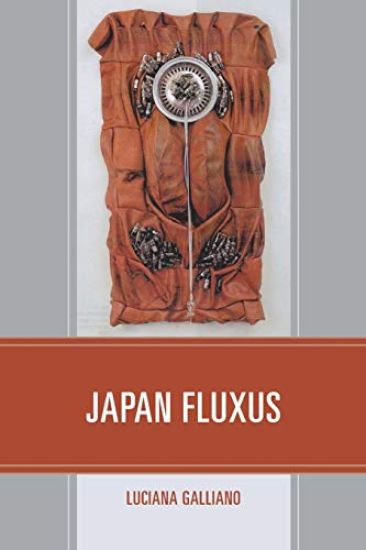
Fluxus was a pivotal movement in redefining art’s role and the artist’s identity in the contemporary world, so that its aesthetics – as well as many of its gimmicks – have become so deeply embedded in our social setting that we now no longer realize where they originally came into being. Fluxus has been described as the most radical and experimental art movement of the 1960s, challenging conventional thinking on art and culture. It had a central role in the birth of such key contemporary art forms as concept art, installation, performance art, intermedia and video. The amount of Fluxus-related scholarly activity has increased since 2009, when New York’s Museum of Modern Art acquired the world’s largest collection of Fluxus works, the Lila and Gilbert Silverman Collection, and this in turn led to a series of exhibitions, first at MoMA and subsequently at other institutions worldwide. Focusing on Japanese artists involved in Fluxus, the book proposes a new understanding of this movement which, in spite of its anti-academicism, its aversion to authorial identity and the ephemeral character of its output, is “the best documented and best cross-indexed art movement in history,” (Nam June Paik 1994, 77). The book presents postwar Japanese radical avant-garde and the related and highly refined discourse and debate behind it, enlightening crucial if less known aspects of (local) Fluxus history and theory.
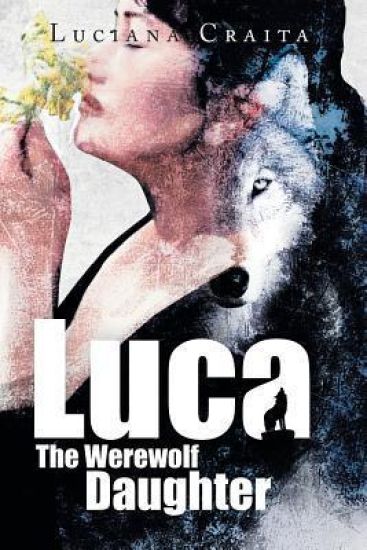


"Oh Lucy" follows Lucy David, a woman who is unaware she suffers from multiple personality disorder. As she tries to rebuild her life after a tumultuous divorce, she is haunted by deep emotional pain and negative feelings. This gripping narrative delves into Lucy's struggle with her condition and the enduring impact of her emotional turmoil. As Lucy David attempts to forge a new path, she is confronted by unsettling pieces of her past, including a series of murders and a serial killer on the loose. Through her journey, Lucy learns that escaping her past is not an option, and true freedom requires facing her inner demons.


Good Girl, Bad Guy
Luciana Santiago; Ben E. Lewis
Createspace Independent Publishing Platform
2014
nidottu


Divagancias Cuánticas: Así nuestro interior, así la realidad
Luciana D. Paradela; Carlos G. Hernández
Createspace Independent Publishing Platform
2015
nidottu
En el mundo cu ntico, las leyes que rigen el comportamiento de las part culas m s peque as de la materia, que son, parad jicamente, no materiales, son distintas a las leyes que rigen los cuerpos macrosc picos. Existiendo, en ese campo, una extra a condici n que genera un fuerte desaf o a nuestro sentido com n. Condici n que lleva a la ruptura de s lidos paradigmas, en los cuales siempre hemos cre do. Esta condici n o ley cu ntica, se denomina "superposici n cu ntica", que es una caracter stica inherente a todo lo que existe en nuestro universo y que consiste en que nada existe de manera definida, clara o precisa. Nada es lo que parece. Todo lo que existe se encuentra, realmente, en un estado de probabilidad de existir, y adem s, de existir de diversas maneras. Parece m stica o magia, pero no lo es. Es ciencia cu ntica pura. Lo que nos parece m s s lido y real, solo lo es cuando una "conciencia" entra en contacto con el "sistema" y hace que en ste se produzca un colapso de onda, lo cual le da las caracter sticas de existencia, a nivel de materia, a todo aquello que habitualmente percibimos. Es pues, la uni n de la "conciencia perceptora" con el estado nebuloso de superposici n cu ntica, lo que genera aquello que llamamos realidad. Cada uno de nosotros crea su propia parcela de la realidad. Eso no significa que estemos creando la realidad. A partir de la realidad, a partir de ese inmenso flujo de energ a, cada uno crea su propia parcela de la realidad. Toda la materia es energ a condensada en vibraciones de diferentes frecuencias. Todos somos energ a. Todos somos una sola consciencia, experiment ndonos a nosotros mismos, muy subjetivamente.Nuestra diminuta conciencia no ser a otra cosa, sino un destello nfimo de la Conciencia Absoluta, semejante en condici n, pero infinitamente lejana en intensidad o tama o, a la que da origen al universo.