Kirjojen hintavertailu. Mukana 11 244 527 kirjaa ja 12 kauppaa.

Kirjahaku

Etsi kirjoja tekijän nimen, kirjan nimen tai ISBN:n perusteella.

1000 tulosta hakusanalla Ludwig Duncker

A Madeline Treasury: The Original Stories by Ludwig Bemelmans

A Madeline Treasury: The Original Stories by Ludwig Bemelmans

Ludwig Bemelmans

Viking Books for Young Readers
2014
sidottu
"In an old house in Paris that was covered with vines lived twelve little girls in two straight lines the smallest one was Madeline." A complete collection of all the adventures of Madeline, a fearless little girl full of mischief and vitality. Madeline, first published in 1939, and its five sequels have charmed generations of readers, and have become true classics. Celebrate one of the world's most popular and beloved fictional characters with this beautiful, deluxe collection, bringing together all six of the Madeline books in one volume. In each of these books, Bemelmans' humorous verse, his immortal characters--Miss Clavel, Pepito, the magician, the others--and his wonderful, whimsical drawings of Paris combine to create a memorable reading experience for people of all ages. Pulitzer Prize-winning journalist Anna Quindlen has written an introduction to the collection, which also includes "The Isle of God," an essay by Bemelmans on how he invented Madeline, and never-before-published working sketches of Madeline, as well as photos of the Bemelmans family.
Great Stories from the German Romantics: Ludwig Tieck and Jean Paul Richter
This outstanding compilation presents stories by two of the writers who helped launch the early nineteenth-century German Romanticism movement: Ludwig Tieck and Jean Paul Richter. Translated by the great British historian Thomas Carlyle, it features seven highly influential tales that range in mood from fantasy and fairy tale lightness to witty satire. Shemlzie's Journey to Fletz and Life of Quintus Fixlien, a story and a novella by Richter, the least translated of the major German Romantics, are of particular note. Ludwig Tieck (1773-1859) is best known for his fantastic stories and short novels, which appeal more to the emotions than the intellect. He translated the works of Shakespeare and Cervantes into German, served as a literary advisor to Dresden's Court Theater, and ranked second only to Goethe as Germany's leading literary authority. Jean Paul Richter (1763-1825) bridged the shift in literature from the formal ideals of Weimar Classicism to the intuitive transcendentalism of early Romanticism. His works range in tone from sentimental humor to bitter satire and span a variety of genres, from fiction to treatises on education and aesthetics.
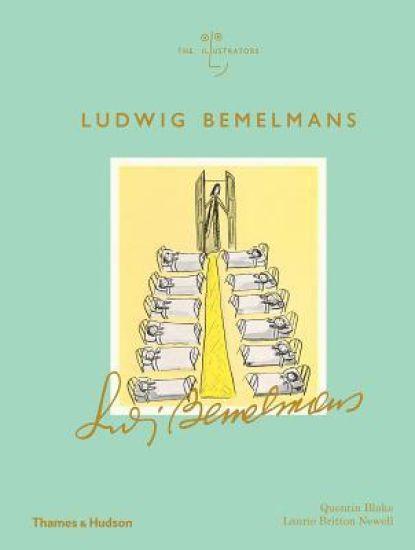
Ludwig Bemelmans

Ludwig Bemelmans

Quentin Blake; Laurie Britton Newell

Thames Hudson Ltd
2019
sidottu
While almost everybody knows Ludwig Bemelmans’ Madeline, the fact that the illustrator published over forty other titles remains a well-kept secret. The first title in Thames & Hudson’s brand-new series, this book offers a visually rich insight into the life and work of this important artist and writer. Ludwig Bemelmans grew up under the Austro-Hungarian empire and emigrated to the United States in his late teens, just escaping the outbreak of the First World War. His illustrations for the Madeline books offer a classic vision of Paris that has created a lasting impression on millions of readers. And every illustrator would love to know how he conveyed all the emotions of a spirited little girl drawn with just a few lines and dots; how did he achieve such clarity in simplicity? Laurie Britton Newell’s illustrated essay gathers material from Bemelmans’ diverse oeuvre, from novels, autobiographical stories, humorous articles and comic strips to murals and menus for hotels and restaurants. The book makes accessible this mesmerizing material, which is otherwise lost to the public, and connects it to the artist’s intriguing life. An icon of a fascinating era, Bemelmans through his magical work gives us glimpses of a life that embodied both hard work and glamour, in Paris and New York.
Ludwig van Beethoven: Fidelio

Ludwig van Beethoven: Fidelio

Cambridge University Press
1996
nidottu
Fidelio is Beethoven’s only complete opera and one of the most admired, and problematic, in the repertoire. This book explores the fascinating musical and dramatic elements within the work as well as the debt to the traditions of French opera in the late eighteenth century and its affinities with the French Revolution. Winton Dean offers a comparison of the opera’s first (1805) and final (1814) versions. Essays by Michael Tusa and Joseph Kerman consider its musical idiom and the challenges Beethoven faced as an instrumental composer trying his hand at opera. A final chapter examines the opera’s performance history, and the volume also includes a synopsis, bibliography, and informative illustrations.
Ludwig Van Beethoven (Revised Edition) (Getting to Know the World's Greatest Composers)
Meet Composer Ludwig van Beethoven Getting to Know the World's Greatest Composers series combines a delightful mix of full-color historical reproductions, photos, and hilarious cartoon-style illustrations that bring to life the works of renowned composers, combining poignant anecdotes with important factual information for readers (Ages 8-9).
Ludwig Wittgenstein and The Vienna Circle

Ludwig Wittgenstein and The Vienna Circle

G. H. von Wright; Friedrich Waismann

JOHN WILEY AND SONS LTD
1984
nidottu
This collection contains hitherto unknown letters exchanged between Wittgenstein and the most important of his Cambridge friends and includes editorial notes based on archival material not previously explored. Incorporates many previously undiscovered unique and significant letters. A powerful record and intimate insight into Wittgenstein's life and thought. Extensive editorial annotations.
Ludwig and the Rhinoceros

Ludwig and the Rhinoceros

Noemi Schneider

North-South Books
2023
sidottu
Does something exist even if you can't see it? A humorous bedtime story for budding philosophers. "There's a rhinoceros in my room " Ludwig claims. His father doesn't think so. He looks for the huge pachyderm in every corner, but he just can't find it. There CANNOT be a rhinoceros in Ludwig's room. It's way too small for a rhinoceros. But Ludwig shows his father that something can be there, even if you can't see it. Young children will love pointing out the rhinoceros in each spread. Older children will enjoy thinking about how the moon is still there even when we can't see it. Philosopher Ludwig Wittgenstein discussed the power and the limitations of language with his professor Bertrand Russell: how even if you don't see something, it can still be there. These philosophical discussions are the basis for Noemi Schneider's hilarious and thoughtful story. The Berlin duo GOLDEN COSMOS, who work with their characteristic screen printing style for international magazines, are now illustrating a picture book for the first time.
Ludwig Wittgenstein

Ludwig Wittgenstein

Rowman Littlefield Publishers
2003
sidottu
In the safety of his manuscripts, Ludwig Wittgenstein was free to endlessly revise, rework and reframe his philosophical thoughts. Thus his published work yields a glimpse of just a small portion of Wittgenstein's philosophical thought—the portion that eventually appeared in print. Yet for Wittgenstein, philosophy was an on-going activity, a process. Only in his dialog with the philosophical community and in his private moments does Wittgenstein's philosophical practice fully come to light. Those public and private occasions are collected here. In Private Occasions, co-editor Alfred Nordmann presents Wittgenstein's diaries from the 1930s to an English audience for the first time. They are accompanied by Wittgenstein's letters to and from friend Ludwig Hänsel. Together, they reveal a great deal about Wittgenstein, who himself says "The movement of thought in my philosophizing should be discernible also in the history of my mind." In Public Occasions, James Klagge collects Wittgenstein's papers and speeches, some newly published, from a number of forums, including his lectures at Cambridge and his involvement with the Cambridge Moral Science Club. Much of Wittgenstein's philosophical work came through, or in the form of, dialogs, making these public encounters particularly valuable. The result of this collaboration, Ludwig Wittgenstein: Public and Private Occasions, is a thorough look at the philosophy of one of the 20th century's greatest thinkers that goes beyond a mere study of his published work.
Ludwig's Applied Process Design for Chemical and Petrochemical Plants
The Fourth Edition of Applied Process Design for Chemical and Petrochemical Plants Volume 2 builds upon the late Ernest E. Ludwig’s classic chemical engineering process design manual. Volume Two focuses on distillation and packed towers, and presents the methods and fundamentals of plant design along with supplemental mechanical and related data, nomographs, data charts and heuristics. The Fourth Edition is significantly expanded and updated, with new topics that ensure readers can analyze problems and find practical design methods and solutions to accomplish their process design objectives.
Ludwig's Applied Process Design for Chemical and Petrochemical Plants
The fourth edition of Ludwig’s Applied Process Design for Chemical and Petrochemical Plants, Volume Three is a core reference for chemical, plant, and process engineers and provides an unrivalled reference on methods, process fundamentals, and supporting design data. New to this edition are expanded chapters on heat transfer plus additional chapters focused on the design of shell and tube heat exchangers, double pipe heat exchangers and air coolers. Heat tracer requirements for pipelines and heat loss from insulated pipelines are covered in this new edition, along with batch heating and cooling of process fluids, process integration, and industrial reactors. The book also looks at the troubleshooting of process equipment and corrosion and metallurgy.
Ludwig Wittgenstein - A Cultural Point of View

Ludwig Wittgenstein - A Cultural Point of View

William J. DeAngelis

Ashgate Publishing Limited
2007
sidottu
In the preface to his Philosophical Investigations Ludwig Wittgenstein expresses pessimism about the culture of his time and doubts as to whether his ideas would be understood in such a time: 'I make them public with doubtful feelings. It is not impossible that it should fall to the lot of this work, in its poverty and in the darkness of this time, to bring light into one brain or another - but, of course, it is not likely'. In this book William James DeAngelis develops a deeper understanding of Wittgenstein's remark and argues that it is an expression of a significant cultural component in Wittgenstein's later thought which, while latent, is very much intended. DeAngelis focuses on the fascinating connection between Wittgenstein and Oswald Spengler and in particular the acknowledged influence of Spengler's Decline of the West. His book shows in meticulous detail how Spengler's dark conception of an ongoing cultural decline resonated deeply for Wittgenstein and influenced his later work. In so doing, the work takes into account discussions of these matters by major commentators such as Malcolm, Von Wright, Cavell, Winch, and Clack among others. A noteworthy feature of this book is its attempt to link Wittgenstein's cultural concerns with his views on religion and religious language. DeAngelis offers a fresh and original interpretation of the latter.
Ludwig Boltzmann His Later Life and Philosophy, 1900–1906
2 But already he had done important work on thermal equilibrium which helped generalize Maxwell's distribution law. Indeed, there is part of a letter by James Clerk Maxwell to Loschmidt from this period which runs: "I am very pleased over the outstanding work of your student; in England experi­ mental physics is much neglected. Sir William Thomson has done the most in this connection, but you [in Austria] are ahead of us with your good example. "2 But while praise was fine, Boltzmann lusted after further travel. He wanted to know what other physicists were doing first hand. In 1870 he attended lectures by Bunsen and Konigsberger in Heid­ elberg, and in the same year went to Berlin only to scurry back to Vienna with the outbreak of the Franco-Prussian War, but Boltzmann was back in Berlin the next year attending lectures, visiting laboratories, and working on dielectricity more or less under the direction of Kirchhhoff and Helmholtz.
Ludwig Boltzmann: His Later Life and Philosophy, 1900-1906
After his failure to replace metaphysics by a linguistic approach, Ludwig Boltzmann came to identify the philosophy of science with methodology which, in turn, he considered to be part of science itself, and thus not part of philosophy at all. His definition of philosophy as metaphysics meant that, from his point of view, all philosophers were metaphysicians, himself included. Boltzmann the philosopher was advised on the improvement of his Weltanschauung by Franz Brentano; to such effect that, by the summer of 1905, Boltzmann appeared to be close to a form of critical realism. However, the stronger this realism became, the more inconsistent it seemed to be with his `Mach plus pictures' methodology of science. During this period, he planned to write a book, first on metaphysics and then later on what he called `A priori probability' and what he considered to be its shortcomings. Apparently, the book was never completed. All know Boltzmann the great physicist. Much less widely known is that he was an original philosopher: one who had a great impact on early 20th Century Viennese philosophy, beginning with Wittgenstein and the Vienna Circle and extending even to Popper and Feyerabend. Blackmore's delving into Boltzmann's correspondence, coupled with his unparalleled knowledge of Boltzmann's final years, allows him to present Boltzmann in an entirely new light to readers in the English language. For physicists, philosophers and historians.
Ludwig Wittgenstein: Half-Truths and One-and-a-Half-Truths
IF WITI'GENSTEIN COULD TALK, COULD WE UNDERSTAND HIM? Perusing the secondary literature on Wittgenstein, I have frequently experienced a perfect Brechtean Entfremdungseffekt. This is interesting, I have felt like saying when reading books and papers on Wittgenstein, but who is the writer talking about? Certainly not Ludwig Wittgenstein the actual person who wrote his books and notebooks and whom I happened to meet. Why is there this strange gap between the ideas of the actual philosopher and the musings of his interpreters? Wittgenstein is talking to us through the posthumous publication of his writings. Why don't philosophers understand what he is saying? A partial reason is outlined in the first essay of this volume. Wittgenstein was far too impatient to explain in his books and book drafts what his problems were, what it was that he was trying to get clear about. He was even too impatient to explain in full his earlier solutions, often merely referring to them casually as it were ina shorthand notation. For one important instance, in The Brown Book, Wittgenstein had explained in some detail what name-object relationships amount to in his view. There he offers both an explanation of what his problem is and an account of his own view illustrated by means of specific examples of language-games. But when he raises the same question again in Philosophical Investigations I, sec.
Ludwig Wittgenstein: Half-Truths and One-and-a-Half-Truths
IF WITI'GENSTEIN COULD TALK, COULD WE UNDERSTAND HIM? Perusing the secondary literature on Wittgenstein, I have frequently experienced a perfect Brechtean Entfremdungseffekt. This is interesting, I have felt like saying when reading books and papers on Wittgenstein, but who is the writer talking about? Certainly not Ludwig Wittgenstein the actual person who wrote his books and notebooks and whom I happened to meet. Why is there this strange gap between the ideas of the actual philosopher and the musings of his interpreters? Wittgenstein is talking to us through the posthumous publication of his writings. Why don't philosophers understand what he is saying? A partial reason is outlined in the first essay of this volume. Wittgenstein was far too impatient to explain in his books and book drafts what his problems were, what it was that he was trying to get clear about. He was even too impatient to explain in full his earlier solutions, often merely referring to them casually as it were ina shorthand notation. For one important instance, in The Brown Book, Wittgenstein had explained in some detail what name-object relationships amount to in his view. There he offers both an explanation of what his problem is and an account of his own view illustrated by means of specific examples of language-games. But when he raises the same question again in Philosophical Investigations I, sec.
Ludwig's Room

Ludwig's Room

Alois Hotschnig

Seagull Books London Ltd
2021
nidottu
When Kurt Weber inherits his great-uncle’s lakeside house, he finds traces of the dark secrets of his family’s past. The early inhabitants of the house haunt his dreams nightly. And one day a ghostlike woman appears before him, hiding herself in a room that had been kept locked throughout his childhood. Inside, Kurt finds a hidden stash of photographs, letters, and documents. As he deciphers them, he gradually understands the degree of complicity in wartime horrors by his family and among his neighbors. As the story unfolds, it becomes clear that the entire village adheres to an old and widely understood agreement not to expose the many members in the community who had been involved with a nearby prison camp during World War II. This knowledge wraps the entire community—those involved, and those who know of the involvement—in inescapable guilt for generations. Translated from the original German by Tess Lewis, Ludwig’s Room is a story of love, betrayal, honor, and cowardice, as well as the burden of history and the moral demands of the present.
Ludwig Van Beethoven: Sheet Music for Piano
A passion for Beethoven? With fingerings clearly marked and designed for easy reading, these books are the ideal resource for any piano or keyboard player. Suited to every ability and helpfully grouped by level of difficulty - from Beginner, through Intermediate, to Advanced (covering Associated Board of the Royal Schools of Music Grades 5 to 8 and above) - each book contains pieces to delight lovers of the classical masterpieces. Ludwig Van Beethoven: Sheet Music for Piano includes everything from 'Fur Elise' to 'Pathetique'.