Kirjojen hintavertailu. Mukana 11 244 527 kirjaa ja 12 kauppaa.

Kirjahaku

Etsi kirjoja tekijän nimen, kirjan nimen tai ISBN:n perusteella.

1000 tulosta hakusanalla M Lynn

Business Process Transformation

Business Process Transformation

Varun Grover; M Lynne Markus

Routledge
2008
sidottu
Featuring contributions from prominent thinkers and researchers, this volume in the "Advances in Management Information Systems" series provides a rich set of conceptual, empirical, and introspective studies that epitomize fundamental knowledge in the area of Business Process Transformation. Processes are interpreted broadly to include operational and managerial processes within and between organizations, as well as those involved in knowledge generation. Transformation includes radical and incremental change, its conduct, management, and outcome. The editors and contributing authors pay close attention to the role of IS organizations and information technologies in facilitating business process transformation. Each chapter places major emphasis on clearly articulating the "knowledge" generated, both theoretical and applied. The book incorporates case studies and tables throughout, and provides fundamental grounding for any stakeholder of business process transformation.
Business Process Transformation

Business Process Transformation

Varun Grover; M Lynne Markus

Routledge
2016
nidottu
Featuring contributions from prominent thinkers and researchers, this volume in the "Advances in Management Information Systems" series provides a rich set of conceptual, empirical, and introspective studies that epitomize fundamental knowledge in the area of Business Process Transformation. Processes are interpreted broadly to include operational and managerial processes within and between organizations, as well as those involved in knowledge generation. Transformation includes radical and incremental change, its conduct, management, and outcome. The editors and contributing authors pay close attention to the role of IS organizations and information technologies in facilitating business process transformation. Each chapter places major emphasis on clearly articulating the "knowledge" generated, both theoretical and applied. The book incorporates case studies and tables throughout, and provides fundamental grounding for any stakeholder of business process transformation.
Interior, Environment & Related Agencies Appropriations

Interior, Environment & Related Agencies Appropriations

Carol Hardy Vincent; Robert Bamberger; David M Bearden; M Lynne Corn

Nova Science Publishers Inc
2008
sidottu
The annual consideration of appropriations bills (regular, continuing, and supplemental) by Congress is part of a complex set of budget processes that also encompasses the consideration of budget resolutions, revenue and debt-limit legislation, other spending measures, and reconciliation bills. In addition, the operation of programs and the spending of appropriated funds are subject to constraints established in authorising statutes. Congressional action on the budget for a fiscal year usually begins following the submission of the President's budget at the beginning of the session. Congressional practices governing the consideration of appropriations and other budgetary measures are rooted in the Constitution, the standing rules of the House and Senate, and statutes, such as the Congressional Budget and Impoundment Control Act of 1974.This book is a guide to one of the regular appropriations bills that Congress considers each year. It is designed to supplement the information provided by the House and Senate Subcommittees on Interior, Environment, and Related Agencies. It summarises the status of the Interior, Environment, and Related Agencies appropriations bill, its scope, major issues, funding levels, and related congressional activity, and is updated as events warrant.
Advocate for Music!

Advocate for Music!

Brinckmeyer Lynn M.

Oxford University Press Inc
2016
sidottu
Across the US, school budgets are tightening and music programs, often the first asked to compromise in the name of a balanced budget, face a seemingly grim future. Monetary restrictions combined with an increasing focus on test scores have led to heavy cuts in school music programs. In many cases, communities and teachers untrained in advocacy are helpless in the face of the school board, with no one willing and comfortable to speak up on their behalf. In Advocate for Music!: A Guide to User-Friendly Strategies, Lynn M. Brinckmeyer, respected educator and past president for the National Association for Music Education, provides a manual for music teachers motivated to advocate but lacking the experience, resources, or time to acquire the skills to do so effectively. It will serve as a toolkit for advocating, and also for sharing resources, strategies and ideas useful for educating everyone - from community members to political representatives - about the immediate and long-term benefits of music education. In Advocate for Music!, Brinckmeyer draws on a lifetime of arts advocacy to provide answers to the questions so many teachers have but are afraid - or simply too busy - to ask. A simple, hands-on guidebook for becoming an effective advocate for the arts, Advocate for Music! is structured around six key questions: what is advocacy? Why focus on it? Who should do it? How does one do it? Where should we advocate? And when should we advocate? Readers will have access to step-by-step guidelines and strategies on how to engage others, and themselves, in a variety of levels of advocacy activities. In addition to granting access to compelling research projects, the book will provide models of letters, webinars, research findings, printed documents, websites and contact information useful for communicating with local, state and national decision makers. Working in an informal, hands-on manner, Brinckmeyer lays out advice on who to work with and what to do: providing concrete examples of advocacy tactics from ideas on how to cooperate with the gym teacher to a sample speech for the holiday concert. As she walks the reader through the a myriad of real-life examples and practical answers to her central questions, Brinckmeyer shows that every educator, parent, family member, and administrator can and should be engaged in advocating to maintain, and support, the right for today's children and adolescents to have access to high quality music education. Advocate for Music! is an important book not only for all pre-service and inservice music teachers, but aso for state MEA leaders and staff, administrators, parents, community members, and all those involved with arts or education associations.
Advocate for Music!

Advocate for Music!

Brinckmeyer Lynn M.

Oxford University Press Inc
2016
nidottu
Across the US, school budgets are tightening and music programs, often the first asked to compromise in the name of a balanced budget, face a seemingly grim future. Monetary restrictions combined with an increasing focus on test scores have led to heavy cuts in school music programs. In many cases, communities and teachers untrained in advocacy are helpless in the face of the school board, with no one willing and comfortable to speak up on their behalf. In Advocate for Music!: A Guide to User-Friendly Strategies, Lynn M. Brinckmeyer, respected educator and past president for the National Association for Music Education, provides a manual for music teachers motivated to advocate but lacking the experience, resources, or time to acquire the skills to do so effectively. It will serve as a toolkit for advocating, and also for sharing resources, strategies and ideas useful for educating everyone - from community members to political representatives - about the immediate and long-term benefits of music education. In Advocate for Music!, Brinckmeyer draws on a lifetime of arts advocacy to provide answers to the questions so many teachers have but are afraid - or simply too busy - to ask. A simple, hands-on guidebook for becoming an effective advocate for the arts, Advocate for Music! is structured around six key questions: what is advocacy? Why focus on it? Who should do it? How does one do it? Where should we advocate? And when should we advocate? Readers will have access to step-by-step guidelines and strategies on how to engage others, and themselves, in a variety of levels of advocacy activities. In addition to granting access to compelling research projects, the book will provide models of letters, webinars, research findings, printed documents, websites and contact information useful for communicating with local, state and national decision makers. Working in an informal, hands-on manner, Brinckmeyer lays out advice on who to work with and what to do: providing concrete examples of advocacy tactics from ideas on how to cooperate with the gym teacher to a sample speech for the holiday concert. As she walks the reader through the a myriad of real-life examples and practical answers to her central questions, Brinckmeyer shows that every educator, parent, family member, and administrator can and should be engaged in advocating to maintain, and support, the right for today's children and adolescents to have access to high quality music education. Advocate for Music! is an important book not only for all pre-service and inservice music teachers, but aso for state MEA leaders and staff, administrators, parents, community members, and all those involved with arts or education associations.
Professional Fees in Corporate Bankruptcies

Professional Fees in Corporate Bankruptcies

Lynn M. LoPucki; Joseph W. Doherty

Oxford University Press Inc
2011
sidottu
Bankrupt Enron paid well over a billion dollars in cash to bankruptcy lawyers, financial advisors, and other bankruptcy professionals. The managers of most bankrupt companies pay the professionals with money that would otherwise have gone to creditors, employees, shareholders, or to saving the companies. To prevent excessive payments, the bankruptcy code and rules establish an elaborate system for public reporting and court approval of professional fees. Armed with the ability to choose among courts that want or need to attract the cases, the professionals have largely taken charge of the fee-control system and rendered it toothless. The professionals ignore many of the governing rules and the courts do nothing about it. Effective methods for assessing and controlling fees do exist, but it is not in the interests of the courts or the professionals to apply them. Professional Fees in Corporate Bankruptcies: Data, Analysis, and Evaluation, by Lynn M. LoPucki and Joseph W. Doherty is based on a study of thousands of documents from the court files in over a hundred of the largest bankruptcy cases. It employs statistical analysis and documents its findings, and provides an unprecedented window on the worlds of bankruptcy professionals, professional fees, and their scientific study. Through that window, readers see both a disturbing picture of a legal system in crisis and a hopeful one with opportunities for desperately needed reform. The authors have nevertheless written it for readers with technical backgrounds in neither bankruptcy nor statistics. This book will be of interest not only to scholars studying professional fees, but also to bankruptcy professionals, judges, policymakers, and anyone interested in the functioning of law-based systems.
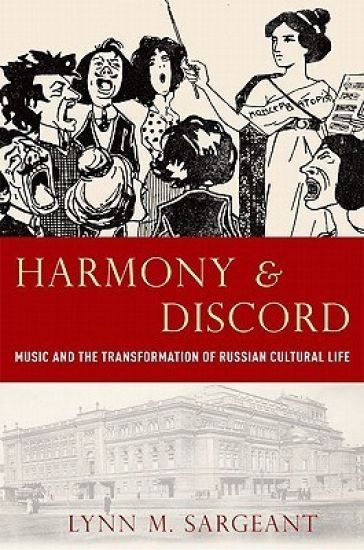
Harmony and Discord

Harmony and Discord

Lynn M. Sargeant

Oxford University Press Inc
2011
sidottu
Harmony and Discord: Music and the Transformation of Russian Cultural Life explores the complex development of Russian musical life during the nineteenth and early twentieth centuries. At the heart of this cultural history lies the Russian Musical Society, as both a unique driving force behind the institutionalization of music and a representative of the growing importance of voluntary associations in public life. Sustained simultaneously by privateinitiative and cooperative relationships with the state, the Russian Musical Society played a key role in the creation of Russia's infrastructure for music and music education. Author Lynn M. Sargeant explores the fluid nature of Russian social identity through the broad scope of musical life, including not only the "leading lights" of the era but also rank-and-file musicians, teachers, and students. Although Russian musicians longed for a secure place within the new hierarchy of professions, their social status remained ambiguous throughout the nineteenth century. Traditional reliance on serf musicians and foreigners left lasting scars that motivated musicians'efforts to obtain legal rights and social respectability. And women's increasing visibility in the musical world provoked acrimonious debates that were, at heart, efforts by male musicians to strengthen their claims to professional status by denying the legitimacy of female participation. Sargeantdemonstrates that the successful development of a Russian musical infrastructure salved persistent anxieties about Russia's place vis-a-vis its European cultural competitors. Remarkably, the institutions developed by the Russian Musical Society survived the upheavals of war and revolution to become the foundation for the Soviet musical system.A wealth of historical documentation makes Harmony and Discord required reading for musicologists, sociologists and historians interested in this period, and the abundance of amusing anecdotes and the author's lucid and lively literary style make it an enjoyable history for all readers.
Redefining Hungarian Music from Liszt to Bartók

Redefining Hungarian Music from Liszt to Bartók

Hooker Lynn M.

Oxford University Press Inc
2013
sidottu
Some of the most popular works of nineteenth-century music were labeled either "Hungarian" or "Gypsy" in style, including many of the best-known and least-respected of Liszt's compositions. In the early twentieth century, Béla Bartók and his colleagues questioned not only the Hungarianness but also the good taste of that style. Bartók argued that it should be discarded in favor of a national style based in the "genuine" folk music of the rural peasantry. Between the heyday of the nineteenth-century Hungarian-Gypsy style and its replacement by a new paradigm of "authentic" national style was a vigorous decades-long debate-one little known inside or outside Hungary-over what it meant to be Hungarian, European, and modern. Redefining Hungarian Music from Liszt to Bartók traces the historical process that defined the conventions of Hungarian-Gypsy style. Author Lynn M. Hooker frames her study around the 1911 celebration of Liszt's centennial. In so doing, she analyzes Liszt's problematic role as a Hungarian-born composer and leader of Hungarian art music who spent most of his life outside of Hungary and questioned whether Hungary's national music was more the creation of Hungarians or Roma (Gypsies). The themes of race and nation that emerge in the discussion of Liszt are further developed in an analysis of discourse on Hungarian national music throughout the Hungarian press in the late nineteenth and early twentieth centuries. Showing how the "discovery" of "genuine" folk music by Bartók and Kodály, often depicted as a purely "scientific" matter, responds directly to concerns raised by earlier writers about the "problem of Hungarian music," Hooker argues that the innovations of Bartók and Kodály and their circle are not so much in correcting a flawed concept of the national as in using the idea of national authenticity to open up freedom for composers to explore more stylistic options, including the exploration of modernist musical language. Meticulously researched and elegantly written, Redefining Hungarian Music from Liszt to Bartók is essential reading for musicologists, musicians, and concertgoers alike.
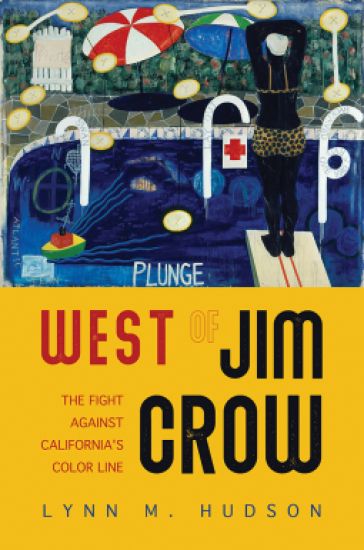
West of Jim Crow

West of Jim Crow

Lynn M. Hudson

University of Illinois Press
2020
sidottu
African Americans who moved to California in hopes of finding freedom and full citizenship instead faced all-too-familiar racial segregation. As one transplant put it, "The only difference between Pasadena and Mississippi is the way they are spelled." From the beaches to streetcars to schools, the Golden State—in contrast to its reputation for tolerance—perfected many methods of controlling people of color. Lynn M. Hudson deepens our understanding of the practices that African Americans in the West deployed to dismantle Jim Crow in the quest for civil rights prior to the 1960s. Faced with institutionalized racism, black Californians used both established and improvised tactics to resist and survive the state's color line. Hudson rediscovers forgotten stories like the experimental all-black community of Allensworth, the California Ku Klux Klan's campaign of terror against African Americans, the bitter struggle to integrate public swimming pools in Pasadena and elsewhere, and segregationists' preoccupation with gender and sexuality.
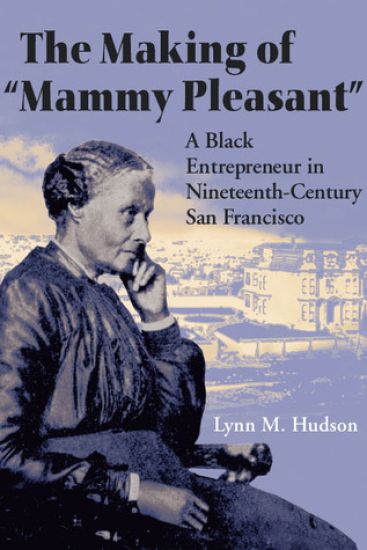
The Making of "Mammy Pleasant"

The Making of "Mammy Pleasant"

Lynn M. Hudson

University of Illinois Press
2008
nidottu
Investigating Mary Ellen Pleasant's convoluted legacy Mary Ellen Pleasant arrived in Gold Rush-era San Francisco a free black woman with abolitionist convictions and a predilection for entrepreneurial success. Behind the convenient and trusted disguise of "Mammy," she transformed domestic labor into enterprise, amassed remarkable real estate, wealth, and power, and gained notoriety for her work in fighting Jim Crow. Pleasant's legacy is steeped in scandals and lore. Was she a voodoo queen who traded in sexual secrets? A madam? A murderer? In The Making of "Mammy Pleasant," Lynn M. Hudson examines the folklore of Pleasant's real and imagined powers. Emphasizing the significance of her life in the context of how it has been interpreted or ignored in the larger trends of American history, Hudson integrates fact and speculation culled from periodicals, court cases, diaries, letters, Pleasant's interviews with the San Francisco press, and various biographical and fictional accounts. Addressing the lack of a historical record of black women's lives, the author argues that the silences and mysteries of Pleasant's past, whether never recorded or intentionally omitted, reveal as much about her life as what has been documented. Through Pleasant's life, Hudson also interrogates the constructions of race, gender, and sexuality during the formative years of California's economy and challenges popular mythology about the liberatory sexual culture of the American West.
West of Jim Crow

West of Jim Crow

Lynn M. Hudson

University of Illinois Press
2020
nidottu
African Americans who moved to California in hopes of finding freedom and full citizenship instead faced all-too-familiar racial segregation. As one transplant put it, "The only difference between Pasadena and Mississippi is the way they are spelled." From the beaches to streetcars to schools, the Golden State—in contrast to its reputation for tolerance—perfected many methods of controlling people of color. Lynn M. Hudson deepens our understanding of the practices that African Americans in the West deployed to dismantle Jim Crow in the quest for civil rights prior to the 1960s. Faced with institutionalized racism, black Californians used both established and improvised tactics to resist and survive the state's color line. Hudson rediscovers forgotten stories like the experimental all-black community of Allensworth, the California Ku Klux Klan's campaign of terror against African Americans, the bitter struggle to integrate public swimming pools in Pasadena and elsewhere, and segregationists' preoccupation with gender and sexuality.
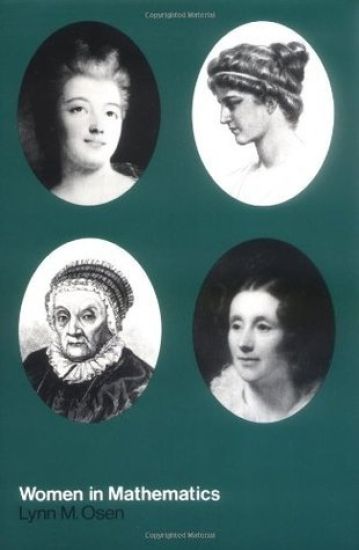
Women in Mathematics

Women in Mathematics

Lynn M. Osen

MIT Press
1975
pokkari
Mathematicians, science historians, and general readers will find this book a lively history; women will find it a reminder of a proud tradition and a challenge to take their rightful place in academic life today.The colorful lives of these women, who often traveled in the most avant-garde circles of their day, are presented in fascinating detail. The obstacles and censures that were also a part of their lives are a sobering reminder of the bias against women still present in this and other fields of academic endeavor. Mathematicians, science historians, and general readers will find this book a lively history; women will find it a reminder of a proud tradition and a challenge to take their rightful place in academic life today.
Food Culture in the Caribbean

Food Culture in the Caribbean

Lynn M. Houston

Greenwood Press
2005
sidottu
Food in the Caribbean reflects both the best and worst of the Caribbean's history. On the positive side, Caribbean culture has been compared with a popular stew there called callaloo. The stew analogy comes from the many different ethic groups peacefully maintaining their traditions and customs while blending together, creating a distinct new flavor. On the negative side, many foods and cooking techniques derive from a history of violent European conquest, the importation of slaves from Africa, and the indentured servitude of immigrants in the plantation system. Within this context, students and other readers will understand the diverse island societies and ethnicities through their food cultures. Some highlights include the discussion of the Caribbean concept of making do—using whatever is on hand or can be found—the unique fruits and starches, the one-pot meal, the technique of jerking meat, and the preference for cooking outdoors. The Caribbean is known as the cradle of the Americas. The Columbian food exchange, which brought products from the Caribbean and the Americas to the rest of the world, transformed global food culture. Caribbean food culture has wider resonance to North, Central, and South America as well. The parallels in the food-related evolution in the Americas include the early indigenous foods and agriculture; the import and export of foods; the imported food culture of colonizers, settlers, and immigrants; the intricacies of defining an independent national food culture; the loss of the traditional agricultural system; the trade issues sparked by globalization; and the health crises prompted by the growing fast-food industry. This thorough overview of island food culture is an essential component in understanding the Caribbean past and present.
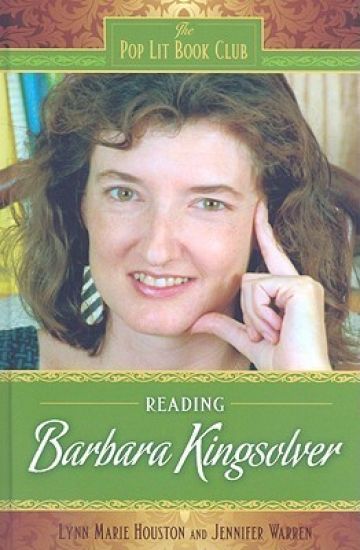
Reading Barbara Kingsolver

Reading Barbara Kingsolver

Lynn M. Houston; Jennifer Warren

Libraries Unlimited Inc
2009
sidottu
Best-selling author Barbara Kingsolver's life and works are explored in this comprehensive, unique reference guide. Ideal for book club members and essential for high school students, this valuable resource introduces the plot summaries as well as theme and character analysis for seven of Kingsolver's major works. Kingsolver's usual topics, primarily focusing on the working class, environmental issues, feminism, and Native American studies, are closely examined in relation to current events and contemporary popular culture. Also discussed are Kingsolver's presence on the Internet, as well as the media's reception of the author. Each chapter concludes with thought-provoking, analytical discussion questions, ideal for encouraging book club conversation as well as stimulating classroom discussion. The What Do I Read Next chapter will delight readers who enjoy Kingsolver's work. This guide is a must-have for public and high school library shelves! Best-selling author Barbara Kingsolver's life and works are explored in this comprehensive, unique reference guide. Ideal for book club members and essential for high school students, this valuable resource introduces the plot summaries as well as theme and character analysis for seven of Kingsolver's major works. Kingsolver's usual topics, primarily focusing on the working class, environmental issues, feminism, and Native American studies, are closely examined in relation to current events and contemporary popular culture. Also discussed are Kingsolver's presence on the Internet, as well as the media's reception of the author. Each chapter concludes with thought-provoking, analytical discussion questions, ideal for encouraging book club conversation as well as stimulating classroom discussion. The What Do I Read Next chapter will delight readers who enjoy Kingsolver's work. This guide is a must-have for public and high school library shelves!
Reading Joan Didion

Reading Joan Didion

Lynn M. Houston; William V. Lombardi

Libraries Unlimited Inc
2009
sidottu
This book is a compelling reference guide for book clubs on the work of Joan Didion, with summaries of her major works and discussion questions. Reading Joan Didion is the ideal way to enter this extraordinary and versatile author's world—a world that counts among its citizens burned-out hippies, cynical and delusional players in the film and music scene, and even members of the Charles Manson family. In addition to looking closely at major works of fiction, Reading Joan Didion also focuses on Didion the essayist, critic, and founding member of the New Journalism Movement, which uses fiction-like narrative techniques to go deeper into subjects that traditional objective reporting allows. Also covered is the rich screenwriting partnership of Didion and husband John Gregory Dunne, and the overwhelming late-career success of The Year of Magical Thinking, written in the aftermath of Dunne's shocking death and completed just before the author's daughter also passed away unexpectedly.
How do You Know it's God?

How do You Know it's God?

Lynn M. McChlery

SCM Press
2021
sidottu
Much of the conversation and concern of churches and of Christian individuals is centred around Christian discernment or knowing God’s leading in decision-making. The language we use around these moments is fluid, and often feels inadequate – ask someone how they ‘know’ what God might be saying in a given situation and they may well reach for the phrase ‘I just know’. In "How Do You Know it’s God?", Lynn McChlery draws on ethnographic research amongst those in different kinds of ‘discernment’ processes, along with theological, spiritural and psychological insights to try and understand this phenomenum of ‘insight’ – or ‘just knowing’. Challenging the perception that such intuition needs to be marginalised and removed from discernment conversations, McChlery suggests that instead intuition can and should be intentionally matured both individually and in communities; and that it can be verified, articulated and recorded in forms appropriate to its own mode of insight. It is a vital new contribution to the scholarship for all practical theologians researching ecclesiology, vocation, group dynamics in churches, and communal decision-making processes of any kind.
Teacher Written Commentary in Second Language Writing Classrooms

Teacher Written Commentary in Second Language Writing Classrooms

Lynn M. Goldstein

The University of Michigan Press
2005
nidottu
Although second language writing instructors know that providing effective written feedback is essential to any good composition course, beginning and seasoned teachers alike struggle with this challenging task. In Teacher Written Commentary in Second Language Writing Classrooms, Lynn M. Goldstein uses ample research and experiential evidence to explain both how and why teachers should comment on their students' writing assignments. Among the problems that Goldstein addresses are how to attend to the product without slighting the process, how to intervene in process without appropriating product, how to facilitate student comprehension and use of teacher feedback while promoting student independence, and how to respond efficiently while remaining attentive to individual student needs. While it may not necessarily reduce the time spent on commenting, the book will enable teachers and teachers-in-training to provide written commentary that will help their students to become stronger and more independent writers in English. This volume is the only source that contains such in-depth consideration of the issues and the range of practices within teacher written commentary and the only resource that focuses solely on issues of rhetoric and content in multilingual writing students' texts. Teachers and teacher educators will appreciate the Goldstein's thorough and well-grounded analysis. Lynn M. Goldstein is Professor, TESOL and Applied Linguistics, Monterey Institute of International Studies (CA).
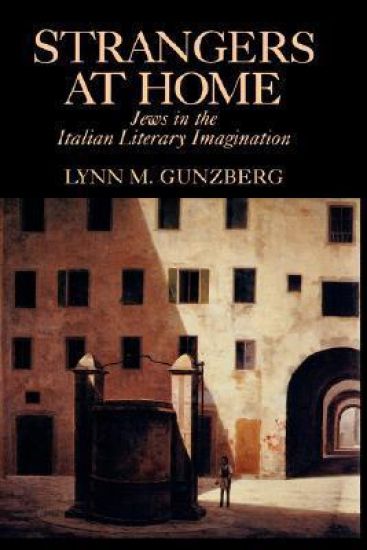
Strangers at Home

Strangers at Home

Lynn M. Gunzberg

University of California Press
1992
sidottu
Using popular literature as a window on Italian society and its values, Lynn Gunzberg explores the representation of Jews in novels and poetry written by non-Jews from the beginning of the Risorgimento in the early 1800s to the enactment of the Fascist racial laws in 1938. She shows how the literature of that period contradicts the popular belief that anti-Semitism simply did not exist in Italy until late in the Fascist period.
Community Participation in Health

Community Participation in Health

Lynn M. Morgan

Cambridge University Press
2006
pokkari
A guiding principle of international primary health care since the 1970s is contained in the slogan, 'community participation in health'. In practice, however, national and local political considerations are often decisive in the implementation of health policies. Dr Morgan shows how 'community participation' was sacrificed to competing political priorities even in Costa Rica, a country known for its dedication to health care. Focusing on a banana-growing community, she documents and analyses the process by which local health policy is politicized. Her sophisticated case study sets a detailed rural ethnography in both a national and international context. This book will be of great interest to medical anthropologists, planners, and anyone concerned with international health and development policy.