Kirjojen hintavertailu. Mukana 11 244 527 kirjaa ja 12 kauppaa.

Kirjahaku

Etsi kirjoja tekijän nimen, kirjan nimen tai ISBN:n perusteella.

1000 tulosta hakusanalla Manisha Gupta

Cofinally Complete Metric Spaces And Related Functions

Cofinally Complete Metric Spaces And Related Functions

Subiman Kundu; Manisha Aggarwal; Lipsy Gupta

WORLD SCIENTIFIC PUBLISHING CO PTE LTD
2023
sidottu
The monograph targets a huge variety of characterizations of cofinally complete metric spaces. These spaces are studied in terms of several properties of some classes of functions between metric spaces that are stronger than the continuous functions such as Cauchy-regular, uniformly continuous, strongly uniformly continuous, and various Lipschitz-type functions. There is one chapter that is dedicated to studying cofinally complete metric spaces in terms of hyperspace and function space topologies. Along with that, various characterizations are studied in terms of geometric functionals, sequences, Cantor-type conditions, etc. The study of such spaces is interesting as well as it has nice connections with various other branches of mathematics such as convex analysis, optimization theory, fixed point theory, functional analysis and approximation theory. But until now, there has been no textbook or research monograph which presents the entire theory of these spaces in a comprehensive way. The study of the aforesaid spaces and their variants is still a vibrant area of research, and many prominent researchers are working in this area.The book is targeted at researchers as well as graduate students interested in real functions, analysis on metric spaces, topology, and the aforementioned. Since the monograph often discusses various properties of Lipschitz-type functions, it would be of interest to people interested in PDEs as well.
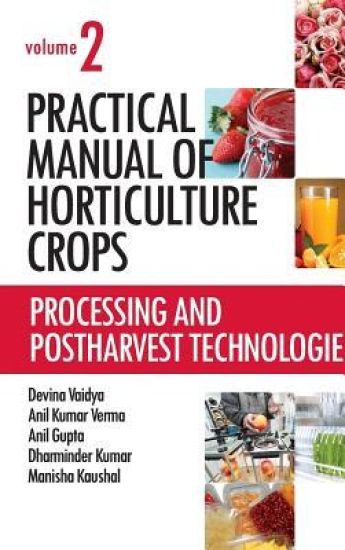
Practical Manual of Horticulture Crops: Vol.02

Practical Manual of Horticulture Crops: Vol.02

Devina Vaidya; Anil Kumar Verma; Anil Gupta; Dharminder Kumar; Manisha Kaushal

New India Publishing Agency
2015
nidottu
The book comprises a total of 15 chapters, each addressing a specific aspect of production technologies for horticulture crops. The first chapter delves into processing and post-harvest technologies and provides a comprehensive overview of the Indian processing industry as well as the current status of horticultural crops. This chapter also highlights the potential for growth in the processing industry. The second chapter focuses on the biology of horticulture crops and explores the biochemical and physiological changes associated with these commodities.The third chapter discusses maturity indices and harvesting practices for horticulture crops, covering concepts related to the life of a horticultural produce, maturity indices of fruits, vegetables, and floral crops, and harvesting practices. Chapters 4 through 7 then discuss preparation for market and transportation of horticulture produce, grading and packing of horticulture produce, post-harvest problems, and common disorders of horticultural crops, respectively.Chapter 8 focuses on quality evaluation criteria for horticultural crops, while chapter 9 delves into browning reactions. Chapters 10 through 12 describe carbohydrates, proteins, fats, and oils in the context of food. Chapter 13 is dedicated exclusively to post-harvest handling, storage, and processing of vegetables, while chapter 14 provides an overview of the evaluation of food. Finally, chapter 15 focuses on practical chemistry applications in postharvest technology.The authors of this book acknowledge that no publication can be considered perfect and welcome comments and suggestions for further improvement from readers.
Practical Manual of Horticulture Crops: Vol.02

Practical Manual of Horticulture Crops: Vol.02

Devina Vaidya; Anil Kumar Verma; Anil Gupta; Dharminder Kumar; Manisha Kaushal

New India Publishing Agency
2015
sidottu
The book under consideration comprises a total of 15 chapters, each focusing on a specific aspect of production technologies for horticultural crops. The first chapter provides a comprehensive introduction to the Indian processing industry, along with an overview of the status of horticultural crops in the country. Additionally, it highlights the prospects for the growth of the processing industry. The second chapter delves into the biology of horticultural crops, concentrating on the biochemical and physiological changes associated with these commodities. The third chapter discusses maturity indices and harvesting practices for horticultural crops, covering concepts related to the life of a horticultural produce, maturity indices of fruits, vegetables, and floral crops, and harvesting practices.Chapters four through seven focus on various aspects of preparing horticultural produce for market and transportation, grading and packing of horticultural produce, post-harvest problems, and common disorders of horticultural crops. The eighth chapter deals with quality evaluation criteria for horticultural crops, while the ninth chapter is centered on browning reactions. Chapters ten through twelve describe carbohydrates, proteins, fats, and oils in the context of food. Chapter thirteen is exclusively devoted to post-harvest handling, storage, and processing of vegetables, and chapter fourteen covers the evaluation of food. The final chapter focuses on practical chemistry applications in postharvest technology.It is essential to acknowledge that no book can be perfect, and the authors would appreciate any comments or suggestions for further improvement from readers.
Handbook of Research on Emerging Developments in Data Privacy
Data collection allows today’s businesses to cater to each customer’s individual needs and provides a necessary edge in a competitive market. However, any breach in confidentiality can cause serious consequences for both the consumer and the company.The Handbook of Research on Emerging Developments in Data Privacy brings together new ideas on how to deal with potential leaks of valuable customer information. Highlighting the legal aspects of identity protection, trust and security, and detection techniques, this comprehensive work is a valuable resource for any business, legal, or technology professional looking to improve information security within their organization.
Information Retrieval with Verbose Queries

Information Retrieval with Verbose Queries

Manish Gupta; Michael Bendersky

now publishers Inc
2015
nidottu
Information retrieval with verbose natural language queries has been generating a lot of interest in recent years. The focus of many novel search applications has shifted from short keyword queries to verbose queries. Examples include question answering systems and dialogue systems, voice search on mobile devices, and entity search engines like Facebook's Graph Search or Google's Knowledge Graph. However, the performance of textbook information retrieval techniques for such verbose queries is not as good as that for their shorter counterparts. Thus, effective handling of verbose queries has become a critical factor for adoption of information retrieval techniques in this new breed of search applications.Over the past decade, the information retrieval community has deeply explored the problem of transforming natural language verbose queries using operations like reduction, weighting, expansion, reformulation and segmentation into more effective structural representations.This is the first monograph to provide a coherent and organized survey on this topic. It puts together the various research pieces of the puzzle, provides a comprehensive and structured overview of diverse proposed methods, and lists several application scenarios where effective verbose query processing can make a significant difference.Information Retrieval with Verbose Queries is a very timely reference on this important topic. It is entirely based on previously published research and publicly available datasets and as such, it should prove useful for both practitioners and academic researchers interested in reproducing the reported results.
Outlier Detection for Temporal Data

Outlier Detection for Temporal Data

Manish Gupta; Jing Gao; Charu Aggarwal; Jiawei Han

Springer International Publishing AG
2014
nidottu
Outlier (or anomaly) detection is a very broad field which has been studied in the context of a large number of research areas like statistics, data mining, sensor networks, environmental science, distributed systems, spatio-temporal mining, etc. Initial research in outlier detection focused on time series-based outliers (in statistics). Since then, outlier detection has been studied on a large variety of data types including high-dimensional data, uncertain data, stream data, network data, time series data, spatial data, and spatio-temporal data. While there have been many tutorials and surveys for general outlier detection, we focus on outlier detection for temporal data in this book. A large number of applications generate temporal datasets. For example, in our everyday life, various kinds of records like credit, personnel, financial, judicial, medical, etc., are all temporal. This stresses the need for an organized and detailed study of outliers with respect to such temporal data.In the past decade, there has been a lot of research on various forms of temporal data including consecutive data snapshots, series of data snapshots and data streams. Besides the initial work on time series, researchers have focused on rich forms of data including multiple data streams, spatio-temporal data, network data, community distribution data, etc. Compared to general outlier detection, techniques for temporal outlier detection are very different. In this book, we will present an organized picture of both recent and past research in temporal outlier detection. We start with the basics and then ramp up the reader to the main ideas in state-of-the-art outlier detection techniques. We motivate the importance of temporal outlier detection and brief the challenges beyond usual outlier detection. Then, we list down a taxonomy of proposed techniques for temporal outlier detection. Such techniques broadly include statistical techniques (like AR models, Markov models, histograms, neuralnetworks), distance- and density-based approaches, grouping-based approaches (clustering, community detection), network-based approaches, and spatio-temporal outlier detection approaches. We summarize by presenting a wide collection of applications where temporal outlier detection techniques have been applied to discover interesting outliers. Table of Contents: Preface / Acknowledgments / Figure Credits / Introduction and Challenges / Outlier Detection for Time Series and Data Sequences / Outlier Detection for Data Streams / Outlier Detection for Distributed Data Streams / Outlier Detection for Spatio-Temporal Data / Outlier Detection for Temporal Network Data / Applications of Outlier Detection for Temporal Data / Conclusions and Research Directions / Bibliography / Authors' Biographies
Hassle-Free Business Setup in India

Hassle-Free Business Setup in India

Manish Gupta

Gullybaba Publishing House Pvt Ltd
2024
nidottu
Discover the potential of India's growing market with this practical guide for NRIs and foreign entrepreneurs. It offers clear strategies for navigating complex regulations, leveraging tax incentives, and managing approval processes. Designed to empower readers, this book provides the knowledge needed to seize opportunities and succeed in India's dynamic economy, contributing to its ambitious growth goals. With over 11 years of experience in India entry strategies and tax compliance, CA Manish Gupta has helped more than 300 global companies from 15+ countries navigate the complexities of the Indian market. As the founder of Manish Anil Gupta & Co. and an author of 150+ blogs, he is on a mission to help business owners and NRIs navigate the complexities of Indian taxation and compliance.
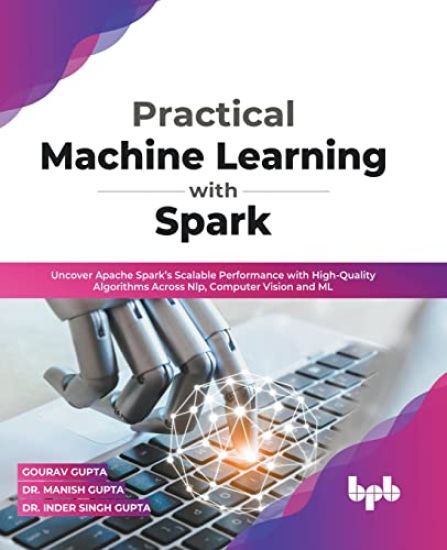
Building Applications with AI Agents

Building Applications with AI Agents

Manish Gupta

BPB PUBLICATIONS
2025
nidottu
The rapid evolution of large language models (LLMs) has led to the next major frontier: the AI agents. AI agents are software programs that leverage AI to learn, adapt, and perform tasks autonomously on behalf of users or other systems. Today, AI agents are transforming industries, increasing efficiency, and increasing innovation across business domains. This book provides practical steps for designing and building AI systems that deliver true intelligent automation. This book offers a comprehensive and practical guide to building effective AI agents for real-world LLM applications. It covers all essential topics: from the basics of AI, ML, and GenAI to agent architectures, core components, and design principles. Advanced concepts such as agentic AI frameworks, agentic design patterns, and multi-agent collaboration are also covered. The book also provides the best practices and step-by-step guides for implementing AI agents at scale. Business professionals will benefit from detailed case studies and applications in finance, healthcare, and e-commerce that demonstrate how AI agents are being applied across industries. This book further highlights key implementation challenges along with mitigation strategies related to deployment, building trust, and adoption of AI agents. By the end of this book, readers will be equipped to confidently design, build, and deploy robust, ethical, and scalable AI agents, acquiring industry-ready skills for the future of AI-driven automation. WHAT YOU WILL LEARN ● Understand AI agent fundamentals, workflows, and ML basics. ● Explore agentic AI frameworks and design principles. ● Learn core components with modern agentic design patterns. ● Master multi-agent system architectures and collaboration. ● Build autonomous AI agents with safety. ● Learn practical implementation of designing, deploying, and optimizing AI agents. WHO THIS BOOK IS FOR This book is for AI practitioners, developers, and business leaders seeking to design, build, and deploy effective AI agents for real-world applications. It is also useful for business leaders aiming to leverage AI agents to drive efficiency and gain a competitive advantage, along with tech enthusiasts interested in understanding how AI agents are revolutionizing business transformation and future trends.
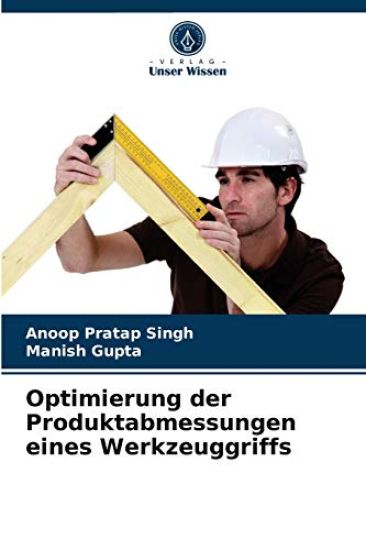
Optimierung der Produktabmessungen eines Werkzeuggriffs

Optimierung der Produktabmessungen eines Werkzeuggriffs

Anoop Pratap Singh; Manish Gupta

Verlag Unser Wissen
2021
pokkari
Der Einsatz von Handwerkzeugen wird in der Industrie auf verschiedenen Ebenen immer noch sehr gesch tzt. Die Anwendung von Handwerkzeugen variiert von einfachen Aufgaben wie H mmern bis hin zu komplizierten, komplexen und pr zisionsfordernden Aufgaben wie die von chirurgischen Skalpellen. Wenn ein Benutzer wiederholt und kontinuierlich mit einem ungeeigneten Werkzeuggriff arbeitet, kann er an einer kumulativen Traumaerkrankung (CTD) leiden, daher ist es sehr wichtig, den Werkzeuggriff so zu gestalten, dass er aus Sicht des Benutzers komfortabel ist. Das Ziel dieser Studie ist es, einen Werkzeuggriff mit maximaler Grip-Qualit t f r den Hammer im Falle eines Kraftgriffs zu entwerfen. Der Fokus dieser Studie ist haupts chlich darauf beschr nkt, die richtigen Querschnittsdurchmesser des Werkzeuggriffs zu identifizieren, basierend auf der Optimierung der Griffqualit tsfunktion mit Hilfe der Technik des Genetischen Algorithmus. Und eine Kreuzverifizierung der Ergebnisse wird auch durch subjektive Experimente einer Gruppe von Probanden durchgef hrt, um die ungef hre Dimension zu finden, die in der Komfortwahrnehmung der Probanden berragt. In dieser Studie soll ein neuer Weg zur Gestaltung eines Werkzeuggriffs vorgestellt werden.
Optimisation des dimensions du produit d'un manche d'outil

Optimisation des dimensions du produit d'un manche d'outil

Anoop Pratap Singh; Manish Gupta

Editions Notre Savoir
2021
pokkari
L'utilisation d'outils main est encore largement appr ci e dans les industries diff rents niveaux. L'application des outils main varie d'une t che simple comme le martelage des t ches compliqu es, complexes et exigeantes en pr cision comme celle des scalpels chirurgicaux. Si un utilisateur travaille de mani re r p t e et continue avec un manche d'outil mal con u, il peut souffrir de troubles traumatiques cumulatifs (TTC), d'o l'importance de concevoir un manche d'outil qui soit "confortable" pour l'utilisateur. L'objectif de cette tude est de concevoir un manche d'outil avec une qualit de pr hension maximale pour le marteau en cas de prise de force. L'objectif de cette tude se limite principalement identifier les bons diam tres de section transversale du manche de l'outil, en se basant sur l'optimisation de la fonction de qualit de la poign e l'aide de la technique de l'algorithme g n tique. Et une v rification crois e des r sultats est galement effectu e par l'exp rimentation subjective d'un groupe de sujets et de trouver la dimension approximative qui se d marque dans la perception du confort du sujet. Dans cette tude, une nouvelle fa on de concevoir un manche d'outil doit tre introduite.