

Kirjahaku
Etsi kirjoja tekijän nimen, kirjan nimen tai ISBN:n perusteella.
1000 tulosta hakusanalla Marcos Giusti

Marcos de empresa y de aplicación
Mohamed Fayad; David Hamu
Ediciones Nuestro Conocimiento
2022
nidottu

Marcos de pruebas de penetración para aplicaciones web y API
Devansh Gandhi; Rutvij Jhaveri
Ediciones Nuestro Conocimiento
2022
nidottu
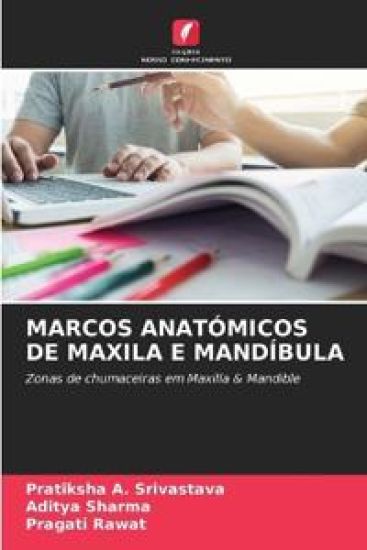
Marcos Anatómicos de Maxila E Mandíbula
Pratiksha A Srivastava; Aditya Sharma; Pragati Rawat
Edicoes Nosso Conhecimento
2023
pokkari
Este livro oferece uma explica o clara e simples sobre os marcos anat micos da maxila e da mand bula. Esta informa o d aos estudantes uma base s lida para conhecer e identificar os pontos de refer ncia que, por sua vez, fornece uma base para a continua o da medicina dent ria. Al m disso, a fim de criar uma pr tese completa correcta e de alta qualidade para o paciente, crucial aprender primeiro sobre a anatomia e fisiologia das estruturas sobre as quais ela tem de ser feita.

Marcos no desenvolvimento motor
Saheli Basu; Neerja Singh; Sharlin Ahmad
Edicoes Nosso Conhecimento
2023
pokkari
Uma etapa ou um acontecimento importante na evolu o de qualquer coisa designado por marco. Este estabelece um quadro de acompanhamento e de observa o do jovem ao longo do tempo. Cada crian a um indiv duo que se destaca sua maneira. As crian as que t m a mesma idade cronol gica podem apresentar varia es nas fases iniciais de diferentes estruturas biol gicas. As realiza es formativas s o algumas compet ncias ou ac es distintas que a maioria das crian as consegue realizar numa determinada idade. As etapas ajudam a definir o processo criativo de uma crian a. Cada crian a um indiv duo. As crian as s o capazes de realizar uma tarefa durante um longo per odo de tempo. O per odo de crescimento ao longo da inf ncia grande. Em todos os dom nios da sua vida, medida que passam da inf ncia para a maturidade, sofrem mudan as significativas.
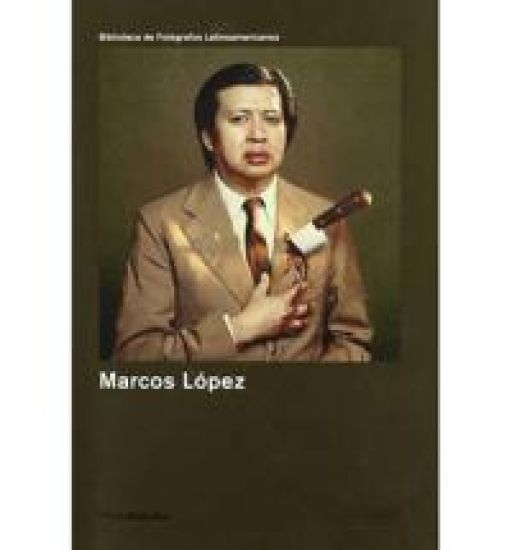
Marcos Lopez: PHotoBolsillo
La Fabrica
2011
nidottu
This title offers monographs on the most important Spanish, African and Latin American photographers. "The PhotoBolsillo" series is dedicated to publishing monographs on the most notable Spanish, African, and Latin American photographers of the recent past. Each small-format paperback features full-page, full-colour and black-and-white photographs representing the best of the artist's portfolio - each of which is captioned with title and year. Additionally there is a Chronology, plus lists of exhibitions and collections in which the photographer's work has been/is displayed, plus a brief appreciation of the artist by a "PhotoBolsillo" editor.

Marcos Kurtycz
Editorial PM
2019
sidottu
Marcos Kurtycz: An Art of Total Action Against the State of War surveys the multifaceted career of this Polish-born artist who relocated to Mexico in the late 1960s and whose work developed across different platforms, including graphic design, printmaking, painting, sculpture and action art and the incorporation of the body as an artistic tool.
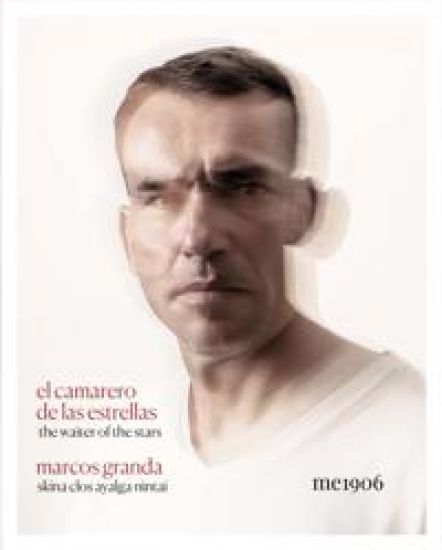
Marcos Granda, Skina, Clos, Ayalga, Nintai
Montagud Editores
nidottu

Marcos de protección de datos de India, Europa y EE.UU.
Hrishikesh Bedi
Ediciones Nuestro Conocimiento
2024
nidottu

Marcos financieros estratégicos
Manish Raval; Ashish Gorvadiya
Ediciones Nuestro Conocimiento
2024
nidottu

Marcos de Soft Computing para sistemas adaptativos e inteligentes
Ediciones Nuestro Conocimiento
2025
pokkari

El evangelio de Marcos sigue suscitando importantes cuestiones a los exegetas contempor neos que demuestran que, pese a ser uno de los escritos b blicos a los que m s atenci n se ha dedicado a lo largo de la historia, siempre ofrece nuevos interrogantes.Este estudio aborda en profundidad el cap tulo 13 del evangelio, que recoge el nico gran discurso ininterrumpido de Jes s que hay en la obra. Se pregunta por los motivos concretos de su ubicaci n, antesala del relato de la pasi n, y, sobre todo, por su relaci n con el contexto hist rico de sus oyentes.Con ello se busca arrojar luz sobre el sentido originario del discurso y sobre c mo este pudo servir de clave hermen utica para el conjunto del evangelio. A partir de ello se analiza la propuesta de vida que el evangelio de Marcos present a su audiencia para afrontar la crisis que ocasion en su seno la primera guerra jud a.
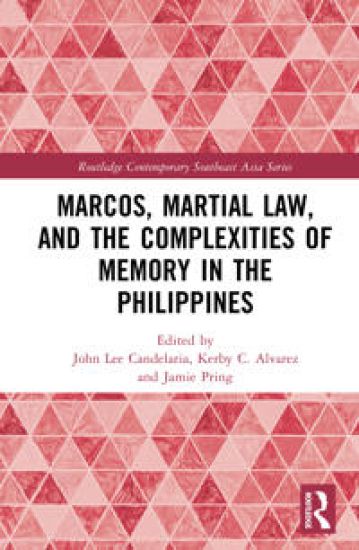
Marcos, Martial Law, and the Complexities of Memory in the Philippines
TAYLOR FRANCIS LTD
2026
sidottu
Marcos, Martial Law, and the Complexities of Memory in the Philippines examines the complex role of memory in the climax of the Marcos resurgence in 2022. This comprehensive volume features eleven empirical chapters analyzing diverse sites where memories of dictatorship are constructed and contested: war memorials embedding fabricated heroism, museums preserving counter-narratives, textbooks sanitizing authoritarian violence, and social media platforms circulating nostalgic mythologies.The collection explores memory as a dynamic battlefield across five dimensions: its active social nature, material and institutional grounding, multidirectional flows between communities, digital transformation patterns, and the power relations determining which narratives achieve prominence. Contributors include emerging and established historians, heritage practitioners, sociologists, political scientists, and media scholars who conducted extensive fieldwork, archival research, and digital ethnography across the Philippines. Offering vital analytical tools for understanding authoritarian nostalgia, an explanation as to why documented atrocities fail to prevent political rehabilitation, and how digital platforms transform collective memory, this book provides actionable insights for strengthening democratic memory work globally. The book will serve scholars and students in Southeast Asian studies, memory studies, political science, and media studies, while engaging policymakers, educators, and civil society advocates.

Marcos metodológicos para la enseñanza de la Historia especializada
Ediciones Nuestro Conocimiento
2026
pokkari

Marcos (automobile)
OmniScriptum
2026
pokkari

Marcos Curiel
OmniScriptum
2026
pokkari

MARCOS ORGÁNICOS METÁLICOS
Ediciones Nuestro Conocimiento
2026
pokkari

Marcos anatómicos e cirurgia pré-protética
Edições Nosso Conhecimento
2026
nidottu
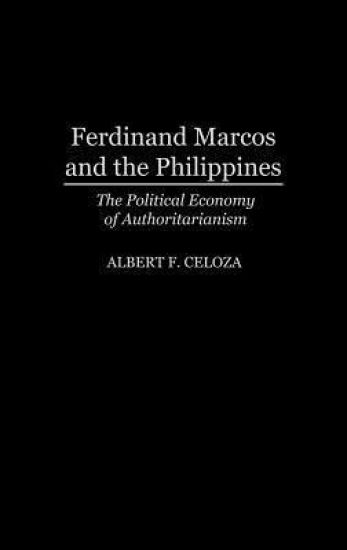
Ferdinand Marcos came to power in the Philippines in a coup détat in 1972 and ruled absolutely, in the name of order, until his dramatic overthrow in February of 1986. This study examines how the authoritarian regime of Marcos remained in power, sometimes in the face of massive opposition, for 14 years. Repressive regimes may seem undesirable, but they are often able to elicit the support of significant sectors of society. Marcos was able to maintain authoritarian rule through the support of bureaucrats, businessmen, and the military—all with the assistance of the United States government. He maintained this network of support through a patron-client system with a centralized bureaucracy as its power and resource base. In order to reward his supporters, he expanded the authority of government. But to minimize the political cost of expansion, he maintained the legal and constitutional forms of democracy. The Philippine experience in despotism is not unique; many Third World countries are under authoritarian rule. This subtle and nuanced analysis, therefore, provides an examination of the levers of power available to absolute rulers, to better understand the political economy of authoritarianism.

Subcommander Marcos made his debut on the world stage on January 1, 1994, the day the North American Free Trade Agreement took effect. At dawn, from a town-hall balcony he announced that the Zapatista Army of National Liberation had seized several towns in the Mexican state of Chiapas in rebellion against the government; by sunset Marcos was on his way to becoming the most famous guerrilla leader since Che Guevara. Subsequently, through a succession of interviews, communiqués, and public spectacles, the Subcommander emerged as a charismatic spokesperson for the indigenous Zapatista uprising and a rallying figure in the international anti-globalization movement.In this, the first English-language biography of Subcommander Marcos, Nick Henck describes the thought, leadership, and personality of this charismatic rebel spokesperson. He traces Marcos’s development from his provincial middle-class upbringing, through his academic career and immersion in the clandestine world of armed guerrillas, to his emergence as the iconic Subcommander. Henck reflects on what motivated an urbane university professor to reject a life of comfort in Mexico City in favor of one of hardship as a guerrilla in the mountainous jungles of Chiapas, and he examines how Marcos became a conduit through which impoverished indigenous Mexicans could communicate with the world.Henck fully explores both the rebel leader’s renowned media savvy and his equally important flexibility of mind. He shows how Marcos’s speeches and extensive writings demonstrate not only the Subcommander’s erudition but also his rejection of Marxist dogmatism. Finally, Henck contextualizes Marcos, locating him firmly within the Latin American guerrilla tradition.