Kirjojen hintavertailu. Mukana 11 699 587 kirjaa ja 12 kauppaa.

Kirjahaku

Etsi kirjoja tekijän nimen, kirjan nimen tai ISBN:n perusteella.

1000 tulosta hakusanalla Margaret

Margaret Macdonald and Analytic Philosophy in the 1930s

Margaret Macdonald and Analytic Philosophy in the 1930s

Michael Kremer; Cheryl Misak

Oxford University Press
2025
sidottu
This volume examines the important but, until recently, forgotten work of the British analytic philosopher Margaret Macdonald. Macdonald's career spanned one of the most significant and fascinating periods in the history of analytic philosophy: the pre-war London of Susan Stebbing as she advanced philosophical analysis; the Cambridge of Ludwig Wittgenstein as he lectured on his new practice-centred philosophy; the Oxford of Gilbert Ryle and ordinary language philosophy; and the post-war London of A.J. Ayer as he defended a version of logical positivism. In this predominantly male, elite world, Macdonald was an anomaly: a woman, abandoned as a child, raised by foster parents and in an orphanage, poor for much of her life. Remarkably, she made a highly respected academic life for herself. A talented philosopher, she was a major influence on Ryle, and one of those few who really understood Wittgenstein during the 1930s. She also helped found, and later edited, the journal Analysis, and was a serious scholar of C. S. Peirce, introducing his complex work to her British colleagues. Cheryl Misak and Michael Kremer provide a biographical essay, a transcription of a no-longer accessible paper on Peirce, an essay on Macdonald as a scholar of pragmatism, and an essay on her as a scholar of Wittgenstein. The centrepiece is a set of letters from Macdonald to Max Black, written between 1932 and 1937--a crucial time for the development of the analytic school, embracing Cambridge analysis, Viennese logical positivism, Oxford linguistic philosophy, and American pragmatism and neo-realisms. The letters shed light on the cultural, social, and political situation in Britain in the 1930s and its impact on academic life, revealing that, against the mighty obstacles stacked against them, some women in English philosophy before World War II were able to carve out paths as professional philosophers.
Margaret Storm Jameson

Margaret Storm Jameson

Jennifer Birkett

Oxford University Press
2009
sidottu
From her childhood in Whitby to her long old age in Cambridge, the life of Margaret Storm Jameson (1891-1986), novelist, autobiographer, and political activist, spanned almost the whole of the twentieth century. A self-styled Little Englander by nature, and European by nurture, equally at home, or out of place, in the North Yorkshire moors and seascape of her birth, metropolitan London, rural France, and the capitals of Central Europe, she wrote of country, cities and the exile from both with equal knowledge and sympathy. Out of the changing landscapes of her present, she fashioned her vision of the future. The title of her autobiography, Journey from the North, is a simultaneous evocation and erasure of nostalgia for lost commonality, and in her long life as writer and activist, President of wartime PEN (the association of Poets, Essayist, Novelists) committed to the values of freedom and social justice, she fought to reconcile the conflicting forms of emergent modernity. Her own journey is the generic experience of twentieth-century Britain, and the England she urges on her contemporaries is one that shares the life and mind of Europe. The present book traces the history of that shared experience. It recovers, through her writing, the aspirations and the disappointments of the generation of socialists that was Class 1914. The soldiers returning from the front in 1918, to unemployment and the General Strike of 1926, fight in 1940 alongside Frenchmen, and against Germans, who are victims of the same system: class conflict, nationalist rivalries, imperialist ambition, all for Jameson have the same defining economic horizon. At the end of the odyssey the stark alternatives take shape: Washington or Moscow, the madness of American capitalism, or the oppression of Stalinist Communism. Alongside the narrative of Jameson's life, and the experiences as daughter, wife, and mother that shaped her personality and her career, the book explores her concern with issues of culture and society, cultural memory, and cultural landscapes, her fascination with aesthetic form and the relation of writing to politics, her insight into the materiality of words, and her persistent probing of the nature of the writing subject. It draws on unpublished archive material and brings new research on neglected areas of cultural history into conjunction with literary-critical analyses of Jameson's novels and studies of her journalism and essays. There is an extensive Bibliography of her work.
Margaret Mead, Gregory Bateson, and Highland Bali

Margaret Mead, Gregory Bateson, and Highland Bali

Gerald Sullivan

University of Chicago Press
1999
sidottu
In 1936 anthropologist Margaret Mead and her husband, Gregory Bateson, retreated from lowland Bali, which was the focal point of much scholarly and tourist activity, to the remote village of Bayung Gede in the island's central highlands. Although they wrote relatively little about their work in this place, which Mead called "our village, way up in the mountains, a lovely self-contained village", they did leave behind a photographic record of their time there. This text includes 200 photographs that the couple took between 1936 and 1939. They capture the everyday lives of the men, women and children of Bayung Gede, their homes and their temples, and many other details of village life. In an introductory essay, Gerald Sullivan, who selected the photographs, uses excerpts from fieldnotes and correspondence to illuminate Mead and Bateson's ethnographic work. Tracing the project from its inception in their proposals to the publication of their work, Sullivan shows how they used the photographs both as fieldnotes and as elements in their theoretical argument. Finally, he explores what the photographs reveal - independently of Mead and Bateson's project - about the Balinese character to the contemporary viewer. The result is a contribution to visual anthropology and a supplement to the published works of Margaret Mead and Gregory Bateson.
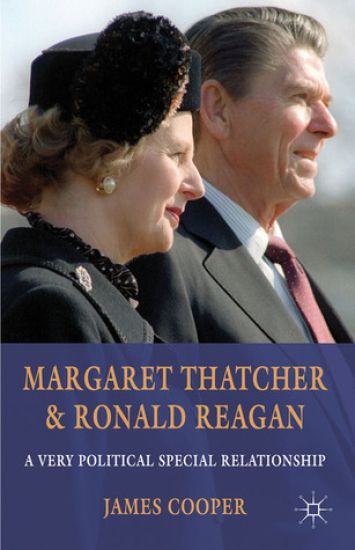
Margaret Thatcher and Ronald Reagan

Margaret Thatcher and Ronald Reagan

J. Cooper

Palgrave Macmillan
2012
sidottu
A new exploration of the relationship between the Margaret Thatcher and Ronald Reagan administrations in domestic policy. Using recently released documentary material and extensive research interviews, James Cooper demonstrates how specific policy transfer between these 'political soul mates' was more limited than is typically assumed.
Margaret Paston’s Piety

Margaret Paston’s Piety

J. Rosenthal

Palgrave Macmillan
2010
sidottu
Drawing on a close reading of nearly forty years' worth of personal letters and her will, and incorporating new archival material, Margaret Paston emerges from this study as the best example we have of how lay piety was negotiated and integrated into daily medieval life.
Margaret Fuller, Critic

Margaret Fuller, Critic

Columbia University Press
2000
sidottu
Ardent feminist, leader of the transcendentalist movement, participant in the European revolutions of 1848-49, and an inspiration for Zenobia in Hawthorne's Blithedale Romance and the caricature Miranda in James Russell Lowell's Fable for Critics, Margaret Fuller was one of the most influential personalities of her day. Though a plethora of critical writings, biographies, and bibliographies on Fuller have been available-as well as her three published books, European dispatches, and editions of her letters and journals-until now there has been no complete, reliable edition of her writings from the New-York Tribune, where she was the first literary editor. Fuller wrote 250 articles for the Tribune, only 38 of which have been reprinted in modern editions; this book makes this significant portion of her writings available to the public for the first time. Judith Mattson Bean and Joel Myerson have assembled a selection of Fuller's essays and reviews on American and British literature, music, culture and politics, and art. The accompanying fully annotated, searchable CD-ROM contains all of Fuller's New-York Tribune writings.
Margaret Thatcher

Margaret Thatcher

Charles Moore

Allen Lane
2019
sidottu
Shortlisted for the 2020 ORWELL PRIZE FOR POLITICAL WRITINGThe final part of Charles Moore's bestselling and definitive biography of Britain's first female Prime Minister, 'One of the great biographical achievements of our times' (Sunday Times)A TIMES, SUNDAY TIMES, FINANCIAL TIMES, SPECTATOR, TELEGRAPH, IRISH TIMES, NEW STATESMAN AND SPECTATOR BOOK OF THE YEARHow did Margaret Thatcher change and divide Britain? How did her model of combative female leadership help shape the way we live now? How did the woman who won the Cold War and three general elections in succession find herself pushed out by her own MPs?Charles Moore's full account, based on unique access to Margaret Thatcher herself, her papers and her closest associates, tells the story of her last period in office, her combative retirement and the controversy that surrounded her even in death. It includes the Fall of the Berlin Wall which she had fought for and the rise of the modern EU which she feared. It lays bare her growing quarrels with colleagues and reveals the truth about her political assassination.Moore's three-part biography of Britain's most important peacetime prime minister paints an intimate political and personal portrait of the victories and defeats, the iron will but surprising vulnerability of the woman who dominated in an age of male power. This is the full, enthralling story.
Margaret Thatcher

Margaret Thatcher

Charles Moore

PENGUIN BOOKS LTD
2021
sidottu
Not For Turning is the first volume of Charles Moore's authorized biography of Margaret Thatcher, the longest serving Prime Minister of the twentieth century and one of the most influential political figures of the postwar era.Charles Moore's biography of Margaret Thatcher, published after her death on 8 April 2013, immediately supersedes all earlier books written about her. At the moment when she becomes a historical figure, this book also makes her into a three dimensional one for the first time. It gives unparalleled insight into her early life and formation, especially through her extensive correspondence with her sister, which Moore is the first author to draw on. It recreates brilliantly the atmosphere of British politics as she was making her way, and takes her up to what was arguably the zenith of her power, victory in the Falklands. (This volume ends with the Falklands Dinner in Downing Street in November 1982.) Moore is clearly an admirer of his subject, but he does not shy away from criticising her or identifying weaknesses and mistakes where he feels it is justified. Based on unrestricted access to all Lady Thatcher's papers, unpublished interviews with her and all her major colleagues, this is the indispensable, fully rounded portrait of a towering figure of our times.
Margaret Thatcher

Margaret Thatcher

Charles Moore

PENGUIN BOOKS LTD
2021
sidottu
The sensational second volume of Charles Moore's bestselling authorized biography of the Iron LadyIn June 1983 Margaret Thatcher won the biggest increase in a government's Parliamentary majority in British electoral history. Over the next four years, as Charles Moore relates in this central volume of his uniquely authoritative biography, Britain's first woman prime minister changed the course of her country's history and that of the world, often by sheer force of will.The book reveals as never before how she faced down the Miners' Strike, transformed relations with Europe, privatized the commanding heights of British industry and continued the reinvigoration of the British economy. It describes her role on the world stage with dramatic immediacy, identifying Mikhail Gorbachev as 'a man to do business with' before he became leader of the Soviet Union, and then persistently pushing him and Ronald Reagan, her great ideological soulmate, to order world affairs according to her vision. For the only time since Churchill, she ensured that Britain had a central place in dealings between the superpowers.But even at her zenith she was beset by difficulties. The beloved Reagan two-timed her during the US invasion of Grenada. She lost the minister to whom she was personally closest to scandal and almost had to resign as a result of the Westland affair. She found herself isolated within her own government over Europe. She was at odds with the Queen over the Commonwealth and South Africa. She bullied senior colleagues and she set in motion the poll tax. Both these last would later return to wound her, fatally.In all this, Charles Moore has had unprecedented access to all Mrs Thatcher's private and government papers. The participants in the events described have been so frank in interview that we feel we are eavesdropping on their conversations as they pass. We look over Mrs Thatcher's shoulder as she vigorously annotates documents, so seeing her views on many particular issues in detail, and we understand for the first time how closely she relied on a handful of trusted advisors to help shape her views and carry out her will. We see her as a public performer, an often anxious mother, a workaholic and the first woman in western democratic history who truly came to dominate her country in her time.In the early hours of 12 October 1984, during the Conservative party conference in Brighton, the IRA attempted to assassinate her. She carried on within hours to give her leader's speech at the conference (and later went on to sign the Anglo-Irish agreement). One of her many left-wing critics, watching her that day, said 'I don't approve of her as Prime Minister, but by God she's a great tank commander.' This titanic figure, with all her capacities and all her flaws, storms from these pages as from no other book.
Margaret Thatcher

Margaret Thatcher

Charles Moore

PENGUIN BOOKS LTD
2025
sidottu
With unparalleled authority and dramatic detail, Charles Moore's definitive biography of Margaret Thatcher, now published in a single volume to mark the 100th anniversary of her birth, presents the whole history of the woman who transformed Britain and the world in the late twentieth century. With unique access to Thatcher’s private and governmental papers and extensive interviews with her, her family, and colleagues, Moore gives readers an unsurpassed portrait of her life.From her early years and rise to power, through her transformative tenure as Prime Minister, to her final days, this biography illuminates the complexities of Thatcher’s character – her determination, boldness, and the challenges she faced as a woman in a male-dominated political world. Moore brilliantly conveys her pivotal role on the world stage, her battles at home, and the dramatic events leading to her resignation.This edition combines the insights of the original three volumes, providing a comprehensive portrait of one of the most influential figures of her age, whose impact has lasted well into our own.
The Selected Papers of Margaret Sanger, Volume 2

The Selected Papers of Margaret Sanger, Volume 2

Margaret Sanger

University of Illinois Press
2007
sidottu
The birth control crusader, feminist, and reformer Margaret Sanger was one of the most controversial and dynamic figures of the twentieth century. Volume 2 chronicles Sanger’s efforts during the Depression years to legalize contraception. These significant and engaging letters and writings, constructed to be read as biography, tell the story of Sanger’s frank discussion of birth control before an uneasy Congress, her quest for a judicial test case, and her ongoing public relations campaign in the face of powerful opposition from the Catholic Church, to convince Americans about the benefits of birth control. Volume 2 also documents Sanger’s complicated personal life, her unstable marriage, loss of wealth, and love affairs in middle age. Required reading for anyone interested in the emergence of planned parenthood and the life of its extraordinary leader.
The Selected Papers of Margaret Sanger, Volume 3

The Selected Papers of Margaret Sanger, Volume 3

Margaret Sanger

University of Illinois Press
2010
sidottu
Birth control crusader, feminist, and reformer Margaret Sanger was one of the most controversial and dynamic figures of the twentieth century and one of the great women reformers in history. Volume 3: The Politics of Planned Parenthood, 1939–1966 of The Selected Papers of Margaret Sanger highlights Sanger's quest for the "magic pill," the non-barrier method of birth control she had envisioned since the early 1930s. These lively and fascinating letters and other writings tell the story of Sanger's consequential collaboration with the philanthropist Katharine Dexter McCormick and their masterful direction of scientists, physicians, and birth control bureaucrats toward the production of the first contraceptive pill--the catalyst for the sexual revolution. Volume 3 also chronicles Sanger's attempt to guide the American birth control movement during World War II and its immediate aftermath, when many were calling for increased fertility, not family planning. And it documents her controversial efforts to expand birth control services to African Americans in the rural South and to incorporate contraceptive health care into state and federal public health programs. All the while she was engaged in a contentious battle with the leadership of the Planned Parenthood Federation of America over the direction of the movement, with Sanger pushing to revive a feminist rationale for birth control and to emphasize the needs of the poor, and the Federation looking to extend its services beyond contraception and to encourage middle-class childbearing. Constructed to be read as the last chapter of her domestic biography, this volume documents the final turbulent decades of a remarkable life and includes important material on the efforts of biographers, film makers, journalists such as the young Mike Wallace, and Sanger herself, to assess her motivations and affirm her pivotal role in the history of reproductive rights. As with volumes 1 and 2, the documents assembled here, more than eighty-four percent of them letters, were culled from the Margaret Sanger Papers Microfilm Edition, edited by Esther Katz, Cathy Moran Hajo, and Peter C. Engelman. Volume 4 will cover Sanger's international work in the birth control struggle.
The Selected Papers of Margaret Sanger, Volume 4

The Selected Papers of Margaret Sanger, Volume 4

Margaret Sanger

University of Illinois Press
2016
sidottu
When Margaret Sanger returned to Europe in 1920, World War I had altered the social landscape as dramatically as it had the map of Europe. Population concerns, sexuality, venereal disease, and contraceptive use had entered public discussion, and Sanger's birth control message found receptive audiences around the world. This volume focuses on Sanger from her groundbreaking overseas advocacy during the interwar years through her postwar role in creating the International Planned Parenthood Federation. The documents reconstruct Sanger's dramatic birth control advocacy tours through early 1920s Germany, Japan, and China in the midst of significant government and religious opposition to her ideas. They also trace her tireless efforts to build a global movement through international conferences and tours. Letters, journal entries, writings, and other records reveal Sanger's contentious dealings with other activists, her correspondence with the likes of Albert Einstein and Eleanor Roosevelt, and Sanger's own dramatic evolution from gritty grassroots activist to postwar power broker and diplomat.A powerful documentary history of a transformative twentieth-century figure, The Selected Papers of Margaret Sanger, Volume 4 is a primer for the debates on individual choice, sex education, and planned parenthood that remain all-too-pertinent in our own time.
The Selected Papers of Margaret Sanger, Volume 1

The Selected Papers of Margaret Sanger, Volume 1

Margaret Sanger

University of Illinois Press
2007
nidottu
The birth control crusader, feminist, and reformer Margaret Sanger was one of the most controversial and compelling figures in the twentieth century. The Selected Papers of Margaret Sanger, Volume 1 is composed of Sanger’s letters, diaries, journals, articles, and speeches, most of which have not appeared previously in print. Now in paperback, the book documents the critical phases and influences of an American feminist icon and offers rare glimpses into her working-class childhood, burgeoning feminism, spiritual and scientific interests, sexual explorations, and diverse roles as wife, mother, lover, nurse, journalist, radical socialist, and activist.
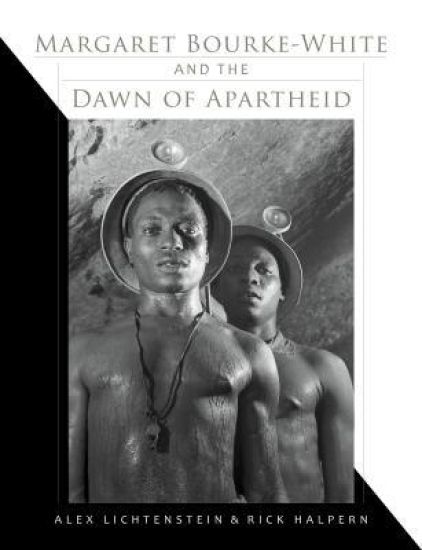
Margaret Bourke-White and the Dawn of Apartheid

Margaret Bourke-White and the Dawn of Apartheid

Alex Lichtenstein; Rick Halpern

Indiana University Press
2016
sidottu
As a photographer for Life and Fortune magazines, Margaret Bourke-White traveled to Russia in the 1930s, photographed the Nazi takeover of Czechoslovakia in 1938, and recorded the liberation of Buchenwald at the end of WWII. In 1949, Life sent her to South Africa to take photographs in a country that was becoming racially polarized by white minority rule. Life published two photo-essays highlighting Bourke-White's photographs, but much of her South African work remained unpublished until now. Here, these stunning photographs collected by Alex Lichtenstein and Rick Halpern offer an unparalleled visual record of white domination in South Africa during the early days of apartheid. In addition to these powerful and historically significant photographs, Lichtenstein and Halpern include two essays that explore Bourke-White's artistic and political formation and provide background material about the cultural, political, and economic circumstances that produced the rise and triumph of Afrikaner nationalism in South Africa. This richly illustrated book brings to light a large body of photography from a major American photographer and offers a compelling history of a reprehensible system of racial conflict and social control that Bourke-White took such pains to document.
Margaret Thatcher

Margaret Thatcher

Bruce Geelhoed

Praeger Publishers Inc
1992
sidottu
This volume studies Margaret Thatcher and her influence on British politics with the American reader in mind. E. Bruce Geelhoed interprets Thatcher's strengths and weaknesses as a political leader and analyzes the important trends in modern British politics. Drawing on the author's own experience as an expatriate eyewitness to the latter part of the Thatcher era, interviews with numerous British scholars and political observers, and a thorough examination of relevant published sources on the Thatcher years, this book provides an unique analysis of this extraordinary woman's leadership and the closing years of her era. Scholars and general readers in modern British history and politics will find this fascinating reading, both for its chronicle of the latter Thatcher years and its insightful analysis of that prime minister's strengths and weakness, accomplishments and failures.
Margaret Fuller

Margaret Fuller

Lester K. Little

University of Wisconsin Press
2007
sidottu
Margaret Fuller (1810-1850), a pioneering gender theorist, transcendentalist, journalist, and literary critic, was one of the most well-known and highly regarded feminist intellectuals of nineteenth-century America. With her contemporaries Ralph Waldo Emerson and Henry David Thoreau, she was one of the predominant writers of the Transcendentalist movement, and she aligned herself in both her public and private life with the European revolutionary fervor of the 1840s. She traveled to Italy as a foreign correspondent for the New York Tribune to cover the nascent revolutions, pursuing the transnational ideal awakened in her youth by a classical education in European languages and a Romantic curiosity about other cultures, traditions, and identities. This volume is a collaboration of international scholars who, from varied fields and approaches, assess Fuller's genius and character. Treating the last several years of Margaret Fuller's short life, these essays offer a truly international discussion of Fuller's unique cultural, political, and personal achievements. From the origins and articulations of Fuller's cosmopolitanism to her examination of ""the woman question,"" and from her fascination with the European ""other"" to her candid perception of imperial America from abroad, they ponder what such an extraordinary woman meant to America, and also to Italy and Europe, during her lifetime and continuing to the present.
Margaret Thatcher

Margaret Thatcher

Faysal Mikdadi

Greenwood Press
1993
sidottu
Margaret Thatcher unalterably changed the face of Britain. This volume, the first book-length bibliography on Thatcher, will help the researcher to evaluate her impact. The volume opens with a brief biography, which includes coverage of Thatcher's monetary and social market policies, her special relationship with Ronald Reagan, her foreign and domestic policies, and her attitudes toward women and equal opportunity issues. The bibliography, which comprises the bulk of the book, provides a comprehensive guide to works on Thatcher's life and career. Entries are annotated except when a title is self-explanatory. Coverage is devoted primarily to English-language materials. The book includes full indexes. The book will be an important aide for all scholars, researchers, and students concerned with British politics.
Margaret Webster

Margaret Webster

Milly S. Barranger

Greenwood Press
1994
sidottu
Margaret Webster presided over many firsts in the American theater. She was the first woman to direct Shakespearean plays on Broadway, she was one of the founders of the American Repertory Theatre, she was active in the beginning of the Off-Broadway movement, and she wrote an assortment of articles, speeches, memoirs, and autobiographies. This reference provides an overview of her life and a detailed record of her many accomplishments in 20th-century American theater. The volume begins with a biographical essay that discusses her life and career. A chronology then highlights the most significant events in her career. The sections that follow list her many productions for the stage and opera, and provide detailed information about them. A discography is also included, followed by lists of Webster's awards and honors, and a description of the various archives that hold information about her. An extensive annotated bibliography concludes the work.