Seers featured prominently in ancient Greek culture, but they rarely appear in colonial discourse from the archaic and classical periods. Margaret Foster exposes the ideological motivations behind this discrepancy and reveals how colonial discourse's privileging of the city's founder and his dependence on Delphi, the colonial oracle par excellence, entails a corresponding suppression of the seer. Foster explains why the seer's authority conflicts with that of the founder and investigates a sequence of literary works from a range of genres that showcase this dynamic. The first study to analyze the seer and the Delphi-sanctioned founder relationally, this volume illuminates the contests between religious and political powers in archaic and classical Greece.
Seers featured prominently in ancient Greek culture, but they rarely appear in archaic and classical colonial discourse. Margaret Foster exposes the ideological motivations behind this discrepancy and reveals how colonial discourse privileged the city’s founder and his dependence on Delphi, the colonial oracle par excellence, at the expense of the independent seer. Investigating a sequence of literary texts, Foster explores the tactics the Greeks devised both to leverage and suppress the extraordinary cultural capital of seers. The first cultural history of the seer, The Seer and the City illuminates the contests between religious and political powers in archaic and classical Greece.
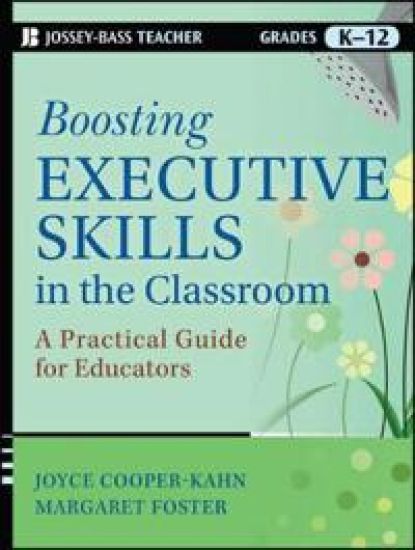
A guide for helping students with weak Executive Function skills to learn efficiently and effectively Students with weak Executive Function skills need strong support and specific strategies to help them learn in an efficient manner, demonstrate what they know, and manage the daily demands of school. This book shows teachers how to do exactly that, while also managing the ebb and flow of their broader classroom needs. From the author of the bestselling parenting book Late, Lost, and Unprepared, comes a compilation of the most practical tools and strategies, designed to be equally useful for children with EF problems as well as all other students in the general education classroom. Rooted in solid research and classroom-tested experience, the book is organized to help teachers negotiate the very fluid challenges they face every day; educators will find strategies that improve their classroom "flow" and reduce the stress of struggling to teach students with EF weaknesses. Includes proven strategies for teachers who must address the needs of students with Executive Function deficitsContains information from noted experts Joyce Cooper-Kahn, a child psychologist and Margaret Foster, an educator and learning specialistOffers ways to extend learning and support strategies beyond the classroomThe book's reproducible forms and handouts are available for free download This important book offers teachers specific strategies to help students with EF deficits learn in an efficient manner, demonstrate what they know, and manage the daily demands of school.
"Night Time Shadows: Patrick's Story" Taking twelve years in the living and three years in the writing, Night Time Shadows "Patrick's Story" is a poignant yet often humorous account of one man's struggle with growing older under the cloud of Parkinson's disease; and just like the disease itself, there is a progression that reveals how really unprepared, as individuals, society in general and our care system, we are for the future. As the pages unfold and the chapters divulge, beginning slowly and almost unpredictably, Parkinson's creeps up on an unsuspecting individual, and just like the effects of growing old the symptoms are unsettling and often mistaken or misunderstood. However, this is not a story of doom and gloom. Throughout, there is a sense of optimism, and Patrick's Irish wit portrays a real love of life and a determination to make the most of his situation, as he recalls the diverse dilemmas he and his family were faced with. Pulling no punches Night Time Shadows not only reflects on how some sections of the medical and social services, using compassion and empathy, were proactive in helping Patrick and his close family. It also exposes the often unnecessary thoughtlessness, and sometimes downright inconsiderate way in which Britain's health care system struggles to keep pace with the associated illnesses of old age; often creating more problems than they actually solve. Without fear or favour "Patrick's Story reveals how financial and political pressures on the National Health Service, imposed by successive governments, have produced a postcode lottery that puts immense pressure on all aspects of medical care. This places a tremendous strain on healthcare professionals, who in the main are dedicated to making their patients well again. Unfortunately, it was these pressures that were to be Patrick's undoing and at the end of "Patrick's Story", when the "Night Time Shadows" are finally gone forever, the author brings her own expertise to a final appendix. This examines in more depth the ramifications of her father's experiences and how, at a time when the western world is burdened with an ever aging population, the multiplicity of Patrick's needs may hold the key to the paradigm shift, which will be needed to encompass our own concerns about growing old, and society's inability to properly care for our elderly. Testimonials. I absolutely loved your book. It really gives an insight into what life is like for a person suffering with Parkinson's disease and, working within a care setting, I think it is easy to forget that sufferers of the disease can still have a life and a laugh. I also love the way you engage and interact with your dad and always try to see the funny side of things, even at times when you could otherwise get upset. Furthermore, I admire your honesty and love the way you don't try and paint yourself as a saint but instead you openly admit the times when you get angry and frustrated with your dad. I think your book sends out an important message that the diagnosis of Parkinson's disease does not have to be the end and sufferers can still enjoy life. Whilst at the same time portraying the difficulties carers and sufferers face, as even though you love and care for your dad and you have the support of a loving family, there is still not enough help and support available to carers and the pressures and strains of caring for a person with this disease can be overwhelming This book is a valuable and inspiring read and I hope to see it on the shelves soon. Claira Newton BSc (Hons). * Night Time Shadows is a well written account of her father's struggle with Parkinson's disease. Delivered in a very personal style, it is easy to read, being clear and to the point and it contains a strong message for anyone suffering with a long-term illness as well as for those caring for them. I thoroughly enjoyed reading the book which obviously came from the heart. Ann Frost. M A, Dipl
Sex addiction is a controversial subject for some, but the simple truth is that there are people who do self-destructive things related to sex that they feel they cannot control. When a person chooses to have sex with someone they find physically repulsive, it's difficult to argue that they didn't want to control their behavior. When someone masturbates so often they hurt themselves, it is clearly compulsive. My goal is not to persuade you that sex addiction is a bona fide disorder. I simply am here to tell my story. Monster or sick? You decide. A note about this book: I worked hard to keep this book short and succinct, especially for partners of sex addicts to hear my story. Is there more I could say? You bet. But in the interest of respecting your time, I asked myself whether a particular point was necessary, and if the answer was not a resounding "yes ", I cut it. I want you to know my story. I want this disease to come out into the light. A note about our children: Our children are growing up in an era where we cannot protect them. They are exposed to far too many things, far too early. The current crop of 40 year olds grew up in an era before the Internet. Despite this, many of today's 40-year-old sex addicts say that they started with the underwear models in JC Penney catalogs. Today, much more graphic images are easily available, and depict sex in a way that is entirely contradictory to healthy sexual intimacy. The most common age that sex addicts say their addiction began is 12 years old. I purposely did not restrict this book to the 18+ age group. If unhealthy behaviors start at age 12, adolescents need to learn to distinguish what is healthy and unhealthy before that. By age 18, most sex addicts have been "using" their drug of choice for many years. Sex addiction develops early in life, because it's in adolescence that we experiment with various coping mechanisms and our developing bodies. We do not have the luxury of waiting until our brains are more fully developed. Anorexia, bulimia, substance abuse, smoking, and porn use most commonly begin well before 18 years of age.
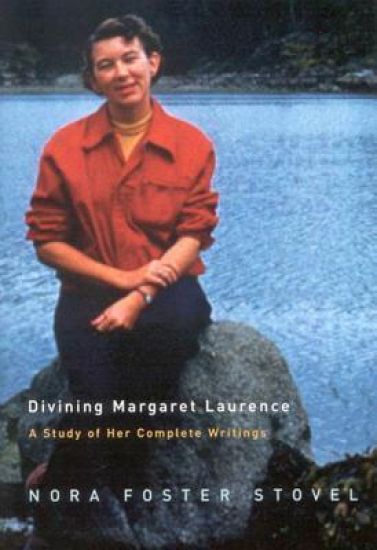
Margaret Laurence is justly famous for her Manawaka cycle of Canadian novels, but her work extends from Canada to Africa and includes poetry and prose, children's and adult literature, memoir and travel-writing.
Margaret Laurence is justly famous for her Manawaka cycle of Canadian novels, but her work extends from Canada to Africa and includes poetry and prose, children's and adult literature, memoir and travel-writing.