
Kirjahaku
Etsi kirjoja tekijän nimen, kirjan nimen tai ISBN:n perusteella.
1000 tulosta hakusanalla Margit Resch

Optimistic Aging: From Midlife to the Good Life, an Action Plan
Margit Cox Henderson
Resilient Publications
2014
nidottu
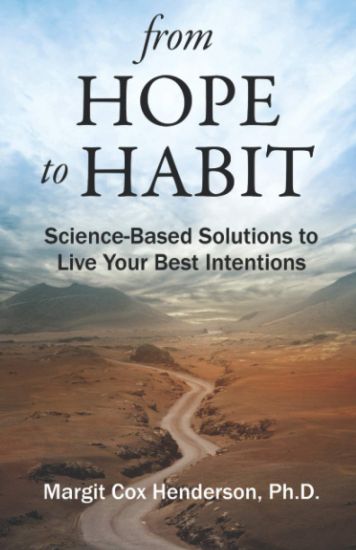
Habits happen. The question iswill you choose your habits, or will your habits choose you?Your brain is a habit-forming machine. The problem is unhealthy habits are much easier to make-and harder to break-than healthy ones. But once you learn the science of creating lasting change, you'll be empowered to take charge of your life by owning your habits.This book maps out the Action-Ability Approach and guides you on your journey from hope to habit. You will learn how to: - Exit the loop between hope and disappointment.- Identify and get around obstacles on your journey toward change.- Handle setbacks with kindness and determination to quickly get back on track.- Map out a personalized path that works for your specific resolution, situation and personality.- Create lasting change for your health, relationships, finances and work.Use this accessible guide to chart your course to effective action and begin living your best intentions today



Meet The Devil Spinners: edge-dwellers, poets and lovable scoundrels who bluster, blunder and bellow their way to redemption-or not-between stops at Crawley's Pub. Each faces a moment of life-bafflement, brief or prolonged, that finds resolution through a shift in perception, an unexpected intervention, a kind word, or in one case, an insect. The stories are set on the B.C. coast in an indeterminate era when screens, though present, have not yet dominated every public place. At Crawley's, live conversation rules and a haphazard harmony prevails as bartender Gabe and her co-workers serve a ragtag assortment of neighbourhood regulars. Over the course of fifteen stories, we find Mike the lawyer advising Sam the towboat man on his faulty DUI charge, Haley the musician describing to Gabe how a detour in his travels led to lessons in devil spinning, the mad Professor Weibel refereeing the Great Debate over the ethics of Dutch the Greek, and the hapless Fredrik being bullied by a beetle. At a table against the wall, Beets the poet ruminates on the tyrannies of self-awareness, while down the road, ex-server Erin hatches a wicked plot for severing ties with Edward... According to Haley, everyone is a devil spinner, though not every formula is freeing: "Sometimes we spin to make the needle skip, sometimes we spin for the comfort of the groove." Whether they favour the skips or the grooves, readers who appreciate a novel twist in a well-spun yarn, liberally laced with humour and heart, will find congenial company in The Devil Spinners.

Meet The Devil Spinners: edge-dwellers, poets and lovable scoundrels who bluster, blunder and bellow their way to redemption-or not-between stops at Crawley's Pub. Each faces a moment of life-bafflement, brief or prolonged, that finds resolution through a shift in perception, an unexpected intervention, a kind word, or in one case, an insect. The stories are set on the B.C. coast in an indeterminate era when screens, though present, have not yet dominated every public place. At Crawley's, live conversation rules and a haphazard harmony prevails as bartender Gabe and her co-workers serve a ragtag assortment of neighbourhood regulars. Over the course of fifteen stories, we find Mike the lawyer advising Sam the towboat man on his faulty DUI charge, Haley the musician describing to Gabe how a detour in his travels led to lessons in devil spinning, the mad Professor Weibel refereeing the Great Debate over the ethics of Dutch the Greek, and the hapless Fredrik being bullied by a beetle. At a table against the wall, Beets the poet ruminates on the tyrannies of self-awareness, while down the road, ex-server Erin hatches a wicked plot for severing ties with Edward... According to Haley, everyone is a devil spinner, though not every formula is freeing: "Sometimes we spin to make the needle skip, sometimes we spin for the comfort of the groove." Whether they favour the skips or the grooves, readers who appreciate a novel twist in a well-spun yarn, liberally laced with humour and heart, will find congenial company in The Devil Spinners.

Post-Communist Democracies and Party Organization
Margit Tavits
Cambridge University Press
2013
sidottu
Scholars of post-communist politics often argue that parties in new democracies lack strong organizations - sizable membership, local presence, and professional management - because they do not need them to win elections and they may hinder a party's flexibility and efficiency in office. Post-Communist Democracies and Party Organization explains why some political parties are better able than others to establish themselves in new democracies and why some excel at staying unified in parliament, whereas others remain dominated by individuals. Focusing on the democratic transitions in post-communist Europe from 1990 to 2010, Margit Tavits demonstrates that the successful establishment of a political party in a new democracy crucially depends on the strength of its organization. Yet not all parties invest in organization development. This book uses data from ten post-communist democracies, including detailed analysis of parties in the Czech Republic, Estonia, Hungary, and Poland.

Post-Communist Democracies and Party Organization
Margit Tavits
Cambridge University Press
2013
pokkari
Scholars of post-communist politics often argue that parties in new democracies lack strong organizations - sizable membership, local presence, and professional management - because they do not need them to win elections and they may hinder a party's flexibility and efficiency in office. Post-Communist Democracies and Party Organization explains why some political parties are better able than others to establish themselves in new democracies and why some excel at staying unified in parliament, whereas others remain dominated by individuals. Focusing on the democratic transitions in post-communist Europe from 1990 to 2010, Margit Tavits demonstrates that the successful establishment of a political party in a new democracy crucially depends on the strength of its organization. Yet not all parties invest in organization development. This book uses data from ten post-communist democracies, including detailed analysis of parties in the Czech Republic, Estonia, Hungary, and Poland.

A Clinician’s Guide to Acceptance-Based Approaches for Weight Concerns
Margit Berman
Routledge
2018
sidottu
This clinician manual presents the Accept Yourself! Program, which is derived from empirically supported interventions (including Acceptance and Commitment Therapy and Health At Every Size) that have a demonstrated ability to enhance women’s mental and physical health. This book offers a clear, research-based, and forgiving explanation for clients’ failure to lose weight, helpful guidance for clinicians who are frustrated with poor client weight loss outcomes, as well as a liberating invitation to clients to give up this struggle and find another way to achieve their dreams and goals.

A Clinician’s Guide to Acceptance-Based Approaches for Weight Concerns
Margit Berman
Routledge
2018
nidottu
This clinician manual presents the Accept Yourself! Program, which is derived from empirically supported interventions (including Acceptance and Commitment Therapy and Health At Every Size) that have a demonstrated ability to enhance women’s mental and physical health. This book offers a clear, research-based, and forgiving explanation for clients’ failure to lose weight, helpful guidance for clinicians who are frustrated with poor client weight loss outcomes, as well as a liberating invitation to clients to give up this struggle and find another way to achieve their dreams and goals.

This three-part workbook offers a concise and forgiving research- based guide to clients’ diffi cultieswith sustained weight loss. Part 1 is a review of your client’s previous efforts at weight control andimage change, as well as information and a review of research to help your client understand whyweight loss might not have worked in the past. Part 2 contains information and exercises to help yourclient develop a new acceptance of their body and their relationship with food, as well as tools todevelop mindfulness and self- compassion. Part 3 will help your client identify, experiment with, andcommit to values related to food, appearance, and other important areas of life, tackling troublesomemental and practical barriers along the way.

This three-part workbook offers a concise and forgiving research- based guide to clients’ diffi cultieswith sustained weight loss. Part 1 is a review of your client’s previous efforts at weight control andimage change, as well as information and a review of research to help your client understand whyweight loss might not have worked in the past. Part 2 contains information and exercises to help yourclient develop a new acceptance of their body and their relationship with food, as well as tools todevelop mindfulness and self- compassion. Part 3 will help your client identify, experiment with, andcommit to values related to food, appearance, and other important areas of life, tackling troublesomemental and practical barriers along the way.

Migrants have organized at all times and in all cities and places. The processes of their accommodation, however, differ, with local authorities and other state institutions playing an important role in these processes. Offering comprehensive empirical insights both from recent sites of immigration in Southern Europe, as well as from places of more established immigration in the north, this book examines the accommodation of migrant organizations in different cities and the factors that affect this process. It thus sheds light on the manner in which the interplay of immigration regime, national integration policy and local responses shape the differing patterns and trajectories observed in the formation and action of migrant organizations across Europe.

Mobile Citizenship addresses the crucial question of how mobility reconfigures citizenship. Engaging with debates on transnationalism, citizenship, and lifestyle migration, the book draws on ethnographic research and interview material collected among retired lifestyle migrants moving south from Germany to Turkey to explore the practices and narratives of these privileged migrants. Revealing the ways in which these migrants relate to their old homes and to their new places, the author examines the social, political, and spatial dimensions of citizenship and belonging and argues that citizenship is key to understanding the privileges of transnational lifestyles. By taking up discussions emanating from studies on other privileged lifestyle migrations—around social welfare and well-being, social participation, and affective belonging, as well as class and racialized privileges—the book exposes particular comparative value and showcases similarities and differences across this emerging type of migration. Mobile Citizenship thus shows how citizenship allows for mobility, resources, and privilege yet is also replete with limitations and ambivalences. The book brings together perspectives on citizenship, space, and privilege and will appeal to social scientists with interests in lifestyle migration and citizenship and their interconnections with global and social inequalities.

Migrants have organized at all times and in all cities and places. The processes of their accommodation, however, differ, with local authorities and other state institutions playing an important role in these processes. Offering comprehensive empirical insights both from recent sites of immigration in Southern Europe, as well as from places of more established immigration in the north, this book examines the accommodation of migrant organizations in different cities and the factors that affect this process. It thus sheds light on the manner in which the interplay of immigration regime, national integration policy and local responses shape the differing patterns and trajectories observed in the formation and action of migrant organizations across Europe.