Kirjojen hintavertailu. Mukana 11 244 527 kirjaa ja 12 kauppaa.

Kirjahaku

Etsi kirjoja tekijän nimen, kirjan nimen tai ISBN:n perusteella.

1000 tulosta hakusanalla Maria Edgeworth

Frank: A Sequel to Frank in Early Lessons- (1822). By: Maria Edgeworth (Volume 2). In two volume: Maria Edgeworth (1 January
Maria Edgeworth (1 January 1768 - 22 May 1849) was a prolific Anglo-Irish writer of adults' and children's literature. She was one of the first realist writers in children's literature and was a significant figure in the evolution of the novel in Europe. She held advanced views, for a woman of her time, on estate management, politics and education, and corresponded with some of the leading literary and economic writers, including Sir Walter Scott and David Ricardo. Early life: Maria Edgeworth was born at Black Bourton, Oxfordshire. She was the second child of Richard Lovell Edgeworth (who eventually fathered 22 children by four wives) and Anna Maria Edgeworth; Maria was thus an aunt of Francis Ysidro Edgeworth. She spent her early years with her mother's family in England, until her mother's death when Maria was five. When her father married his second wife Honora Sneyd in 1773, she went with him to his estate, Edgeworthstown, in County Longford, Ireland. Maria was sent to Mrs. Lattafi re's school in Derby after Honora fell ill in 1775. After Honora died in 1780 Maria's father married Honora's sister Elizabeth (then socially disapproved and legally forbidden from 1833 until the Deceased Wife's Sister's Marriage Act 1907). Maria transferred to Mrs. Devis's school in London. Her father's attention became fully focused on her in 1781 when she nearly lost her sight to an eye infection. Returning home at the age of 14, she took charge of her many younger siblings and was home-tutored in law, Irish economics and politics, science, and literature by her father. She also started her lifelong correspondences with learned men, mainly members of the Lunar Society. She became her father's assistant in managing the Edgeworthstown estate, which had become run-down during the family's 1777-1782 absence; she would live and write there for the rest of her life. With their bond strengthened, Maria and her father began a lifelong academic collaboration "of which she was the more able and nimble mind." Present at Edgeworthstown was an extended family, servants and tenants. She observed and recorded the details of daily Irish life, later drawing on this experience for her novels about the Irish. She also mixed with the Anglo-Irish gentry, particularly Kitty Pakenham (later the wife of Arthur Wellesley, 1st Duke of Wellington), Lady Moira, and her aunt Margaret Ruxton of Black Castle. Margaret supplied her with the novels of Anne Radcliffe and William Godwin and encouraged her in her writing. Though Maria Edgeworth spent most of her childhood in England, her life in Ireland had a profound impact on both her thinking and views surrounding her Irish culture. Fauske and Kaufman conclude, " She] used her fiction to address the inherent problems of acts delineated by religious, national, racial, class based, sexual, and gendered identities." Edgeworth used works such Castle Rackrent and Harrington to express her feelings on controversial issues.
Frank: A Sequel to Frank in Early Lessons- (1822). By: Maria Edgeworth (Complete set volume 1, and 2).: Maria Edgeworth (1 Ja
Maria Edgeworth (1 January 1768 - 22 May 1849) was a prolific Anglo-Irish writer of adults' and children's literature. She was one of the first realist writers in children's literature and was a significant figure in the evolution of the novel in Europe. She held advanced views, for a woman of her time, on estate management, politics and education, and corresponded with some of the leading literary and economic writers, including Sir Walter Scott and David Ricardo. Early life: Maria Edgeworth was born at Black Bourton, Oxfordshire. She was the second child of Richard Lovell Edgeworth (who eventually fathered 22 children by four wives) and Anna Maria Edgeworth; Maria was thus an aunt of Francis Ysidro Edgeworth. She spent her early years with her mother's family in England, until her mother's death when Maria was five. When her father married his second wife Honora Sneyd in 1773, she went with him to his estate, Edgeworthstown, in County Longford, Ireland. Maria was sent to Mrs. Lattafi re's school in Derby after Honora fell ill in 1775. After Honora died in 1780 Maria's father married Honora's sister Elizabeth (then socially disapproved and legally forbidden from 1833 until the Deceased Wife's Sister's Marriage Act 1907). Maria transferred to Mrs. Devis's school in London. Her father's attention became fully focused on her in 1781 when she nearly lost her sight to an eye infection. Returning home at the age of 14, she took charge of her many younger siblings and was home-tutored in law, Irish economics and politics, science, and literature by her father. She also started her lifelong correspondences with learned men, mainly members of the Lunar Society. She became her father's assistant in managing the Edgeworthstown estate, which had become run-down during the family's 1777-1782 absence; she would live and write there for the rest of her life. With their bond strengthened, Maria and her father began a lifelong academic collaboration "of which she was the more able and nimble mind." Present at Edgeworthstown was an extended family, servants and tenants. She observed and recorded the details of daily Irish life, later drawing on this experience for her novels about the Irish. She also mixed with the Anglo-Irish gentry, particularly Kitty Pakenham (later the wife of Arthur Wellesley, 1st Duke of Wellington), Lady Moira, and her aunt Margaret Ruxton of Black Castle. Margaret supplied her with the novels of Anne Radcliffe and William Godwin and encouraged her in her writing. Though Maria Edgeworth spent most of her childhood in England, her life in Ireland had a profound impact on both her thinking and views surrounding her Irish culture. Fauske and Kaufman conclude, " She] used her fiction to address the inherent problems of acts delineated by religious, national, racial, class based, sexual, and gendered identities." Edgeworth used works such Castle Rackrent and Harrington to express her feelings on controversial issues.
Helen: a tale By: Maria Edgeworth, Novel: Helen is a novel by Maria Edgeworth (1767-1849). It was written in 1834, late in the writer's life.
Helen is a novel by Maria Edgeworth (1767-1849). It was written in 1834, late in the writer's life. Helen tells the story of a young orphan, Helen Stanley, whose guardian, Dean Stanley, has squandered his fortune and left Helen without means of support. She is forced to take up residence with the local vicar, whose wife is astonished that none of the Stanleys' aristocratic friends have offered a refuge to her. Eventually, however, the Davenant family returns from abroad and invite Helen to their daughter's new home, Clarendon Park. (Cecilia Davenant has just married General Clarendon.) Helen journeys to join her dear friend Cecilia (a charming socialite), and the first half of the novel describes Helen's experiences among the most fortunate of Britain's elite under the tutelage of Lady Davenant, who in some ways favors Helen over her own daughter Cecilia. In the second and more dramatic half of the novel, Lady Davenant departs with her husband, who has been named ambassador at the Court of St. Petersburg, Russia. Helen is left to the care of General Clarendon and Cecilia. By this time she is engaged to Granville Beauclerc, a young and handsome man who is another of Lady Davenant's favorites. All does not run smoothly for Helen, however. Before her marriage, Cecilia has carried on an amorous correspondence with Colonel d'Aubigny, a worthless rou who has since died. These letters reappear in a packet addressed to Cecilia's husband. Cecilia implores Helen to act as if the letters were addressed to her rather than to Cecilia. Helen, from misguided devotion to her friend and gratitude for Cecilia's kind hospitality, agrees to the deception. This first step leads to more and more serious consequences, until finally Helen's reputation is in tatters. Beauclerc is forced to fight a duel in defense of his fianc e, after which he must flee from England. Cecilia still refuses to recognize the letters as hers, out of fear of losing her own husband if she admits to the correspondence. The General is convinced that Helen is faithless. She refuses to stay where she is not respected and chooses exile in Wales with the General's sister, where she becomes dangerously ill. Even the birth of Cecilia's first child, a son, does not encourage her to confess to her husband, and Helen gives up all hope of exoneration. The d nouement comes when Lady Davenant, also dangerously ill, returns to London at the same time as the General finally discovers his wife's deception and vows to separate from Cecilia for life. Helen's character is redeemed, Beauclerc returns to England when his adversary recovers from his wounds, and the novel ends happily for all the protagonists with Lady Davenant saying that she is "now, and not till now, happy--perfectly happy in Love and Truth "....... Maria Edgeworth (1 January 1768 - 22 May 1849) was a prolific Anglo-Irish writer of adults' and children's literature. She was one of the first realist writers in children's literature and was a significant figure in the evolution of the novel in Europe. She held advanced views, for a woman of her time, on estate management, politics and education, and corresponded with some of the leading literary and economic writers, including Sir Walter Scott and David Ricardo. Early life: Maria Edgeworth was born at Black Bourton, Oxfordshire. She was the second child of Richard Lovell Edgeworth (who eventually fathered 22 children by four wives) and Anna Maria Edgeworth; Maria was thus an aunt of Francis Ysidro Edgeworth. She spent her early years with her mother's family in England, until her mother's death when Maria was five. When her father married his second wife Honora Sneyd in 1773, she went with him to his estate, Edgeworthstown, in County Longford, Ireland. Maria was sent to Mrs. Lattafi re's school in Derby after Honora fell ill in 1775....
The Absentee (1812). By: Maria Edgeworth, NOVEL: Maria Edgeworth (1 January 1768 - 22 May 1849) was a prolific Anglo-Irish writer of adults' an
Lord Colambre, the sensitive hero of the novel, finds that his mother Lady Clonbrony's attempts to buy her way into the high society of London are only ridiculed, while his father, Lord Clonbrony, is in serious debt as a result of his wife's lifestyle. Colambre travels incognito to Ireland to see the country that he still considers his home. When he returns to London he assists his father to pay off the debts, on condition that the Clonbrony family return to live in Ireland.,,, Maria Edgeworth (1 January 1768 - 22 May 1849) was a prolific Anglo-Irish writer of adults' and children's literature. She was one of the first realist writers in children's literature and was a significant figure in the evolution of the novel in Europe. She held advanced views, for a woman of her time, on estate management, politics and education, and corresponded with some of the leading literary and economic writers, including Sir Walter Scott and David Ricardo. Early life: Maria Edgeworth was born at Black Bourton, Oxfordshire. She was the second child of Richard Lovell Edgeworth (who eventually fathered 22 children by four wives) and Anna Maria Edgeworth; Maria was thus an aunt of Francis Ysidro Edgeworth. She spent her early years with her mother's family in England, until her mother's death when Maria was five. When her father married his second wife Honora Sneyd in 1773, she went with him to his estate, Edgeworthstown, in County Longford, Ireland. Maria was sent to Mrs. Lattafi re's school in Derby after Honora fell ill in 1775. After Honora died in 1780 Maria's father married Honora's sister Elizabeth (then socially disapproved and legally forbidden from 1833 until the Deceased Wife's Sister's Marriage Act 1907). Maria transferred to Mrs. Devis's school in London. Her father's attention became fully focused on her in 1781 when she nearly lost her sight to an eye infection. Returning home at the age of 14, she took charge of her many younger siblings and was home-tutored in law, Irish economics and politics, science, and literature by her father. She also started her lifelong correspondences with learned men, mainly members of the Lunar Society. She became her father's assistant in managing the Edgeworthstown estate, which had become run-down during the family's 1777-1782 absence; she would live and write there for the rest of her life. With their bond strengthened, Maria and her father began a lifelong academic collaboration "of which she was the more able and nimble mind." Present at Edgeworthstown was an extended family, servants and tenants. She observed and recorded the details of daily Irish life, later drawing on this experience for her novels about the Irish. She also mixed with the Anglo-Irish gentry, particularly Kitty Pakenham (later the wife of Arthur Wellesley, 1st Duke of Wellington), Lady Moira, and her aunt Margaret Ruxton of Black Castle. Margaret supplied her with the novels of Anne Radcliffe and William Godwin and encouraged her in her writing. Though Maria Edgeworth spent most of her childhood in England, her life in Ireland had a profound impact on both her thinking and views surrounding her Irish culture. Fauske and Kaufman conclude, " She] used her fiction to address the inherent problems of acts delineated by religious, national, racial, class based, sexual, and gendered identities." Edgeworth used works such Castle Rackrent and Harrington to express her feelings on controversial issues............
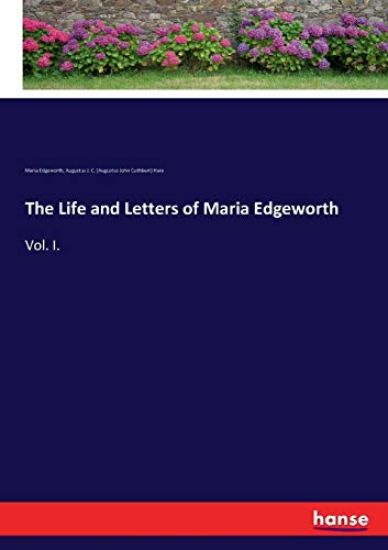
The Life and Letters of Maria Edgeworth
The Life and Letters of Maria Edgeworth - Vol. I. is an unchanged, high-quality reprint of the original edition of 1895. Hansebooks is editor of the literature on different topic areas such as research and science, travel and expeditions, cooking and nutrition, medicine, and other genres. As a publisher we focus on the preservation of historical literature. Many works of historical writers and scientists are available today as antiques only. Hansebooks newly publishes these books and contributes to the preservation of literature which has become rare and historical knowledge for the future.
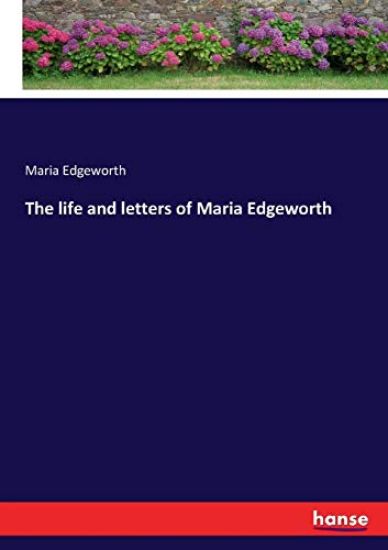
The life and letters of Maria Edgeworth
The life and letters of Maria Edgeworth is an unchanged, high-quality reprint of the original edition of 1894. Hansebooks is editor of the literature on different topic areas such as research and science, travel and expeditions, cooking and nutrition, medicine, and other genres. As a publisher we focus on the preservation of historical literature. Many works of historical writers and scientists are available today as antiques only. Hansebooks newly publishes these books and contributes to the preservation of literature which has become rare and historical knowledge for the future.
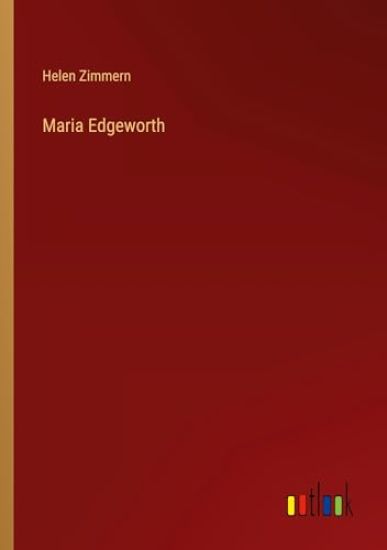
Maria Edgeworth

Maria Edgeworth

Helen Zimmern

Salzwasser-Verlag Gmbh
2017
sidottu
Though many notices of Miss Edgeworth have appeared from time to time, nothing approaching to a Life of her has been published in this country. As I have had the good fortune to have access to an unpublished memoir of her, written by her stepmother, as well as to a large number of her private letters, I am enabled to place what I hope is at least an authentic biography before the reader. Besides much kindness received from the members of Miss Edgeworth's family, I have also to acknowledge my obligations for help afforded in the preparation of this little book to Mrs. George Ticknor and Miss Ticknor of Boston, U. S. A., Mrs. Le Breton, Sir Henry Holland, Bart., the Rev. Canon Holland, the Rev. Dr. Sadler and Mr. F. Y. Edgeworth. H. Z. LONDON, August, 1883.