

Kirjahaku
Etsi kirjoja tekijän nimen, kirjan nimen tai ISBN:n perusteella.
1000 tulosta hakusanalla Maria M.

The secrets of the dark blue sea have dazzled the human creative mind for quite a long time, welcoming us to investigate the mysterious domains underneath the waves. This tremendous and generally unknown world holds mysteries and marvels that keep on escaping our comprehension. From the 12 PM zone's inky profundities to the dynamic coral reefs close to the surface, the sea disguises secrets that challenge our insight and fuel our interest. Perhaps of the most captivating secret lies in a twilight zone, a faintly lit locale where daylight scarcely enters. Here, odd and supernatural animals explore the limitlessness in close to murkiness. Bioluminescent living beings, equipped for delivering their own light, make a hypnotizing display as they gleam in the inky profundities. The biodiversity in this zone remains to a great extent unseen, with endless species yet to be distinguished. More profound still, in the deep zone, aqueous vents discharge geothermally warmed water, making a desert garden of life in a generally unwelcoming climate. These outrageous environments, covered in dimness and high strain, have strange animals adjusted to flourish in conditions that were once remembered to be contrary with life. Monster tube worms, spooky white and a few feet long, group around these vents, testing how we might interpret the restrictions of life on The planet. The sea's profundities additionally conceal the leftovers of old civic establishments and wrecks, protecting authentic secrets that keep on catching the creative mind of students of history and archeologists. Submerged urban communities and buried treasures lie undisturbed on the sea depths, holding on to uncover their insider facts to the people who try to investigate. The submerged archeological locales, like the lowered city of Pavlopetri in Greece, offer a brief look into the secrets of our past, saved by the dark blue's defensive hug. However, maybe the best secret of the dark blue lies in the neglected districts that actually evade us. The Mariana Channel, the most profound point on the planet's seas, arrives at profundities of north of 36,000 feet. This goliath abyss stays quite possibly of the least-investigated region on The planet, with its outrageous circumstances and squashing pressures introducing considerable difficulties to investigation. What secretive animals and topographical marvels anticipate disclosure in this deep territory? The secrets of the dark blue sea allure researchers, voyagers, and visionaries the same to unwind the mysteries concealed underneath the surface. As innovation propels, permitting us to dive further and all the more definitively into the sea's profundities, the cover over these secrets gradually lifts. Nonetheless, with every disclosure comes the acknowledgment that the sea, covering more than 70% of our planet, actually holds innumerable insider facts ready to be uncovered. The secrets of the dark blue keep on moving stunningness and light an enthusiasm for revelation, helping us that our comprehension to remember the sea is just starting to expose the marvels that lie underneath.

In the steadily developing scene of the computerized period, where data goes at the speed of light, Web At Speed Fiber Miracles remains as a demonstration of the persistent quest for quicker and more proficient web network. This earth shattering innovation has upset the manner in which we experience the web, offering uncommon speed and dependability that has turned into a distinct advantage in the domain of computerized correspondence. At its center, Web At Speed Fiber Miracles use fiber-optic innovation, a wonder of present day designing that uses meager strands of glass or plastic to communicate information as beats of light. Not at all like customary copper-based associations, fiber-optic links empower information to go over longer distances with negligible sign misfortune, bringing about blasting quick web speeds that were once incomprehensible. One of the critical benefits of Web At Speed Fiber Miracles is its capacity to give even rates, implying that both transfer and download speeds are similarly quick. This balance is a distinct advantage for clients who depend on consistent two-way correspondence, for example, video conferencing, live real time, and cloud-based applications. The times of frustratingly slow transfers are presently a relic of days gone by, as Web At Speed Fiber Marvels guarantees a balanced and amicable web insight. The unwavering quality of Web At Speed Fiber Miracles is another vital component. Conventional web associations are defenseless to impedance from outer variables like electromagnetic obstruction or atmospheric conditions. Fiber-optic links, then again, are invulnerable to such issues, giving a steady and predictable web association paying little mind to outside impacts. This unwavering quality is a shelter for organizations, gamers, and people who rely upon a consistent and continuous web association. Web At Speed Fiber Miracles isn't just about speed and dependability yet in addition about future-sealing our computerized framework. As the interest for transmission capacity keeps on soaring with the multiplication of top quality substance, augmented reality, and the Web of Things (IoT), fiber-optic innovation guarantees that our advanced parkways can oblige the rising traffic without compromising execution. The effect of Web At Speed Fiber Marvels stretches out past individual clients to shape the scene of enterprises and economies. From working with remote work and online schooling to engaging developments in medical care and diversion, this innovation has turned into a foundation of the computerized age. As we keep on pushing the limits of what is conceivable in the web-based world, Web At Speed Fiber Miracles stands tall as an image of progress, network, and the boundless capability of human resourcefulness.
"Dreadful Haunting In Moonlight" entices perusers into a domain where the meager cloak between the residing and the extraordinary is destroyed. The setting is a decrepit house, a gothic structure remaining as a grave landmark to a sad past. As the twilight washes the disintegrating structure, it creates creepy shaded areas that appear to hold onto the privileged insights of an unspeakable tormenting. The story starts with Emily Thornton, an insightful columnist attracted to the manor by murmurs of extraordinary events that have tormented the modest community for ages. Charmed by the shocking stories encompassing the bequest, Emily sets out on an excursion into the core of murkiness, equipped with an assurance to disclose reality disguised inside the manor's rotting walls. After passing the boundary, Emily is encompassed in a severe climate that appears to thicken with each step. The air is weighed down with the fragrance of rot, and the squeaking flooring planks reverberation the sorrowful moans of a spot long neglected by time. Moonlight channels through the broke windows, projecting ethereal pillars that uncover looks at spooky spirits, waiting as though caught between the domains of the living and the dead. The manor's set of experiences unfurls like a heartbreaking ensemble as Emily dives into old diaries, journals, and blurred photos. A story of taboo love, disloyalty, and a revile that rises above ages arises, winding around an embroidery of hopelessness that ties the spirits to their tormented presence. The twilight, an accidental observer to the house's terrible past, appears to strengthen the heavenly events, transforming the home into a horrendous venue of the ghastly. As Emily uncovers the horrible truth, the limits between the living and the ghostly haze. The apparitions, longing to convey their untold stories, manifest with expanding recurrence. Ghost strides reverberation in the passageways, and distressed murmurs entice Emily to the secret chambers where the most obscure mysteries lie lethargic. "Dreadful Haunting In Moonlight" investigates topics of reclamation, absolution, and the certain hold of the past. As Emily stands up to the malignant substances that meander the manor, she winds up snared in a battle for her endurance as well as for the arrival of tormented spirits limited by a revile that rises above the limits of mortality. The peak unfurls in the ghostly shine of a crimson moon, as the spirits' misery arrives at its pinnacle. Emily, directed by a powerful power, should stand up to the noxious element that has coordinated the eerie for a really long time. The manor turns into a milestone between the powers of light and obscurity, with the evening glow projecting a strange background to the climactic battle for salvation. In the outcome, as the primary light of day break punctures the shadows, Emily rises out of the house, always different by the frightening trial. The spooky bequest, presently washed in the purging beams of the rising sun, stands quiet, its malignance at last let go. "Dreadful Haunting In Moonlight leaves perusers with a waiting feeling of the powerful, a story that rises above the limits of the unmistakable, and an update that a few repulsions are best left undisturbed in the shadows of the twilight evening.
"Concordance in Nature's Ensemble" is a charming investigation of the fragile and interconnected trap of life that pervades the regular world. The book dives into the complex connections among different species, biological systems, and ecological elements, laying out a striking representation of the ensemble that unfurls in the core of nature.Inside the pages of this smart work, perusers will leave on an excursion through different scenes and biological systems, finding the musical magnificence that emerges from the consistent communications between creatures, plants, and their surroundings. The book exhibits the exquisite movement of nature's entertainers, outlining the way that every species contributes its exceptional song to the fantastic arrangement of life.From the clamoring wildernesses overflowing with a racket of calls to the quiet profundities of the sea where whales convey through tormenting songs, "Congruity in Nature's Orchestra" investigates the bunch manners by which animals impart, participate, and coincide. The account discloses the secret language of the animals of the world collectively, uncovering the nuanced signs, sounds, and ways of behaving that add to the general amicability of their environments.The idea of equilibrium becomes the dominant focal point as the book dives into the fragile balance that supports life on The planet. Perusers will acquire an appreciation for the job every species plays, whether it be the fertilization dance of honey bees guaranteeing the multiplication of vegetation or the hunter prey connections that keep up with populace elements. The account underscores the interconnectedness of every living thing and the significant effect that even the littlest organic entities can have on the more extensive ensemble of nature."Concordance in Nature's Orchestra" additionally analyzes the impact of outside variables like environment, seasons, and topographical highlights on the regular world's beat. Through distinctive portrayals and drawing in stories, the book outlines how these components shape the ways of behaving and examples of natural life, making an agreeable dance that unfurls with the evolving seasons.Notwithstanding its emphasis on untamed life, the book commends the endeavors of preservationists and researchers devoted to saving the orchestra of nature. It reveals insight into the significance of safeguarding biodiversity, reestablishing environments, and alleviating human-initiated interruptions to guarantee the proceeded with reverberation of the normal world's orchestra.All through its pages, "Amicability in Nature's Ensemble" winds around together logical experiences, spellbinding stories, and stunning symbolism, welcoming perusers to drench themselves in the charming universe of nature's symphony. Whether investigating the cooperative endeavors of subterranean insects in a rainforest or the synchronized developments of a school of fish, the book cultivates a profound appreciation for the interconnected magnificence that characterizes the perplexing ensemble of life on our planet.

In this important new historical study, Mária Kovács examines the struggle between liberal and anti-Semitic policies among professional groups--doctors, lawyers, engineers--in Hungary from 1867 to 1945. Kovács's main emphasis is on the interwar period when unemployment, expansion of the welfare system, and competition for state jobs during the Great Depression, combined with crass anti-Semitism on the part of engineers and medical associations, radically altered previously liberal policies of open entry and equal educational opportunity. Liberal Professions and Illiberal Politics analyses to what extent these new policies were dictated by authoritarian governments from above and to what extent they originated within the professions themselves. The story ends with the Holocaust, which sealed the fate of those professionals who had become victims of persecution under the German occupation of Hungary.
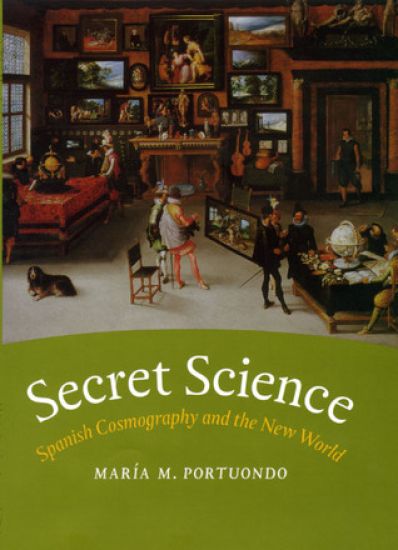
The discovery of the New World raised many questions for early modern scientists, and imperial expansion necessitated changes in the way scientific knowledge was gathered. Spanish cosmographers in particular were charged with turning their observations of the New World into a body of knowledge that could be used for governing the largest empire the world had ever known. As Maria M. Portuondo shows, this cosmographic knowledge had considerable strategic, defensive, and monetary value that royal scientists were charged with safeguarding from foreign and internal enemies. Cosmography was thus a secret science, but despite the limited dissemination of this body of knowledge, royal cosmographers applied alternative epistemologies and new methodologies that changed the discipline, and, in the process, how Europeans understood the natural world.

In this book, historian Mar a M. Portuondo takes us to sixteenth-century Spain, where she identifies a community of natural philosophers and biblical scholars. They shared what she calls the "Spanish Disquiet"--a preoccupation with the perceived shortcomings of prevailing natural philosophies and empirical approaches when it came to explaining the natural world. Foremost among them was Benito Arias Montano--Spain's most prominent biblical scholar and exegete of the sixteenth century. He was also a widely read member of the European intellectual community, and his motivation to reform natural philosophy shows that the Spanish Disquiet was a local manifestation of greater concerns about Aristotelian natural philosophy that were overtaking Europe on the eve of the Scientific Revolution. His approach to the study of nature framed the natural world as unfolding from a series of events described in the Book of Genesis, ultimately resulting in a new metaphysics, cosmology, physics, and even a natural history of the world. By bringing Arias Montano's intellectual and personal biography into conversation with broader themes that inform histories of science of the era, The Spanish Disquiet ensures an appreciation of the variety and richness of Arias Montano's thought and his influence on early modern science.
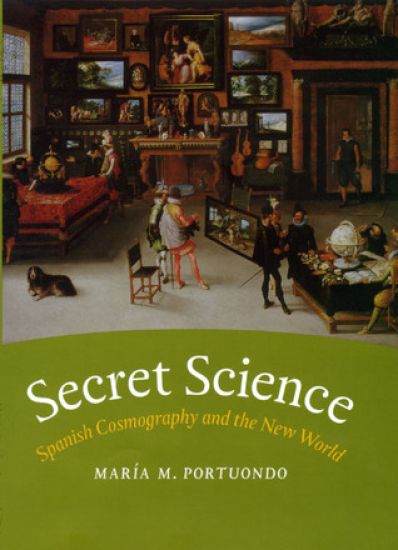
The discovery of the New World raised many questions for early modern scientists: What did these lands contain? Where did they lie in relation to Europe? Who lived there, and what were their inhabitants like? Imperial expansion necessitated changes in the way such scientific knowledge was gathered, and Spanish cosmographers in particular were charged with turning their observations of the New World into a body of knowledge that could be used for governing the largest empire the world had ever known. As Maria M. Portuondo here shows, this cosmographic knowledge had considerable strategic, defensive, and monetary value that royal scientists were charged with safeguarding from foreign and internal enemies. Cosmography was thus a secret science, but despite the limited dissemination of this body of knowledge, royal cosmographers applied alternative epistemologies and new methodologies that changed the discipline, and, in the process, how Europeans understood the natural world. "Secret Science" promises to enhance our understanding of early modern science and the scientific revolution by shedding light on a nation that has long been in the shadow of the Black Legend.

Although organic acids have been used to counteract pathogens in food for many years, there is a glaring need to assess and improve their continued effectiveness and sustainability. There is also a growing demand for foods that are produced using milder treatments (e.g., less heat, salt, sugar, and chemicals) and newer technologies to prevent the growth of dangerous bacteria. Organic Acids and Food Preservation concentrates on safe and effective techniques for applying organic acids to prevention of bacterial growth. Despite the wide range of potentially useful antimicrobials, relatively few are suitable in practice—and this invaluable hands-on guide explains why. With its wealth of information and rare focus solely on the subject, it provides practical tools that can be used in the food industry, various academic disciplines, research, education, and food technology fields to better understand the problem and develop optimal solutions. Why are preservative strategies ineffective? Why are microorganisms becoming acid tolerant and resistant in other ways? To answer these and other key questions, the authors combine research findings from industries and laboratories around the globe, specific application regimen, future prospects, and other information that is vital to the successful use of organic acids as food preservatives. After outlining challenges that the food industry faces from modern consumer trends, food legislation, and other obstacles, this book then explores possible solutions that are applicable not only to food science but to microbiology, food science, food technology, biochemistry, and biotechnology. It will become a valuable addition to the library of any scientist or researcher working in these and other fields.

Immortalized in death by The Clash, Pablo Neruda, Salvador Dalí, Dmitri Shostakovich and Lindsay Kemp, Federico García Lorca's spectre haunts both contemporary Spain and the cultural landscape beyond. This study offers a fresh examination of one of the Spanish language’s most resonant voices; exploring how the very factors which led to his emergence as a cultural icon also shaped his dramatic output.The works themselves are also awarded the space that they deserve, combining performance histories with incisive textual analysis to restate Lorca’s presence as a playwright of extraordinary vision, in works such as:Blood WeddingThe PublicThe House of Bernarda AlbaYerma.Federico García Lorca is an invaluable new resource for those seeking to understand this complex and multifaceted figure: artist, playwright, director, poet, martyr and in the eyes of many, Spain’s ‘national dramatist’.

Immortalized in death by The Clash, Pablo Neruda, Salvador Dalí, Dmitri Shostakovich and Lindsay Kemp, Federico García Lorca's spectre haunts both contemporary Spain and the cultural landscape beyond. This study offers a fresh examination of one of the Spanish language’s most resonant voices; exploring how the very factors which led to his emergence as a cultural icon also shaped his dramatic output.The works themselves are also awarded the space that they deserve, combining performance histories with incisive textual analysis to restate Lorca’s presence as a playwright of extraordinary vision, in works such as:Blood WeddingThe PublicThe House of Bernarda AlbaYerma.Federico García Lorca is an invaluable new resource for those seeking to understand this complex and multifaceted figure: artist, playwright, director, poet, martyr and in the eyes of many, Spain’s ‘national dramatist’.

Following the success of the first edition, this thoroughly updated second edition of Image Processing: The Fundamentals will ensure that it remains the ideal text for anyone seeking an introduction to the essential concepts of image processing. New material includes image processing and colour, sine and cosine transforms, Independent Component Analysis (ICA), phase congruency and the monogenic signal and several other new topics. These updates are combined with coverage of classic topics in image processing, such as orthogonal transforms and image enhancement, making this a truly comprehensive text on the subject. Key features: Presents material at two levels of difficulty: the main text addresses the fundamental concepts and presents a broad view of image processing, whilst more advanced material is interleaved in boxes throughout the text, providing further reference for those who wish to examine each technique in depth.Contains a large number of fully worked out examples.Focuses on an understanding of how image processing methods work in practice.Illustrates complex algorithms on a step-by-step basis, and lists not only the good practices but also identifies the pitfalls in each case.Uses a clear question and answer structure.Includes a CD containing the MATLAB® code of the various examples and algorithms presented in the book. There is also an accompanying website with slides available for download for instructors as a teaching resource. Image Processing: The Fundamentals, Second Edition is an ideal teaching resource for both undergraduate and postgraduate students. It will also be of value to researchers of various disciplines from medicine to mathematics with a professional interest in image processing

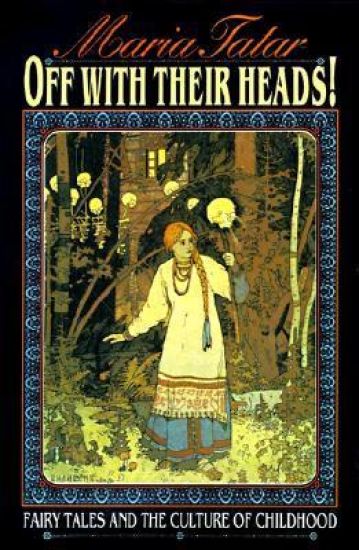
When Hansel and Gretel try to eat the witch's gingerbread house in the woods, are they indulging their "uncontrolled cravings" and "destructive desires" or are they simply responding normally to the hunger pangs they feel after being abandoned by their parents? Challenging Bruno Bettelheim and other critics who read fairy tales as enactments of children's untamed urges, Maria Tatar argues that it is time to stop casting the children as villians. In this provocative book she explores how adults mistreat children, focusing on adults not only as hostile characters in fairy tales themselves but also as real people who use frightening stories to discipline young listeners.
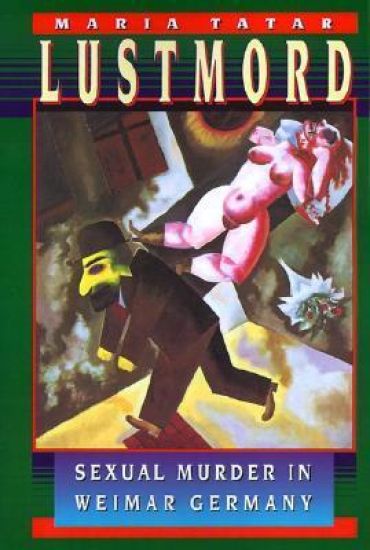
In a book that confronts our society's obsession with sexual violence, Maria Tatar seeks the meaning behind one of the most disturbing images of twentieth-century Western culture: the violated female corpse. This image is so prevalent in painting, literature, film, and, most recently, in mass media, that we rarely question what is at stake in its representation. Tatar, however, challenges us to consider what is taking place--both artistically and socially--in the construction and circulation of scenes depicting sexual murder. In examining images of sexual murder (Lustmord), she produces a riveting study of how art and murder have intersected in the sexual politics of culture from Weimar Germany to the present. Tatar focuses attention on the politically turbulent Weimar Republic, often viewed as the birthplace of a transgressive avant-garde modernism, where representations of female sexual mutilation abound. Here a revealing episode in the gender politics of cultural production unfolds as male artists and writers, working in a society consumed by fear of outside threats, envision women as enemies that can be contained and mastered through transcendent artistic expression. Not only does Tatar show that male artists openly identified with real-life sexual murderers--George Grosz posed as Jack the Ripper in a photograph where his model and future wife was the target of his knife--but she also reveals the ways in which victims were disavowed and erased. Tatar first analyzes actual cases of sexual murder that aroused wide public interest in Weimar Germany. She then considers how the representation of murdered women in visual and literary works functions as a strategy for managing social and sexual anxieties, and shows how violence against women can be linked to the war trauma, to urban pathologies, and to the politics of cultural production and biological reproduction. In exploring the complex relationship between victim and agent in cases of sexual murder, Tatar explains how the roles came to be destabilized and reversed, turning the perpetrator of criminal deeds into a defenseless victim of seductive evil. Throughout the West today, the creation of similar ideological constructions still occurs in societies that have only recently begun to validate the voices of its victims. Maria Tatar's book opens up an important discussion for readers seeking to understand the forces behind sexual violence and its portrayal in the cultural media throughout this century.
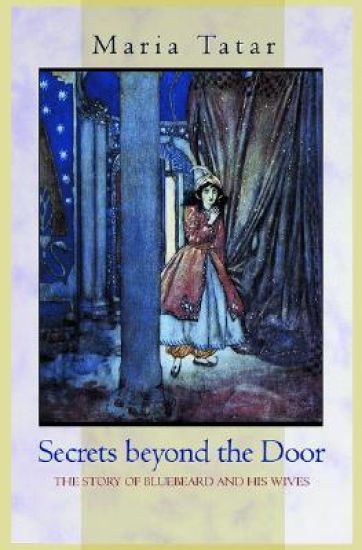
The tale of Bluebeard's Wife--the story of a young woman who discovers that her mysterious blue-bearded husband has murdered his former spouses--no longer squares with what most parents consider good bedtime reading for their children. But the story has remained alive for adults, allowing it to lead a rich subterranean existence in novels ranging from Jane Eyre to Lolita and in films as diverse as Hitchcock's Notorious and Jane Campion's The Piano. In this fascinating work, Maria Tatar analyzes the many forms the tale of Bluebeard's Wife has taken over time, particularly in Anglo-European popular culture. It documents the fortunes of Bluebeard, his wife, and their marriage in folklore, fiction, film, and opera, showing how others took the Bluebeard theme and revived it with their own signature twists. In some tales the wife is a deceiver; in others she is a clever investigator. Earlier ages denounced Bluebeard's wife for her "reckless curiosity" and for her "uncontrolled appetite"; our own times have turned her into something of a heroine, a woman who rescues herself--and often her marriage--through her detective work and psychological finesse. And as for Bluebeard? Once considered a one-dimensional brute, he has found renewed cultural energy both as a master criminal who kills in order to create a higher moral order and as an artist figure who must shield himself against intimacy to foster his creative powers. A brilliant account of how one classic fairy tale has been continually reincarnated, Secrets beyond the Door will appeal to both literary scholars and general readers.
Murder, mutilation, cannibalism, infanticide, and incest: the darker side of classic fairy tales is the subject of this groundbreaking and intriguing study of Jacob and Wilhelm Grimm’s Nursery and Household Tales. This expanded edition includes a new preface and an appendix featuring translations of six tales with commentary by Maria Tatar. Throughout the book, Tatar draws on the disciplinary tools of psychoanalysis and folklore while also providing historical context to explore the harsher aspects of these stories, presenting new interpretations of tales that engage in a kind of cultural repetition compulsion. No other book so thoroughly challenges us to rethink the happily-ever-after of these classic stories.