Kirjojen hintavertailu. Mukana 11 244 527 kirjaa ja 12 kauppaa.

Kirjahaku

Etsi kirjoja tekijän nimen, kirjan nimen tai ISBN:n perusteella.

1000 tulosta hakusanalla Maria Story

Popular tales. By: Maria Edgeworth, and By: Richard Lovell Edgeworth: (Story collections), Volume I.

Popular tales. By: Maria Edgeworth, and By: Richard Lovell Edgeworth: (Story collections), Volume I.

Richard Lovell Edgeworth; Maria Edgeworth

Createspace Independent Publishing Platform
2017
nidottu
Maria Edgeworth (1 January 1768 - 22 May 1849) was a prolific Anglo-Irish writer of adults' and children's literature. She was one of the first realist writers in children's literature and was a significant figure in the evolution of the novel in Europe. She held advanced views, for a woman of her time, on estate management, politics and education, and corresponded with some of the leading literary and economic writers, including Sir Walter Scott and David Ricardo. Early life: Maria Edgeworth was born at Black Bourton, Oxfordshire. She was the second child of Richard Lovell Edgeworth (who eventually fathered 22 children by four wives) and Anna Maria Edgeworth; Maria was thus an aunt of Francis Ysidro Edgeworth. She spent her early years with her mother's family in England, until her mother's death when Maria was five. When her father married his second wife Honora Sneyd in 1773, she went with him to his estate, Edgeworthstown, in County Longford, Ireland. Maria was sent to Mrs. Lattafi re's school in Derby after Honora fell ill in 1775. After Honora died in 1780 Maria's father married Honora's sister Elizabeth (then socially disapproved and legally forbidden from 1833 until the Deceased Wife's Sister's Marriage Act 1907). Maria transferred to Mrs. Devis's school in London. Her father's attention became fully focused on her in 1781 when she nearly lost her sight to an eye infection. Returning home at the age of 14, she took charge of her many younger siblings and was home-tutored in law, Irish economics and politics, science, and literature by her father. She also started her lifelong correspondences with learned men, mainly members of the Lunar Society. She became her father's assistant in managing the Edgeworthstown estate, which had become run-down during the family's 1777-1782 absence; she would live and write there for the rest of her life. With their bond strengthened, Maria and her father began a lifelong academic collaboration "of which she was the more able and nimble mind." Present at Edgeworthstown was an extended family, servants and tenants. She observed and recorded the details of daily Irish life, later drawing on this experience for her novels about the Irish. She also mixed with the Anglo-Irish gentry, particularly Kitty Pakenham (later the wife of Arthur Wellesley, 1st Duke of Wellington), Lady Moira, and her aunt Margaret Ruxton of Black Castle. Margaret supplied her with the novels of Anne Radcliffe and William Godwin and encouraged her in her writing. Though Maria Edgeworth spent most of her childhood in England, her life in Ireland had a profound impact on both her thinking and views surrounding her Irish culture. Fauske and Kaufman conclude, " used her fiction to address the inherent problems of acts delineated by religious, national, racial, class based, sexual, and gendered identities." Edgeworth used works such Castle Rackrent and Harrington to express her feelings on controversial issues............... Richard Lovell Edgeworth (31 May 1744 - 13 June 1817) was an Anglo-Irish politician, writer and inventor.Biography Edgeworth was born in Pierrepont Street, Bath, England, great-grandson of Sir Salathiel Lovell through his granddaughter, Jane Lovell. A Trinity College, Dublin and Oxford alumnus, he is credited for creating, among other inventions, a machine to measure the size of a plot of land. He also made strides in the developing educational methods. He anticipated the caterpillar track with an invention that he played around with for forty years but that he never successfully developed. 3] He described it as a "cart that carries its own road". He was married four times, including both Honora Sneyd and Frances Beaufort, older sister of Francis Beaufort of the Royal Navy. The two men installed a telegraph line for Ireland. Richard Lovell Edgeworth was a member of the Lunar Society.....
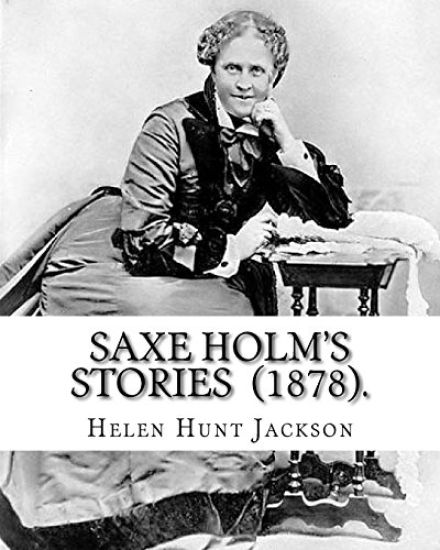
Saxe Holm's Stories (1878). By: Helen Hunt Jackson: (Short story collections). Helen Maria Hunt Jackson (pen name, H.H.; October 15, 1830 - August 12,
Helen Maria Hunt Jackson (pen name, H.H.; October 15, 1830 - August 12, 1885), was an American poet and writer who became an activist on behalf of improved treatment of Native Americans by the United States government. She described the adverse effects of government actions in her history A Century of Dishonor (1881). Her novel Ramona (1884) dramatized the federal government's mistreatment of Native Americans in Southern California after the Mexican-American War and attracted considerable attention to her cause. Commercially popular, it was estimated to have been reprinted 300 times and most readers liked its romantic and picturesque qualities rather than its political content. The novel was so popular that it attracted many tourists to Southern California who wanted to see places from the book. Early years and education Helen Maria Fiske was born in Amherst, Massachusetts, the daughter of Nathan Welby Fiske and Deborah Waterman Vinal Fiske. Helen's father was a minister, author, and professor of Latin, Greek, and philosophy at Amherst College. She had two brothers, Humphrey Washburn Fiske (?-1833) and David Vinal Fiske (1829-1829), both of whom died soon after birth, and a sister Anne. They were raised as Unitarian. Anne became the wife of E. C. Banfield, a federal government official who served as Solicitor of the United States Treasury. The girls' mother died in 1844, when Helen was fourteen. Three years later, their father died. He had provided financially for Helen's education and arranged for an uncle to care for her. Fiske attended Ipswich Female Seminary and the Abbott Institute, a boarding school in New York City run by Reverend John Stevens Cabot Abbott. She was a classmate of Emily Dickinson, also from Amherst; Emily became a renowned poet. The two corresponded for the rest of their lives, but few of their letters have survived. WORK: Bits of Travel (1872) Bits about Home Matters (1873) Saxe Holm's Stories (1874) The Story of Boon (1874) Mercy Philbrick's Choice (1876) Hetty's Strange History (1877) Bits of Talk in Verse and Prose for Young Folks (1876) Bits of Travel at Home (1878) Nelly's Silver Mine: A Story of Colorado Life (1878) Letters from a Cat (1879) A Century of Dishonor (1881) Ramona (1884) Zeph: A Posthumous Story (1885) Glimpses of Three Coasts (1886) Between Whiles (1888) A Calendar of Sonnets (1891) Ryan Thomas (1892) The Hunter Cats of Connorloa (1894) Poems by Helen Jackson Roberts Bros, Boston (1893) Pansy Billings and Popsy: Two Stories of Girl Life (1898) Glimpses of California (1914)
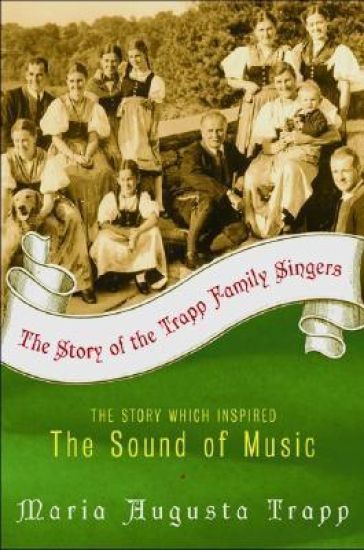
The Story of the Trapp Family Singers

The Story of the Trapp Family Singers

Maria A Trapp

William Morrow Paperbacks
2002
nidottu
With nearly 1,500 Broadway performances, six Tony Awards, more than three million albums sold, and five Academy Awards, The Sound of Music, based on the lives of Maria, the baron, and their singing children, is as familiar to most of us as our own family history. But much about the real-life woman and her family was left untold. Here, Baroness Maria Augusta Trapp tells in her own beautiful, simple words the extraordinary story of her romance with the baron, their escape from Nazi-occupied Austria, and their life in America. Now with photographs from the original edition.
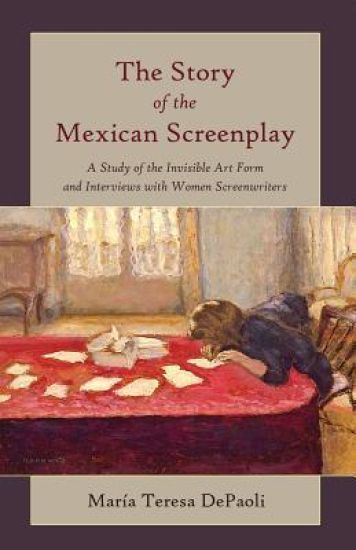
The Story of the Mexican Screenplay

The Story of the Mexican Screenplay

Maria Teresa DePaoli

Peter Lang Publishing Inc
2014
nidottu
The Story of the Mexican Screenplay: A Study of the Invisible Art Form and Interviews with Women Screenwriters contributes to the international development of screenplay studies. While the debate on the ontology of the screenplay continues, a fact remains clear for screenwriters: the screenplay is the film’s skeleton and the main base that sustains a story told through images. Certainly, lack of visibility, including publication, distribution, and promotion, are some of the problems that the screenplay confronts, but these are not the only challenges. Traditionally, the form has been unappreciated and regarded by many as only an initial step in the complexity of film production. In this study, the author elaborates on the cultural baggage that the screenplay carries since it is text imbued with multiple signs that – for various reasons – often get lost in the process and never make it to the screen. In this context, the author touches on the concept of adaptation since it is often a key element in screenplay research. The Story of the Mexican Screenplay focuses on a general historical investigation of the Mexican screenplay, specifically on women’s screenwriting. In addition to screenplay analysis, the interviews with women screenwriters are revealing of various cultural issues such as gender discrimination in the work place, political censorship, collective screenwriting, and collaboration among writers, and with the director. These topics explain, in part, the double marginalization of female screenwriting in Mexico.
The Story of the Mexican Screenplay

The Story of the Mexican Screenplay

Maria Teresa DePaoli

Peter Lang Publishing Inc
2014
sidottu
The Story of the Mexican Screenplay: A Study of the Invisible Art Form and Interviews with Women Screenwriters contributes to the international development of screenplay studies. While the debate on the ontology of the screenplay continues, a fact remains clear for screenwriters: the screenplay is the film’s skeleton and the main base that sustains a story told through images. Certainly, lack of visibility, including publication, distribution, and promotion, are some of the problems that the screenplay confronts, but these are not the only challenges. Traditionally, the form has been unappreciated and regarded by many as only an initial step in the complexity of film production. In this study, the author elaborates on the cultural baggage that the screenplay carries since it is text imbued with multiple signs that – for various reasons – often get lost in the process and never make it to the screen. In this context, the author touches on the concept of adaptation since it is often a key element in screenplay research. The Story of the Mexican Screenplay focuses on a general historical investigation of the Mexican screenplay, specifically on women’s screenwriting. In addition to screenplay analysis, the interviews with women screenwriters are revealing of various cultural issues such as gender discrimination in the work place, political censorship, collective screenwriting, and collaboration among writers, and with the director. These topics explain, in part, the double marginalization of female screenwriting in Mexico.
The Story of Our Existence

The Story of Our Existence

María Sulbarán

Bookleaf Publishing
2023
nidottu
This collection of poems tells a story; My story. And perhaps yours. I tell how my life has been transformed through paragraphs written with the most human emotions that I can express. In this book, you will find poems about life, love, childhood, how it feels to live with the depths of darkness, your place in the world, how to coexist with your existence, and the future. I intend to connect with you to the point that we both share the same story.
The Untold Story of the World's Leading Environmental Institution
The past, present, and possible future of the agency designed to act as the world's environmental conscience.The United Nations Environmental Programme (UNEP) was founded in 1972 as a nimble, fast, and flexible entity at the core of the UN system--a subsidiary body rather than a specialized agency. It was intended to be the world's environmental conscience, an anchor institution that established norms and researched policy, leaving it to other organizations to carry out its recommendations. In this book, Maria Ivanova offers a detailed account of UNEP's origin and history. Ivanova counters the common criticism that UNEP was deficient by design, arguing that UNEP has in fact delivered on much (though not all) of its mandate.
Hada's Story

Hada's Story

María Beatriz Álvarez Tortolero

Lulu.com
2014
pokkari
Faced with the imminent end of the world, Hada notices that the solution lies in the human kind. Her mission will be to try to convince people that the only way to salvation consists in a change of attitude. Hada will strive to raise awareness among people at any cost. By doing this, she hopes to make people change in order to rescue the kindness of our planet and the good attitude in people.