This is a critical edition, or “édition critique,” of Victor Hugo’s play Marion de Lorme. A critical edition is much more than a typical scholarly publication of a literary work that only contains a brief introduction, the text, and endnotes. The in-depth introduction in this critical edition details the history and genesis of the play from its inception through its première, as well as a study of the manuscript and of all other original related documents. It also features a history of the première, the critical reaction, and an analysis of various nineteenth-century editions of the work. The actual text of the play contains a critical apparatus that indicates all modifications of the text made by the author during its composition. Following the play, there are literary, historical, linguistic, and critical notes, indexes of all words and proper names, and a bibliography of works related to the play in question. (Text in French)
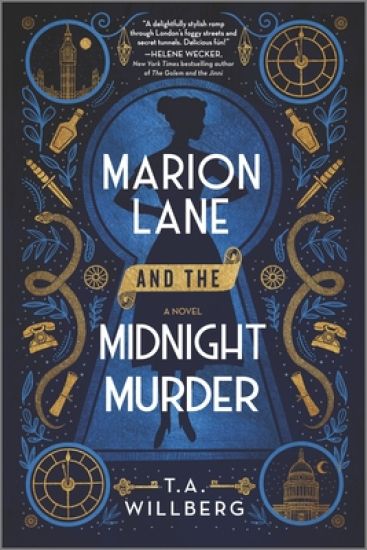
"Every page is a delight--this is what would happen if a trainee James Bond was asked to solve an Agatha Christie mystery, and it's brilliant."--Stuart Turton, bestselling author of The 7 1/2 Deaths of Evelyn HardcastleMarion Lane and the Midnight Murder plunges readers into the heart of London, to the secret tunnels that exist far beneath the city streets. There, a mysterious group of detectives recruited for Miss Brickett's Investigations & Inquiries use their cunning and gadgets to solve crimes that have stumped Scotland Yard.Late one night in April 1958, a filing assistant for Miss Brickett's receives a letter warning her that a heinous act is about to occur. She goes to investigate, but at the stroke of midnight, she is murdered by a killer she can't see--her death the only sign she wasn't alone.Marion Lane, a first-year Inquirer-in-training, finds herself being drawn ever deeper into the investigation. When hercolleague is framed for the crime, she must sort through the hidden alliances at Miss Brickett's and secrets dating back to WWII to uncover the real killer. Brimming with imagination and suspense, Marion Lane and the Midnight Murder is a fresh take on the Agatha Christie-style locked-room mystery with an exciting new heroine detective at the helm.
"This is what would happen if a trainee James Bond was asked to solve an Agatha Christie mystery, and it's brilliant." --Stuart Turton, bestselling author of The 71/2 Deaths of Evelyn Hardcastle The raven had struck. And the thing was, she knew exactly who was next... London, 1960. Marion Lane, a twenty-five-year-old apprentice detective at the elusive Miss Brickett's Investigations & Inquiries, is busier than ever and determined to prove herself worthy of an official Inquirer badge. But when her close friend's girlfriend, Darcy, is targeted by a dangerous gang leader and seeks out the Inquirers' assistance, Marion cannot help but get involved. Just when Marion thinks she has the situation under control, Darcy disappears and the agency receives a package containing a dead raven. Everyone is puzzled by what the threat could mean, except for Marion. She recognizes it as the same calling card left on her mother's doorstep just before she died. With harrowing twists and turns, Marion Lane and the Raven's Revenge follows Marion's most personal case to date. To uncover who is behind these ominous packages and find Darcy, she must piece together how they are related to her mother's mysterious death and secretive past.
"What a delight... I found myself so drawn into this world of peculiar crimes that finishing the last page left me disoriented, requiring an extra beat to flash forward and rejoin the current century." - Sarah Weinman, New York Times Book ReviewThe envelope was tied with three delicate silk ribbons: "One of the new recruits is not to be trusted..."It's 1959 and a new killer haunts the streets of London, having baffled Scotland Yard. The newspapers call him The Florist because of the rose he brands on his victims. The police have turned yet again to the Inquirers at Miss Brickett's for assistance, and second-year Marion Lane is assigned the case.But she's already dealing with a mystery of her own, having received an unsigned letter warning her that one of the three new recruits should not be trusted. She dismisses the letter at first, focusing on The Florist case, but her informer seems to be one step ahead, predicting what will happen before it does. But when a fellow second-year Inquirer is murdered, Marion takes matters into her own hands and must come face-to-face with her informer--who predicted the murder--to find out everything they know. Until then, no one at Miss Brickett's is safe and everyone is a suspect.With brilliant twists and endless suspense, all set within the dazzling walls and hidden passageways of Miss Brickett's, Marion Lane and the Deadly Rose is a deliciously fun new historical mystery you won't be able to put down.
These records contain deeds from Marion County, Tennessee, Deed Book A of A & B spanning the years 1819 through 1830. Details such as location, price, and amount of land are provided in this work. A full name and place index adds value to this work.
With sales of more than one-half million copies since its original publication in 1951, Marion Brown's Southern Cook Book is one of the most popular regional cookbooks available. Here are nearly 1,000 recipes from the South's finest kitchens--treasured old recipes from southern households, favorite dishes from hotels and restaurants with a tradition of Southern cuisine, and newer recipes that take advantage of prepared products. This edition incorporates many new recipes sent to Mrs. Brown by enthusiastic users of the first edition. Marion Brown's Southern Cook Book retains its true Southern flavor, but it illustrates the increasing cosmopolitanism of the Southern palate. It also takes heed of the fact that today's cook is constantly on the go and needs many simple, easy-to-prepare dishes, and that prepared mixes and packaged and processed foods are an important part of today's preparation of meals. And the recipes themselves have been reorganized and presented in a way that makes them easier to follow for the inexperienced cook. Marion Brown's Southern Cook Book makes the charm and good company of the best Southern cookery available to everyone. |In Pursuit of Unity , Michael Perman presents a comprehensive analysis of the South's political history. In the 1800s, the region endured almost continuous political crisis--nullification, secession, Reconstruction, the Populist revolt, and disfranchisement. For most of the twentieth century, the region was dominated by a one-party system, the ""Solid South,"" that ensured both political unity internally and political influence in Washington. But in both centuries, the South suffered from the noncompetitive, one-party politics that differentiated it from the rest of the country. Since the passage of the Voting Rights Act in 1965, Perman argues, the South's political distinctiveness has come to an end, as has its pursuit of unity.
Chicago-born architect Marion Mahony Griffin (1871-1961) is known primarily for a magnificent drafting style that incorporated architectural plans into dramatic and stylized landscapes. Yet standard histories of early twentieth-century architecture have not fully recognized her pioneering work, which went far beyond her early contributions to the Prairie School. ""Marion Mahony Griffin: Drawing the Form of Nature"" is the first book devoted to Mahony Griffin's graphic work and presents a new critical interpretation of her art. Marion Mahony Griffin was the second woman to graduate from the Massachusetts Institute of Technology with a degree in architecture and the first woman licensed to practice architecture in Illinois. After years of freelance drafting and design - most famously for Frank Lloyd Wright - she and her husband, architect Walter Burley Griffin, embarked on a career that catapulted them from Chicago to Australia in 1914 after winning the international competition to design the Federal Capital of Australia at Canberra. Marion Mahony Griffin's graphic art is defined by her innovative representations of nature. Her presentation drawings clearly illustrate that architectural design and forms of the natural landscape are inseparable. Botanical forms are also woven into her children's book illustrations and murals and are the subject of the series of ""Forest Portraits"" she made in Australia. The many illustrations in this book include vintage photographs of Mahony Griffin's life and work and commercial illustrations that have previously never been published, new photographs of her public murals, full-page color plates of her architectural renderings and ""Forest Portraits"", as well as an exclusive color facsimile of the ""Forest Portraits"" and captions as found in the New-York Historical Society's copy of Marion Mahony Griffin's unpublished memoir ""The Magic of America.
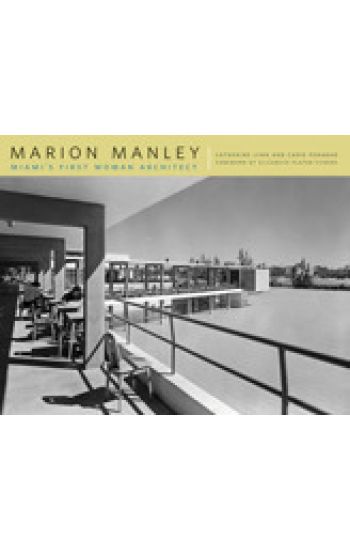
Marion Manley (1893–1984), Miami’s first female architect, successfully maintained an independent architectural practice in South Florida over much of the twentieth century. In this first comprehensive, illustrated work on Manley, Catherine Lynn and Carie Penabad explore the relationship of Manley’s work to her life and to the broader historical moment of which she was a part, including the overall development of the city of Miami. The book catalogs all of Manley’s known work, includes images and plans where available, and provides detailed examinations of what the authors consider to be her best, most emblematic work in each phase of her long career.Best known as one of the designers of the innovative University of Miami campus built just after the Second World War, Manley worked on other public buildings that are less well known, including an addition to the John Ringling Museum in Sarasota. Her residential work is interesting as well: modest and rational, with careful consideration of regional characteristics and construction appropriate to the South Florida landscape. As noted architect Elizabeth Plater-Zyberk remarks in her foreword, “Understanding the reduced circumstances of the provenance of these buildings and their low-tech characteristics such as rooms with cross ventilation, large areas of shaded glass, and the almost tactile relationship to the adjacent landscape, we must admire the legacy of Marion Manley.”
This fascinating version of Daniel MacIvor's most successful play to date lets the reader in on a secret: it was never primarily written as a work for live theatrical performance, but as a vehicle for his development of a screenplay, also included in this new edition. In his surprisingly revealing introduction, MacIvor talks about the genesis of both the play and the movie; the lessons he learned about the differences between the two media; and their radically different stylistic, technical and practical demands on both their authors and their audiences. A well-known practitioner of Canada's theatre of the avant-garde, MacIvor had for years wanted to write a brilliant screenplay, but there was a problem: he didn't know how. Most of his stark improvisational work for the live stage, centered around minimalist sets and props, dramatic effects of light and sound, and usually his own improvisational solo performances, did not translate well into the medium of film.So in order to realize his ambition he decided to create Marion Bridge, a piece of "conventional theatre," as a vehicle or transitionary playscript he thought he could use as a stylistic "bridge" from the live stage to the cinema. In the fact that Marion Bridge has become his most successful play to date lies one of the most important lessons MacIvor learned about the vast differences between the two media--between live performance that always relies on the audience to participate with the actor(s) in the active and collective creation of landscape and time within the space they share, and the cinematic experience wherein the creators and actors are absent, and the audience is estranged from the action by its passive consumption of a narrative of space and time always understood to take place in someone else's world outside of the theatre.
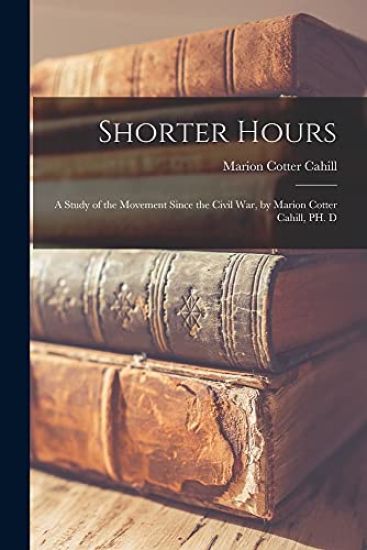
This work has been selected by scholars as being culturally important and is part of the knowledge base of civilization as we know it.This work is in the public domain in the United States of America, and possibly other nations. Within the United States, you may freely copy and distribute this work, as no entity (individual or corporate) has a copyright on the body of the work.Scholars believe, and we concur, that this work is important enough to be preserved, reproduced, and made generally available to the public. To ensure a quality reading experience, this work has been proofread and republished using a format that seamlessly blends the original graphical elements with text in an easy-to-read typeface.We appreciate your support of the preservation process, and thank you for being an important part of keeping this knowledge alive and relevant.
This work has been selected by scholars as being culturally important and is part of the knowledge base of civilization as we know it.This work is in the public domain in the United States of America, and possibly other nations. Within the United States, you may freely copy and distribute this work, as no entity (individual or corporate) has a copyright on the body of the work.Scholars believe, and we concur, that this work is important enough to be preserved, reproduced, and made generally available to the public. To ensure a quality reading experience, this work has been proofread and republished using a format that seamlessly blends the original graphical elements with text in an easy-to-read typeface.We appreciate your support of the preservation process, and thank you for being an important part of keeping this knowledge alive and relevant.
This work has been selected by scholars as being culturally important and is part of the knowledge base of civilization as we know it.This work is in the public domain in the United States of America, and possibly other nations. Within the United States, you may freely copy and distribute this work, as no entity (individual or corporate) has a copyright on the body of the work.Scholars believe, and we concur, that this work is important enough to be preserved, reproduced, and made generally available to the public. To ensure a quality reading experience, this work has been proofread and republished using a format that seamlessly blends the original graphical elements with text in an easy-to-read typeface.We appreciate your support of the preservation process, and thank you for being an important part of keeping this knowledge alive and relevant.