
Kirjahaku
Etsi kirjoja tekijän nimen, kirjan nimen tai ISBN:n perusteella.
1000 tulosta hakusanalla Mark B Mercer

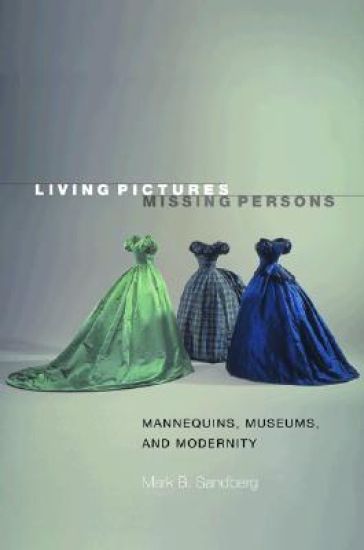
In the late nineteenth century, Scandinavian urban dwellers developed a passion for a new, utterly modern sort of visual spectacle: objects and effigies brought to life in astonishingly detailed, realistic scenes. The period 1880-1910 was the popular high point of mannequin display in Europe. Living Pictures, Missing Persons explores this phenomenon as it unfolded with the rise of wax museums and folk museums in the largest cities of Denmark, Sweden, and Norway. Mark Sandberg asks: Why did modernity generate a cultural fascination with the idea of effigy? He shows that the idea of effigy is also a portal to understanding other aspects of visual entertainment in that period, including the widespread interest in illusionistic scenes and tableaux, in the "portability" of sights, spaces, and entire milieus. Sandberg investigates this transformation of visual culture outside the usual test cases of the largest European metropolises. He argues that Scandinavian spectators desired an unusual degree of authenticity--a cultural preference for naturalism that made its way beyond theater to popular forms of museum display. The Scandinavian wax museums and folk-ethnographic displays of the era helped pre-cinematic spectators work out the social implications of both voyeuristic and immersive display techniques. This careful study thus anticipates some of the central paradoxes of twentieth-century visual culture--but in a time when the mannequin and the physical relic reigned supreme, and in a place where the contrast between tradition and modernity was a high-stakes game.

This lovely new collection of photographs covers the area in which the London & South Western Railway operated, which subsequently became part of the Southern Railway in the Grouping in 1923 and then Southern Region under BR on Nationalisation. As well as the main line from London Waterloo to Basingstoke, Southampton and Bournemouth, the book covers other lines in Hampshire and Dorset, the Lymington branch, the Swanage branch, Weymouth, and the holiday routes via Salisbury into Somerset, Devon and Cornwall, with detours to the Lyme Regis branch, the Exmouth branch, Wadebridge and Torrington, terminating at the Atlantic Coast at Ilfracombe This book presents an evocative pictorial record of the end of the 1950s and the 1960s on South Western lines. The photographs record the whole railway scene of the time, including the stations - from busy main line stations to unspoilt branch line stops and rural halts - and detail of railway infrastructure such as signalling. It portrays a way of life on the railway that was soon to disappear with the end of steam and the closure of many lines in the 1960s.
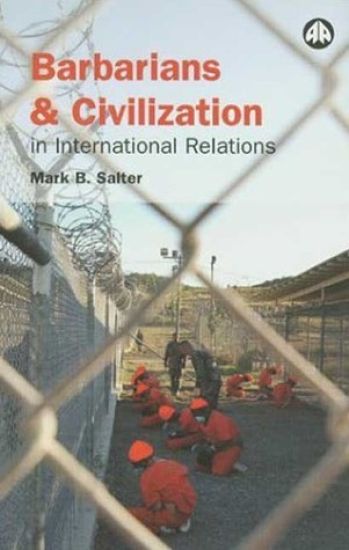
The terrorist attacks in New York and Washington have led to popular conceptions of Muslims as terrorists. Some commentators have harked back to the 'Clash of Civilizations' argument outlined by Samuel Huntington which argued that, after the collapse of the Cold War, culture would become the main axis of conflict for civilisational alliances. Mark Salter takes issue with Huntington's theory and explains how the terms of his argument are part of an imperialist discourse that casts other civilisations as essentially barbarian. Although many commentators have engaged with Huntington's claims, few have pursued the political implications of his argument. Barbarians and Civilisation offers a decisive exploration of the colonial rhetoric inherent in current political discourse. Charting the usefulness of concepts of culture and identity for understanding world politics, Salter brilliantly illustrates the benefits and the limitations of the civilised/barbarian dichotomy in international relations.
With origins in the late 1960s, a 'quiet revolution' in land use planning and control has taken hold across North America. First seen as a manifestation of the environmental movement, the revolution prompted governments at several levels to attempt to protect critical areas and vulnerable natural resources. Many of the most dramatic and far-reaching shifts in planning regimes have occurred in large-scale, environmentally unique or sensitive regions. It is these big places, looming large in the American and Canadian psyches, that are the focus of this edited volume. Each of the chapters reflects on the contemporary challenge of environmental and land use planning. Ten leading distinguished scholars here provide thoughtful analyses and critical insights into the processes and contexts shaping the innovative planning and policy schemes in seven regional landscapes.

Raw Ingredients in the Processed Foods: The Influence of Agricultural Principles and Practices
Mark B. Springett
Aspen Publishers Inc.,U.S.
2000
sidottu
The properties of incoming raw ingredients have a great impact on the processing, storage, and resulting quality of all food products, yet the effects of agronomic practices on product quality and safety are often not well understood, as illustrated by the BSE outbreak in cattle and other public health crises. This book is the first to relate different agronomic practices to differenct product types, and to relate all to the final safety and quality of foods and drinks. In particular, factors such as variety or species, fertilizer or feed regimes, effect of water, climate, and microbiological loading can all have large effects on the processing properties and final flavor, texture and color of foods. Written by experts in their fields, this highly practical book provides essential information for food scientists and technologists as well as other professionals in food processing and food ingredients.
Building an Information Security Awareness Program
Mark B. Desman
Auerbach Publishers Inc.
2001
nidottu
In his latest book, a pre-eminent information security pundit confessed that he was wrong about the solutions to the problem of information security. It's not technology that's the solution, but the human factor-people. But even infosec policies and procedures are insufficient if employees don't know about them, or why they're important, or what can happen to them if they ignore them. The key, of course, is continuous awareness of the problems and the solutions.Building an Information Security Awareness Program addresses these concerns. A reference and self-study guide, it goes step-by-step through the methodology for developing, distributing, and monitoring an information security awareness program. It includes detailed instructions on determining what media to use and where to locate it, and it describes how to efficiently use outside sources to optimize the output of a small staff. The author stresses the importance of security and the entire organizations' role and responsibility in protecting it. He presents the material in a fashion that makes it easy for nontechnical staff members to grasp the concepts. These attributes render Building an Information Security Awareness Program an immensely valuable reference in the arsenal of the IS professional.

Within fifteen years of the end of the Second World War, many tens of millions of Soviet city dwellers had been rehoused—liberated from shelters and overcrowded communal dwellings—and the paradox of housing ownership rights under proto-communism had been clarified. The transformation of the Soviet cityscape and of popular living conditions underwrote many other changes in Soviet life. In this first, full-length study of one of the major social reforms of twentieth-century European history, Smith presents an analysis built on hundreds of previously unexplored sources that include papers from state and municipal archives, material from the popular and professional press, legal tracts, films, novels, and personal accounts. Property of Communists makes two substantial contributions to historical scholarship. First, it challenges the commonplace belief that the housing program was entirely a post-Stalin reform and discusses in detail its wartime and late Stalinist origins as well as its escalation under Khrushchev. Second, the originality of Smith's study involves property relations, as he demonstrates that the Soviet housing stock was never a monolithic item of state ownership, but was the subject of multiple tenures that invested the individual resident with substantial rights of possession. With its wide chronological framing, its reappraisal of the status of property and ownership in the first communist society, and its anchoring in comparative history, this provocative book will appeal to a broad audience of European historians and Soviet scholars and students.



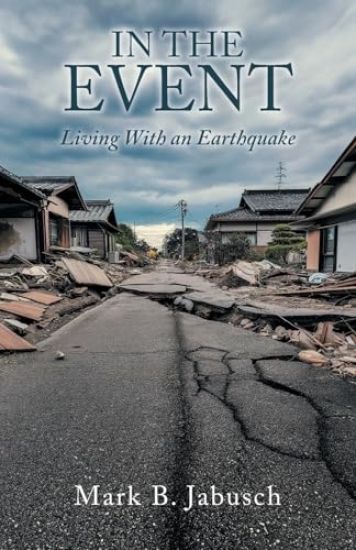
Dive into the frantic fight for survival in this riveting, firsthand account of the devastating earthquake and tsunami that hit northeastern Japan in 2011. In the Event: Living with an Earthquake takes readers onto the heaving, rolling streets as the earth cracked on the day that changed the lives of millions forever. It's an account of an unthinkable disaster, and a testimony to hope and faith as it challenges readers to consider their approach to life overall.Mark B. Jabusch, a Christian missionary, lived with his family in Japan during the seismic events of 2011, and in this narrative, he chronicles the days leading up to the quake as well as the aftermath during the months that followed. Through his own testimony and the stories of others, he bears witness to the power of community and individual resilience in a crisis, and to the role of faith in his own life as he navigated this unknown territory.A journey into human resilience, the strength of community, and steadfast faith, In the Event is an engaging cross between a personal memoir and an informational guide on surviving and recovering from a natural disaster. Educational and inspiring, this book is for readers of all faiths and backgrounds
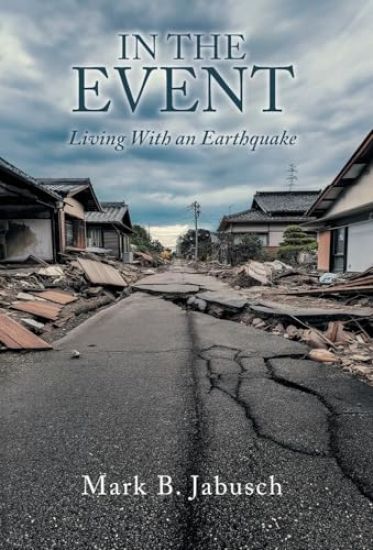
Dive into the frantic fight for survival in this riveting, firsthand account of the devastating earthquake and tsunami that hit northeastern Japan in 2011. In the Event: Living with an Earthquake takes readers onto the heaving, rolling streets as the earth cracked on the day that changed the lives of millions forever. It's an account of an unthinkable disaster, and a testimony to hope and faith as it challenges readers to consider their approach to life overall.Mark B. Jabusch, a Christian missionary, lived with his family in Japan during the seismic events of 2011, and in this narrative, he chronicles the days leading up to the quake as well as the aftermath during the months that followed. Through his own testimony and the stories of others, he bears witness to the power of community and individual resilience in a crisis, and to the role of faith in his own life as he navigated this unknown territory.A journey into human resilience, the strength of community, and steadfast faith, In the Event is an engaging cross between a personal memoir and an informational guide on surviving and recovering from a natural disaster. Educational and inspiring, this book is for readers of all faiths and backgrounds
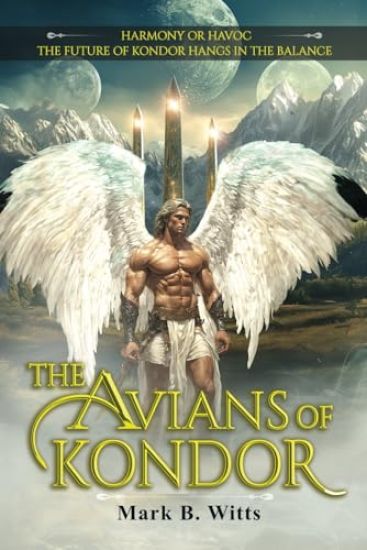
In the lush expanse of the Grand Valley on the planet Kondor, a saga unfolds beneath the shadow of the towering Othor Mountains. "The Avians of Kondor" is a tale of two races locked in an ancient struggle: the graceful Avian bird people who commune deeply with nature, and the Othorians, a bat-like race whose king is driven by expansion and domination. At the heart of this conflict is Caleb, a young Avian with an extraordinary destiny, grappling with his emerging powers and the heavy burden of his people's hopes.As the Othorians, led by the ruthless Bertran, intensify their onslaught, the mysterious Creator Marcus, alongside his Enhanced Intellectual Being, Leurin, intervenes, offering hope and advanced technology but also revealing an even greater threat. Can they turn the tide against an enemy whose thirst for power knows no bounds?"The Avians of Kondor" weaves a rich tapestry of loyalty, betrayal, and the quest for harmony. Dive into a world where every choice resonates with the future of an entire planet. Will Caleb harness his newfound abilities and ancestral wisdom in time to save his people?The fate of Kondor and an entire region of the universe teeters on the brink of annihilation. Can the growing flood of evil be turned back in time?