Kirjojen hintavertailu. Mukana 11 627 630 kirjaa ja 12 kauppaa.

Kirjahaku

Etsi kirjoja tekijän nimen, kirjan nimen tai ISBN:n perusteella.

1000 tulosta hakusanalla Mark C Collins

Rewiring the Real

Rewiring the Real

Mark C. Taylor

Columbia University Press
2013
sidottu
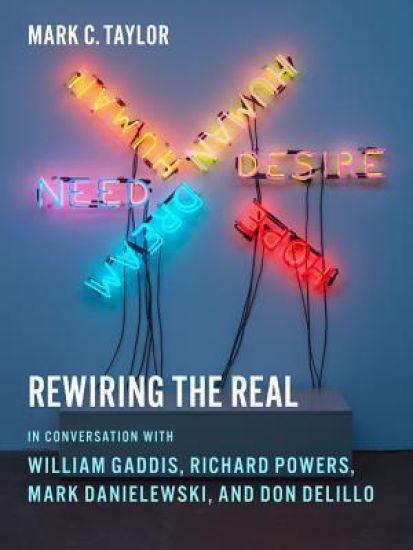
Digital and electronic technologies that act as extensions of our bodies and minds are changing how we live, think, act, and write. Some welcome these developments as bringing humans closer to unified consciousness and eternal life. Others worry that invasive globalized technologies threaten to destroy the self and the world. Whether feared or desired, these innovations provoke emotions that have long fueled the religious imagination, suggesting the presence of a latent spirituality in an era mistakenly deemed secular and posthuman. William Gaddis, Richard Powers, Mark Danielewski, and Don DeLillo are American authors who explore this phenomenon thoroughly in their work. Engaging the works of each in conversation, Mark C. Taylor discusses their sophisticated representations of new media, communications, information, and virtual technologies and their transformative effects on the self and society. He focuses on Gaddis's The Recognitions, Powers's Plowing the Dark, Danielewski's House of Leaves, and DeLillo's Underworld, following the interplay of technology and religion in their narratives and their imagining of the transition from human to posthuman states. Their challenging ideas and inventive styles reveal the fascinating ways religious interests affect emerging technologies and how, in turn, these technologies guide spiritual aspirations. To read these novels from this perspective is to see them and the world anew.
Rewiring the Real

Rewiring the Real

Mark C. Taylor

Columbia University Press
2014
pokkari
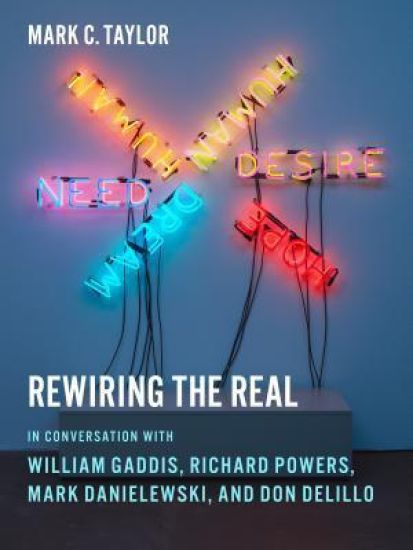
Digital and electronic technologies that act as extensions of our bodies and minds are changing how we live, think, act, and write. Some welcome these developments as bringing humans closer to unified consciousness and eternal life. Others worry that invasive globalized technologies threaten to destroy the self and the world. Whether feared or desired, these innovations provoke emotions that have long fueled the religious imagination, suggesting the presence of a latent spirituality in an era mistakenly deemed secular and posthuman. William Gaddis, Richard Powers, Mark Danielewski, and Don DeLillo are American authors who explore this phenomenon thoroughly in their work. Engaging the works of each in conversation, Mark C. Taylor discusses their sophisticated representations of new media, communications, information, and virtual technologies and their transformative effects on the self and society. He focuses on Gaddis's The Recognitions, Powers's Plowing the Dark, Danielewski's House of Leaves, and DeLillo's Underworld, following the interplay of technology and religion in their narratives and their imagining of the transition from human to posthuman states. Their challenging ideas and inventive styles reveal the fascinating ways religious interests affect emerging technologies and how, in turn, these technologies guide spiritual aspirations. To read these novels from this perspective is to see them and the world anew.
Recovering Place

Recovering Place

Mark C. Taylor

Columbia University Press
2014
sidottu
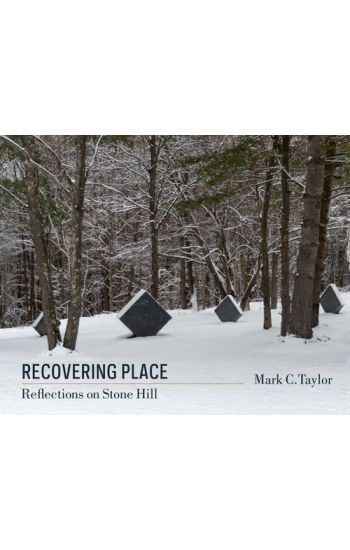
Mark C. Taylor recounts a poignant love affair not with a person but with a place that, paradoxically, cannot be easily localized. For many years, Taylor has lived in the Berkshire Mountains, where he writes and creates land art and sculpture. In a world of mobile screens and virtual realities, where speed is the measure of success and place is disappearing, his work slows down thought and brings life back to earth to give readers time to ponder the importance of place before it slips away. Taylor extends reflection beyond the page and returns with new insights about what is hiding in plain sight all around us. Weaving together words and images, his artful work enacts what it describes. Things long familiar suddenly appear strange, and the strange, unexpected, and unprogrammed unsettle readers in surprising ways. This timely meditation gives pause in the midst of harried lives and turns attention toward what we usually overlook: night, silence, touch, grace, ghosts, water, earth, stones, bones, idleness, infinity, slowness, and contentment. Recovering Place is a unique work with reflections that linger long after the book is closed.
Recovering Place

Recovering Place

Mark C. Taylor

Columbia University Press
2016
pokkari
Mark C. Taylor recounts a poignant love affair not with a person but with a place that, paradoxically, cannot be easily localized. For many years, Taylor has lived in the Berkshire Mountains, where he writes and creates land art and sculpture. In a world of mobile screens and virtual realities, where speed is the measure of success and place is disappearing, his work slows down thought and brings life back to earth to give readers time to ponder the importance of place before it slips away. Taylor extends reflection beyond the page and returns with new insights about what is hiding in plain sight all around us. Weaving together words and images, his artful work enacts what it describes. Things long familiar suddenly appear strange, and the strange, unexpected, and unprogrammed unsettle readers in surprising ways. This timely meditation gives pause in the midst of harried lives and turns attention toward what we usually overlook: night, silence, touch, grace, ghosts, water, earth, stones, bones, idleness, infinity, slowness, and contentment. Recovering Place is a unique work with reflections that linger long after the book is closed.
Intervolution

Intervolution

Mark C. Taylor

Columbia University Press
2020
sidottu
Where does my body begin? Where does it end? What is inside my body? What is outside? What is primary? What is secondary? What is natural? What is artificial?Science fiction has long imagined a future fusion of humanity with technology. Today, many of us—especially people with health issues such as autoimmune diseases—have functionally become hybrids connected to other machines and to other bodies. The combination of artificial intelligence with implants, transplants, prostheses, and genetic reprogramming is transforming medical research and treatment, and it is now also transforming what we thought was human nature.Mark C. Taylor identifies this process as “intervolution” and explores how it is weaving together smart things and smart bodies to create new forms of life. Our wired bodies are no longer freestanding individuals, but interconnected nodes in worldwide networks. Recognizing this transformation overturns deeply entrenched distinctions and oppositions between minds and bodies. Intervolution reveals that we are already cyborgs, integral cogs in what will become a superorganism of bodies and things.
Intervolution

Intervolution

Mark C. Taylor

Columbia University Press
2020
pokkari
Where does my body begin? Where does it end? What is inside my body? What is outside? What is primary? What is secondary? What is natural? What is artificial?Science fiction has long imagined a future fusion of humanity with technology. Today, many of us—especially people with health issues such as autoimmune diseases—have functionally become hybrids connected to other machines and to other bodies. The combination of artificial intelligence with implants, transplants, prostheses, and genetic reprogramming is transforming medical research and treatment, and it is now also transforming what we thought was human nature.Mark C. Taylor identifies this process as “intervolution” and explores how it is weaving together smart things and smart bodies to create new forms of life. Our wired bodies are no longer freestanding individuals, but interconnected nodes in worldwide networks. Recognizing this transformation overturns deeply entrenched distinctions and oppositions between minds and bodies. Intervolution reveals that we are already cyborgs, integral cogs in what will become a superorganism of bodies and things.
After the Human

After the Human

Mark C. Taylor

Columbia University Press
2025
sidottu
The world is on fire and time for avoiding impending disaster is rapidly running out. This catastrophe has deeply entrenched foundations: a belief in human exceptionalism and human mastery over the Earth. Accelerating technological changes ranging from genetic engineering, synthetic biology, and nanotechnology to biobots, neuroprosthetics, and artificial intelligence are creating new worlds in which human beings will either be radically transformed or become extinct.After the Human is an ambitious and audacious grand synthesis that weaves together philosophy, theology, quantum mechanics, relativity theory, information theory, ecology, plant and animal cognition, and artificial intelligence to forge a new philosophical vision for the future. Mark C. Taylor calls for replacing human exceptionalism with a theory of radical relationalism, an account of the world in which everything is interrelated and codependent. People, in this telling, are not isolated individuals separated from each other and set apart from the complex world they are destined to dominate but integral parts of a vital web, where differences enrich each other and nourish the greater whole. Ranging from the grounded worlds of dirt and soil to the most abstract realms of quantum ecology, After the Human reveals the alternative intelligences and transformative possibilities that provide hope for life beyond our perilous moment.
After the Human

After the Human

Mark C. Taylor

Columbia University Press
2025
pokkari
The world is on fire and time for avoiding impending disaster is rapidly running out. This catastrophe has deeply entrenched foundations: a belief in human exceptionalism and human mastery over the Earth. Accelerating technological changes ranging from genetic engineering, synthetic biology, and nanotechnology to biobots, neuroprosthetics, and artificial intelligence are creating new worlds in which human beings will either be radically transformed or become extinct.After the Human is an ambitious and audacious grand synthesis that weaves together philosophy, theology, quantum mechanics, relativity theory, information theory, ecology, plant and animal cognition, and artificial intelligence to forge a new philosophical vision for the future. Mark C. Taylor calls for replacing human exceptionalism with a theory of radical relationalism, an account of the world in which everything is interrelated and codependent. People, in this telling, are not isolated individuals separated from each other and set apart from the complex world they are destined to dominate but integral parts of a vital web, where differences enrich each other and nourish the greater whole. Ranging from the grounded worlds of dirt and soil to the most abstract realms of quantum ecology, After the Human reveals the alternative intelligences and transformative possibilities that provide hope for life beyond our perilous moment.
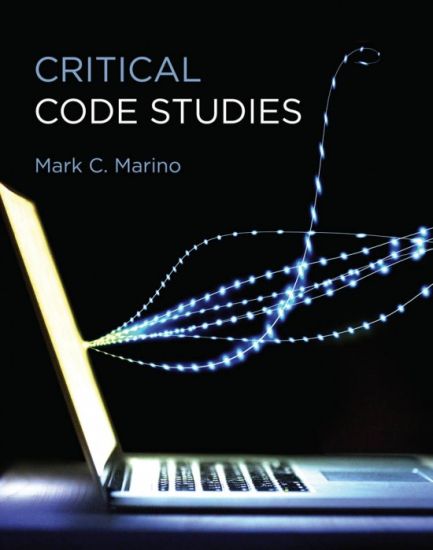
Critical Code Studies

Critical Code Studies

Mark C. Marino

MIT Press
2020
sidottu
An argument that we must read code for more than what it does-we must consider what it means.Computer source code has become part of popular discourse. Code is read not only by programmers but by lawyers, artists, pundits, reporters, political activists, and literary scholars; it is used in political debate, works of art, popular entertainment, and historical accounts. In this book, Mark Marino argues that code means more than merely what it does; we must also consider what it means. We need to learn to read code critically. Marino presents a series of case studies-ranging from the Climategate scandal to a hactivist art project on the US-Mexico border-as lessons in critical code reading.Marino shows how, in the process of its circulation, the meaning of code changes beyond its functional role to include connotations and implications, opening it up to interpretation and inference-and misinterpretation and reappropriation. The Climategate controversy, for example, stemmed from a misreading of a bit of placeholder code as a "smoking gun" that supposedly proved fabrication of climate data. A poetry generator created by Nick Montfort was remixed and reimagined by other poets, and subject to literary interpretation.Each case study begins by presenting a small and self-contained passage of code-by coders as disparate as programming pioneer Grace Hopper and philosopher Friedrich Kittler-and an accessible explanation of its context and functioning. Marino then explores its extra-functional significance, demonstrating a variety of interpretive approaches.
Writing the Oral Tradition

Writing the Oral Tradition

Mark C. Amodio

University of Notre Dame Press
2004
nidottu
Mark Amodio's book focuses on the influence of the oral tradition on written vernacular verse produced in England from the fifth to the fifteenth century. His primary aim is to explore how a living tradition articulated only through the public, performance voices of pre-literate singers came to find expression through the pens of private, literate authors. Amodio argues that the expressive economy of oral poetics survives in written texts because, throughout the Middle Ages, literacy and orality were interdependent, not competing, cultural forces. After delving into the background of the medieval oral-literate matrix, Writing the Oral Tradition develops a model of non-performative oral poetics that is a central, perhaps defining, component of Old English vernacular verse. Following the Norman Conquest, oral poetics lost its central position and became one of many ways to articulate poetry. Contrary to many scholars, Amodio argues that oral poetics did not disappear but survived well into the post-Conquest period. It influenced the composition of Middle English verse texts produced from the twelfth to the fourteenth century because it offered poets an affectively powerful and economical way to articulate traditional meanings. Indeed, fragments of oral poetics are discoverable in contemporary prose, poetics, and film as they continue to faithfully emit their traditional meanings. Writing the Oral Tradition will appeal to specialists and students interested in medieval literature, medieval cultural studies, and oral theory.
Washington Hall at Notre Dame

Washington Hall at Notre Dame

Mark C. Pilkinton

University of Notre Dame Press
2011
nidottu
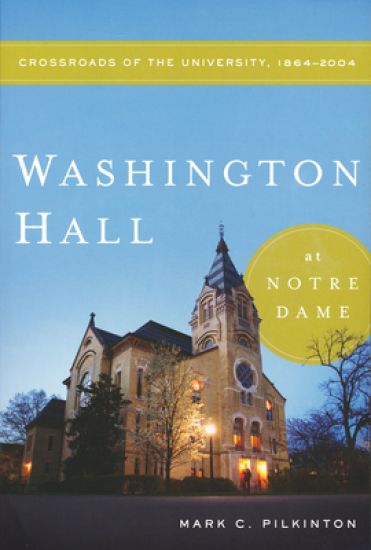
At the heart of the University of Notre Dame's campus sits the Main Building with its trademark golden dome. Flanking it on the west is the equally distinctive Sacred Heart Basilica, and on the east is the building known today as Washington Hall. Washington Hall at Notre Dame is the first history of this building—the university's first performing arts center—and illuminates the ways in which Washington Hall has served as the prime venue of secular communal assembly for the university and surrounding communities since 1864. In addition to detailing the history of Washington Hall, Mark Pilkinton, a theatre historian, emphasizes the art form of theatre and its development at Notre Dame, but also discusses the contributions of music, debate, and lectures, as well as the introduction of the "new media" of film, radio, and television. Among many other fascinating stories, the author recounts the early commencements and "exhibitions" that included students' orations in Latin and Greek, chronicles the history of the ghost of Washington Hall, and describes the contributions Knute Rockne made to the performing arts at the university, both as a student actor and as a faculty member. Lavishly illustrated with 50 halftones and 5 line drawings, Washington Hall at Notre Dame offers a fascinating history of Notre Dame through the prism of its first performing arts center and adds to our understanding of American Catholic higher education and American history in general.
Washington Hall at Notre Dame

Washington Hall at Notre Dame

Mark C. Pilkinton

UNIVERSITY OF NOTRE DAME PRESS
2022
sidottu
At the heart of the University of Notre Dame's campus sits the Main Building with its trademark golden dome. Flanking it on the west is the equally distinctive Sacred Heart Basilica, and on the east is the building known today as Washington Hall. Washington Hall at Notre Dame is the first history of this building—the university's first performing arts center—and illuminates the ways in which Washington Hall has served as the prime venue of secular communal assembly for the university and surrounding communities since 1864. In addition to detailing the history of Washington Hall, Mark Pilkinton, a theatre historian, emphasizes the art form of theatre and its development at Notre Dame, but also discusses the contributions of music, debate, and lectures, as well as the introduction of the "new media" of film, radio, and television. Among many other fascinating stories, the author recounts the early commencements and "exhibitions" that included students' orations in Latin and Greek, chronicles the history of the ghost of Washington Hall, and describes the contributions Knute Rockne made to the performing arts at the university, both as a student actor and as a faculty member. Lavishly illustrated with 50 halftones and 5 line drawings, Washington Hall at Notre Dame offers a fascinating history of Notre Dame through the prism of its first performing arts center and adds to our understanding of American Catholic higher education and American history in general.
Secret Ritual and Manhood in Victorian America

Secret Ritual and Manhood in Victorian America

Mark C. Carnes

Yale University Press
1991
pokkari
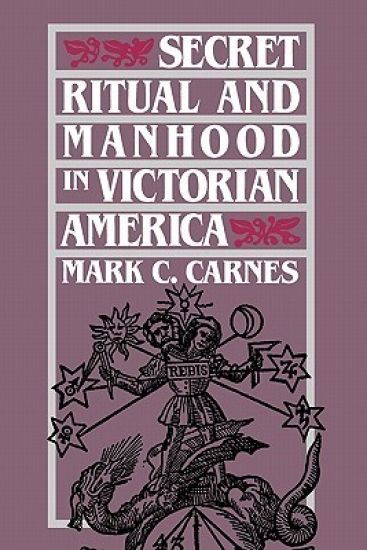
Freemasons, Odd Fellows, Knights of Pythias—why did millions of nineteenth-century American men belong to these and other secret orders? In this engrossing study, Mark C. Carnes argues that fraternal rituals created a fantasy world antithetical to prevailing religious practices, gender roles, and institutional structures, offering a male religious counterculture that opposed an increasingly liberal and feminized Protestantism. "[An] original and compelling study. . . . Making use of anthropology as well as social history, Carnes is probably the first outsider to take these rituals seriously. . . . Playing the role of a graceful, controlling . . . guide into these mysteries, Carnes slowly unveils his thesis, which itself has several layers of mystery."—David Leverentz, New England Quarterly "An imaginative fusion of social and intellectual history. . . . Carnes’s work shows the true depth of nineteenth-century male sexual anxiety and hostility toward women. In this compelling book, Carnes opens new approaches to the study of gender and helps us better understand the reorientation of American culture at the turn of the century." —Donald Yacovone, Journal of American History"This is an important monograph in the field of men’s history. . . . This is ambitious conceptualization—the book is a refreshingly bold statement. . . . I find most of its conclusions accurate."—Peter N. Stearns, Journal of Ritual Studies"The breadth and thoroughness of this book is impressive. Carnes draws on the literature of the time, religious history and theology, child rearing and developmental psychology, women's history and gender studies, and structural and cultural anthropology."—Rosamund Orde-Powlett, Literary Review
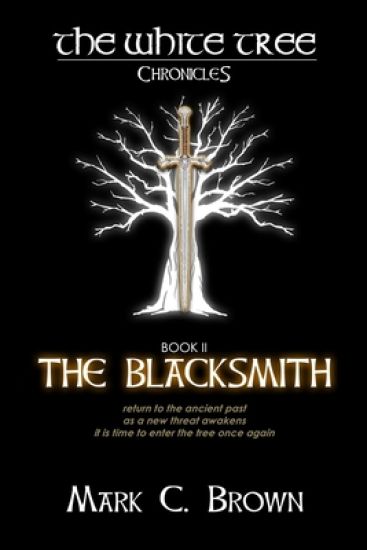
The White Tree: The Blacksmith

The White Tree: The Blacksmith

Mark C. Brown

Lulu.com
2019
nidottu
A storm begins to brew as ancient ties calls the present.Cade finds himself, once again, caught up into the past.Something threatens the White TreeNow, as the last Keeper of the Tree, his job is to protect it.Will his abilities help him?Allies and foes, both mythical and legendaryCross his path as his journey unfolds.Join Cade as he faces new challenges Especially when he befriends a mysterious manWho is on a mission himself.
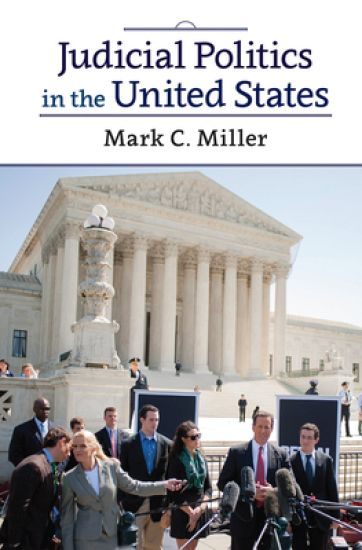
Judicial Politics in the United States
Judicial Politics in the United States examines the role of courts as policymaking institutions and their interactions with the other branches of government and other political actors in the U.S. political system. Not only does this book cover the nuts and bolts of the functions, structures and processes of our courts and legal system, it goes beyond other judicial process books by exploring how the courts interact with executives, legislatures, and state and federal bureaucracies. It also includes a chapter devoted to the courts' interactions with interest groups, the media, and general public opinion and a chapter that looks at how American courts and judges interact with other judiciaries around the world.Judicial Politics in the United States balances coverage of judicial processes with discussions of the courts' interactions with our larger political universe, making it an essential text for students of judicial politics.
Controlling High Blood Pressure through Nutrition, Nutritional Supplements, Lifestyle, and Drugs
Controlling High Blood Pressure through Nutrition, Nutritional Supplements, Lifestyle, and Drugs helps prevent and treat high blood pressure and hypertension, the most common primary diagnosis in the United States and a leading cause of heart attack, heart failure, kidney failure, and stroke.Written by two leading experts in nutrition and hypertension, it takes an integrative and evidence-based approach based on scientific research and clinical studies. It explains what causes high blood pressure and includes easy-to-follow solutions for patients that help to treat and prevent it. These include:The ideal drugs to reduce blood pressure with fewest side effects and optimal efficacyA nutrition program to reduce weight and lower the risk of a cardiovascular problemA comprehensive review of nutritional supplements to improve blood pressure control and reduce cardiovascular diseaseA review of lifestyle changes to improve blood pressure such as a detailed exercise program.This book is for doctors, nutritionists, naturopaths, pharmacists and other health practitioners as well as anyone with a family history of hypertension or overt blood pressure issues that would like to make better and healthier lifestyle choices.
Controlling High Blood Pressure through Nutrition, Nutritional Supplements, Lifestyle, and Drugs
Controlling High Blood Pressure through Nutrition, Nutritional Supplements, Lifestyle, and Drugs helps prevent and treat high blood pressure and hypertension, the most common primary diagnosis in the United States and a leading cause of heart attack, heart failure, kidney failure, and stroke.Written by two leading experts in nutrition and hypertension, it takes an integrative and evidence-based approach based on scientific research and clinical studies. It explains what causes high blood pressure and includes easy-to-follow solutions for patients that help to treat and prevent it. These include:The ideal drugs to reduce blood pressure with fewest side effects and optimal efficacyA nutrition program to reduce weight and lower the risk of a cardiovascular problemA comprehensive review of nutritional supplements to improve blood pressure control and reduce cardiovascular diseaseA review of lifestyle changes to improve blood pressure such as a detailed exercise program.This book is for doctors, nutritionists, naturopaths, pharmacists and other health practitioners as well as anyone with a family history of hypertension or overt blood pressure issues that would like to make better and healthier lifestyle choices.
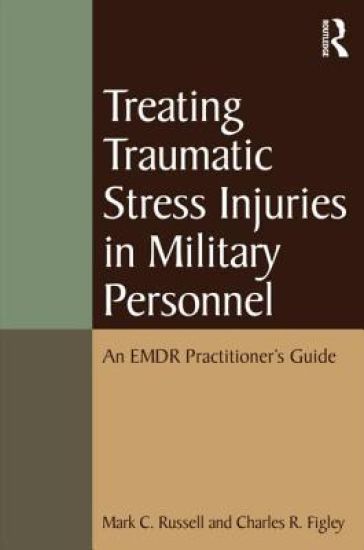
Treating Traumatic Stress Injuries in Military Personnel

Treating Traumatic Stress Injuries in Military Personnel

Mark C. Russell; Charles R. Figley

Routledge
2012
nidottu
Treating Traumatic Stress Injuries in Military Personnel offers a comprehensive treatment manual for mental health professionals treating traumatic stress injuries in both male and female veterans. It is the first book to combine the most recent knowledge about new paradigms of combat-related traumatic stress injuries (Figley & Nash, 2006) and offers a practical guide for treating the spectrum of traumatic stress injuries with EMDR, which has been recognized by the Department of Veterans Affairs and Department of Defense clinical practice guidelines as one of the most studied, efficient, and particularly well-suited evidence-based treatments for military-related stress injuries. Russell and Figley introduce an array of treatment innovations designed especially for use with military populations, and readers will find pages filled with practical information, including appendices that feature a glossary of military terminology, breakdowns of rank and pay grades, and various clinical forms.
Treating Traumatic Stress Injuries in Military Personnel

Treating Traumatic Stress Injuries in Military Personnel

Mark C. Russell; Charles R. Figley

Routledge
2012
sidottu
Treating Traumatic Stress Injuries in Military Personnel offers a comprehensive treatment manual for mental health professionals treating traumatic stress injuries in both male and female veterans. It is the first book to combine the most recent knowledge about new paradigms of combat-related traumatic stress injuries (Figley & Nash, 2006) and offers a practical guide for treating the spectrum of traumatic stress injuries with EMDR, which has been recognized by the Department of Veterans Affairs and Department of Defense clinical practice guidelines as one of the most studied, efficient, and particularly well-suited evidence-based treatments for military-related stress injuries. Russell and Figley introduce an array of treatment innovations designed especially for use with military populations, and readers will find pages filled with practical information, including appendices that feature a glossary of military terminology, breakdowns of rank and pay grades, and various clinical forms.