Kirjojen hintavertailu. Mukana 11 699 587 kirjaa ja 12 kauppaa.

Kirjahaku

Etsi kirjoja tekijän nimen, kirjan nimen tai ISBN:n perusteella.

1000 tulosta hakusanalla Mark C. Taylor

From No-Where to Obscurity: How a 1980's post-punk band called The Flying Shards Stomped Around Washington D.C. and Barely Left a Mark
Two women fondly and hilariously recall their wild days in a 1980's post-punk band in Washington D.C. A fun read for anyone who enjoyed the punk scene, complete with descriptions of venues that were popular at the time. (Some of the song lyrics are also included, which contain some language that may not be suitable for young children or those with delicate sensibilities.)
Puzzles and Paradoxes in Economics

Puzzles and Paradoxes in Economics

Mark Skousen; Kenna C. Taylor

Edward Elgar Publishing Ltd
1997
sidottu
Economics is full of puzzles and paradoxes that often frustrate and challenge everyone, including economists. This engaging book includes fifty puzzles and focuses on three types of paradox. First, everyday observations that appear to belie common sense (such as, why do some supermarket items sell for more per ounce in larger sizes?). Secondly, those paradoxes which have perplexed economists in the past but have since been fairly resolved (such as, the diamond-water paradox). Finally, empirical or conceptual anomalies that remain unresolved and present a challenge to today's economists (such as the voting paradox).Fifty puzzles and paradoxes are analysed in a clear framework. Examples include: the fairness of market wages, the alleged gold absurdity, Giffin goods and the Irish potato famine, the paradox of thrift, the supposed perversity of Wall Street, the leisure paradox, why the best Washington apples are shipped out of state (the Alchian-Allen theorem), the question of whether teachers are underpaid, whether studying economics makes people immoral and whether war is good for the economy.This original and unusual book will have a wide appeal, ranging from the lay person with an interest in everyday economic puzzles, to the student and teacher wishing to develop their understanding of some of the paradoxes that have existed and continue to exist in economics. It will serve as an ideal source for teachers who want to challenge their students with unusual economic problems.
The Polysynthesis Parameter

The Polysynthesis Parameter

Mark C. Baker

Oxford University Press Inc
1996
sidottu
Baker argues that polysynthetic languages - in which verbs are built up of many parts and where one verb can act as a whole sentence - are more than an accidental collection of morphological processes; rather they adopt a systematic way of representing predicate-argument relationships, parallel to but distinct from the system used for English.
The Polysynthesis Parameter

The Polysynthesis Parameter

Mark C. Baker

Oxford University Press Inc
1996
nidottu
Baker argues that polysynthetic languages - in which verbs are built up of many parts and where one verb can act as a whole sentence - are more than an accidental collection of morphological processes; rather they adopt a systematic way of representing predicate-argument relationships, parallel to but distinct from the system used for English. This idea has repercussions for many areas of syntax and morphology, resulting in a comprehensive picture of the grammar of polysynthetic languages.
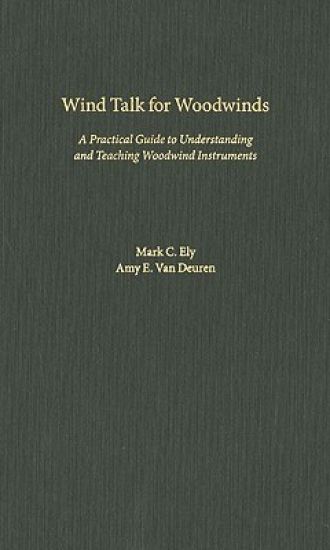
Wind Talk for Woodwinds

Wind Talk for Woodwinds

Mark C Ely; Amy E. Van Deuren

Oxford University Press Inc
2009
sidottu
Wind Talk for Woodwinds provides instrumental music teachers, practitioners, and students with a handy, easy-to-use pedagogical resource for woodwind instruments found in school instrumental programs. With thorough coverage of the most common woodwind instruments - flute, oboe, clarinet, saxophone, and bassoon - the book offers the most topical and information necessary for effective teaching. This includes terminology, topics, and concepts associated with each specific instrument, along with teaching suggestions that can be applied in the classroom. Be sure to look to the back of the book for a "Practical Tips" section, which discusses common technical faults and corrections, common problems with sound (as well as their causes and solutions to them), fingering charts, literature lists (study materials, method books, and solos), as well as a list of additional resources relevant to teaching woodwind instruments (articles, websites, audio recordings). Without question, Wind Talk for Woodwinds stands alone as an invaluable resource for woodwinds!
Wind Talk for Woodwinds

Wind Talk for Woodwinds

Mark C Ely; Amy E. Van Deuren

Oxford University Press Inc
2009
nidottu
Wind Talk for Woodwinds provides instrumental music teachers, practitioners, and students with a handy, easy-to-use pedagogical resource for woodwind instruments found in school instrumental programs. With thorough coverage of the most common woodwind instruments - flute, oboe, clarinet, saxophone, and bassoon - the book offers the most topical and information necessary for effective teaching. This includes terminology, topics, and concepts associated with each specific instrument, along with teaching suggestions that can be applied in the classroom. Be sure to look to the back of the book for a "Practical Tips" section, which discusses common technical faults and corrections, common problems with sound (as well as their causes and solutions to them), fingering charts, literature lists (study materials, method books, and solos), as well as a list of additional resources relevant to teaching woodwind instruments (articles, websites, audio recordings). Without question, Wind Talk for Woodwinds stands alone as an invaluable resource for woodwinds!
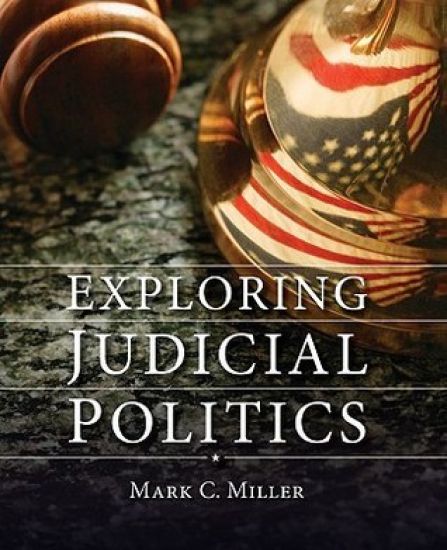
Exploring Judicial Politics

Exploring Judicial Politics

Mark C. Miller

Oxford University Press Inc
2008
nidottu
This volume presents 20 original essays by political scientists and other judicial scholars on a variety of topics relative to the broad area of judicial politics. One theme of these essays is to explore the ways in which law and politics intertwine in the United States. Secondly, the essays provide insights into how scholars go about studying various judicial politics subjects such as the role of judges, lawyers, and juries in our political system. The essays explore issues at the trial court level, at the intermediate appellate court level, and at the U.S. Supreme Court. The essays look at the role of judges, juries, lawyers, interest groups, and other actors in the American legal system. Some of the essays look at the issues of judicial selection, while others look at how what we learn about the courts in the U.S. can help us better understand courts in other countries. Taken together, the essays reveal the broad range of issues that students of judicial politics will want to understand in order to appreciate the role of courts in our society.
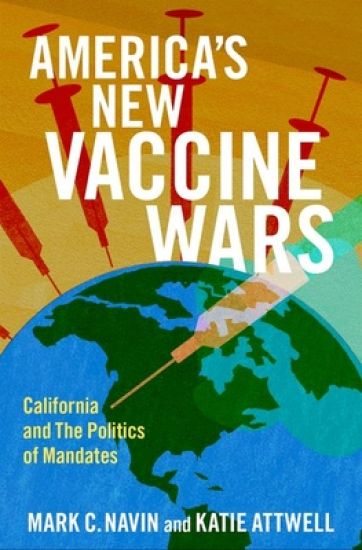
America's New Vaccine Wars

America's New Vaccine Wars

Mark C. Navin; Katie Attwell

OXFORD UNIVERSITY PRESS INC
2023
sidottu
Bioethicist Mark Navin and policy scholar Katie Attwell explore the evolution of American childhood vaccination policy through the prism of political history, contemporary parenthood, and diverse governance strategies. America's New Vaccine Wars focuses on the origins and the outcomes of America's recent efforts to eliminate nonmedical exemptions to school and daycare vaccine mandates. These policy developments have increased immunization rates, but they have also ignited polarizing, nationwide debates about parents' rights, democracy, and the authority of the government to use coercion to promote health. This book explores the meaning of these battles for parents, doctors, the politics of public health, and the future of bioethics. Navin and Attwell ground the book with a case study of California's efforts to exclude unvaccinated children from school and daycare following the Disneyland Measles Outbreak of 2014. The authors use original interviews with key policymakers and activists to explain the development and execution of California's new vaccination policies, and they connect California's immunization policy developments to similar efforts across America and in other countries. America's New Vaccine Wars is a story about how political and community actors fought to exclude unvaccinated children from school in the face of significant opposition and failing public health institutions. The book unpacks the meaning and impact of these efforts for broader debates about America's immunization governance, including conflicts about coercive public health measures during the COVID-19 pandemic.
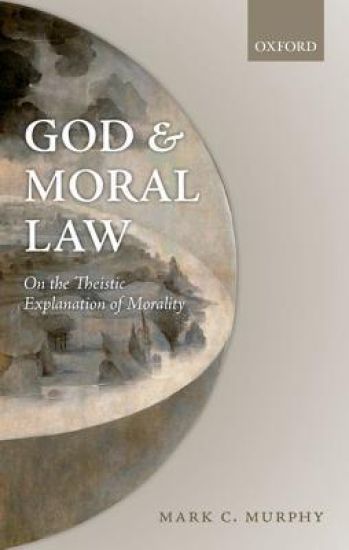
God and Moral Law

God and Moral Law

Mark C. Murphy

Oxford University Press
2016
nidottu
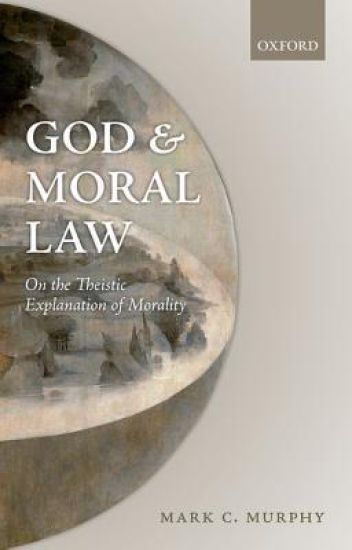
Does God's existence make a difference to how we explain morality? Mark C. Murphy critiques the two dominant theistic accounts of morality--natural law theory and divine command theory--and presents a novel third view. He argues that we can value natural facts about humans and their good, while keeping God at the centre of our moral explanations. The characteristic methodology of theistic ethics is to proceed by asking whether there are features of moral norms that can be adequately explained only if we hold that such norms have some sort of theistic foundation. But this methodology, fruitful as it has been, is one-sided. God and Moral Law proceeds not from the side of the moral norms, so to speak, but from the God side of things: what sort of explanatory relationship should we expect between God and moral norms given the existence of the God of orthodox theism? Mark C. Murphy asks whether the conception of God in orthodox theism as an absolutely perfect being militates in favor of a particular view of the explanation of morality by appeal to theistic facts. He puts this methodology to work and shows that, surprisingly, natural law theory and divine command theory fail to offer the sort of explanation of morality that we would expect given the existence of the God of orthodox theism. Drawing on the discussion of a structurally similar problem--that of the relationship between God and the laws of nature--Murphy articulates his new account of the relationship between God and morality, one in which facts about God and facts about nature cooperate in the explanation of moral law.
God's Own Ethics

God's Own Ethics

Mark C. Murphy

Oxford University Press
2017
sidottu
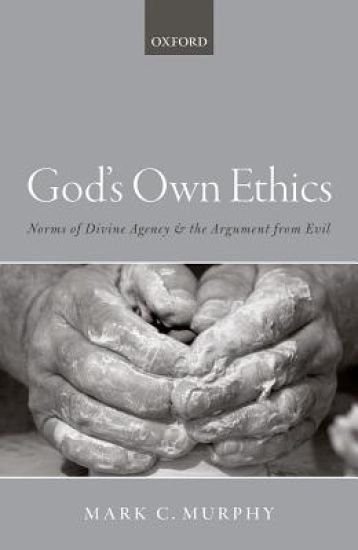
Every version of the argument from evil requires a premise concerning God's motivation - about the actions that God is motivated to perform or the states of affairs that God is motivated to bring about. The typical source of this premise is a conviction that God is, obviously, morally perfect, where God's moral perfection consists in God's being motivated to act in accordance with the norms of morality by which both we and God are governed. The aim of God's Own Ethics is to challenge this understanding by giving arguments against this view of God as morally perfect and by offering an alternative account of what God's own ethics is like. According to this alternative account, God is in no way required to promote the well-being of sentient creatures, though God may rationally do so. Any norms of conduct that favor the promotion of creaturely well-being that govern God's conduct are norms that are contingently self-imposed by God. This revised understanding of divine ethics should lead us to revise sharply downward our assessment of the force of the argument from evil while leaving intact our conception of God as an absolutely perfect being, supremely worthy of worship.
How to Succeed in Organic Chemistry

How to Succeed in Organic Chemistry

Mark C. Elliott

Oxford University Press
2020
nidottu
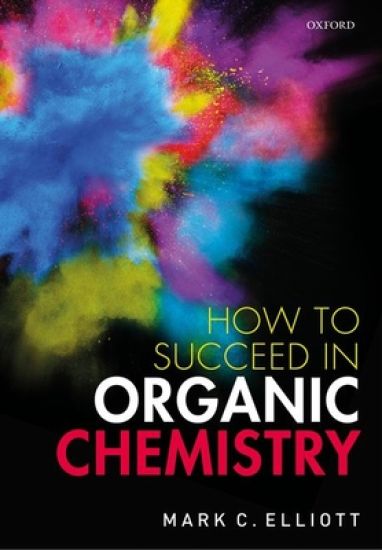
'How to succeed in organic chemistry' gives the reader a solid understanding of the principles of organic reaction mechanisms, such that they can draw structures, stereoisomers and reaction mechanisms with confidence. Throughout, the author speaks the language of students to build their confidence and interest. At heart, the book promotes active learning to ensure the necessary skills become so ingrained that they become something students simply cannot forget, and do not need to revise. As such, the book structures learning so that the reader encounters the right things at the right time, helping to 'internalise' key concepts. Concepts, explanations and examples are presented in short, easy-to-read chapters, each of which explores one of a number of themes, including 'Basics', 'Habits', 'Common error', 'Reaction detail', and 'Practice'. Digital formats and resources How to Succeed in Organic Chemistry is supported by online resources and is available for students and institutions to purchase in a variety of formats. - The e-book includes more than 60 author videos which are embedded in the text, and these discuss and offer solutions to problems posed in the text, providing a fully immersive experience and extra learning support. www.oxfordtextbooks.co.uk/ebooks - These videos are also available as a stand-alone online resource for use alongside the print book, where lecturers can also access the figures from the book for use in their teaching.
Divine Holiness and Divine Action

Divine Holiness and Divine Action

Mark C. Murphy

Oxford University Press
2021
sidottu
Holiness is the attribute most emphatically ascribed to God in Scripture, but there has been little attention devoted to characterizing and considering the entailments of divine holiness. In Divine Holiness and Divine Action, Mark C. Murphy defends an account of holiness indebted to Rudolf Otto's description of the experience of the holy as that of a mysterium tremendum et fascinans. God's being holy consists in God's being someone with whom intimate union is both extremely desirable for us and yet something for which we--and indeed any limited beings--are unfit. This notion of divine holiness is useful for addressing disputed theological questions regarding divine action. In contrast to standard accounts of divine action that begin with assumptions regarding God's moral perfection or God's maximal love, the appeal to divine holiness supports a rival framework for explaining and predicting divine action--the holiness framework--according to which God is motivated to act in ways that are a response to God's own value by keeping distance from that which is deficient, defective, or in any way limited in goodness. This study exhibits the fruitfulness of a reorientation from the morality and love frameworks to the holiness framework by showing how such a reorientation suggests distinct approaches to perennial problems of divine action regarding creation, incarnation, atonement, and salvation. From the treatment of these perennial problems, a general theme regarding divine action emerges: that God's interaction with the world exhibits a radical sort of humility.
God and Moral Law

God and Moral Law

Mark C. Murphy

Oxford University Press
2011
sidottu
Does God's existence make a difference to how we explain morality? Mark C. Murphy critiques the two dominant theistic accounts of morality--natural law theory and divine command theory--and presents a novel third view. He argues that we can value natural facts about humans and their good, while keeping God at the centre of our moral explanations. The characteristic methodology of theistic ethics is to proceed by asking whether there are features of moral norms that can be adequately explained only if we hold that such norms have some sort of theistic foundation. But this methodology, fruitful as it has been, is one-sided. God and Moral Law proceeds not from the side of the moral norms, so to speak, but from the God side of things: what sort of explanatory relationship should we expect between God and moral norms given the existence of the God of orthodox theism? Mark C. Murphy asks whether the conception of God in orthodox theism as an absolutely perfect being militates in favour of a particular view of the explanation of morality by appeal to theistic facts. He puts this methodology to work and shows that, surprisingly, natural law theory and divine command theory fail to offer the sort of explanation of morality that we would expect given the existence of the God of orthodox theism. Drawing on the discussion of a structurally similar problem--that of the relationship between God and the laws of nature--Murphy articulates his new account of the relationship between God and morality, one in which facts about God and facts about nature cooperate in the explanation of moral law.
Critical Code Studies

Critical Code Studies

Mark C. Marino

MIT Press
2020
sidottu
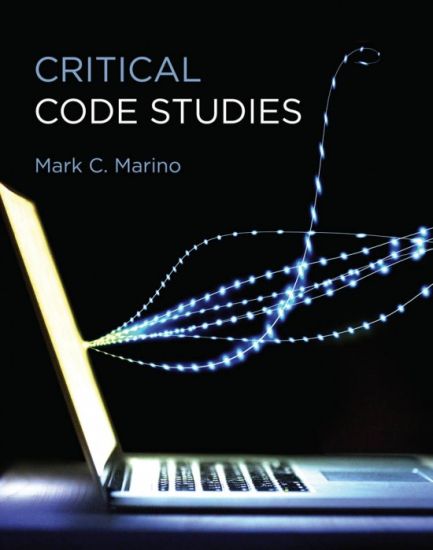
An argument that we must read code for more than what it does-we must consider what it means.Computer source code has become part of popular discourse. Code is read not only by programmers but by lawyers, artists, pundits, reporters, political activists, and literary scholars; it is used in political debate, works of art, popular entertainment, and historical accounts. In this book, Mark Marino argues that code means more than merely what it does; we must also consider what it means. We need to learn to read code critically. Marino presents a series of case studies-ranging from the Climategate scandal to a hactivist art project on the US-Mexico border-as lessons in critical code reading.Marino shows how, in the process of its circulation, the meaning of code changes beyond its functional role to include connotations and implications, opening it up to interpretation and inference-and misinterpretation and reappropriation. The Climategate controversy, for example, stemmed from a misreading of a bit of placeholder code as a "smoking gun" that supposedly proved fabrication of climate data. A poetry generator created by Nick Montfort was remixed and reimagined by other poets, and subject to literary interpretation.Each case study begins by presenting a small and self-contained passage of code-by coders as disparate as programming pioneer Grace Hopper and philosopher Friedrich Kittler-and an accessible explanation of its context and functioning. Marino then explores its extra-functional significance, demonstrating a variety of interpretive approaches.
Writing the Oral Tradition

Writing the Oral Tradition

Mark C. Amodio

University of Notre Dame Press
2004
nidottu
Mark Amodio's book focuses on the influence of the oral tradition on written vernacular verse produced in England from the fifth to the fifteenth century. His primary aim is to explore how a living tradition articulated only through the public, performance voices of pre-literate singers came to find expression through the pens of private, literate authors. Amodio argues that the expressive economy of oral poetics survives in written texts because, throughout the Middle Ages, literacy and orality were interdependent, not competing, cultural forces. After delving into the background of the medieval oral-literate matrix, Writing the Oral Tradition develops a model of non-performative oral poetics that is a central, perhaps defining, component of Old English vernacular verse. Following the Norman Conquest, oral poetics lost its central position and became one of many ways to articulate poetry. Contrary to many scholars, Amodio argues that oral poetics did not disappear but survived well into the post-Conquest period. It influenced the composition of Middle English verse texts produced from the twelfth to the fourteenth century because it offered poets an affectively powerful and economical way to articulate traditional meanings. Indeed, fragments of oral poetics are discoverable in contemporary prose, poetics, and film as they continue to faithfully emit their traditional meanings. Writing the Oral Tradition will appeal to specialists and students interested in medieval literature, medieval cultural studies, and oral theory.
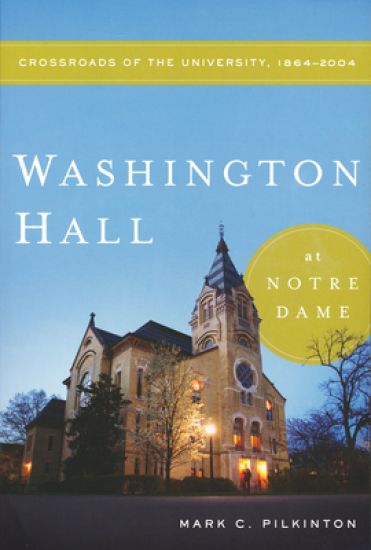
Washington Hall at Notre Dame

Washington Hall at Notre Dame

Mark C. Pilkinton

University of Notre Dame Press
2011
nidottu
At the heart of the University of Notre Dame's campus sits the Main Building with its trademark golden dome. Flanking it on the west is the equally distinctive Sacred Heart Basilica, and on the east is the building known today as Washington Hall. Washington Hall at Notre Dame is the first history of this building—the university's first performing arts center—and illuminates the ways in which Washington Hall has served as the prime venue of secular communal assembly for the university and surrounding communities since 1864. In addition to detailing the history of Washington Hall, Mark Pilkinton, a theatre historian, emphasizes the art form of theatre and its development at Notre Dame, but also discusses the contributions of music, debate, and lectures, as well as the introduction of the "new media" of film, radio, and television. Among many other fascinating stories, the author recounts the early commencements and "exhibitions" that included students' orations in Latin and Greek, chronicles the history of the ghost of Washington Hall, and describes the contributions Knute Rockne made to the performing arts at the university, both as a student actor and as a faculty member. Lavishly illustrated with 50 halftones and 5 line drawings, Washington Hall at Notre Dame offers a fascinating history of Notre Dame through the prism of its first performing arts center and adds to our understanding of American Catholic higher education and American history in general.
Washington Hall at Notre Dame

Washington Hall at Notre Dame

Mark C. Pilkinton

UNIVERSITY OF NOTRE DAME PRESS
2022
sidottu
At the heart of the University of Notre Dame's campus sits the Main Building with its trademark golden dome. Flanking it on the west is the equally distinctive Sacred Heart Basilica, and on the east is the building known today as Washington Hall. Washington Hall at Notre Dame is the first history of this building—the university's first performing arts center—and illuminates the ways in which Washington Hall has served as the prime venue of secular communal assembly for the university and surrounding communities since 1864. In addition to detailing the history of Washington Hall, Mark Pilkinton, a theatre historian, emphasizes the art form of theatre and its development at Notre Dame, but also discusses the contributions of music, debate, and lectures, as well as the introduction of the "new media" of film, radio, and television. Among many other fascinating stories, the author recounts the early commencements and "exhibitions" that included students' orations in Latin and Greek, chronicles the history of the ghost of Washington Hall, and describes the contributions Knute Rockne made to the performing arts at the university, both as a student actor and as a faculty member. Lavishly illustrated with 50 halftones and 5 line drawings, Washington Hall at Notre Dame offers a fascinating history of Notre Dame through the prism of its first performing arts center and adds to our understanding of American Catholic higher education and American history in general.
Secret Ritual and Manhood in Victorian America

Secret Ritual and Manhood in Victorian America

Mark C. Carnes

Yale University Press
1991
pokkari
Freemasons, Odd Fellows, Knights of Pythias—why did millions of nineteenth-century American men belong to these and other secret orders? In this engrossing study, Mark C. Carnes argues that fraternal rituals created a fantasy world antithetical to prevailing religious practices, gender roles, and institutional structures, offering a male religious counterculture that opposed an increasingly liberal and feminized Protestantism. "[An] original and compelling study. . . . Making use of anthropology as well as social history, Carnes is probably the first outsider to take these rituals seriously. . . . Playing the role of a graceful, controlling . . . guide into these mysteries, Carnes slowly unveils his thesis, which itself has several layers of mystery."—David Leverentz, New England Quarterly "An imaginative fusion of social and intellectual history. . . . Carnes’s work shows the true depth of nineteenth-century male sexual anxiety and hostility toward women. In this compelling book, Carnes opens new approaches to the study of gender and helps us better understand the reorientation of American culture at the turn of the century." —Donald Yacovone, Journal of American History"This is an important monograph in the field of men’s history. . . . This is ambitious conceptualization—the book is a refreshingly bold statement. . . . I find most of its conclusions accurate."—Peter N. Stearns, Journal of Ritual Studies"The breadth and thoroughness of this book is impressive. Carnes draws on the literature of the time, religious history and theology, child rearing and developmental psychology, women's history and gender studies, and structural and cultural anthropology."—Rosamund Orde-Powlett, Literary Review