Kirjojen hintavertailu. Mukana 12 390 323 kirjaa ja 12 kauppaa.

Kirjahaku

Etsi kirjoja tekijän nimen, kirjan nimen tai ISBN:n perusteella.

1000 tulosta hakusanalla Mark D. Jordan

The Fantasy of Reunion

The Fantasy of Reunion

Mark D. Chapman

Oxford University Press
2014
sidottu
This book discusses the different understandings of 'catholicity' that emerged in the interactions between the Church of England and other churches - particularly the Roman Catholic Church and later the Old Catholic Churches - from the early 1830s to the early 1880s. It presents a pre-history of ecumenism, which isolates some of the most distinctive features of the ecclesiological positions of the different churches as these developed through the turmoil of the nineteenth century. It explores the historical imagination of a range of churchmen and theologians, who sought to reconstruct their churches through an encounter with the past whose relevance for the construction of identity in the present went unquestioned. The past was no foreign country but instead provided solutions to the perceived dangers facing the church of the present. Key protagonists are John Henry Newman and Edward Bouverie Pusey, the leaders of the Oxford Movement, as well as a number of other less well-known figures who made their distinctive mark on the relations between the churches. The key event in reshaping the terms of the debates between the churches was the Vatican Council of 1870, which put an end to serious dialogue for a very long period, but which opened up new avenues for the Church of England and other non-Roman European churches including the Orthodox. In the end, however, ecumenism was halted in the 1880s by an increasingly complex European situation and an energetic expansion of the British Empire, which saw the rise of Pan-Anglicanism at the expense of ecumenism.

Geriatric Psychiatry

Geriatric Psychiatry

Mark D. Miller; LalithKumar K. Solai

Oxford University Press Inc
2013
nidottu
Part of the Pittsburgh Pocket Psychiatry series, this volume comprehensively and definitively addresses geriatric psychiatry, focusing on depression, dementia, anxiety as well as managing the caregivers. Additional chapters cover psychotherapy, legal issues, alcohol and drug use, and chronic pain management. Designed to be a highly practical, clinical guide for practitioners, each chapter is clearly written by one or more faculty members from Western Psychiatric Institute and Clinic, many of whom are recognized experts in their field. Self-assessment questions help the student learn the material.
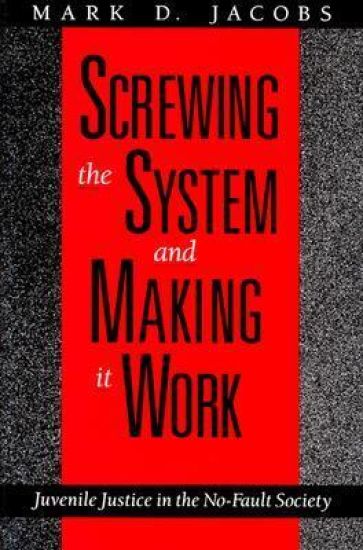
Screwing the System and Making it Work

Screwing the System and Making it Work

Mark D. Jacobs

University of Chicago Press
1990
sidottu
Who is responsible for juvenile delinquency? Mark D. Jacobs uses ethnographic, statistical, and literary methods to uncover the many levels of disorganization in American juvenile justice. By analyzing the continuities betwen normal casework and exceptional cases, he reveals that probation officers must commonly contrive informal measures to circumvent a system which routinely obstructs the delivery of services to their clients. Jacobs defines the concept of the "no-fault society" to describe the larger context of societal disorder and interpersonal manipulation that the juvenile justice system at once reflects and exacerbates.
Screwing the System and Making it Work

Screwing the System and Making it Work

Mark D. Jacobs

University of Chicago Press
1993
nidottu
Who is responsible for juvenile delinquency? Mark D. Jacobs uses ethnographic, statistical, and literary methods to uncover the many levels of disorganization in American juvenile justice. By analyzing the continuities betwen normal casework and exceptional cases, he reveals that probation officers must commonly contrive informal measures to circumvent a system which routinely obstructs the delivery of services to their clients. Jacobs defines the concept of the "no-fault society" to describe the larger context of societal disorder and interpersonal manipulation that the juvenile justice system at once reflects and exacerbates.
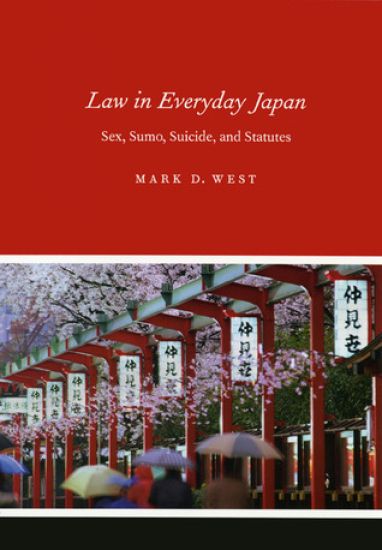
Law in Everyday Japan

Law in Everyday Japan

Mark D. West

University of Chicago Press
2005
sidottu
Lawsuits are rare events in most people's lives. And high-stakes cases are even less commonplace. Why is it, then, that scholarship concerning the Japanese legal system has focused almost exclusively on big topics like corporate law and large-scale social issues? Mark D. West's Law in Everyday Japan fills a void in our understanding of the relationship between law and social life in Japan by shifting the focus to cases most representative of everyday Japanese life. Compiling case studies based on seven fascinating themes - karaoke-based noise complaints, sumo wrestling, love hotels, post-Kobe earthquake condominium reconstruction, lost-and-found outcomes, working hours, and debt-induced suicide - Law in Everyday Japan offers a vibrant portrait of the way law intermingles with social norms, historically ingrained ideas, and cultural mores in Japan. Each example is informed by extensive fieldwork. West interviews the participants - from judges and lawyers to defendants, plaintiffs, and their families - to uncover an everyday Japan where law matters, albeit in very unexpected ways.
Law in Everyday Japan

Law in Everyday Japan

Mark D. West

University of Chicago Press
2005
nidottu
Lawsuits are rare events in most people's lives. And high-stakes cases are even less commonplace. Why is it, then, that scholarship concerning the Japanese legal system has focused almost exclusively on big topics like corporate law and large-scale social issues? Mark D. West's Law in Everyday Japan fills a void in our understanding of the relationship between law and social life in Japan by shifting the focus to cases most representative of everyday Japanese life. Compiling case studies based on seven fascinating themes - karaoke-based noise complaints, sumo wrestling, love hotels, post-Kobe earthquake condominium reconstruction, lost-and-found outcomes, working hours, and debt-induced suicide - Law in Everyday Japan offers a vibrant portrait of the way law intermingles with social norms, historically ingrained ideas, and cultural mores in Japan. Each example is informed by extensive fieldwork. West interviews the participants - from judges and lawyers to defendants, plaintiffs, and their families - to uncover an everyday Japan where law matters, albeit in very unexpected ways.
Secrets, Sex, and Spectacle

Secrets, Sex, and Spectacle

Mark D. West

University of Chicago Press
2006
sidottu
A leader of a global superpower is betrayed by his mistress, who makes public the sordid details of their secret affair. His wife stands by as he denies the charges. Debates over definitions of moral leadership ensue. Sound familiar? If you guessed Clinton and Lewinsky, try again. This incident involved former Japanese prime minister Sosuke Uno and a geisha. In Secrets, Sex, and Spectacle, Mark D. West organizes the seemingly random worlds of Japanese and American scandal—from corporate fraud to baseball cheaters, political corruption to celebrity sexcapades—to explore well-ingrained similarities and contrasts in law and society. In Japan and the United States, legal and organizational rules tell us what kind of behavior is considered scandalous. When Japanese and American scandal stories differ, those rules—rules that define what’s public and what’s private, rules that protect injuries to dignity and honor, and rules about sex, to name a few—often help explain the differences. In the cases of Clinton and Uno, the rules help explain why the media didn’t cover Uno’s affair, why Uno’s wife apologized on her husband’s behalf, and why Uno—and not Clinton—resigned. Secrets, Sex, and Spectacle offers a novel approach to viewing the phenomenon of scandal—one that will be applauded by anyone who has obsessed over (or ridiculed) these public episodes.
As it Was in the Beginning

As it Was in the Beginning

Mark D. Owens

James Clarke Co Ltd
2016
nidottu
The meaning of Paul's comments about the new creation in 2 Corinthians 5:17 and Galatians 6:15 has long been obscured. Debate has raged for years, with some arguing that the phrase "new creation" solely refers to the inward transformation believers have experienced through faith in Jesus Christ, and others that this phrase should be understood cosmologically and linked with Isaiah's "new heavens and new earth". Still more advocate an ecclesiological interpretation of this phrase that centres Paul in the new community formed around Jesus Christ. In As It Was in the Beginning, Mark Owens argues that the concept of "new creation" should be understood within the realm of Paul's anthropology, cosmology, and ecclesiology. Paul's understanding of new creation belongs within an Urzeit-Endzeit typological framework, especially within 2 Corinthians 5-6 and Ephesians 1-2. Owens's reading of "new creation" gives due weight to the use of Isaianic traditions in Paul's letters, and to demonstrate that the vision of new creation in 2 Corinthians and Galatians is in striking harmony with that of Ephesians.
Okinawan Karate (Kobudo & Te) Teachers, Styles and Secret Techniques
Time moves on, cultures change with the twists of history and secret arts are lost. To understand the essence of karate, kobudo and te is to read and digest this work. To devour the mysteries of the secret principles it records is to dwell in a former time, only then will the reader know the true meanings of what the masters passed on. This book was a classic of the 20th century and, with the passing of time, is now considered to be an historic record for the modern era; both a time capsule and an integrated tool of knowledge transmission. Also featuring contributions from the latest breed of expert researchers, this Expanded Third Edition keeps the original version alive in its entirety, while bringing the Okinawan karate world up to date, as it expands into an ever-increasing international world. Be warned though, it also answers questions that have not been asked until now and topics that could not have been discussed, while expanding on newly debatable issues. This is what the masters were really saying
Zen Bodywork Dynamics, Enigma Key to Restorative Martial Arts
Zen Bodywork Dynamics is a natural, martial-arts-based, hands-on method of helping to restore health in a holistic way. It corresponds with other martial-arts training, which it is seen as complementing - whatever the style. Thumbs, hands, elbows and feet, etc. are used to apply pressure and relieve pent-up stress in the format of: Relax, Release & Let Go. Many trainees have benefitted from its wisdom, as have thousands of members of the public - the book is highly recommended.
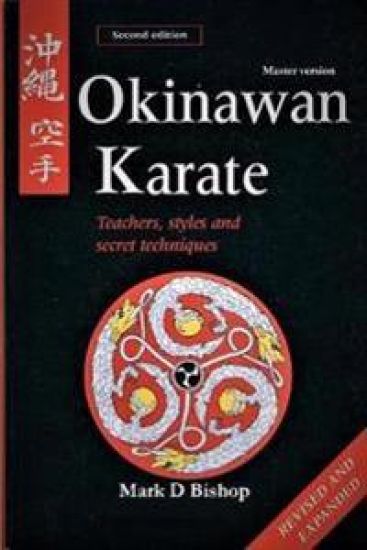
Okinawan Karate: Teachers, Styles & Secret Techniques, Revised & Expanded Second Edition: Master Version
Progression is a positive trait, as long as one keeps in touch with the past and has a staple backdrop to focus or fall back on. Although the Revised Expanded Third Edition contains all the wording and photographs that are reproduced in both the first edition, as well as this Revised and Expanded Second Edition, it comparatively represents a step into what was, for these latter two books, the future. The year 2019, in which I am writing this foreword, represents respectively 30 years and 20 years into the future since the publication of these two books, so I think this faithful reproduction of the Master Version by Q&I Publications is well timed. For some readers it might bring about nostalgia, for others it might be an eye-opener into a world that is not always truthfully represented, due to commercial or other reasons. For the teachers who I interviewed and have been embodied herein, I hope this Master Version will remain a testament into how they wished to be represented for time immemorial.
Okinawan Te, In the Footsteps of The Masters
Known for its knock-out strikes, fluid footwork & bladed weaponry, Okinawan te is a survivor that has endured due to its ability to adapt to social changes. In 1609, in order to suppress Okinawa's developing military might & vast trading links, the Japanese Satsuma clan launched a massive invasion & subjugated the island kingdom. Until then, te had been a bushido battlefield system, with organised castle & naval warfare. However, under Satsuma's rule, the Okinawan bushi, could no longer bear arms in public or have standing armies, so te was transformed into a personal fighting system & recreational activity. Within karate, Okinawan dance & music, the hidden essence of te still provides the framework. It fills Okinawan cultural life & keeps its subtle social machinery revolving. In this detailed work the foundation stones of Okinawan te are laid out through the explanations of historic technical photographs left by the masters for future generations; their forethought has enabled us to walk in their footsteps.
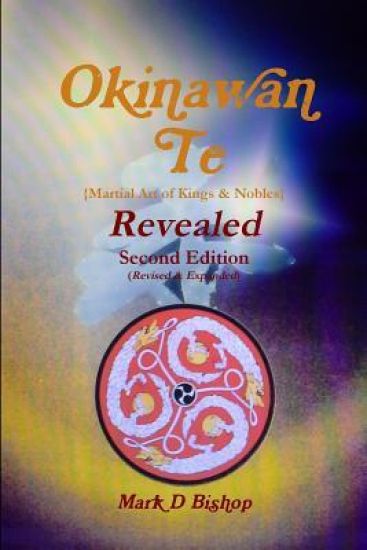
Okinawan Te (Martial Art of Kings & Nobles) Revealed, Second Edition (Revised & Expanded)
Another revealing book by Mark D Bishop. This work expands on the original best-selling version, by including more than 40 extra pages and further explaining the methodology of applications, as well training methods, for proper conditioning. Providing a teaching format for the instructor, it is also an informative workbook for the beginner and a how-to-do manual for those already with experience in the martial arts. In effect, it is the first ever work that deals thoroughly with the training and techniques of Okinawan Te as it developed from 1609, following the Satsuma Invasion of the Ryukyu Islands, until 1879, when the monarchy was dissolved by Japan. Until now, despite demonstrations of its effectiveness, the study of and training in Okinawan Te of this period has been known only to a few adherents. This has led to a mystification and often false representation. However, this can no longer be the case, as all is uncovered in this detailed and brilliantly coordinated work.
Karate Uncovered (Fact & Fiction, Wisdom & Magic)
Explosively direct: Always one to stand his ground for technical reality and historical fact, this work reflects the quality and sheer scale of information in the author's previous works. Poignant questions are asked, debates are raised and down-to-earth, enlightening answers are given. Much of what is considered to be tradition by many a karate-ka is shown to be not necessarily the case. If you think the closed-fist punch is standard fair, read the facts. If you have been taught that karate is an ancient Japanese art founded on violence, reconsider the fiction. If you think karate training is for self-development, absorb the wisdom. If you seek the truth about zen, enjoy the magic. Packed with until now undisclosed information, this book leads the way for the mature karate-ka to discover those hidden treasures that lie beneath the surface. Fifty years of training will give any teacher insights and Mark D Bishop has more than most to offer. Read, absorb, be enriched & uncover your true self, through karate