Kirjojen hintavertailu. Mukana 11 699 587 kirjaa ja 12 kauppaa.

Kirjahaku

Etsi kirjoja tekijän nimen, kirjan nimen tai ISBN:n perusteella.

1000 tulosta hakusanalla Mark Joseph Rogers

Life After America: A Memoir about the Wild and Crazy 1960s
What would you do if your country was on the wrong side of history? Would you leave if you had the chance--even if leaving might ruin the rest of your life?In 1967, Joseph Mark Glazner, a twenty-two-year-old American writer, left Los Angeles behind forever and became one of the first war resisters to go to Canada during the extremely divisive Vietnam War.Life After America is Glazner's upbeat, personal memoir about his first two years in Canada as an FBI fugitive, new immigrant, tabloid writer, journalist, and John Lennon's accidental muse.Glazner, an internationally acclaimed crime novelist, recounts with dark humor and the eye of a thriller writer his nearly bungled escape from the US, the sweetness and pitfalls of love in an era of sexual revolution, and his own youthful quest to make an impact on the world.Like many new immigrants throughout history, Glazner soon discovered that physically emigrating was easier than emotionally leaving his homeland.Consumed with exiting the US as his personal protest against the war, he thought little about where he was going. Canada was the closest safe haven, but he knew so little about it he thought Montreal was on the Atlantic Ocean somewhere north of Boston. He had no idea what Quebec separatists were.In Canada, half the news coverage was American. He couldn't escape its impact. Glazner chronicles his own psychological turmoil as the war continued to escalate, and two men of reason--Martin Luther King, Jr. and Robert Kennedy--were shot dead. He watched with growing despair as Richard Nixon became President on the promise of a secret plan to quickly end the war. (Spoiler alert: There was no plan.)In Canada, he marveled at the rise of Pierre Trudeau and agonized over the threat from terrorist bombs to Canada and to his own refuge.Never a formal member of any protest or anti-war group, Glazner's quest to think for himself and draw his own conclusions will resonate with many today in an increasingly dangerous and polarized world.While resistance and protest against violence are distinctive themes, Glazner's racy, picaresque, coming-of-age tale is also about a young writer surviving in the big city, falling in love, and hunting for his first big break.Willing to try almost anything, Glazner hawked celebrity posters, wrote for small film companies, and worked as a futurist in a McLuhanesque think tank. Reinventing himself as a tabloid writer and editor at Montreal's notorious weekly, Midnight, Glazner reveals how some of the most outrageous stories of the day--from Jackie O's sex life to UFOs that killed people and sheep--were created during the birth of the supermarket tabloids.For John Lennon fans, the third act of Glazner's memoir provides a fresh and unique look at one of the most memorable and zany counterculture events of the 1960s--John and Yoko's Montreal Bed-In for Peace in 1969.Originally assigned as a freelance journalist to cover the event for North America's newest newspaper, the Sunday Express, Glazner became an aide-de-camp to John Lennon during the world's longest press conference, and the producer (uncredited) of the segment on war resisters for the Lennons' documentary Bed Peace.More importantly, Glazner's Life After America solves one of the great mysteries of rock and roll lore by revealing for the first time in detail the true and serendipitous origins of John and Yoko's WAR IS OVER campaign.For Americans, Life After America is a reminder of a time when the US lost its way and came close to surrendering its moral leadership of the free world.
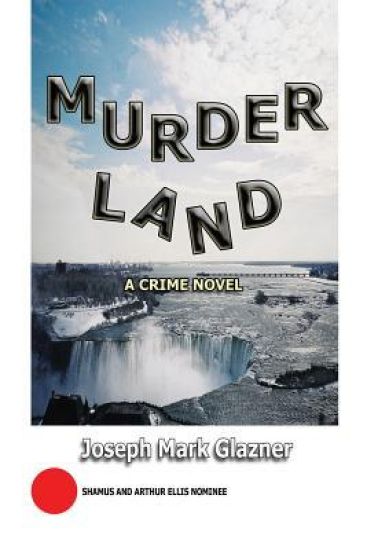
Murderland: A Crime Novel

Murderland: A Crime Novel

Joseph Mark Glazner

Joseph Mark Glazner
2018
nidottu
Only one question needs to be asked: IS HARRY HOLIDAY LUCKY ENOUGH TO GET AWAY WITH THE PERFECT MURDER?Harry, like a lot of us, has been angry or backed against a wall enough times to think about killing someone.Like most of us, his thoughts were nothing more than emotional and intellectual exercises.Just like you and me, the fear of getting caught and his better self always won out.Until now.Now, Harry Holiday's better self lies in ruins. His world is crumbling around him.Someone tried to murder Harry's father six months ago and left Dad in a coma. Someone is trying to steal what's left of the family fortune. Some people would like to see Harry dead, and they have no scruples about killing him.Harry, a young, likable but out-of-control wheeler-dealer, is so desperate that pulling off the perfect murder seems like his only way out.Can his harebrained scheme actually work? Will he go through with it? Will it save him and the once-famous, now-rundown family business--MurderLand--a museum of gangland and murder-related memorabilia? Harry's beloved MurderLand is located in the heart of the old, tacky, casino and entertainment district in Niagara Falls. Along with the falls, the most popular natural wonder in North America, the museum was once one of the must-see sideshows for the twelve million annual visitors to this popular tourist mecca. Now, the iconic exhibition is close to folding, and Harry is at his wit's end trying to figure out how to win back the sightseers.Fighting off loan sharks and forced to sell relics buried in the museum's basement to keep the doors open and impress a quirky young woman he can't live without, Harry's hopes soar when he thinks he may have discovered the perfect dupe to help carry out a flawless murder.But Harry gets more than he bargains for in this fast-paced caper when he not only stumbles into the middle of another crime in progress but accidentally begins to uncover shocking new evidence in the basement of MurderLand that may tie together the building's past, the plot to assassinate a president, and Harry's own growing urge to kill.After a thirty year absence, Shamus and Arthur Ellis nominee Joseph Mark Glazner is back, writing about some of his favorite themes--revenge, greed, conspiracy theories, love, hate, and desperate characters willing to commit murder. Writing from inside the head of Harry Holiday, Glazner has created one of the most unusual, enjoyable, and irreverent antiheroes you're ever likely to run across in fiction or real life.
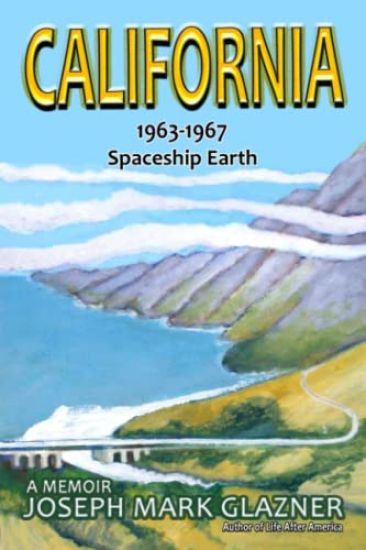
California 1963-1967 Spaceship Earth

California 1963-1967 Spaceship Earth

Joseph Mark Glazner

Joseph Mark Glazner
2022
pokkari
Joseph Mark Glazner's upbeat memoir, California 1963-1967 Spaceship Earth, recreates the wild and crazy early years of the counterculture through the eyes of a college student, promising young writer, and conflicted war resister living on the edge of Hollywood and the music industry while trying to make sense of the sexually charged, anything goes California of the 1960s. In his words: "Everything was changing, and nothing could stop it. Optimism and rage lived side-by-side with sexual revolution, mind-expanding drugs, and music that changed the world. Friendships promising to last forever competed for our attention with soaring racial unrest and a war tearing America apart. Living in California between the last weeks of President Kennedy's White House (1963) and the Summer of Love (1967) was like looking out the window of a spaceship and catching a glimpse of the future. That spaceship was planet earth. We were traveling together, destination unknown. The rules were changing. We felt it. We tried to define it and redefine ourselves to make more sense of the best and worst parts of the journey. We were desperate and curious enough to try anything. No matter what we did, nothing would ever be the same again." Glazner draws on hundreds of letters from the 1960s, dozens of interviews, headline news, and personal memories to bring to life the terror of the Watts Riots, the promise of the world's first Love-In, his own family's struggles back East, and famous and not-so-famous people who influenced his writing and the one irrevocable, life-changing decision he had to make about the Vietnam War and his own future. For those who missed the 1960s or were there but don't remember them, meet some of the foot soldiers of the counterculture as well as some of the innovators and young black sheep of the music industry and Hollywood through Glazner's eyes, including Allen Ginsberg, Edie Sedgwick, Beatles' insider Derek Taylor, underground publisher Paul Krassner, artist Paul Thek, and many others. California 1963-1967 Spaceship Earth is an antiwar story with a happy ending and the prequel to Glazner's first memoir Life After America.
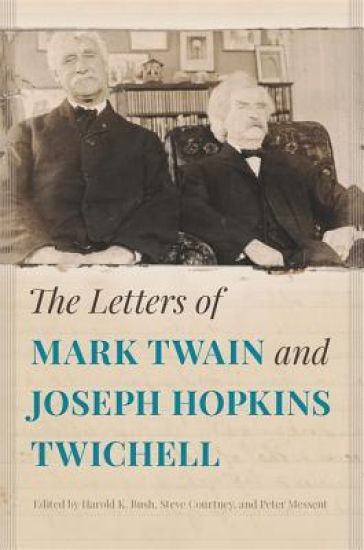
The Letters of Mark Twain and Joseph Hopkins Twichell
This book contains the complete texts of all known correspondence between Samuel L. Clemens (Mark Twain) and Joseph Hopkins Twichell. Theirs was a rich exchange. The long, deep friendship of Clemens and Twichell—a Congregationalist minister of Hartford, Connecticut—rarely fails to surprise, given the general reputation Twain has of being antireligious. Beyond this, an examination of the growth, development, and shared interests characterizing that friendship makes it evident that as in most things about him, Mark Twain defies such easy categorization or judgment.From the moment of their first encounter in 1868, a rapport was established. When Twain went to dinner at the Twichell home, he wrote to his future wife that he had “got up to go at 9.30 PM, & never sat down again—but [Twichell] said he was bound to have his talk out—& I was willing—& so I only left at 11.” This conversation continued, in various forms, for forty-two years—in both men’s houses, on Hartford streets, on Bermuda roads, and on Alpine trails.The dialogue between these two men—one an inimitable American literary figure, the other a man of deep perception who himself possessed both narrative skill and wit—has been much discussed by Twain biographers. But it has never been presented in this way before: as a record of their surviving correspondence; of the various turns of their decades-long exchanges; of what Twichell described in his journals as the “long full feast of talk” with his friend, whom he would always call “Mark.”
The Letters of Mark Twain and Joseph Hopkins Twichell
This book contains the complete texts of all known correspondence between Samuel L. Clemens (Mark Twain) and Joseph Hopkins Twichell. Theirs was a rich exchange. The long, deep friendship of Clemens and Twichell—a Congregationalist minister of Hartford, Connecticut—rarely fails to surprise, given the general reputation Twain has of being antireligious. Beyond this, an examination of the growth, development, and shared interests characterizing that friendship makes it evident that as in most things about him, Mark Twain defies such easy categorization or judgment.From the moment of their first encounter in 1868, a rapport was established. When Twain went to dinner at the Twichell home, he wrote to his future wife that he had “got up to go at 9.30 PM, & never sat down again—but [Twichell] said he was bound to have his talk out—& I was willing—& so I only left at 11.” This conversation continued, in various forms, for forty-two years—in both men’s houses, on Hartford streets, on Bermuda roads, and on Alpine trails.The dialogue between these two men—one an inimitable American literary figure, the other a man of deep perception who himself possessed both narrative skill and wit—has been much discussed by Twain biographers. But it has never been presented in this way before: as a record of their surviving correspondence; of the various turns of their decades-long exchanges; of what Twichell described in his journals as the “long full feast of talk” with his friend, whom he would always call “Mark.”
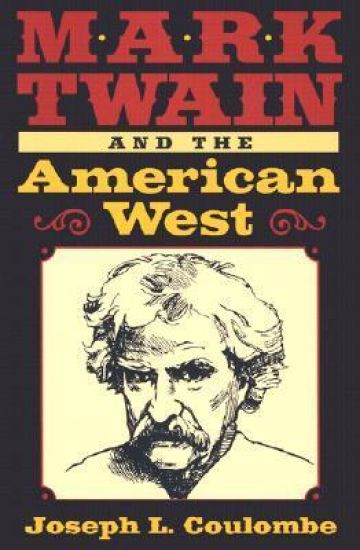
Mark Twain and the American West

Mark Twain and the American West

Joseph L. Coulombe

University of Missouri Press
2003
sidottu
In Mark Twain and the American West, Joseph Coulombe maintains that for more than twenty-five years, Mark Twain deliberately manipulated contemporary conceptions of the American West to create and then modify a public image that won worldwide fame. He establishes the central role of the region in the development of a persona that not only helped redefine American manhood and literary celebrity in the late nineteenth century, but also produced some of the most complex and challenging writings in the American canon. Coulombe sheds new light on previously underappreciated components of Twain's distinctly western persona. Gathering new evidence from contemporary newspapers, letters, literature, and advice manuals, Coulombe shows how Twain's persona in the early 1860s as a hard-drinking, low-living straight-talker was an implicit response to western conventions of manhood. He then traces the author's movement toward a more sophisticated public image, arguing that Twain characterized language and authorship in the same manner that he described western men: direct, bold, physical, even violent. In this way, Twain capitalized upon common images of the West to create himself as a new sort of western outlaw - one who wrote. Coulombe outlines Twain's struggle to find the proper balance between changing cultural attitudes toward male respectability and rebellion and his own shifting perceptions of the East and the West. Focusing on his unpredictable treatment of American Indians, Coulombe links Twain's enigmatic use of racial stereotypes in the West to Huck's treatment of Jim in Adventures of Huckleberry Finn. He argues that the repeated pattern not only illuminates the great moments in Huck's journey, but also clarifies inconsistencies within one of America's most important novels. Mark Twain and the American West is sure to generate new interest and discussion about Mark Twain and his influence. By understanding how conventions of the region, conceptions of money and class, and constructions of manhood intersect with the creation of Twain's persona, Coulombe helps us better appreciate the writer's lasting influence on American thought and literature through the twentieth century and into the twenty-first.
Mark Twain and the American West

Mark Twain and the American West

Joseph L. Coulombe

University of Missouri Press
2011
nidottu
In Mark Twain and the American West, Joseph Coulombe explores how Mark Twain deliberately manipulated contemporary conceptions of the American West to create and then modify a public image that eventually won worldwide fame. He establishes the central role of the western region in the development of a persona that not only helped redefine American manhood and literary celebrity in the late nineteenth century, but also produced some of the most complex and challenging writings in the American canon. Coulombe sheds new light on previously underappreciated components of Twain's distinctly western persona. Gathering evidence from contemporary newspapers, letters, literature, and advice manuals, Coulombe shows how Twain's persona in the early 1860s as a hard-drinking, low-living straight-talker was an implicit response to western conventions of manhood. He then traces the author's movement toward a more sophisticated public image, arguing that Twain characterized language and authorship in the same manner that he described western men: direct, bold, physical, even violent. In this way, Twain capitalized upon common images of the West to create himself as a new sort of western outlaw - one who wrote. Coulombe outlines Twain's struggle to find the proper balance between changing cultural attitudes toward male respectability and rebellion and his own shifting perceptions of the East and the West. Focusing on the tension between these goals, Coulombe explores Twain's emergence as the moneyed and masculine man-of-letters, his treatment of American Indians in its relation to his depiction of Jim in Adventures of Huckleberry Finn, the enigmatic connection of Huck Finn to the natural world, and Twain's profound influence on Willa Cather's western novels. Mark Twain and the American West is sure to generate new interest and discussion about Mark Twain and his influence. By understanding how conventions of the region, conceptions of money and class, and constructions of manhood intersect with the creation of Twain's persona, Coulombe helps us better appreciate the writer's lasting effect on American thought and literature through the twentieth century and into the twenty-first.
Joseph Smith and the Book of Enoch

Joseph Smith and the Book of Enoch

Mark Lines

MCFARLAND CO INC
2023
pokkari
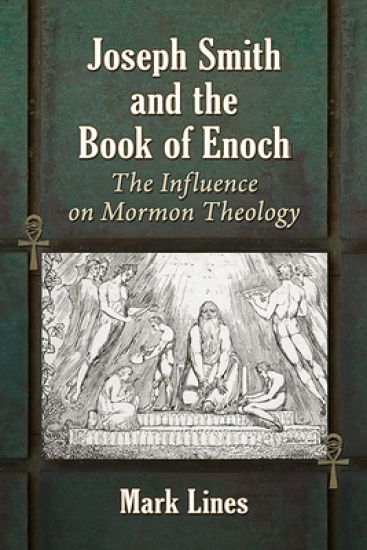
The sources of Joseph Smith's literary works remain the most enigmatic aspect of Mormon history. Smith's "translation projects," the Book of Mormon, Book of Moses, the Inspired Bible and Book of Abraham, include prophecies, visions and allusions to the ancient biblical prophet Enoch. Before Joseph Smith began writing his visions of Enoch, Oxford professor Richard Laurence revived interest in the prophet through his 1821 English translation of the ancient text, the Book of Enoch, known as 1 Enoch. For decades, some historians have denied that Joseph Smith ever had access to the Book of Enoch, but many reserve the possibility that it directly influenced Smith's works. The author of this book documents the many similarities between the Book of Enoch and Smith's Mormon texts. Using source analysis and historical context, the author identifies the uniquely Mormon words, storylines, imagery and concepts that appear in Richard Laurence's translation of the ancient religious text.
Joseph, Rachel's son

Joseph, Rachel's son

Mark Timothy Morgan

Bible Tales Online
2018
pokkari
Joseph, Rachel's son, lived the privileged life of a favourite son until his jealous brothers sold him into slavery in Egypt. Overcoming one trial after another, he finally faces the greatest test of all: power over his brothers. When they bow before him, will he take revenge, or show the forgiveness that comes from God?
Joseph Conrad's Nautical Terms: A Handbook
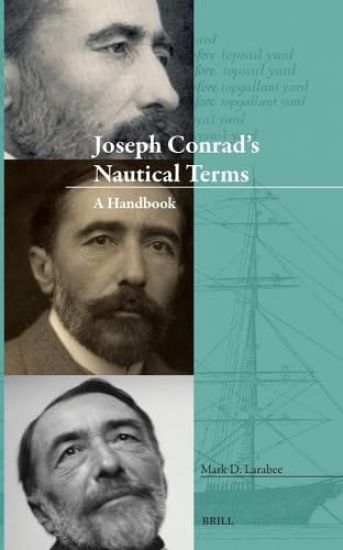
Unlock the secrets of Conrad's salt-laced realm Discover the meanings of "wearing ship," "kedge anchors," or the perils of "scudding under bare poles." Joseph Conrad's Nautical Terms demystifies 2,000 maritime words and phrases, revealing how Conrad used them to create his legendary narratives. Rich historical sources, clear glossary definitions, informative illustrations, and 600 detailed examples from his writing combine to decode and bring to life his nautical world. Explore his thrilling storm passages, evocative calm scenes, rigorous examinations, and remarkable journey from sailor to shipmaster--and even learn the ropes of the Beaufort wind scale. Whether you're a Conrad enthusiast, student, or sea lover, this book transforms your reading experience, making every voyage with him a deeper, more immersive adventure.
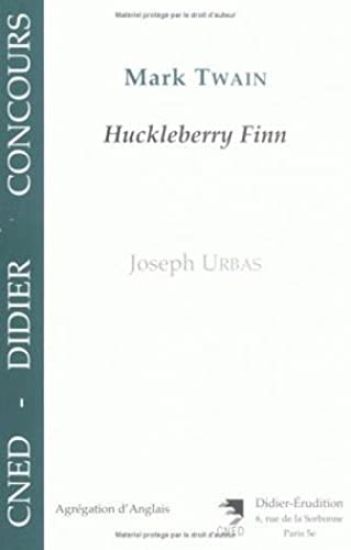
Mark Twain - Huckleberry Finn

Mark Twain - Huckleberry Finn

Joseph Urbas

Klincksieck
1996
nidottu
A central work in the national canon, an inspiration for some of the greatest American writers of our century, and the first literary masterpiece in multi-voiced, regional vernacular, Huckleberry Finn is, as Walter Blair observed, unique in being held in the highest esteem by critics and at the same time prodigiously popular in the United States and throughout the world . This study explores the peculiar dynamics of space and time in Huck Finn before shifting to an analysis of the fate of illusion, one of the enduring themes in Twain. Emphasis is placed throughout on the subtlety and complexity of Twain's artistic vision, which projects a world of doublings, reversals, instability, and paradox, drawing all the while on the tremendous evocative force of the river, which, like Huck himself in T.S. Eliot's words, has no beginning and no end .