Kirjojen hintavertailu. Mukana 11 244 527 kirjaa ja 12 kauppaa.

Kirjahaku

Etsi kirjoja tekijän nimen, kirjan nimen tai ISBN:n perusteella.

1000 tulosta hakusanalla Mark P Sebar

Communication Realities in a "Post-Racial" Society
This book seeks to go beyond existing public polls regarding Barack Obama, and instead offers a comprehensive treatment of public perceptions that resist mass generalizations based on race, gender, age, political affiliation, or geographical location. Drawing from a large national qualitative data set generated by 333 diverse participants from twelve different states across six U.S. regions, Mark P. Orbe offers a comprehensive look into public perceptions of Barack Obama's communication style, race matters, and the role of the media in 21st century politics. Communication Realities in a "Post-Racial" Society: What the U.S. Public Really Thinks about Barack Obama is the first of its kind in that it uses the voices of everyday U.S. Americans to advance our understanding of how identity politics influence public perceptions. The strength of a book such as this one lies within the power of the diverse perspectives of hundreds of participants. Each chapter features extended comments from rural volunteer fire fighters in southern Ohio, African American men in Oakland, CA, religious communities in Alabama; New England senior citizens; military families from southern Virginia; Tea Party members from Nebraska; business and community leaders from North Carolina; individuals currently unemployed and/or underemployed in Connecticut; college students from predominately White, Black, and Hispanic-serving institutions of higher learning; and others. As such, it is the first book that is based on comments from multiple perspectives - something that allows a deeper understanding that hasn't been possible with public polls, media sound bites, and political commentary. It is a must read for scholars interested in contemporary communication in a time when "post-racial" declarations are met with resistance and political junkies who seek an advanced understanding of the peculiarities of rapidly changing political realities.
The Big Book of Pain

The Big Book of Pain

Mark P Donnelly; Daniel Diehl

The History Press Ltd
2011
nidottu
For millennia, mankind has devised ingenious and diabolical means of inflicting pain on fellow human beings. This deplorable but seemingly universal trait has eaten away at mankind’s very claim to civilisation. Despite how repugnant the practice of torture appears to us today, for at least 3,000 years it formed part of most legal codes throughout Europe and the Far East. The Big Book of Pain is an exploration of the systematic use throughout the ages of various means of punishment, torture, coercion and torment. It takes the reader into the Ancient Roman Coliseum, the medieval dungeon, the Inquisitional interrogation, the auto-da-fe, the witch-trial, and the worst of prisons. It is a shocking and compelling study of the shameful methods and motives of the torturer and the executioner, and of the heinous duty they have performed through the ages.
Constructing Co-Cultural Theory

Constructing Co-Cultural Theory

Mark P. Orbe

SAGE Publications Inc
1997
sidottu
How do people traditionally situated on the margins of societyùpeople of color, women, gays/lesbians/bisexuals, and those from a lower socio-economic statusùcommunicate within the dominant societal structures? Constructing Co-Cultural Theory presents a phenomenological framework for understanding the intricate relationship between culture, power, and communication. Grounded in muted group and standpoint theory, this volume presents a theoretical framework that fosters a critically insightful vantage point into the complexities of culture, power, and communication. The volume comprises six chapters; key coverage includes: a review of critique of the literature on co-cultural communication; description of how the perspective of co-cultural group members were involved in each stage of theory development; an explication of 25 co-cultural communication strategies, and a model of six factors that influence strategy selection. The final chapter examines how co-cultural theory correlates with other work in communication generally and in intercultural communication specifically. Author Mark P. Orbe considers inherent limitations of his framework and the implication for future research in this area. Scholars and upper-level undergraduate and graduate students will find that this volume covers an important topic which will be of interest to those in the fields of communication, cultural studies, and race and ethnic studies.
Constructing Co-Cultural Theory

Constructing Co-Cultural Theory

Mark P. Orbe

SAGE Publications Inc
1997
nidottu
How do people traditionally situated on the margins of societyùpeople of color, women, gays/lesbians/bisexuals, and those from a lower socio-economic statusùcommunicate within the dominant societal structures? Constructing Co-Cultural Theory presents a phenomenological framework for understanding the intricate relationship between culture, power, and communication. Grounded in muted group and standpoint theory, this volume presents a theoretical framework that fosters a critically insightful vantage point into the complexities of culture, power, and communication. The volume comprises six chapters; key coverage includes: a review of critique of the literature on co-cultural communication; description of how the perspective of co-cultural group members were involved in each stage of theory development; an explication of 25 co-cultural communication strategies, and a model of six factors that influence strategy selection. The final chapter examines how co-cultural theory correlates with other work in communication generally and in intercultural communication specifically. Author Mark P. Orbe considers inherent limitations of his framework and the implication for future research in this area. Scholars and upper-level undergraduate and graduate students will find that this volume covers an important topic which will be of interest to those in the fields of communication, cultural studies, and race and ethnic studies.
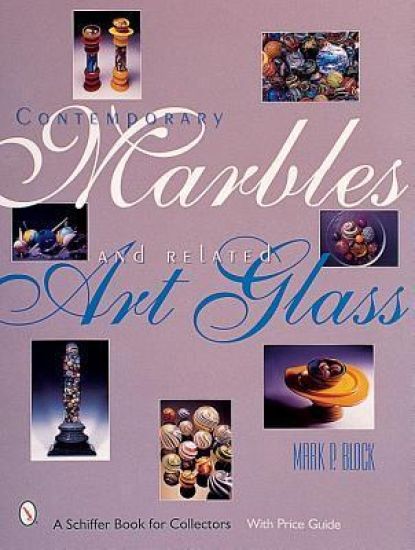
Contemporary Marbles & Related Art Glass

Contemporary Marbles & Related Art Glass

Mark P. Block

Schiffer Publishing Ltd
2000
sidottu
Exquisite marbles produced by more than 130 artists and craftsmen in over 600 stunning color photographs. Alongside the 600 photos, this guide's text gives an extensive and detailed look at the pioneers, current artists, and craftsmen of the contemporary handmade marble movement. You'll find: • Work by over 130 artists, shown in 600 stunning color photos. The history and development of handmade marbles, beginning with the earliest use of decorative glass. • The influence that the founding artists of the studio glass movement brought to bear in the 20th century. • Work to enjoy and learn from by the pioneers and current craftsmen of contemporary handmade marbles. • Tips for the purchase and care of fine marbles. • An in-depth glossary. Collectors of art glass and marbles, whether novice or experienced, will appreciate this beautiful book. It offers joy for everyone fascinated with the wonders of glass.
The Encyclopedia of Modern Marbles, Spheres, and Orbs

The Encyclopedia of Modern Marbles, Spheres, and Orbs

Mark P. Block

Schiffer Publishing Ltd
2005
sidottu
This beautiful and thought-provoking reference explores the close relationships among contemporary studio art glass marbles, spheres, and orbs and their predecessors, the marbles of childhood, as well as areas of significant divergence. Over 900 gorgeous color photos display the vast range available today, including handmade and machine-made marbles, edition types, regular stock, open edition production stock, prototypes, limited editions, experimental works, and studio glass. Many rare and historical examples are shown. The thorough and engaging text provides a history of the studio glass movement, manufacturing processes, artists' marks, essential information on building and caring for a collection, and methods of valuing items in a collection. Also included are a glossary, a bibliography, an index, and values in the captions. All glass fanciers will learn about this new generation of modern styles.
Turquoise Mines, Minerals, and Wearable Art, 2nd Edition
Explore the fascinating history and contemporary influence of turquoise as a gemstone of choice for collectors, artists, and jewelry wearers. Immerse yourself in its history from ancient times to the present, and the influence of Native American artists in making this gemstone an enduring part of popular culture in America. Illustrated with over 500 color images, this updated second edition includes nearly 150 photos never seen before. It shows turquoise from Arizona, New Mexico, Colorado, and Nevada, plus Australia, China, and Iran, and the major localities in between. The gems appear in their natural state, cut, polished, and set into silver and gold jewelry. Extensive text details the gems' values and the many mines that have relinquished turquoise over thousands of years.
Regulating Flexibility

Regulating Flexibility

Mark P. Thomas

McGill-Queen's University Press
2009
sidottu
In a contemporary labour market that includes growing levels of precarious employment, the regulation of minimum employment standards is intricately connected to conditions of economic security. With a focus on the role of neoliberal labour market policies in promoting 'flexible' employment standards legislation - particularly in the areas of minimum wages and working time - Mark Thomas argues that shifts toward 'flexible' legislation have played a central role in producing patterns of labour market inequality. Using an analytic framework that situates employment standards within the context of the broader social relations that shape processes of labour market regulation, Thomas constructs a case study of employment standards legislation in Ontario from 1884 to 2004. Drawing from political economy scholarship, and using a qualitative research methodology, he analyses class, race, and gender dimensions of legislative developments, highlighting the ways in which shifts towards 'flexible' employment standards have exacerbated longstanding racialized and gendered inequities. "Regulating Flexibility" argues that in order to counter current trends towards increased insecurity, employment standards should not be treated as a secondary form of labour protection but as a cornerstone in a progressive project of labour market re-regulation.
Regulating Flexibility

Regulating Flexibility

Mark P. Thomas

McGill-Queen's University Press
2009
nidottu
In a contemporary labour market that includes growing levels of precarious employment, the regulation of minimum employment standards is intricately connected to conditions of economic security. With a focus on the role of neoliberal labour market policies in promoting 'flexible' employment standards legislation - particularly in the areas of minimum wages and working time - Mark Thomas argues that shifts toward 'flexible' legislation have played a central role in producing patterns of labour market inequality. Using an analytic framework that situates employment standards within the context of the broader social relations that shape processes of labour market regulation, Thomas constructs a case study of employment standards legislation in Ontario from 1884 to 2004. Drawing from political economy scholarship and using a qualitative research methodology, Thomas analyses class, race and gender dimensions of legislative developments, highlighting the ways in which shifts towards 'flexible' employment standards have exacerbated longstanding radicalised and gendered inequities. "Regulating Flexibility" argues that in order to counter current trends towards increased insecurity, employment standards should not be treated as a secondary form of labour protection but as a cornerstone in a progressive project of labour market re-regulation.
Pirates of Maryland

Pirates of Maryland

Mark P. Donnelly; Daniel Diehl

Stackpole Books
2012
nidottu
Pirates and privateers (thieves who had the blessings of their home countries) were major players in Chesapeake Bay history. For nearly 200 years, pirates roamed the Bay’s waters looking for prey and outfitting themselves to search for prizes in other parts of the world. In the early 17th century, pirates settled near the southern portion of the Chesapeake Bay, increasing the possibility of pirate attacks in the region. As the young Virginia colony flourished and commerce with Europe expanded, pirates and privateers found plenty of opportunities to prey upon vessels. The first act of piracy was committed on the Chesapeake in 1635. William Claiborne, who owned a plantation on Kent Island, Maryland, sent his agent to capture a small boat as it approached Palmer's Island at the head of the Bay. Fueled by growing tensions between Maryland and Virginia, Claiborne– a Virginian – was angry that the Maryland boat had invaded his plantation’s territory. This event kicked off almost 200 years of piracy on the Bay. Even though they victimized colonial ships, pirates were often tolerated and even courted by governors, merchants and citizens of the colonies. In some ways, supporting piracy marked their growing desire to be independent from England. Pirates sold colonial merchants the black market goods they could not buy from England. Despite their apparent prosperity, most pirates led hard lives and died early. Life aboard pirate vessels was miserable. The wooden ships were dank and moldy, and stank of waste, rotted meat and unwashed bodies. Pirates’work was unending. Half a crew could be lost to disease on a single voyage. If pirates did not succumb to disease, they could easily lose their life or limbs in battle. And, on occasion, punishment awaited them when they returned to shore. The brutal life onboard and the likelihood of injury or death did not dissuade all seamen from becoming pirates. The slim possibility of financial reward was a strong incentive. Although many pirates died with little to their names, others somehow managed to thwart authority and find riches.
The Politics Of Interests

The Politics Of Interests

Mark P Petracca

Westview Press Inc
1992
pokkari
Have special interests taken over the country, derailing the public agenda and threatening representative democracy? Or is it possible that the maturation of interest group politics will yield a more pluralistic and balanced society? Interest groups have changed over the past two decades, and so have the ways in which we study them. This volume charts the changes in interest group theory, organization, activity, and the influence of interest groups in the United States and beyond.Leading scholars and practitioners trace notable shifts in interest group politics, including challenges to effective governance, new resources and techniques of influence, patterns of representation, and changing venues, targets, and characteristics of interest group activity. The mobilization of particular interests,including business, women, conservatives, and consumers,is given special attention. Institutional interactions and interest group evaluations round out the coverage.Sixteen original essays written especially for this volume reflect the best and most current scholarship in the field. New empirical research, informed theoretical reflection, and experienced involvement are all rendered accessable in this thematically unified collection. Petracca has drawn together leading text authors, cutting-edge researchers, established scholars, and rising young stars to capture the attention and challenge the thinking of both novice and serious students of interest groups.This compact yet comprehensive volume can provide the core of reading for a course on interest group politics, or it can supplement one of the leading texts in a wide range of courses in American politics. The distinguished lineup of contributors promises to make this book must" reading for scholars, professionals, and practitioners, as well as for their students.
Free Exercise of Religion and the United States Constitution
The United States is extremely diverse religiously and, not infrequently, individuals sincerely contend that they are unable to act in accord with law as a matter of conscience. The First Amendment to the United States Constitution protects the free exercise of religion and the United States Supreme Court has issued many decisions exploring the depth and breadth of those protections. This book addresses the Court’s free exercise jurisprudence, discussing what counts as religion and the protections that have been afforded to a variety of religious practices. Regrettably, the Court has not offered a principled and consistent account of which religious practices are protected or even how to decide whether a particular practice is protected, which has resulted in similar cases being treated dissimilarly. Further, the Court’s free exercise jurisprudence has been used to provide guidance in interpreting federal statutory protections, which is making matters even more chaotic.This book attempts to clarify what the Court has said in the hopes that it will contribute to the development of a more consistent and principled jurisprudence that respects the rights of the religious and the non-religious.
Foundations of Christian Thought

Foundations of Christian Thought

Mark P Cosgrove

Kregel Publications,U.S.
2006
pokkari
"Faith is not just meant for church on Sunday," contends Mark Cosgrove. "Faith and learning are interwoven with each other for the full functioning of the human mind." A book that details this interconnection between faith and learning, Foundations of Christian Thought encourages readers to view the Christian faith and worldview as relevant to everything they read, study, and consider. In part 1, Cosgrove explores the relationship between faith and learning and how an underlying worldview can influence one's beliefs. Part 2 describes and tests five major worldviews competing with Christian theism, including naturalism, secular humanism, atheistic existentialism, pantheism, and the New Age movement. The last part probes the Christian worldview in more detail by analyzing the challenges it faces and how it is lived out day-to-day. An educator on the college campus for thirty years, Cosgrove testifies to how well the Christian worldview relates with the current needs and ideas in American culture. Through Foundations of Christian Thought, high school and college students will begin to see how the Christian worldview is relevant to what they are studying in the classroom and the decisions they make. Readers in the workforce and elsewhere will learn to relate their faith to modern worldviews in our culture.
We Were in the Big One

We Were in the Big One

Mark P. Parillo

Rowman Littlefield
2002
nidottu
World War II was truly the largest and greatest conflict in U.S. history. We Were in the Big One: Experiences of the World War II Generation is a collection of diary entries, letters, photographs, and other documents from that era. Carefully selected from the Eisenhower Library's World War II Participants Collection and other archives, this material-generated in response to the historical events themselves-reflects the mindset of the people who produced it. These documents shed light on one of the most important periods of American history. We Were in the Big One is one of the first books to make primary source material on this era widely available for use in the classroom. These contemporary documents reveal a great deal about the attitudes of the World War II generation toward matters such as gender, political beliefs, race, religion, social and cultural mores, and personal values. With a concise introduction and headnotes that introduce each document, Prof. Parillo provides an interpretive framework that puts the selections in context for students. Parillo shows how the war affected Americans across gender lines, across social and political spectrums, on the home front, and on the battlefield. This compelling text enables students to discover how the war truly influenced an entire generation of Americans. We Were in the Big One is an excellent resource for courses in American twentieth-century history, World War II, and U.S. social and cultural history.
Leonardo Da Vinci Gets a Do-Over

Leonardo Da Vinci Gets a Do-Over

Mark P. Friedlander

Science, Naturally!
2014
pokkari
The passing of great Renaissance master Leonardo da Vinci—artist, anatomist, engineer, inventor—marked the end of an era. The world hasn't seen a visionary like him since. … Until now. On a school trip to Florence, three American middle school students think they are in for a treat when a man who claims to be Leonardo da Vinci, brought back to life with a mission to better humankind, crashes their tour. Too bad he isn't really the celebrated Master of the Renaissance … or is he? Tag along as Max, Tad, and Gina assist Leonardo on his quest while discovering the secrets of his life and teaching the Maestro about science, math, history, art, and more! Will the students be able to help Leonardo evade the mayor of Florence's selfish grasp so he can complete his quest before his time is up… again? Leonardo da Vinci Gets A Do-Over is the first adventure in this new and exciting Innovators in Action blended fiction series.
The Trajectory of Discovery

The Trajectory of Discovery

Mark P. Khurana

Cambridge University Press
2023
pokkari
Medical research works in trajectories. Scientists and researchers must choose to pursue certain scientific pathways and omit others, limited by resources, attention, and time. The trajectory of medical progress is therefore characterized by two crucial characteristics: rate and direction. These two components form the foundation for this book - what are the forces that determine the rate and direction of progress in medicine? This book brings together the worlds of scientific policy, economics, sociology, philosophy, and innovation to describe why the world of medical research looks the way it does. The book also addresses fundamental contemporary issues in medicine, how they influence progress, and how we might improve medical research going forward. The contemporary issues discussed include: flawed incentive structures, a concentration of power and resources among few actors and disease groups, the potential distortionary effects of lobbying by different scientific actors, and missing novelty in drug development.