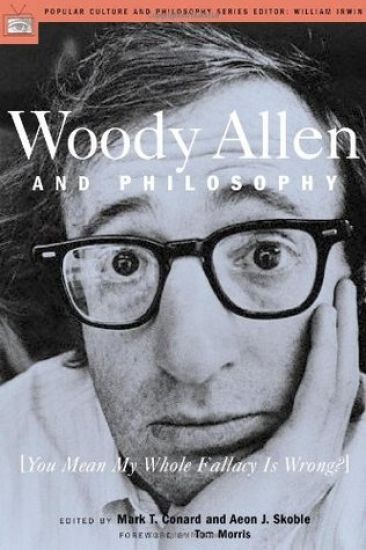
Fifteen philosophers representuing different schools of thought answer the question what is Woody Allen trying to say in his films? And why should anyone care? Focusing on different works and varied aspects of Allen's multifaceted output, these essays explore the philosophical undertones of Anne Hall, Crimes and Misdemeanors, Manhattan, A Midsummer Night's Sex Comedy and reminds us that just because the universe is meaningless and life is pointless is no reason to commit suicide.
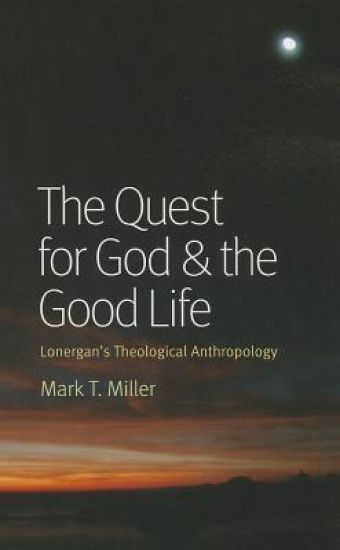
Troubled by the Great Depression, two world wars, and modernity's challenges to religion, Bernard Lonergan attempted to do for our age what Thomas Aquinas did for his: to integrate the best of secular and sacred learning and thus further the Catholic tradition of using both faith and reason to advance the common good and participate in God's work of salvation. Drawing on modern advances in the natural sciences, economics, history and psychology, as well as ancient and medieval philosophy and theology, Lonergan's work is highly fruitful but exceedingly complex. This book provides a basic yet broad introduction to Lonergan's thought in particular and Catholic theology in general. Mark T. Miller's approach is a theological anthropology organised into three main categories, ""progress,"" ""decline,"" and ""redemption,"" which transpose the traditional concepts of nature, sin, and grace into a contemporary social and historical context. Progress is driven by the natural human desire for God. Decline is a downward spiral of violence and suffering caused by sin's perversion of the good, natural desire. Redemption is God's gift of God's self that fulfills our natural desire and becomes the foundation for authentic human living.Throughout this introductory text, progress, decline and redemption constitute a systematic framework for examining the central terms of Catholic theology, as well as key notions in Lonergan's theology. The book provides a firm foundation for students of Lonergan as well as anyone interested in understanding Catholic theology and applying it to ministry, education and other fields.
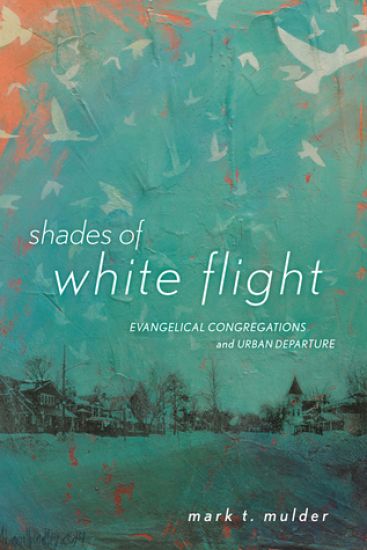
Since World War II, historians have analyzed a phenomenon of “white flight” plaguing the urban areas of the northern United States. One of the most interesting cases of “white flight” occurred in the Chicago neighborhoods of Englewood and Roseland, where seven entire church congregations from one denomination, the Christian Reformed Church, left the city in the 1960s and 1970s and relocated their churches to nearby suburbs. In Shades of White Flight, sociologist Mark T. Mulder investigates the migration of these Chicago church members, revealing how these churches not only failed to inhibit white flight, but actually facilitated the congregations’ departure. Using a wealth of both archival and interview data, Mulder sheds light on the forces that shaped these midwestern neighborhoods and shows that, surprisingly, evangelical religion fostered both segregation as well as the decline of urban stability. Indeed, the Roseland and Englewood stories show how religion—often used to foster community and social connectedness—can sometimes help to disintegrate neighborhoods. Mulder describes how the Dutch CRC formed an insular social circle that focused on the local church and Christian school—instead of the local park or square or market—as the center point of the community. Rather than embrace the larger community, the CRC subculture sheltered themselves and their families within these two places. Thus it became relatively easy—when black families moved into the neighborhood—to sell the church and school and relocate in the suburbs. This is especially true because, in these congregations, authority rested at the local church level and in fact they owned the buildings themselves. Revealing how a dominant form of evangelical church polity—congregationalism—functioned within the larger phenomenon of white flight, Shades of White Flight lends new insights into the role of religion and how it can affect social change, not always for the better.
Since World War II, historians have analyzed a phenomenon of “white flight” plaguing the urban areas of the northern United States. One of the most interesting cases of “white flight” occurred in the Chicago neighborhoods of Englewood and Roseland, where seven entire church congregations from one denomination, the Christian Reformed Church, left the city in the 1960s and 1970s and relocated their churches to nearby suburbs. In Shades of White Flight, sociologist Mark T. Mulder investigates the migration of these Chicago church members, revealing how these churches not only failed to inhibit white flight, but actually facilitated the congregations’ departure. Using a wealth of both archival and interview data, Mulder sheds light on the forces that shaped these midwestern neighborhoods and shows that, surprisingly, evangelical religion fostered both segregation as well as the decline of urban stability. Indeed, the Roseland and Englewood stories show how religion—often used to foster community and social connectedness—can sometimes help to disintegrate neighborhoods. Mulder describes how the Dutch CRC formed an insular social circle that focused on the local church and Christian school—instead of the local park or square or market—as the center point of the community. Rather than embrace the larger community, the CRC subculture sheltered themselves and their families within these two places. Thus it became relatively easy—when black families moved into the neighborhood—to sell the church and school and relocate in the suburbs. This is especially true because, in these congregations, authority rested at the local church level and in fact they owned the buildings themselves. Revealing how a dominant form of evangelical church polity—congregationalism—functioned within the larger phenomenon of white flight, Shades of White Flight lends new insights into the role of religion and how it can affect social change, not always for the better.
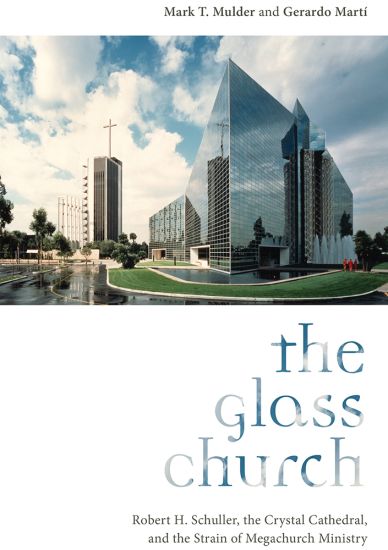
Robert H. Schuller’s ministry—including the architectural wonder of the Crystal Cathedral and the polished television broadcast of Hour of Power—cast a broad shadow over American Christianity. Pastors flocked to Southern California to learn Schuller’s techniques. The President of United States invited him sit prominently next to the First Lady at the State of the Union Address. Muhammad Ali asked for the pastor’s autograph. It seemed as if Schuller may have started a second Reformation. And then it all went away. As Schuller’s ministry wrestled with internal turmoil and bankruptcy, his emulators—including Rick Warren, Bill Hybels, and Joel Osteen— nurtured megachurches that seemed to sweep away the Crystal Cathedral as a relic of the twentieth century. How did it come to this?Certainly, all churches depend on a mix of constituents, charisma, and capital, yet the size and ambition of large churches like Schuller’s Crystal Cathedral exert enormous organizational pressures to continue the flow of people committed to the congregation, to reinforce the spark of charismatic excitement generated by high-profile pastors, and to develop fresh flows of capital funding for maintenance of old projects and launching new initiatives. The constant attention to expand constituencies, boost charisma, and stimulate capital among megachurches produces an especially burdensome strain on their leaders. By orienting an approach to the collapse of the Crystal Cathedral on these three core elements—constituency, charisma, and capital—The Glass Church demonstrates how congregational fragility is greatly accentuated in larger churches, a notion we label megachurch strain, such that the threat of implosion is significantly accentuated by any failures to properly calibrate the inter-relationship among these elements.
Robert H. Schuller’s ministry—including the architectural wonder of the Crystal Cathedral and the polished television broadcast of Hour of Power—cast a broad shadow over American Christianity. Pastors flocked to Southern California to learn Schuller’s techniques. The President of United States invited him sit prominently next to the First Lady at the State of the Union Address. Muhammad Ali asked for the pastor’s autograph. It seemed as if Schuller may have started a second Reformation. And then it all went away. As Schuller’s ministry wrestled with internal turmoil and bankruptcy, his emulators—including Rick Warren, Bill Hybels, and Joel Osteen— nurtured megachurches that seemed to sweep away the Crystal Cathedral as a relic of the twentieth century. How did it come to this?Certainly, all churches depend on a mix of constituents, charisma, and capital, yet the size and ambition of large churches like Schuller’s Crystal Cathedral exert enormous organizational pressures to continue the flow of people committed to the congregation, to reinforce the spark of charismatic excitement generated by high-profile pastors, and to develop fresh flows of capital funding for maintenance of old projects and launching new initiatives. The constant attention to expand constituencies, boost charisma, and stimulate capital among megachurches produces an especially burdensome strain on their leaders. By orienting an approach to the collapse of the Crystal Cathedral on these three core elements—constituency, charisma, and capital—The Glass Church demonstrates how congregational fragility is greatly accentuated in larger churches, a notion we label megachurch strain, such that the threat of implosion is significantly accentuated by any failures to properly calibrate the inter-relationship among these elements.
Detective Gillian McClary moves to a small west coast town for a change of pace after spending many years trying to work her way through the grief of losing her husband and daughter in a tragic auto accident. A teen goes missing in what used to be a local children's asylum and leads her down a rabbit hole of cold cases dating back from 2014 to the 1960's. The local legend goes, if the nursery rhyme "Jack-in-the-Box" is said out loud inside of the building that he will come of hiding and murder you. She begins working with two paranormal investigators and her belief system is constantly challenged while investigating what is clearly a haunted building. As proof of spirits becomes clear, Gillian's adamant belief that the murderer is a human being is shaken. She starts feeling she is no closer to solving the mystery than the original detective before her. Gillian's worst nightmares are coming true. Life after death may not be as simple as heaven and hell. There may be something far worse that can reach across from the other side and kill.