

Kirjahaku
Etsi kirjoja tekijän nimen, kirjan nimen tai ISBN:n perusteella.
1000 tulosta hakusanalla Markus Leon

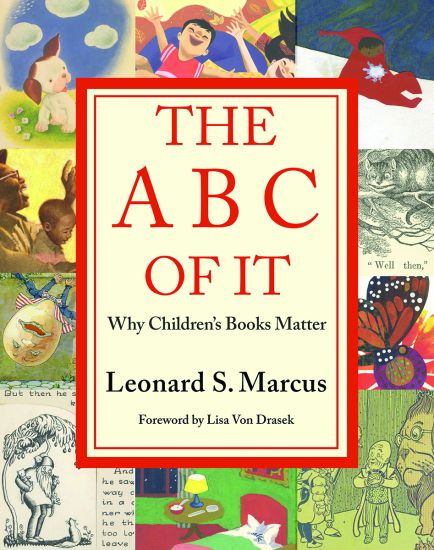
Original artwork and materials explore children’s literature and its impact in society and culture over time A favorite childhood book can leave a lasting impression, but as adults we tend to shelve such memories. For fourteen months beginning in June 2013, more than half a million visitors to the New York Public Library viewed an exhibition about the role that children’s books play in world culture and in our lives. After the exhibition closed, attendees clamored for a catalog of The ABC of It as well as for children’s literature historian Leonard S. Marcus’s insightful, wry commentary about the objects on display. Now with this book, a collaboration between the University of Minnesota’s Kerlan Collection of Children’s Literature and Leonard Marcus, the nostalgia and vision of that exhibit can be experienced anywhere. The story of the origins of children’s literature is a tale with memorable characters and deeds, from Hans Christian Andersen and Lewis Carroll to E. B. White and Madeleine L’Engle, who safeguarded a place for wonder in a world increasingly dominated by mechanistic styles of thought, to artists like Beatrix Potter and Maurice Sendak who devoted their extraordinary talents to revealing to children not only the exhilarating beauty of life but also its bracing intensity. Philosophers like John Locke and Jean-Jacques Rousseau and educators such as Johann Comenius and John Dewey were path-finding interpreters of the phenomenon of childhood, inspiring major strands of bookmaking and storytelling for the young. Librarians devised rigorous standards for evaluating children’s books and effective ways of putting good books into children’s hands, and educators proposed radically different ideas about what those books should include. Eventually, publishers came to embrace juvenile publishing as a core activity, and pioneering collectors of children’s book art, manuscripts, correspondence, and ephemera appeared-the University of Minnesota’s Dr. Irvin Kerlan being a superb example. Without the foresight and persistence of these collectors, much of this story would have been lost forever. Regarding children’s literature as both a rich repository of collective memory and a powerful engine of cultural change is more important today than ever.

This book is about a Jew, a courier who works in Eastern Europe during the early years of the Third Reich and World War II, facing the anti-semitism and racial hatred that was to become such a hallmark of that area and the times. He survives by his wits. This is a book of violence and suspense that paints a picture of that world as only a victim of it could see it.
This is the city tourists don't see and most New Yorkers - the ones with jobs, the ones with money, the ones who own homes - don't even know about. It's the city where the hookers and pimps and strippers live and survive, where the predators exist and prey on the rest of us and on each other, the city where violence is commonplace and nearly always present. It's midtown Manhattan where visitors come to see shows and eat in fancy restaurants and sleep in expensive hotels but it's also where the furnished rooms and SRO's are, where the chicken hawks work the streets and docks, where weapons are always close to hand and the police write off murders and assaults. It's the world of John Board and John Puddle and others like them. This is book number three of twelve. The first, the Man With The Pointy Stick, introduced John Puddle. The second, John Board, focused on Board, this one continues the story. If you liked or were intrigued by the first two you'll like this as well.
This is the city tourists don't see and most New Yorkers - the ones with jobs, the ones with money, the ones who own homes - don't even know about. It's the city where the hookers and pimps and strippers live and survive, where the predators exist and prey on the rest of us and on each other, the city where violence is commonplace and nearly always present. It's midtown Manhattan where visitors come to see shows and eat in fancy restaurants and sleep in expensive hotels but it's also where the furnished rooms and SRO's are, where the chicken hawks work the streets and docks, where weapons are always close to hand and the police write off murders and assaults. It's the world of John Board and John Puddle and others like them. This is the fifth in an exciting and almost unbelievable series of books about life in the underbelly of New York City, a place populated by strippers and pimps, prostitutes and predators. The author was a New York State parole officer for thirty years and lived the life he writes about. His characters come alive, their problems become your problems and their adventures will be felt and experienced by you. The story is told by a man who barely survives each day but does manage to do so. He is violent but some people depend on him and trust him with their lives. It's a book that you will probably have difficulty putting down and may read more than once.
Jake the Snake - not quite a con man, more a hustler trying to make a buck and keep his head above water in the seamy life that is Midtown New York at night. In trouble with the pimps, with the cops and with those whose tastes lead them into trouble as well.

This is the ninth book in the John Board series but is about a different type of drifter, one who drifts across the United States in his vehicle. Not all that different from Board, his territory is the open road, cheap motels and quick food diners and the people he meets are truckers, motel based hookers, crooked cops and others like him. Not overly honest but a person who can survive. And live in a different jungle.
This is the eleventh book in the John Board series and focuses once again on John Board, an aging drifter in New York City who's comfortable in furnished room, strip joints and on the streets. Whatever it is that drives him-and he has no idea-it continues to get him into difficulties, some deadly. And has him facing-albeit reluctantly-the question: Is he simply a rather strange and possibly unique form of a...john?

Rottweillers are dangerous. They're not cute, they're rarely playful and if you come across one it's best to have a chain link fence between you and it. This is the twelfth book in the John Board series. He's older, tired, less friendly and more likely to bite.
He's getting old... Old men shouldn't fall in love. Certainly old men who've spent their lives avoiding emotional entanglements shouldn't fall in love. Especially not with hookers. Most especially not with drug addicted hookers. You know this, I know this and John Board knows this. God knows how old he is and God knows how many years he's spent on the streets surrounded by hookers and pimps and strippers and con men and every other type of predator. But it doesn't matter. Nothing matters. Well, maybe some things matter. He has killed people in the past. So some things do matter.
This is it, folks: the last Board book. I don't know what to say about it or about him but I've followed him, written about him, tried to understand him, tried to lead him to a better life - always unsuccessfully - and at some point you just have to say good-bye. So...good-bye John Board, John Puddle, Wayne, Aaron, Blackie York, Tricia, Jake, J.M., everyone on the streets of Mid-town at night, those trying to make a buck, those trying to survive, those who simply have nowhere else to be. And you readers: you joined them in the cold and on the streets, in the bars and diners and strip joints. Thank you all. It's been a hell of a trip.
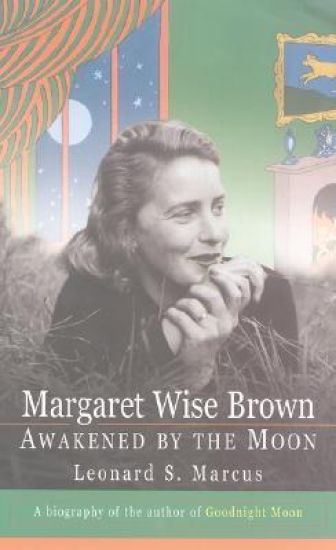
Leonard S. Marcus... has masterfully written about a fascinating woman who in her short life changed literature for the very young. I was throroughly enchanted.--Eric CarleNearly fifty years after her sudden death at the age of forty-two, Margaret Wise Brown remains a legend and an enigma. Author of Goodnight Moon, The Runaway Bunny, and dozens of other children's classics, Brown all but invented the picture book as we know it today. Combining poetic instinct with a profound empathy for small children, she understood a child's need for security, love, and a sense of being at home in the world. Yet, these were comforts that had eluded her. Her sparkling presence and her unparalleled success as a legendary children's book author masked an insecurity that left her restless and vulnerable.In this authoritative and moving biography, Leonard S. Marcus, who had access to never-before-published letters and family papers, portrays Brown's complex character and her tragic, seesaw life. Colorful, thoughtful, and insightful, Margaret Wise Brown is both a portrayal of a woman whose stories still speak to millions and a portrait of New York in the 1930s and 1940s, when the literary world blossomed and made history.