Kirjojen hintavertailu. Mukana 12 390 323 kirjaa ja 12 kauppaa.

Kirjahaku

Etsi kirjoja tekijän nimen, kirjan nimen tai ISBN:n perusteella.

1000 tulosta hakusanalla Mart

Martin Sloane

Martin Sloane

Michael Redhill

Random House UK
2003
pokkari
Jolene Iolas, a student in upstate New York, encounters the work of Martin Sloane while visiting a Toronto gallery. She strikes up a correspondence with the older artist and eventually they become lovers. Then, without a word of warning, he vanishes, and Jolene loses everything to her grief.
Martin Misunderstood

Martin Misunderstood

Karin Slaughter

Arrow Books Ltd
2008
pokkari
Crime fiction obsessive Martin Reed is the proverbial butt of everyone's jokes. Working as a glorified accountant at Southern Toilet Supply and still living with his cantankerous mother, he has become resigned to the world in which he lives. But then he arrives at work one morning to find the police on site. A co-worker has been brutally murdered.
Martin Eden

Martin Eden

Jack London

Penguin Classics
1994
pokkari
The semiautobiographical Martin Eden is the most vital and original character Jack London ever created. Set in San Francisco, this is the story of Martin Eden, an impoverished seaman who pursues, obsessively and aggressively, dreams of education and literary fame. London, dissatisfied with the rewards of his own success, intended Martin Eden as an attack on individualism and a criticism of ambition; however, much of its status as a classic has been conferred by admirers of its ambitious protagonist. Andrew Sinclair's wide-ranging introduction discusses the conflict between London's support of socialism and his powerful self-will. Sinclair also explores the parallels and divergences between the life of Martin Eden and that of his creator, focusing on London's mental depressions and how they affected his depiction of Eden.
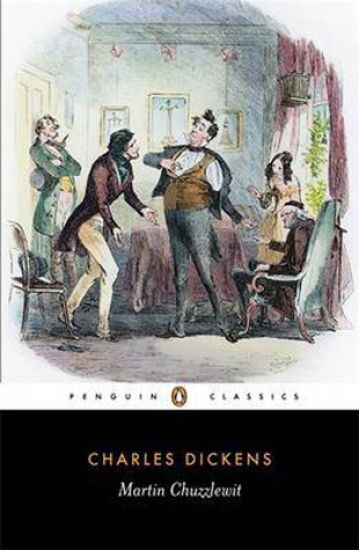
Martin Chuzzlewit

Martin Chuzzlewit

Charles Dickens

Penguin Classics
1999
pokkari
'Among the most powerful things Dickens ever did in fiction' GuardianGreed has led wealthy old Martin Chuzzlewit to become suspicious and misanthropic, leaving his grandson and name-sake to make his own way in the world. And so young Martin sets out from the Wiltshire home of his supposed champion, the scheming architect Pecksniff, to seek his fortune in America. In depicting Martin's journey Dickens created many vividly realized figures, from Martin's optimistic manservant Mark Tapley to the drunken and corrupt private nurse Mrs Gamp. With its portrayal of greed, blackmail and murder, and its searing satire on America, Dickens's novel is a powerful and blackly comic story of hypocrisy and redemption.Edited with an Introduction and Notes by Patricia Ingham
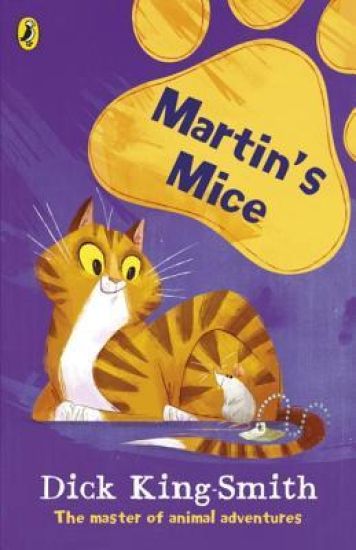
Martin's Mice

Martin's Mice

Dick King-Smith

Puffin
2017
pokkari
Unlike most kittens, Martin doesn't like eating mice - let alone catching them. When he catches one by mistake he decides to keep it as a pet and soon Drusilla the mouse is established in an old bath tub in the attic. Martin is kept busy getting food, water, bedding - and then Drusilla's babies start to arrive. How can Martin cope with all his mice?From the number one author of animal magic comes this wonderful new edition of Martin's Mice.
Martin the Warrior

Martin the Warrior

Brian Jacques

FIREBIRD
2004
nidottu
Soon to be a Netflix original series The battle for freedom begins now, as the adventure continues in the stunning world of Redwall.On the shore of the Eastern Sea, in a cold stone fortress, a stoat named Badrang holds dozens of innocent creatures as slaves, part of his scheme to build an empire where he will rule as unquestioned tyrant. Among those slaves is a mouse named Martin who has a warrior's heart and a burning desire for freedom-freedom not only for himself, but for all of Badrang's victims. There is no risk he will not take, no battle he will not fight, to end the stoat's evil reign and in the process regain the sword of his father, Luke the Warrior, the sword that Badrang stole from him when he was but a lad Perfect for fans of T. A. Barron's Merlin saga, John Flanagan's Ranger's Apprentice series, and J. R. R. Tolkien's Lord of the Rings series.
Martin Luther King, Jr.: A Life

Martin Luther King, Jr.: A Life

Marshall Frady

PENGUIN BOOKS
2005
nidottu
"a quick introduction to the life of a great American" -- The New York TimesAn inspiring portrait of the incredible life and lasting influence of Dr. Martin Luther King Marshall Frady, the reporter who became the unofficial chronicler of the civil rights movement, here re-creates the life and turbulent times of its inspirational leader. Deftly interweaving the story of King's quest with a history of the African American struggle for equality, Frady offers fascinating insights into his subject's magnetic character, with its mixture of piety and ambition. He explores the complexities of King's relationships with other civil rights leaders, the Kennedy and Johnson administrations, and the FBI's J. Edgar Hoover, who conducted a relentless vendetta against him. The result is a biography that conveys not just the facts of King's life but the power of his legacy.
Martha Washington

Martha Washington

Patricia Brady

Penguin USA
2006
pokkari
Challenges popular misconceptions to profile the nation's original first lady as the widowed mother of two children who became Washington's beloved partner and a mainstay in his powerful and stressful life, drawing on numerous sources to reveal her contributions to American character as well as her passionate commitment to her family. Reader's Guide available. Reprint. 35,000 first printing.
Martin Luther: A Life

Martin Luther: A Life

Martin E. Marty

PENGUIN BOOKS
2008
nidottu
Called 'The most influential interpreter of American religion' by Bill Moyers, renowned historian and Lutheran pastor Martin Marty portrays the religious reformer Martin Luther as a man of conscience and courage who risked death to ignite the historic reformation of the Church. Luther's arguments, including his '95 theses, ' changed the destiny of Christendom, the shape of Christianity, and gave rise to new freedoms in church and state. Marty explores the records left by Luther of his inner struggles and his conflicts with the Holy Roman Empire to find a man engaged in a lifelong passionate search for not only the grace of God, but also for the assurance that it was directed toward each individual.
Martial'S Epigrams

Martial'S Epigrams

Martial

J.P.Tarcher,U.S./Perigee Bks.,U.S.
2009
nidottu
One of literature's greatest satirists, Martial earned his livelihood by excoriating the follies and vices of Roman society and its emperors, and set a pattern that satirists have admired across the ages. For the first time, readers can enjoy an English translation of these rhymes that does not sacrifice the cleverly constructed effects of Martial's short and shapely thrusts. Martial's Epigrams ?bespeaks a great scholar at play? (The New York Times Book Review), makes for addictive reading, and is a perfect?if naughty?gift.
Martha Graham's Cold War

Martha Graham's Cold War

Victoria Phillips

Oxford University Press Inc
2020
sidottu
Martha Graham's Cold War frames the story of Martha Graham and her particular brand of dance modernism as pro-Western Cold War propaganda used by the United States government to promote American democracy. Representing every seated president from Dwight D. Eisenhower through Ronald Reagan, Graham performed politics in the global field for over thirty years. Why did the State Department consistently choose Martha Graham? As with other art forms such as jazz or avant-garde paintings, modern dance was seen to demonstrate American values of individualism and freedom; the choreographer used the freed body to make a new dance technique that could find the essence of human narratives. Graham targeted elites and its youth with modern dance to propound the 'universalism' of human rights under the banner of American democracy. In her choreography, argues author Victoria Phillips, Graham recast the stories of the Western canon through female protagonists whom she captured as timeless, seemingly beyond current politics, and in so doing implied superior political and cultural values of the Free World. Centering on powerful yet not demonstrably American female characters, the stories Graham danced seduced and captured the imaginations of elite audiences without seeming to force a determinedly American agenda. When her characters grew mythic on stage, they became the stories of all mankind, as Graham termed it. "My dances are ages old in meaning," she declared. But Graham took the pro-American argument one step further than her artistic compatriots. She added the trope of the frontier to her repertory. In the Cold War, Graham's particular modernism and the woman herself ossified, as did political aims of a cultural diplomacy based on an appeal to foreign elites. Phillips lays bare the side-by-side trajectories between the aging of Graham's choreography, her work as an ambassador, and the political dominance of the United States as a global power. With her tours and Cold War modernism, she demonstrated the power of the individual, immigrants, republicanism, and freedom from walls and metaphorical fences through cultural diplomacy with the unfettered language of movement and dance.
Martyrdom, Self-Sacrifice, and Self-Immolation
Death is an element at the center of all religious imagination. Analysts from Freud to Agamben have pondered religion's fascination with death, and religious art is saturated with images of suffering unto death. As this volume shows, religious fascination with death extends to the notion of elective death, its circumstances, the virtue of those who perform it, and how best to commemorate it. The essays in Martyrdom, Self-Sacrifice, and Self-Immolation address the legendary foundations for those elective deaths which can be categorized as religiously sanctioned suicides. Broadly condemned as cowardice across the world's moral codes, suicide under certain circumstances-such as martyrdom, self-sacrifice, or self-immolation-carries a dynamic importance in religious legends, some tragic and others uplifting. Believers respond to such legends presumably because choosing death is seen as heroic and redemptive for the individuals who die, for their communities, or for humanity. Envisioning suicide as virtuous clashes with popular conceptions of suicide as weak, immoral, and even criminal, but that is precisely the point. This volume offers analyses from renowned scholars with the literary tools and historical insights to investigate the delicate issue of religiously sanctioned elective death.
Martyrdom, Self-Sacrifice, and Self-Immolation
Death is an element at the center of all religious imagination. Analysts from Freud to Agamben have pondered religion's fascination with death, and religious art is saturated with images of suffering unto death. As this volume shows, religious fascination with death extends to the notion of elective death, its circumstances, the virtue of those who perform it, and how best to commemorate it. The essays in Martyrdom, Self-Sacrifice, and Self-Immolation address the legendary foundations for those elective deaths which can be categorized as religiously sanctioned suicides. Broadly condemned as cowardice across the world's moral codes, suicide under certain circumstances-such as martyrdom, self-sacrifice, or self-immolation-carries a dynamic importance in religious legends, some tragic and others uplifting. Believers respond to such legends presumably because choosing death is seen as heroic and redemptive for the individuals who die, for their communities, or for humanity. Envisioning suicide as virtuous clashes with popular conceptions of suicide as weak, immoral, and even criminal, but that is precisely the point. This volume offers analyses from renowned scholars with the literary tools and historical insights to investigate the delicate issue of religiously sanctioned elective death.
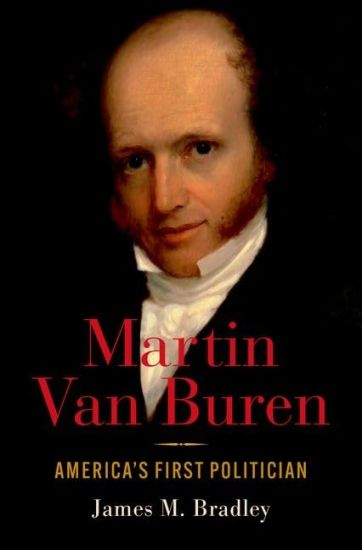
Martin Van Buren

Martin Van Buren

James M. Bradley

OXFORD UNIVERSITY PRESS INC
2025
sidottu
A new biography of the 8th president of the United States, the first chief executive not born a British citizen and the first to use the party system to chart his way from tavern-keeper's son to the pinnacle of power. Martin Van Buren was one of the most remarkable politicians not only of his time but in American presidential history. The principal architect of the party system and one of the founders of the Democratic Party, he came to dominate New York-then the most influential state in the Union-and was instrumental in electing Andrew Jackson president. Van Buren's skills as a political strategist were unparalleled (he was known as the "Little Magician"), winning him a series of high-profile offices: US senator, New York's governor, US secretary of state, US vice president, and finally the White House. In his rise to power, Van Buren sought consensus and conciliation, bending to the wishes of slave interests and complicit in the dispossession of America's Indigenous population--two of the darkest chapters in American history. This new biography of Van Buren -- the first full-scale portrait in four decades -- charts his ascent from a tavern in the Hudson Valley to the presidency, concluding with his late-career involvement in an antislavery movement. Offering vivid profiles of the day's leading figures (Andrew Jackson, Henry Clay, John C. Calhoun, John Quincy Adams, DeWitt Clinton, James K. Polk), James Bradley's book depicts the struggle for power in the tumultuous decades leading up to the Civil War.
Martha Maps It Out In Time

Martha Maps It Out In Time

Leigh Hodgkinson

Oxford University Press
2024
pokkari
Martha LOVES making maps! Step back in time with Martha's amazing maps, packed with cool facts and fun details. She meets dinosaurs, mammoths, and ancient sea creatures as she travels all the way back to the beginning of time . . . and forwards to some of the fantastical things the future might bring!
Martin Rivas

Martin Rivas

Alberto Blest Gana

Oxford University Press Inc
2000
nidottu
Widely acknowledged as the first Chilean novel, Martin Rivas (1862) by Alberto Blest Gana (1830-1920) is at once a passionate love story and an optimistic representation of Chilean nationhood. Written shortly after a decade of civil conflict, it is an indispensable source for understanding politics and society in nineteenth-century Chile. The hero of the story is Martin Rivas, an impoverished but ambitious youngster from the northern mining region of Chile, who is entrusted by his late father to the household of a wealthy and influential member of the Santiago elite. While living there, he falls in love with his guardian's daughter. The tale of their tortuous but ultimately successful love affair represents the author's desire for reconciliation between Chile's antagonistic regional and class interests. Indeed, many critics have interpreted Martin Rivas as a blueprint for national unity that emphasizes consensus over conflict. In addition to providing commentary about the mores of Chilean society, Blest Gana documents the enormous gap that existed between the rich and poor classes. An invaluable text for its portrayal of contemporary social, political, and class conditions, Martin Rivas illustrates the enriching influence that romanticism had on nineteenth-century Chilean literature.
Martial's Epigrams Book Two

Martial's Epigrams Book Two

Oxford University Press Inc
2004
sidottu
This edition provides an English translation of and detailed commentary on the second book of epigrams published by the Latin poet Marcus Valerius Martialis. The past ten years have seen a resurgence of interest in Martial's writings. But contemporary readers are in particular need of assistance when approaching these epigrams, and until now there has been no modern commentary dedicated to Book II. This new commentary carefully illuminates the allusions to people, places, things, and cultural practices of late first-century Rome that pervade Martial's poetry. It analyzes the epigrammatist's poems as literary creations, treating such topics as the structure of the individual poems and of the book as a whole, and the influence of earlier texts on Martial's language and themes.
Martin Luther King, Jr., and the Image of God

Martin Luther King, Jr., and the Image of God

Richard W. Wills

Oxford University Press Inc
2009
sidottu
Hundreds of volumes have been written on the life and civil-rights work of the Rev. Martin Luther King, Jr. One aspect of King that has received surprisingly little attention, however, is his theology. While it is common knowledge that King emerged from the black church tradition, and many have pointed to his religious lineage as a source for his social activism, few have actually examined the content of his religious beliefs and how they are related to his fight for African American civil rights. Richard Wills concentrates here on one particular piece of King's theology, imago dei- the idea that human beings are made in God's image. Wills begins by tracing the evolution of this idea through the history of Christian thought, showing the intellectual sources King drew on in constructing his own theology. Wills then demonstrates how King employed this idea in his civil rights work. The idea that we are all made in God's image was crucial, Wills shows, to King's understanding of human nature and equality. While King shared with many of his black church forebears the view that humanity's creation by God was a powerful argument for the equality of all people, he also took the concept much further. For King, being made in God's image meant that human beings have not only the right but also the power to reshape society and to build a "Beloved Community" on earth. Wills's thorough reconsideration King's thought makes the case for his importance as a theologian and also for the centrality of imago dei to his theology, and of his theology to the civil-rights movement.
Martians of Science

Martians of Science

Istvan Hargittai

Oxford University Press Inc
2008
nidottu
If science has the equivalent of a Bloomsbury group, it is the five men born at the turn of the 20th century in the same neighborhood in Budapest: Theodore von Karman, Leo Szilard, Eugene Wigner, John von Neumann, and Edward Teller. Through immigration from Hungary to Germany to the United States, they remained friends and continued to work together and influence each other throughout their lives. As a result, their work was integral to some of the most important scientific and political developments of the 20th century. They were an extraordinary group of talents: Wigner won a Nobel Prize in theoretical physics without ever having taken a formal college-level physics course, Szilard was the first to see that a chain reaction based on neutrons was possible but left physics to try to restrict nuclear arms, von Neumann could solve problems in his head for which most people needed computers, von Karman became the first director of NASA's Jet Propulsion Lab, and Teller was the father of the hydrogen bomb, whose name is now synonymous with the controversial "Star Wars" defense initiative of the 1980s. Each was fiercely opinionated and politically active, reactionaries against the fascism and anti-Semitism with which they had grown up. Istvan Hargittai, as a young Hungarian physicist, was able to get to know these great men in their later years, and the depth of information and human interest in this book is the result of his personal relationships with the subjects, their families and their contemporaries.
Martin Bucer's Doctrine of Justification

Martin Bucer's Doctrine of Justification

Brian Lugioyo

Oxford University Press Inc
2010
sidottu
Martin Bucer has been predominantly portrayed as a diplomat who attempted to reconcile divergent theological views, sometimes at any cost, or as a pragmatic pastor who was more concerned with ethics than theology. These representations have led to the view that Bucer was a theological light-weight, rightly placed in the shadow of Luther and Calvin. This book makes a different argument. Bucer was an ecclesial diplomat and he was a pragmatic pastor, yet his ecclesial and practical approaches to reforming the Church were guided by coherent theological convictions. Central to his theology was his understanding of the doctrine of justification, an understanding that Lugioyo argues has an integrity of its own and has been imprecisely represented as intentionally conciliatory. It was this solid doctrine that guided Bucer's irenicism and acted as a foundation for his entrance into discussions with Catholics between 1539 and 1541. He was consistent in his approach and did not sacrifice his theological convictions for ecclesial expediency. His understanding was an accepted evangelical perspective on justification, one to be commended along with those of Luther and Calvin.