Kirjojen hintavertailu. Mukana 11 244 527 kirjaa ja 12 kauppaa.

Kirjahaku

Etsi kirjoja tekijän nimen, kirjan nimen tai ISBN:n perusteella.

1000 tulosta hakusanalla Martin Weldon

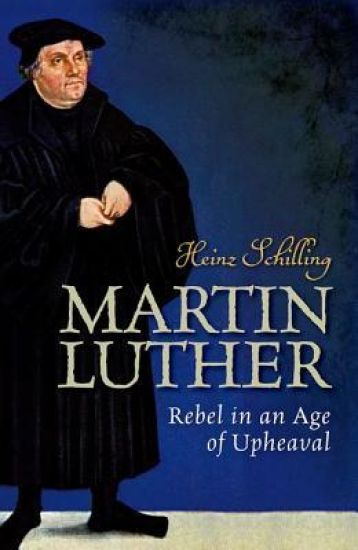
Martin Luther

Martin Luther

Heinz Schilling

Oxford University Press
2017
sidottu
No other German has shaped the history of early-modern Europe more than Martin Luther. In this comprehensive and balanced biography we see Luther as a rebel, but not as a lone hero; as a soldier in a mighty struggle for the universal reform of Christianity and its role in the world. The foundation of Protestantism changed the religious landscape of Europe, and subsequently the world, but the author chooses to show not simply as a reformer, but as an individual. In his study of the Wittenberg monk, Heinz Schilling - one of Germany's leading social and political historians - gives the reader a rounded view of a difficult, contradictory character, who changed the world by virtue of his immense will.
Martin Folkes (1690-1754)

Martin Folkes (1690-1754)

Anna Marie Roos

Oxford University Press
2021
sidottu
Martin Folkes (1690-1754): Newtonian, Antiquary, Connoisseur is a cultural and intellectual biography of the only President of both the Royal Society and the Society of Antiquaries. Sir Isaac Newton's protégé, astronomer, mathematician, freemason, art connoisseur, Voltaire's friend and Hogarth's patron, his was an intellectually vibrant world. Folkes was possibly the best-connected natural philosopher and antiquary of his age, an epitome of Enlightenment sociability, and yet he was a surprisingly neglected figure, the long shadow of Newton eclipsing his brilliant disciple. A complex figure, Folkes edited Newton's posthumous works in biblical chronology, yet was a religious skeptic and one of the first members of the gentry to marry an actress. His interests were multidisciplinary, from his authorship of the first complete history of the English coinage, to works concerning ancient architecture, statistical probability, and astronomy. Rich archival material, including Folkes's travel diary, correspondence, and his library and art collections permit reconstruction through Folkes's eyes of what it was like to be a collector and patron, a Masonic freethinker, and antiquarian and virtuoso in the days before 'science' became sub-specialised. Folkes's virtuosic sensibility and possible role in the unification of the Society of Antiquaries and the Royal Society tells against the historiographical assumption that this was the age in which the 'two cultures' of the humanities and sciences split apart, never to be reunited. In Georgian England, antiquarianism and 'science' were considered largely part of the same endeavour.
Martin Luther

Martin Luther

Robert Kolb

Oxford University Press
2009
sidottu
Martin Luther's thought continues to challenge people throughout the world in the twenty-first century. His paradigmatic shift in defining God and what it means to be human left behind a foundation for viewing human creatures that was anchored in Aristotle's anthropology. Luther defined the Revealed God in terms of his mercy and love for human beings, based not on their merit and performance but rather on his unconditioned grace. He placed 'fearing, loving, and trusting God above all else' at the heart of his definition of being human. This volume places the development and exposition of these key presuppositions in Luther's thinking within the historical context of late medieval theology and piety as well as the unfolding dynamics of political and social change at the dawn of the modern era. Special attention is given the development of a 'Wittenberg way' of practicing theology under Luther's leadership. It left behind a dependence on allegorical methods of biblical interpretation for a 'literal-prophetic' approach to Scripture. More importantly, it placed the distinction between the 'gospel' as God's unmerited gift of identity as his children and the 'law', the expression of God's expectations for the performance of his children in good works, at the heart of all interpretation of the Bible. This presuppositional framework for practicing theology reflects Luther's personal experience and his deep commitment to pastoral care of common Christians as well as his reading of the biblical text. It is supported by his distinction of two kinds of human righteousness (passive in God's sight, active in relationship to others), his distinction of two realms or dimensions of human life, and his theology of the cross. The volume unfolds Luther's maturing thought on the basis of this method.
Martin Luther

Martin Luther

Robert Kolb

Oxford University Press
2009
nidottu
Martin Luther's thought continues to challenge people throughout the world in the twenty-first century. His paradigmatic shift in defining God and what it means to be human left behind a foundation for viewing human creatures that was anchored in Aristotle's anthropology. Luther defined the Revealed God in terms of his mercy and love for human beings, based not on their merit and performance but rather on his unconditioned grace. He placed 'fearing, loving, and trusting God above all else' at the heart of his definition of being human. This volume places the development and exposition of these key presuppositions in Luther's thinking within the historical context of late medieval theology and piety as well as the unfolding dynamics of political and social change at the dawn of the modern era. Special attention is given the development of a 'Wittenberg way' of practicing theology under Luther's leadership. It left behind a dependence on allegorical methods of biblical interpretation for a 'literal-prophetic' approach to Scripture. More importantly, it placed the distinction between the 'gospel' as God's unmerited gift of identity as his children and the 'law', the expression of God's expectations for the performance of his children in good works, at the heart of all interpretation of the Bible. This presuppositional framework for practicing theology reflects Luther's personal experience and his deep commitment to pastoral care of common Christians as well as his reading of the biblical text. It is supported by his distinction of two kinds of human righteousness (passive in God's sight, active in relationship to others), his distinction of two realms or dimensions of human life, and his theology of the cross. The volume unfolds Luther's maturing thought on the basis of this method.
Martin Luther's The Church Held Captive in Babylon

Martin Luther's The Church Held Captive in Babylon

Denis Janz

Oxford University Press Inc
2019
sidottu
In August of 1520, Martin Luther published the first of three incendiary works, Address to the German Nobility, in which he urged secular authorities to take a strong hand in "reforming" the Roman church. In October, he published The Church Held Captive, and by December the deepest theological rationale appeared in The Freedom of a Christian. With these three books, the relatively unknown Friar Martin exploded onto the Western European literary and religious scene. These three works have been universally acknowledged as classics of the Reformation, and of the Western religious tradition in general. Though Reformation scholars have been reluctant to single out one as the most important of the three, Denis Janz proposes a bold case for The Church Held Captive. In the first entirely new translation in more than a century, Janz presents Luther's text as it hasn't been read in English before. Previous translations stifle the original text by dulling the sharpest edges of its argumentation and tame Luther by substituting euphemisms for his vulgarities. In Janz's dual language edition we see the provocative, offensive, and extreme restored. In his wide-ranging introduction, Janz offers much-needed context to clarify the role of The Church Held Captive in Luther's life and the life of the Reformation. This edition is the most reader-friendly scholarly version of Luther's classic in the English language.
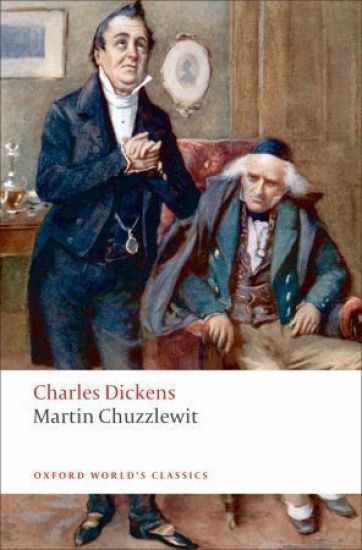
Martin Chuzzlewit

Martin Chuzzlewit

Charles Dickens

Oxford University Press
2009
nidottu
This edition of one of Dickens's earlier novels is based on the accurate Clarendon edition of the text and includes the prefaces to the 1850 and 1867 editions and Dickens's Number Plans. ABOUT THE SERIES: For over 100 years Oxford World's Classics has made available the widest range of literature from around the globe. Each affordable volume reflects Oxford's commitment to scholarship, providing the most accurate text plus a wealth of other valuable features, including expert introductions by leading authorities, helpful notes to clarify the text, up-to-date bibliographies for further study, and much more.
Martin Luther

Martin Luther

Scott H. Hendrix

Oxford University Press
2010
nidottu
This introduction presents Martin Luther as historians now see him. Instead of singling him out as a modern hero, the book emphasizes the context in which Luther worked, the colleagues who supported him, and the opponents who adamantly opposed his agenda for change. Scott H. Hendrix explains the religious reformation and Luther's importance, without ignoring the political and cultural forces that led the reformation down paths Luther could neither foresee nor influence. This Very Short Introduction pays tribute to Luther's genius, but also recognizes the self-righteous attitude that alienated contemporaries, offering a unique explanation for that behaviour. ABOUT THE SERIES: The Very Short Introductions series from Oxford University Press contains hundreds of titles in almost every subject area. These pocket-sized books are the perfect way to get ahead in a new subject quickly. Our expert authors combine facts, analysis, perspective, new ideas, and enthusiasm to make interesting and challenging topics highly readable.
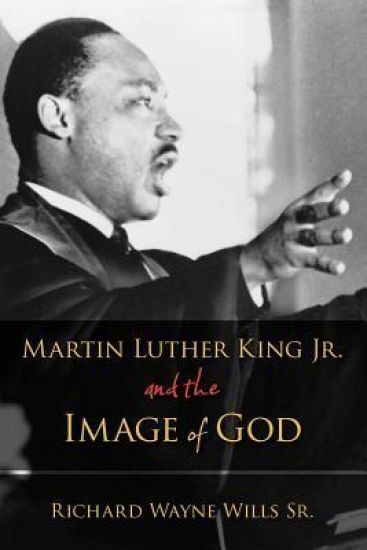
Martin Luther King, Jr., and the Image of God

Martin Luther King, Jr., and the Image of God

Richard W. Wills

Oxford University Press Inc
2011
nidottu
Scholars universally acknowledge the role that Christian belief played in the social movement engendered by Martin Luther King Jr. Yet few have actually delved into the complexity of King's theology itself. The centrality of one aspect of his theology in particular - imago Dei, the belief that human beings are made in God's image - has been surprisingly overlooked. In this book, Richard W. Wills Sr. offers a comprehensive analysis of King's appeal for civil rights by investigating his understanding of imago Dei. Wills begins by tracing the evolution of this idea through the history of Christian thought, showing the intellectual sources King drew on in constructing his own beliefs. Wills then demonstrates how King employed this idea in his civil rights work. The belief that we are all made in God's image was crucial, Wills shows, to King's understanding of human nature and equality. While King shared with many of his black church forebears the view that humanity's creation by God was a powerful argument for the equality of all people, he also took the concept much further. For King, being made in God's image meant that human beings have not only the right but also the power to reshape society and to build a "beloved community" on earth. Though explicitly grounded in Christian faith, the doctrine of imago Dei provided King with a theological rationale that was capable of addressing the needs of the community well beyond the walls of churches. Wills's thorough reconsideration King's thought makes the case for his importance as a theologian. It convincingly demonstrates that the concept of imago Dei formed the heart of his theology and, in turn, that his theology was central to the unfolding of the civil rights movement.
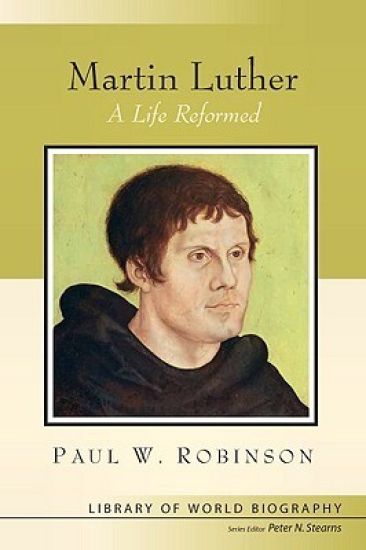
Martin Luther

Martin Luther

Paul Robinson

Pearson
2010
nidottu
This biography is a great addition to a Renaissance/Reformation course. The newest installment to the World Biography Series, this book profiles the life of Martin Luther and the impact he had on world events during his lifetime and long after. Concise and incisive, each interpretive biography in the Library of World Biography Series focuses on a person whose actions and ideas either significantly influenced world events or whose life reflects important themes and developments in global history.
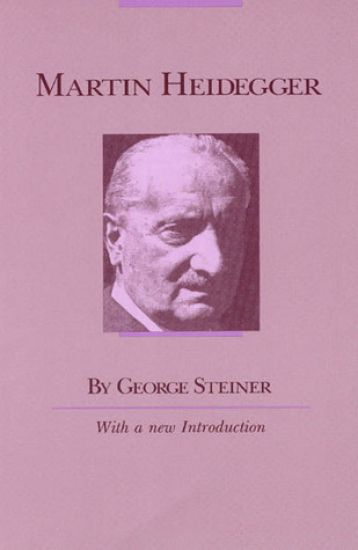
Martin Heidegger

Martin Heidegger

George Steiner

University of Chicago Press
1991
nidottu
With characteristic lucidity and style, Steiner makes Heidegger's immensely difficult body of work accessible to the general reader. In a new introduction, Steiner addresses language and philosophy and the rise of Nazism. "It would be hard to imagine a better introduction to the work of philosopher Martin Heidegger."—George Kateb, The New Republic
Martin Luther's Bible

Martin Luther's Bible

W. Gordon Campbell

JAMES CLARKE CO LTD
2024
sidottu
Martin Luther's 1522 September Testament marked a watershed in Bible translation, making Scripture available to ordinary German people in their own tongue and sparking similar efforts across Europe. Building on the nascent trend of vernacular Bible translations in the early sixteenth century, Luther's translation quickly became definitive linguistically, theologically and culturally, especially once the complete Bible was published in 1534, with production of New Testaments and Bibles in French, English and other languages keeping pace. Luther and his associates constantly revised and improved their methodology for translation and interpretation over a quarter-century of Bible publishing - efforts that helped shape Bible translation, reading and exegesis, for scholars and ordinary Christians alike, well beyond his lifetime. Martin Luther's Bible commemorates the September Testament, exploring the Wittenberg Bible project in its context and tracing aspects of its legacy in Europe and the wider world, from the sixteenth century to the present day. Essays from a range of leading experts draw upon the 2022 Martin Luther: Bible Translator, Illustrator and Publisher International Conference held at Union Theological College, Belfast. Together, they provide critical new insights into the linguistic, hermeneutical and theological history and influence of this landmark text.
Martin Luther's Bible

Martin Luther's Bible

W. Gordon Campbell

JAMES CLARKE CO LTD
2024
nidottu
Martin Luther's 1522 September Testament marked a watershed in Bible translation, making Scripture available to ordinary German people in their own tongue and sparking similar efforts across Europe. Building on the nascent trend of vernacular Bible translations in the early sixteenth century, Luther's translation quickly became definitive linguistically, theologically and culturally, especially once the complete Bible was published in 1534, with production of New Testaments and Bibles in French, English and other languages keeping pace. Luther and his associates constantly revised and improved their methodology for translation and interpretation over a quarter-century of Bible publishing - efforts that helped shape Bible translation, reading and exegesis, for scholars and ordinary Christians alike, well beyond his lifetime. Martin Luther's Bible commemorates the September Testament, exploring the Wittenberg Bible project in its context and tracing aspects of its legacy in Europe and the wider world, from the sixteenth century to the present day. Essays from a range of leading experts draw upon the 2022 Martin Luther: Bible Translator, Illustrator and Publisher International Conference held at Union Theological College, Belfast. Together, they provide critical new insights into the linguistic, hermeneutical and theological history and influence of this landmark text.
Martin Amis: Postmodernism and Beyond
This is the first collection of essays ever published on Martin Amis, one of England's most controversial and critically acclaimed authors. It assembles the ideas of twelve scholars from different countries to clarify the major trends and transitions in Amis's work. The essays will become an authoritative resource for scholars and students alike.
Martin's Dream

Martin's Dream

Carson Clayborne

Palgrave Macmillan
2013
sidottu
Written with the unique perspective of someone who has, for three decades, been involved with Dr. King's legacy, Dr. Carson give us an insider's account of what transpired at the Dream speech, and beyond. A rich and engrossing memoir of black empowerment at a unique moment in time.
Martin and Lorna Activity Book - Ladybird Readers Starter Level 14
This Activity Book accompanies the Reader. It provides practice of key language structures and vocabulary, while developing a range of skills: singing, spelling and writing, reading, speaking, and listening.Ladybird Readers is a graded reading series of traditional tales, popular characters, modern stories, and non-fiction, written for young learners of English as a foreign or second language. Recommended for children aged 4+, the eight levels of Readers and six levels of Activity Books follow the CEFR framework (Pre-A1 to A2+) and include language activities that help develop key skills and provide preparation for the Cambridge English: Young Learners (YLE) Starters, Movers and Flyers exams. The Starter level introduces phonics and sight words. Each book contains two versions of the story: the first with single words focusing on phonics, and the second with full sentences introducing sight words. It is Pre-A1 in the CEFR framework.
Martin Lukes: Who Moved My BlackBerry?

Martin Lukes: Who Moved My BlackBerry?

Lucy Kellaway

Penguin Books Ltd
2011
pokkari
Lucy Kellaway, author of In Office Hours, invites you into the world of Martin Lukes, Marketing Director and adopter of every corporate fad going, in her astutely observed and wickedly funny office satire Martin Lukes: Who Moved My Blackberry? Meet Martin Lukes, Director of Marketing, A&B Global (UK)A year in the life of an A-playing brand ambassador suspended halfway up the corporate ladder. Must be read with a can-do headset.'Enormously funny, touching...should become an instant classic' Financial Times'Acutely and hilariously observed' Evening Standard'Hilarious' Sunday TimesManagement Columnist for the Financial Times, Lucy Kellaway, lampoons modern corporate culture in her two novels: Martin Lukes: Who Moved My Blackberry? and In Office Hours. You can follow Lucy on Twitter @lucykellaway or on her Financial Times blog and podcast.