Kirjojen hintavertailu. Mukana 11 627 463 kirjaa ja 12 kauppaa.

Kirjahaku

Etsi kirjoja tekijän nimen, kirjan nimen tai ISBN:n perusteella.

1000 tulosta hakusanalla Marvin A. Cohen

Berit Olam

Berit Olam

Marvin A. Sweeney

Liturgical Press
2000
sidottu
There is generally no common material that binds together the works of the individual prophets that comprise the Twelve, but through Sweeney's commentary they stand together as a single, clearly defined book among the other prophetic books of the Bible.The Book of the Twelve Prophets is a multifaceted literary composition that functions simultaneously in all Jewish and Christian versions of the Bible as a single prophetic book and as a collection of twelve individual prophetic books. Each of the twelve individual books - Hosea, Joel, Amos, Obadiah, Jonah, Micah, Nahum, Habakkuk, Zephaniah, Haggai, Zechariah, and Malachi - begins with its own narrative introduction that identifies the prophet and provides details concerning the historical setting and literary characteristics. In this manner each book is clearly distinguished from the others within the overall framework of the Twelve.By employing a combination of literary methodologies, such as reader response criticism, canonical criticism, and structural form criticism, Sweeney establishes the literary structure of the Book of the Twelve as a whole, and of each book with their respective ideological or theological perspectives. An introductory chapter orients readers to questions posed by reading the Book of the Twelve as a coherent piece of literature and to a literary overview of the Twelve. Sweeney then treats each of the twelve individual prophetic books in the order of the Masoretic canon, providing a discussion of each one's structure, theme, and outlook. This is followed by a detailed literary discussion of the textual units that comprise the book.
Berit Olam

Berit Olam

Marvin A. Sweeney

Liturgical Press
2021
pokkari
There is generally no common material that binds together the works of the individual prophets that comprise the Twelve, but through Sweeney's commentary they stand together as a single, clearly defined book among the other prophetic books of the Bible. The Book of the Twelve Prophets is a multifaceted literary composition that functions simultaneously in all Jewish and Christian versions of the Bible as a single prophetic book and as a collection of twelve individual prophetic books. Each of the twelve individual books - Hosea, Joel, Amos, Obadiah, Jonah, Micah, Nahum, Habakkuk, Zephaniah, Haggai, Zechariah, and Malachi - begins with its own narrative introduction that identifies the prophet and provides details concerning the historical setting and literary characteristics. In this manner each book is clearly distinguished from the others within the overall framework of the Twelve.By employing a combination of literary methodologies, such as reader response criticism, canonical criticism, and structural form criticism, Sweeney establishes the literary structure of the Book of the Twelve as a whole, and of each book with their respective ideological or theological perspectives. An introductory chapter orients readers to questions posed by reading the Book of the Twelve as a coherent piece of literature and to a literary overview of the Twelve. Sweeney then treats each of the twelve individual prophetic books in the order of the Masoretic canon, providing a discussion of each one's structure, theme, and outlook. This is followed by a detailed literary discussion of the textual units that comprise the book.
Berit Olam

Berit Olam

Marvin A. Sweeney

Liturgical Press
2021
pokkari
There is generally no common material that binds together the works of the individual prophets that comprise the Twelve, but through Sweeney's commentary they stand together as a single, clearly defined book among the other prophetic books of the Bible.The Book of the Twelve Prophets is a multifaceted literary composition that functions simultaneously in all Jewish and Christian versions of the Bible as a single prophetic book and as a collection of twelve individual prophetic books. Each of the twelve individual books - Hosea, Joel, Amos, Obadiah, Jonah, Micah, Nahum, Habakkuk, Zephaniah, Haggai, Zechariah, and Malachi - begins with its own narrative introduction that identifies the prophet and provides details concerning the historical setting and literary characteristics. In this manner each book is clearly distinguished from the others within the overall framework of the Twelve.By employing a combination of literary methodologies, such as reader response criticism, canonical criticism, and structural form criticism, Sweeney establishes the literary structure of the Book of the Twelve as a whole, and of each book with their respective ideological or theological perspectives. An introductory chapter orients readers to questions posed by reading the Book of the Twelve as a coherent piece of literature and to a literary overview of the Twelve. Sweeney then treats each of the twelve individual prophetic books in the order of the Masoretic canon, providing a discussion of each one's structure, theme, and outlook. This is followed by a detailed literary discussion of the textual units that comprise the book.
An Introduction to Tree-Ring Dating

An Introduction to Tree-Ring Dating

Marvin A. Stokes; Terah L. Smiley

University of Arizona Press
1996
nidottu
Tree-ring dating, or dendrochronology, is the study of the chronological sequence of annual growth rings in trees. This book--a seminal study in its field--provides a simple yet eloquent introduction to the discipline, explaining what a dendrochronologist does both in the field and in the laboratory. Authors Stokes and Smiley first explain the basic principles of tree-ring dating, then describe details of the process, step by step, from the time a sample is collected until it is incorporated into a master chronology. The book focuses on coniferous evergreens of the Southwest, particularly piñons, because they have wide geographic distribution, constitute a large population, and show excellent growth response to certain controlling factors. The book is specifically concerned with the task of establishing a calendar date for a wood or charcoal specimen. This concise but thorough explication of an important discipline will make dendrochonology more meaningful to students and professionals in archaeology, forestry, hydrology, and global change.
From Lima to Leticia

From Lima to Leticia

Marvin A. Lewis

University Press of America
1983
sidottu
A primarily culturalist interpretation of four major novels of the Peruvian writer, Mario Vargas Llosa: La ciudad y los perros (1963), La casa verde (1966), Conversacion en La Catedral (1969), and Pantaleon y las visitadores (1973). The author sheds light on various techniques and themes of these novels to show how they contribute to Vargas Llosa's overall view of the human condition in Peru.
From Lima to Leticia

From Lima to Leticia

Marvin A. Lewis

University Press of America
1983
nidottu
A primarily culturalist interpretation of four major novels of the Peruvian writer, Mario Vargas Llosa: La ciudad y los perros (1963), La casa verde (1966), Conversacion en La Catedral (1969), and Pantaleon y las visitadores (1973). The author sheds light on various techniques and themes of these novels to show how they contribute to Vargas Llosa's overall view of the human condition in Peru.
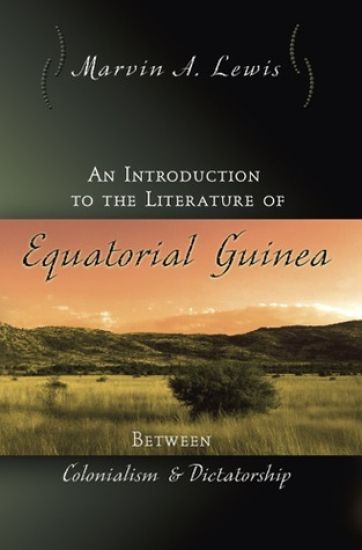
An Introduction to the Literature of Equatorial Guinea

An Introduction to the Literature of Equatorial Guinea

Marvin A. Lewis

University of Missouri Press
2007
nidottu
Spain's only former colony in sub-Saharan Africa, Equatorial Guinea is home to a literature of transition - songs of freedom in which authors reflect on their identity within the context of recent colonialism and dictatorship. ""An Introduction to the Literature of Equatorial Guinea"" is the first book-length critical study of this literature, a multigenre analysis encompassing fifty years of poetry, drama, essays, and prose fiction. Both resident and exiled authors offer insights into the impact of colonialism and dictatorship under Spanish rule and consider the fruits of ""independence"" under the regimes of Francisco Macias Nguema and Teodoro Obiang Nguema. Examining these works from the perspective of postcolonial theory, Marvin A. Lewis shows how writings from Equatorial Guinea depict the clash of traditional and European cultures and reflect a dictatorship that produced poverty, misery, and oppression. He assesses with particular care the impact of the Macias reafricanization process and its manifestations in literature. In showing how the views of the nation correspond and diverge in works of writers such as Maria Nsue Angue, Donato Ndongo-Bidyogo, and Juan Tomas Avila Laurel, Lewis brings to light artists who articulate their concerns in Spanish but are African in their souls. In analyzing the works of both renowned and emerging writers, he marks the themes that contribute to the formation of national identity: Hispanic heritage, the myth of Bantu unity, ""bonding in adversity"" during the Nguema regime, and the Equatoguinean diaspora. Lewis provides an accessible introduction to the work of central writers in a new area of literary study and includes the most exhaustive and up-to-date bibliography available on the subject. It is a groundbreaking work that broadens our understanding of African literature and will be the bedrock for future studies of this Hispanic corner of Africa.
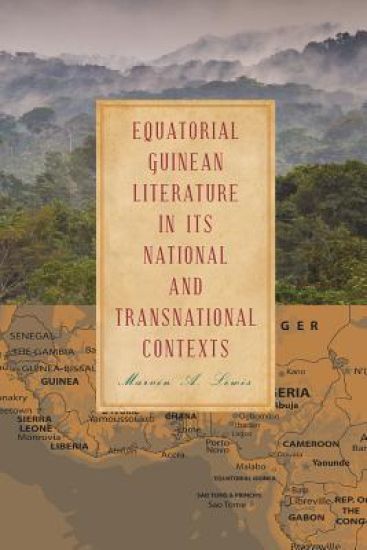
Equatorial Guinean Literature in its National and Transnational Contexts
Equatorial Guinea, a former Spanish colony, is the only African country in which Spanish is an official language and which has a tradition of literature in Spanish. This is a study of the literature produced by the nation’s writers from 2007 to 2013. Since its independence in 1968, Equatorial Guinea has been ruled by dictators under whom ethnic differences have been exacerbated, poverty and violence have increased, and critical voices have been silenced. The result has been an exodus of intellectuals—including writers who express their national and exile experiences in their poems, plays, short stories, and novels. The writers discussed include Juan Tomás Ávila Laurel, Donato Ndongo-Bidyogo, and Guillermina Mekuy, among others.
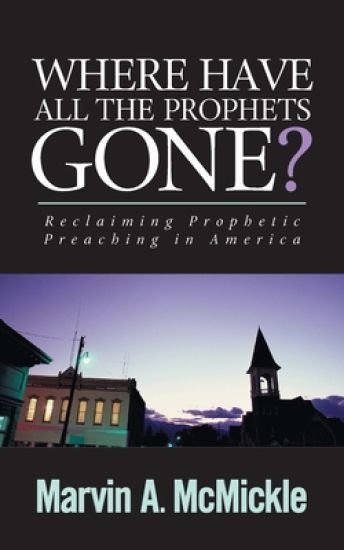
Where Have All the Prophets Gone: Reclaiming Prophetic Preaching in America
This book is a call for preachers to learn the importance of keeping their eyes on the vision of Jesus and biblical prophets when preaching - that of doing justice, caring for others, and being equitable. The book attempts to make a biblical argument for the importance and the content of prophetic preaching, and argues that the issue is not preaching from a text taken from the prophetic corpus but preaching on the themes that echoed over and over from the biblical prophets themselves.
The Mary Martha Principle: Devotion Before Action
One morning in 2006 I woke and in a moment of time had a vision. I seen what it would be like to find myself sitting in a chair; staring out a window at age 65 or 70; bankrupt; broke; with no vision or purpose for the future. It was the greatest wake up call of my life. I will never forget it as long as I live. I immediately responded by repeating these same words in the positive affirmative: "I will die going forward; I will not die in bed or sitting in a chair staring out a window: bankrupt; broke; with no vision or hope for the future." Immediately came to me these words which I believe were given to me by the Holy Spirit: "It's better to die at sea in quest of the dream in faith still believing, than to die anchored to the shore in fear still dreaming." This phrase of words became my motto for living for the next several years. I was deeply in debt. My marriage; and in fact my whole Christian life was all slipping away. The environment of love; God's amazing grace and powerful anointing as I had known it now seemed a thing of the past. I was back in a godless world working on a job with minimal pay, and swearing, cursing, men and women all around me. Reverence for the name of Jesus was like a foreign concept in this sea of profanity. The job was more like a band aid, barely enough to stop the financial bleeding, and definitely not the cure. - exert from chapter four This message is about God's remedy for disaster through the "Mary Martha Principle." God has a plan for total Recovery and Restoration of all things. The remainder of this book is dedicated to discovering this plan, and applying it to my own life. There is no disaster so great that God cannot bring restoration. There is no sickness or disease that is so great that He cannot heal it. There is no addiction or bondage so powerful that He is not more powerful to bring deliverance. There is no darkness so deep that His light and truth cannot penetrate it. We are talking about the One who has power to raise the dead. The One who created the heaven and the earth by the power of His spoken word. Surely He has a plan for me? This plan is revealed here step by step through the "Mary Martha Principle."
1 – 2 Samuel

1 – 2 Samuel

Marvin A. Sweeney

Cambridge University Press
2023
pokkari
In this commentary to 1–2 Samuel, Marvin Sweeney focuses on the qualities of leadership displayed by the major characters of the book. He reads 1–2 Samuel in relation to Machiavelli's The Prince and Sun Tzu's The Art of War, which provide a comparative evaluation of the qualities of leadership displayed by Eli, Samuel, Saul, David, Ish-Bosheth, Abner, Abshalom, Joab, and others. Additionally, Sweeney provides an analysis of the synchronic, literary structure of Samuel, as well as a new theory regarding its composition. He also re-evaluates the role of 2 Samuel 21–24 within the synchronic literary structure of the book, arguing that the so-called Succession Narrative in 2 Samuel 9–20 is a northern Israelite composition that stands as a component of the Jehu Dynastic History. Highlighting the geography and cities of the land of Israel, Sweeney's commentary enables readers to understand the role that the land of Israel plays in the narrative of the book of Samuel.
1 – 2 Samuel

1 – 2 Samuel

Marvin A. Sweeney

Cambridge University Press
2023
sidottu
In this commentary to 1–2 Samuel, Marvin Sweeney focuses on the qualities of leadership displayed by the major characters of the book. He reads 1–2 Samuel in relation to Machiavelli's The Prince and Sun Tzu's The Art of War, which provide a comparative evaluation of the qualities of leadership displayed by Eli, Samuel, Saul, David, Ish-Bosheth, Abner, Abshalom, Joab, and others. Additionally, Sweeney provides an analysis of the synchronic, literary structure of Samuel, as well as a new theory regarding its composition. He also re-evaluates the role of 2 Samuel 21–24 within the synchronic literary structure of the book, arguing that the so-called Succession Narrative in 2 Samuel 9–20 is a northern Israelite composition that stands as a component of the Jehu Dynastic History. Highlighting the geography and cities of the land of Israel, Sweeney's commentary enables readers to understand the role that the land of Israel plays in the narrative of the book of Samuel.
History of Military Mobilization in the United States Army, 1775-1945

History of Military Mobilization in the United States Army, 1775-1945

Marvin a. Kreidberg; Merton G. Henry

Literary Licensing, LLC
2013
sidottu
The book ""History of Military Mobilization in the United States Army, 1775-1945"" by Marvin A. Kreidberg is a comprehensive account of the mobilization efforts of the US Army from its inception in 1775 until the end of World War II in 1945. The book provides a detailed analysis of the various factors that influenced the mobilization process, including political, economic, and social factors.The author examines the evolution of military mobilization in the US Army, from the early days of the Revolutionary War to the massive mobilization efforts of World War II. The book covers a wide range of topics, including the recruitment and training of soldiers, the development of military technology, the role of women in the military, and the impact of war on American society.Kreidberg's research is based on a wide range of primary sources, including government documents, military records, and personal accounts of soldiers and civilians. The book is written in a clear and concise style, making it accessible to both scholars and general readers interested in military history.Overall, ""History of Military Mobilization in the United States Army, 1775-1945"" is a valuable resource for anyone interested in the history of the US Army and the impact of war on American society. The book provides a detailed account of the challenges and successes of military mobilization, and offers insights into the complex relationship between the military and society.This scarce antiquarian book is a facsimile reprint of the old original and may contain some imperfections such as library marks and notations. Because we believe this work is culturally important, we have made it available as part of our commitment for protecting, preserving, and promoting the world's literature in affordable, high quality, modern editions, that are true to their original work.