Kirjojen hintavertailu. Mukana 11 699 587 kirjaa ja 12 kauppaa.

Kirjahaku

Etsi kirjoja tekijän nimen, kirjan nimen tai ISBN:n perusteella.

1000 tulosta hakusanalla Mary Douglas

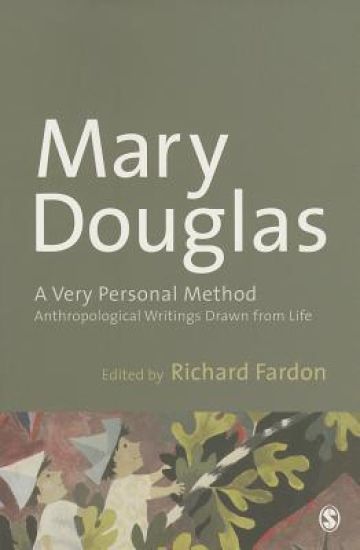
A Very Personal Method

A Very Personal Method

Mary Douglas

SAGE Publications Ltd
2013
sidottu
The range of Mary Douglas's interests had few parallels amongst the leading social anthropologists of the 20th century. Although inspired by the classics of the discipline of anthropology, her theories were idiosyncratic and her applications of them never predictable. By bringing together writings in different genres that she composed over the entirety of her career, this volume demonstrates her distinctive style of thought and expression. The topics she addressed ranged freely between family and friends, the demands of domestic routine, her belonging to the Roman Catholic Church, and cultural similarities and differences on a global scale. In her method and style, as much as in her explicit arguments, Mary Douglas constantly invited her readers to reflect on the inextricable intertwining of the personal and the theoretical in her thought. More than any previous collection of Mary Douglas's work, A Very Personal Method reveals a mind restlessly reworking her enduring preoccupations and finding echoes of them in the new concerns she continued to draw from life. Mary Douglas was one of the most widely read social anthropologists of the 20th Century. She is celebrated both as a literary stylist and an anthropological thinker who challenged common presuppositions and understandings of religion, economy and society. As a cornerstone of modernism in social anthropology, and a precursor of 21st Century interdisciplinarity, her work remains highly influential both within and outside the social sciences. Richard Fardon is Mary Douglas's Literary Executor and Head of the Doctoral School and Professor of West African Anthropology at SOAS, University of London, UK
A Very Personal Method

A Very Personal Method

Mary Douglas

SAGE Publications Ltd
2013
nidottu
The range of Mary Douglas's interests had few parallels amongst the leading social anthropologists of the 20th century. Although inspired by the classics of the discipline of anthropology, her theories were idiosyncratic and her applications of them never predictable. By bringing together writings in different genres that she composed over the entirety of her career, this volume demonstrates her distinctive style of thought and expression. The topics she addressed ranged freely between family and friends, the demands of domestic routine, her belonging to the Roman Catholic Church, and cultural similarities and differences on a global scale. In her method and style, as much as in her explicit arguments, Mary Douglas constantly invited her readers to reflect on the inextricable intertwining of the personal and the theoretical in her thought. More than any previous collection of Mary Douglas's work, A Very Personal Method reveals a mind restlessly reworking her enduring preoccupations and finding echoes of them in the new concerns she continued to draw from life. Mary Douglas was one of the most widely read social anthropologists of the 20th Century. She is celebrated both as a literary stylist and an anthropological thinker who challenged common presuppositions and understandings of religion, economy and society. As a cornerstone of modernism in social anthropology, and a precursor of 21st Century interdisciplinarity, her work remains highly influential both within and outside the social sciences. Richard Fardon is Mary Douglas's Literary Executor and Head of the Doctoral School and Professor of West African Anthropology at SOAS, University of London, UK
Rent og urent

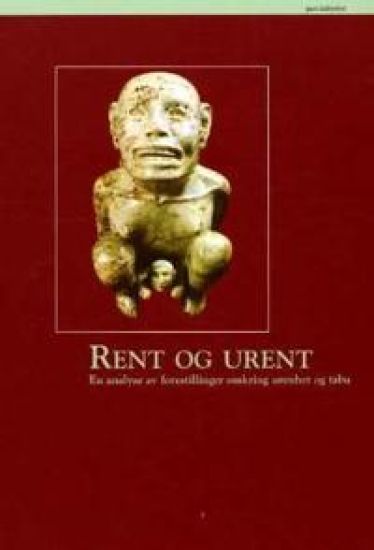
Rent og urent

Mary Douglas

Pax
2007
sidottu
Gjennom sin analyse viser forfatteren hvordan det intrikate mønsteret som er vår egen tilværelse, ikke er noen naturlig inndeling, men resultatet av en sosial prosess. Hun hevder at forståelsen av renhet og urenhet er med på å skape kategorier og skillene i alle kulturer. Dette er en felles faktor som binder alle menneskelige samfunn sammen, og erkjennelsen av dette bidrar til å dempe vårt skille mellom en sekulær og en religiøs virkelighetsoppfatning. Har litteraturliste og stikkordregister.
The World of Goods

The World of Goods

Mary Douglas; Baron Isherwood

Routledge
2021
nidottu
It is well-understood that the consumption of goods plays an important, symbolic role in the way human beings communicate, create identity, and establish relationships. What is less well-known is that the pattern of their flow shapes society in fundamental ways. In this book the renowned anthropologist Mary Douglas and economist Baron Isherwood overturn arguments about consumption that rely on received economic and psychological explanations. They ask new questions about why people save, why they spend, what they buy, and why they sometimes-but not always-make fine distinctions about quality.Instead of regarding consumption as a private means of satisfying one’s preferences, they show how goods are a vital information system, used by human beings to fulfill their intentions towards one another. They also consider the implications of the social role of goods for a new vision for social policy, arguing that poverty is caused as much by the erosion of local communities and networks as it is by lack of possessions, and contrast small-scale with large-scale consumption in the household. A radical rethinking of consumerism, inequality and social capital, The World of Goods is a classic of economic anthropology whose insights remain compelling and urgent.This Routledge Classics edition includes a new foreword by Richard Wilk."Forget that commodities are good for eating, clothing, and shelter; forget their usefulness and try instead the idea that commodities are good for thinking." – Mary Douglas and Baron Isherwood
The World of Goods

The World of Goods

Mary Douglas; Baron Isherwood

Routledge
2021
sidottu
It is well-understood that the consumption of goods plays an important, symbolic role in the way human beings communicate, create identity, and establish relationships. What is less well-known is that the pattern of their flow shapes society in fundamental ways. In this book the renowned anthropologist Mary Douglas and economist Baron Isherwood overturn arguments about consumption that rely on received economic and psychological explanations. They ask new questions about why people save, why they spend, what they buy, and why they sometimes-but not always-make fine distinctions about quality.Instead of regarding consumption as a private means of satisfying one’s preferences, they show how goods are a vital information system, used by human beings to fulfill their intentions towards one another. They also consider the implications of the social role of goods for a new vision for social policy, arguing that poverty is caused as much by the erosion of local communities and networks as it is by lack of possessions, and contrast small-scale with large-scale consumption in the household. A radical rethinking of consumerism, inequality and social capital, The World of Goods is a classic of economic anthropology whose insights remain compelling and urgent.This Routledge Classics edition includes a new foreword by Richard Wilk."Forget that commodities are good for eating, clothing, and shelter; forget their usefulness and try instead the idea that commodities are good for thinking." – Mary Douglas and Baron Isherwood
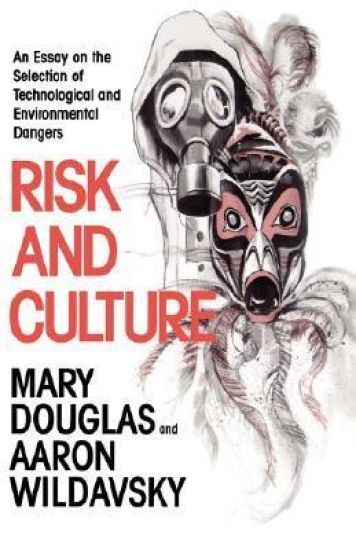
Risk and Culture

Risk and Culture

Mary Douglas; Aaron Wildavsky

University of California Press
1983
pokkari
Can we know the risks we face, now or in the future? No, we cannot; but yes, we must act as if we do. Some dangers are unknown; others are known, but not by us because no one person can know everything. Most people cannot be aware of most dangers at most times. Hence, no one can calculate precisely the total risk to be faced. How, then, do people decide which risks to take and which to ignore? On what basis are certain dangers guarded against and others relegated to secondary status? This book explores how we decide what risks to take and which to ignore, both as individuals and as a culture.
Missing Persons

Missing Persons

Mary Douglas; Steven Ney

University of California Press
1998
sidottu
The Western cultural consensus based on the ideas of free markets and individualism has led many social scientists to consider poverty as a personal experience, a deprivation of material things, and a failure of just distribution. Mary Douglas and Steven Ney find this dominant tradition of social thought about poverty and well-being to be full of contradictions. They argue that the root cause is the impoverished idea of the human person inherited through two centuries of intellectual history, and that two principles, the idea of the solipsist self and the idea of objectivity, cause most of the contradictions. Douglas and Ney state that Economic Man, from its semitechnical niche in eighteenth-century economic theory, has taken over the realms of psychology, consumption, public assistance, political science, and philosophy. They say that by distorting the statistical data presented for policy analysis, the ideas of the solipsist self and objectivity indeed often protect a political bias. The authors propose to correct this by revising the current model of the person. Taking cultural bias into account and giving full play to political dissent, they restore the 'persons' who have been missing from the social science debates. Drawing from anthropology, economics, political science, and sociology, the authors set forth a fundamental critique of the social sciences. Their book will find a wide audience among social scientists and will also interest anyone engaged in current discussions of poverty. This book is a copublication with the Russell Sage Foundation.
Postfeminist War

Postfeminist War

Mary Douglas Vavrus

Rutgers University Press
2018
nidottu
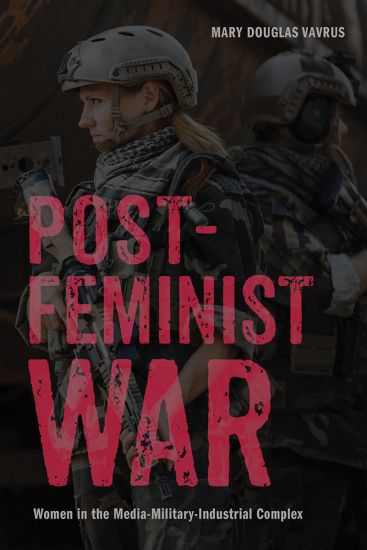
Media representations and practices that have emerged out of contemporary wars have been well documented by a wide array of books and articles. These treatments, however, have been less attentive to how cultural constructions of military personnel and war itself figure in the depiction of the incursions in Iraq and Afghanistan. In Post-Feminist War, Mary Douglas Vavrus argues that all of these identity categories are integral to our understanding of those fighting, saved, or victimized by war. She considers two important questions: how the construction of gender, race, and class in media are productive of régimes of truth regarding war and military life, and how such constructions may also intensify militarism. By examining news and documentary media produced since September 11, 2001, Vavrus demonstrates that news narratives that include women use feminism selectively in gender equality narratives, which tend to reinforce historically resonant gender, race, and class identity constructions. She ultimately asserts that such reporting advances post-feminism, which, in tandem with banal militarism, subtly pushes military solutions for an array of problems women and girls face.
Postfeminist War

Postfeminist War

Mary Douglas Vavrus

Rutgers University Press
2018
sidottu
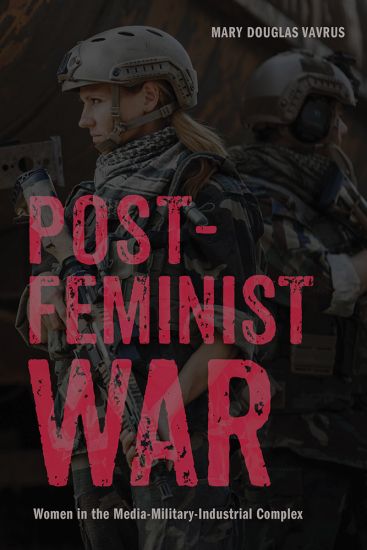
Media representations and practices that have emerged out of contemporary wars have been well documented by a wide array of books and articles. These treatments, however, have been less attentive to how cultural constructions of military personnel and war itself figure in the depiction of the incursions in Iraq and Afghanistan. In Post-Feminist War, Mary Douglas Vavrus argues that all of these identity categories are integral to our understanding of those fighting, saved, or victimized by war. She considers two important questions: how the construction of gender, race, and class in media are productive of régimes of truth regarding war and military life, and how such constructions may also intensify militarism. By examining news and documentary media produced since September 11, 2001, Vavrus demonstrates that news narratives that include women use feminism selectively in gender equality narratives, which tend to reinforce historically resonant gender, race, and class identity constructions. She ultimately asserts that such reporting advances post-feminism, which, in tandem with banal militarism, subtly pushes military solutions for an array of problems women and girls face.
Feminist Psychotherapies

Feminist Psychotherapies

Mary Douglas; E. A. Walker

Praeger Publishers Inc
1989
sidottu
This volume demonstrates that there is no one feminist therapy, but rather a variety. Each has grown from the integration of feminist principles with multiple therapy theories. The authors present several products of this integration as models. The first section's chapters trace the influence of feminism on the development of feminist therapy, discuss a variety of professional issues and the goals of feminist therapy, discuss developmental issues, and examine the interface between feminist and psychotherapy systems, including psychodynamic, cognitive behavioral and family systems. The second section includes chapters on feminist therapies with women, single female parents, men, lesbians and gays, ethnic minorities, and the elderly.
Cultures and Crises

Cultures and Crises

Mary Douglas; Richard Fardon

SAGE Publications Ltd
2013
sidottu
Written in the last two decades of her life, Cultures and Crises finds Mary Douglas developing analyses of critical conditions facing contemporary societies, sometimes in the company of distinguished co-authors across the whole gamut of social sciences. The essays focus on the collaborative development of 'cultural theory' from the 'grid and group' analysis of the 1970s through to its application and elaboration in her later thought. The material covers questions of culture and institutions, the challenges to culture posed by climate change and the nature of risk in culture. What emerges is the most complete picture of Mary Douglas's cultural theory that is currently available to us. The book will add to the legions of Douglas's readers across the disciplinary divisions of the social sciences. Mary Douglas was one of the most widely read social anthropologists of the 20th Century. She is celebrated both as a literary stylist and an anthropological thinker who challenged common presuppositions and understandings of religion, economy and society. As a cornerstone of modernism in social anthropology, and a precursor of 21st Century interdisciplinarity, her work remains highly influential both within and outside the social sciences. Richard Fardon is Mary Douglas's Literary Executor and Head of the Doctoral School and Professor of West African Anthropology at SOAS, University of London, UK.
Cultures and Crises

Cultures and Crises

Mary Douglas; Richard Fardon

SAGE Publications Ltd
2013
nidottu
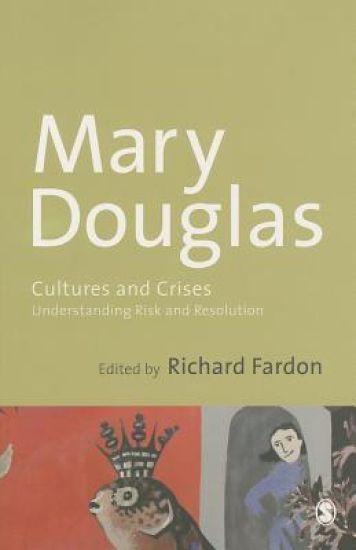
Written in the last two decades of her life, Cultures and Crises finds Mary Douglas developing analyses of critical conditions facing contemporary societies, sometimes in the company of distinguished co-authors across the whole gamut of social sciences. The essays focus on the collaborative development of 'cultural theory' from the 'grid and group' analysis of the 1970s through to its application and elaboration in her later thought. The material covers questions of culture and institutions, the challenges to culture posed by climate change and the nature of risk in culture. What emerges is the most complete picture of Mary Douglas's cultural theory that is currently available to us. The book will add to the legions of Douglas's readers across the disciplinary divisions of the social sciences. Mary Douglas was one of the most widely read social anthropologists of the 20th Century. She is celebrated both as a literary stylist and an anthropological thinker who challenged common presuppositions and understandings of religion, economy and society. As a cornerstone of modernism in social anthropology, and a precursor of 21st Century interdisciplinarity, her work remains highly influential both within and outside the social sciences. Richard Fardon is Mary Douglas's Literary Executor and Head of the Doctoral School and Professor of West African Anthropology at SOAS, University of London, UK.
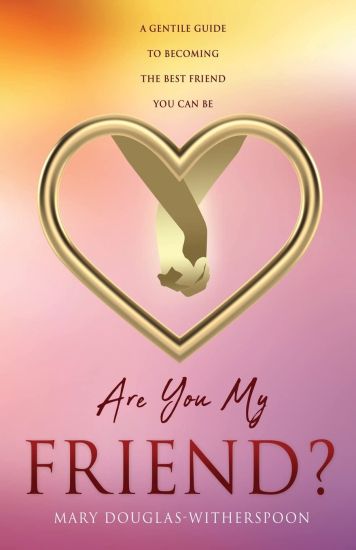
Are You My Friend?

Are You My Friend?

Mary Douglas-Witherspoon

Prominent Books Edge LLC
2024
pokkari
I've worked in corporate America as an administrative assistant at Chase Bank in New York City and as a police dispatcher for thirty years in Niagara Falls, New York. So, I've lived in the "big city" and what would be seen as a "small city." I've worked with and for a diverse population-rich people, poor people, black people, white people, nice people, not-so-nice people old and young people. What I have come to know is that we all want the same things. We love and want to be loved. Whether it is in a relationship of marriage, family or friends, we want to be loved. And as hard as it is for some people to admit, we want to be liked.People get married for many different reasons, and family is DNA, but friends are the ones we choose. I consider myself a people-watcher, and I have watched the actions of some and wondered why they chose a particular person to be their friend. I have also watched the actions of friends and can point out why their friendship must be working.I don't consider myself to be an expert on friendship matters, but I do believe I have insight that I have gained in my over sixty-plus years of living that might be interesting and helpful to some. Though this is an easy read and could be read in one sitting, my suggestion is that you read a chapter at a time. Read it, meditate on it, and take in the affirmations in each chapter. Look at your most precious friendships and see how that particular point is working in your life.Maybe even read it with your friend or friends and see how they feel you all are doing. Open a dialogue that opens your heart even more.I hope that you receive something from this guide and hopefully it will help you to grow in your friendship.-Mary
Risk and Blame

Risk and Blame

Professor Mary Douglas

Routledge
1994
nidottu
Risk and danger are culturally conditioned ideas. They are shaped by pressures of social life and accepted notions of accountability. The risk analyses that are increasingly being utilised by politicians, aid programmes and business ignore the insights to be gained from social anthropology which can be applied to modern industrial society.In this collection of recent essays, Mary Douglas develops a programme for studying risk and blame that follows from ideas originally proposed in Purity and Danger. She suggests how political and cultural bias can be incorporated into the study of risk perception and in the discussion of responsibility in public policy.
Purity and Danger

Purity and Danger

Professor Mary Douglas; Mary Douglas

Routledge
2002
sidottu
Purity and Danger is acknowledged as a modern masterpiece of anthropology. It is widely cited in non-anthropological works and gave rise to a body of application, rebuttal and development within anthropology. In 1995 the book was included among the Times Literary Supplement's hundred most influential non-fiction works since WWII. Incorporating the philosophy of religion and science and a generally holistic approach to classification, Douglas demonstrates the relevance of anthropological enquiries to an audience outside her immediate academic circle. She offers an approach to understanding rules of purity by examining what is considered unclean in various cultures. She sheds light on the symbolism of what is considered clean and dirty in relation to order in secular and religious, modern and primitive life.
Natural Symbols

Natural Symbols

Professor Mary Douglas; Mary Douglas

Routledge
2003
nidottu
One of the most important works of modern anthropology. Written against the backdrop of the student uprisings of the late 1960s, the book took seriously the revolutionary fervour of the times, but instead of seeking to destroy the rituals and symbols that can govern and oppress, Mary Douglas saw instead that if transformation were needed, it could only be made possible through better understanding. Expressed with clarity and dynamism, the passionate analysis which follows remains one of the most insightful and rewarding studies of human behaviour ever written.
Implicit Meanings

Implicit Meanings

Professor Mary Douglas

Routledge
2010
nidottu
Implicit Meanings was first published to great acclaim in 1975. It includes writings on the key themes which are associated with Mary Douglas' work and which have had a major influence on anthropological thought, such as food, pollution, risk, animals and myth. The papers in this text demonstrate the importance of seeking to understand beliefs and practices that are implicit and a priori within what might seem to be alien cultures.
Risk and Blame

Risk and Blame

Professor Mary Douglas

Routledge
2015
sidottu
Risk and danger are culturally conditioned ideas. They are shaped by pressures of social life and accepted notions of accountability. The risk analyses that are increasingly being utilised by politicians, aid programmes and business ignore the insights to be gained from social anthropology which can be applied to modern industrial society.In this collection of recent essays, Mary Douglas develops a programme for studying risk and blame that follows from ideas originally proposed in Purity and Danger. She suggests how political and cultural bias can be incorporated into the study of risk perception and in the discussion of responsibility in public policy.