Eres de los afortunados que saben cu l es su misi n en esta vida? Si es emprender, te ayudar en el camino. Te ofrezco una selecci n de s lo 20 de mis mejores art culos, publicados en varios medios. He escogido los que te pueden ayudar. Espero que los disfrutes y te ayuden a entender mi filosof a de emprender, basada en tres principios: "Crea tu Futuro, ser duro pero ser Tuyo", "Lo importante no es la meta, sino disfrutar del camino y ser Feliz", y "Ser Feliz no es un resultado, es la elecci n personal diaria de invertir en Ti y en tu Sociedad". Recuerda que ser emprendedor no es un trabajo, es un estilo de vida. Y si sabes disfrutar de lo que haces, alcanzar s cualquier meta que te propongas. Te deseo mucho xito, no mucha suerte. La suerte la esperan los que no hacen nada por alcanzar sus sue os. El xito es la consecuencia del disfrute constante realizando aquella labor que tanto amamos y en la que nos esforzamos d ndolo todo. Disfruta tu vida.
From Cuban-American novelist Matias Travieso-Diaz comes a cycle of heroic stories on the pride, passion and power of the ancient Norse deities. What is Thor's secret fear? Loki's lasting grudge? And what was the price that goddess Freyja had to pay for the renowned piece of jewelry known as Br singamen? Explore the action-packed world of the gods as they battle frost giants, ancient fiends and monsters, as well as the treacherous enemy within their own ranks...
Increasingly, employers today are using a tough new kind of interview to evaluate candidates and determine how well they think on their feet. To be successful in these new competency-based interviews, job seekers must be pre pared with situation-specific examples that highlight the accomplishments, knowledge, and abilities they have that employers need. Featuring a plethora of sample questions and winning answers.This indispensable guide features fill-in-the-blank exercises readers can use to prepare themselves to demonstrate sought-after competencies and wow potential employers. It’s a powerful book no job seeker should be without.
En este libro Matías Paterlini te ayudará a responder preguntas como:• ¿Por qué hay que estar en la web y las redes sociales?• ¿Qué tipo de redes sociales hay y cuáles conviene utilizar?• ¿Cómo sacar provecho de las redes sociales para la iglesia• ¿Cómo sacar provecho de la web a nivel personal?• ¿Cómo evitar problemas en las redes sociales?• ¿Cómo administrar tu tiempo en la web?Estamos más conectados que nunca y como iglesia no podemos ignorar y aislarnos de esta realidad. A través de las páginas de este libro Matías te ayudará a entender la importancia y la magnitud de las redes sociales. Te desafiará a resistirte al cambio y a romper la barrera del miedo. Finalmente te elevará a un nivel de comprensión y acción que te movilizará a usar la web y las redes sociales como una herramienta efectiva para tu ministerio.
In this Element, which continues our discussion in Foundations, the authors provide an accessible and practical guide for the analysis and interpretation of Regression Discontinuity (RD) designs that encourages the use of a common set of practices and facilitates the accumulation of RD-based empirical evidence. The focus is on extensions to the canonical sharp RD setup that we discussed in Foundations. The discussion covers (i) the local randomization framework for RD analysis, (ii) the fuzzy RD design where compliance with treatment is imperfect, (iii) RD designs with discrete scores, and (iv) and multi-dimensional RD designs.
In this Element, which continues our discussion in Foundations, the authors provide an accessible and practical guide for the analysis and interpretation of Regression Discontinuity (RD) designs that encourages the use of a common set of practices and facilitates the accumulation of RD-based empirical evidence. The focus is on extensions to the canonical sharp RD setup that we discussed in Foundations. The discussion covers (i) the local randomization framework for RD analysis, (ii) the fuzzy RD design where compliance with treatment is imperfect, (iii) RD designs with discrete scores, and (iv) and multi-dimensional RD designs.
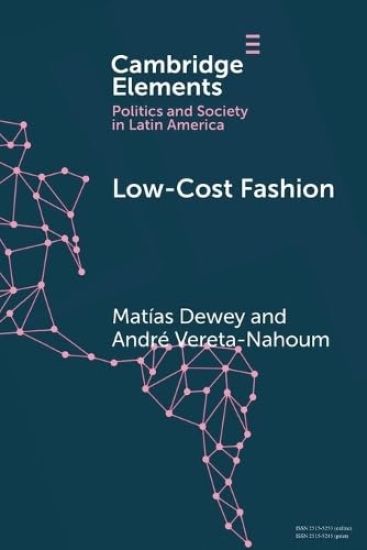
This Element analyses a fundamentally new regional configuration of the garment sector, covering much of South America. Based on ethnographic fieldwork and in-depth interviews with a wide range of actors, it examines two major circuits of informal production and distribution of affordable garments, both of which have emerged around the urban marketplaces of La Salada (Buenos Aires) and Feira da Madrugada (São Paulo). This Element examines a configuration characterized by (1) manufacturers who interact with customer preferences to produce low-cost fashion, (2) marketplaces that function as large garment distribution hubs, and (3) extensive distribution routes with regional reach. This Element discusses the role of creativity in informal production processes, reflects on the implications of both cases for our understanding of global value chains and informality, and provides empirical evidence on forbearance as an explanatory element for the emergence of this phenomenon.
This Element analyses a fundamentally new regional configuration of the garment sector, covering much of South America. Based on ethnographic fieldwork and in-depth interviews with a wide range of actors, it examines two major circuits of informal production and distribution of affordable garments, both of which have emerged around the urban marketplaces of La Salada (Buenos Aires) and Feira da Madrugada (São Paulo). This Element examines a configuration characterized by (1) manufacturers who interact with customer preferences to produce low-cost fashion, (2) marketplaces that function as large garment distribution hubs, and (3) extensive distribution routes with regional reach. This Element discusses the role of creativity in informal production processes, reflects on the implications of both cases for our understanding of global value chains and informality, and provides empirical evidence on forbearance as an explanatory element for the emergence of this phenomenon.
Sustainability accounting and accountability is fundamental in the pursuit of low-carbon and less unsustainable societies. Highlighting that accounting, organisations and economic systems are intertwined with sustainability, the book discusses how sustainability accounting and accountability broaden the spectrum of information used in organisational decision-making and in evaluating organisational success. The authors show how sustainability accounting can prove to be transformative, but only if critical questions are sufficiently addressed.This new and completely rewritten edition provides a comprehensive overview of sustainability accounting and accountability. Relevant global context and key concepts are outlined providing the reader with the conceptual resources to engage with the topic. Drawing on the most recent research and topical practical insights, the book discusses a wide variety of sustainability accounting and accountability topics, including management accounting and organisational decision-making, sustainability reporting frameworks and practices, as well as ESG-investments, financial markets and risk management. The book also highlights the role accounting has with key sustainability issues through dedicated chapters on climate, water, biodiversity, human rights and economic inequality. Each chapter is supplemented with practical examples and academic reading lists to allow in-depth engagement with the key questions. Sustainability Accounting and Accountability walks the reader through a spectrum of themes which are essential for all accountants and organisations. It helps the reader to understand why our traditional accounting techniques and systems are not sufficient for navigating the contemporary sustainability challenges our societies are facing. This key book will be an essential resource for undergraduate and postgraduate instructors and students, as an entry point to sustainability accounting and accountability, as well as being a vital book for researchers.
Sustainability accounting and accountability is fundamental in the pursuit of low-carbon and less unsustainable societies. Highlighting that accounting, organisations and economic systems are intertwined with sustainability, the book discusses how sustainability accounting and accountability broaden the spectrum of information used in organisational decision-making and in evaluating organisational success. The authors show how sustainability accounting can prove to be transformative, but only if critical questions are sufficiently addressed.This new and completely rewritten edition provides a comprehensive overview of sustainability accounting and accountability. Relevant global context and key concepts are outlined providing the reader with the conceptual resources to engage with the topic. Drawing on the most recent research and topical practical insights, the book discusses a wide variety of sustainability accounting and accountability topics, including management accounting and organisational decision-making, sustainability reporting frameworks and practices, as well as ESG-investments, financial markets and risk management. The book also highlights the role accounting has with key sustainability issues through dedicated chapters on climate, water, biodiversity, human rights and economic inequality. Each chapter is supplemented with practical examples and academic reading lists to allow in-depth engagement with the key questions. Sustainability Accounting and Accountability walks the reader through a spectrum of themes which are essential for all accountants and organisations. It helps the reader to understand why our traditional accounting techniques and systems are not sufficient for navigating the contemporary sustainability challenges our societies are facing. This key book will be an essential resource for undergraduate and postgraduate instructors and students, as an entry point to sustainability accounting and accountability, as well as being a vital book for researchers.
This book defends a relational theory of the passage of time. The realist view of passage developed in this book differs from the robust, substantivalist position. According to relationism, passage is nothing over and above the succession of events, one thing coming after another. Causally related events are temporally arranged as they happen one after another along observers’ worldlines. There is no unique global passage but a multiplicity of local passages of time. After setting out this positive argument for relationism, the author deals with five common objections to it: (a) triviality of deflationary passage, (b) a-directionality of passage, (c) the impossibility of experiencing passage, (d) fictionalism about passage, and (e) the incompatibility of passage with perduring objects.Relational Passage of Time will appeal to scholars and advanced students working in philosophy of time, metaphysics, and philosophy of physics.
This book defends a relational theory of the passage of time. The realist view of passage developed in this book differs from the robust, substantivalist position. According to relationism, passage is nothing over and above the succession of events, one thing coming after another. Causally related events are temporally arranged as they happen one after another along observers’ worldlines. There is no unique global passage but a multiplicity of local passages of time. After setting out this positive argument for relationism, the author deals with five common objections to it: (a) triviality of deflationary passage, (b) a-directionality of passage, (c) the impossibility of experiencing passage, (d) fictionalism about passage, and (e) the incompatibility of passage with perduring objects.Relational Passage of Time will appeal to scholars and advanced students working in philosophy of time, metaphysics, and philosophy of physics.
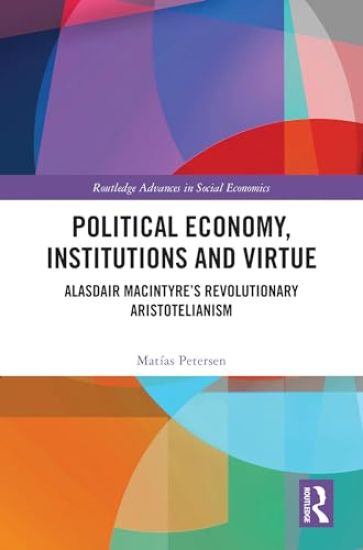
This book engages with a radical critique of the modern state and the contemporary economic order: Alasdair MacIntyre’s ‘revolutionary Aristotelianism’ project. Central to this critique is the idea that the moral norms that markets and states tend to reproduce or reinforce are an obstacle to the development of practical judgement. The book outlines MacIntyre’s theory of practical reason and discusses some of the institutional arrangements that can be derived from it. It also explores the growing body of literature which has started to examine the extent to which alternative forms of social organisation might be more compatible with MacIntyre’s account of the virtues. This literature includes various proposals for alternative political and economic arrangements, ranging from certain forms of market socialism to the promotion of different forms of mutual and cooperative enterprises. Finally, the book offers an account of the type of institutional analysis required for the advancement of the revolutionary Aristotelianism project. This is achieved by showing how some key features of the Bloomington School of political economy are not only compatible with MacIntyre’s political philosophy, but also that a synthesis between neo- Aristotelian moral philosophy and the work of the Bloomington School offers a robust alternative for revolutionary Aristotelians. Thus, the book defends the idea that MacIntyre’s account of human flourishing is more likely to be realised, although imperfectly, in a polycentric social order. This book will be of interest to social scientists working in questions of political economy as well as political and moral philosophers.