Kirjojen hintavertailu. Mukana 12 390 323 kirjaa ja 12 kauppaa.

Kirjahaku

Etsi kirjoja tekijän nimen, kirjan nimen tai ISBN:n perusteella.

1000 tulosta hakusanalla Matthew C. Hunter

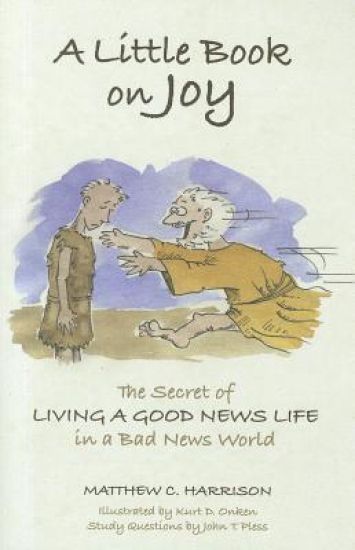
Little Book on Joy

Little Book on Joy

Matthew C Harrison

Concordia Publishing House
2011
pokkari
Rediscover the joy of being a Christian LCMS president Rev. Dr. Matthew Harrison has produced a well written exploration of the nature of life in the fallen world and the joy that we have in Christ. Read about the joy of life together in community, marriage, and family, or the joys of humor, worship, the sanctity of life, and the wonders of creation. Includes: Study questions at the end of each chapter, perfect for Bible study or small group study.A Prayer Guide for "The Great Ninety Days of Joy after Joy with texts and prayers from Ash Wednesday through Pentecost."Something to Think About" questions are included at the end of each chapter.
Closed Communion? Admission to the Lord's Supper in Biblical Lutheran Perspective
The faithful practice of closed Communion is challenged in our day both culturally and ecclesiastically. As Western culture careens down a path of individualism and autonomy, the privatization of faith leads many to regard participation in the Sacrament as a matter of personal entitlement.But the issue of admission to the Lord's Supper is neither a matter of personal entitlement nor based on notions of being a welcoming and affirming church. Rather, it entails questions regarding both the nature of the Sacrament and of the character of the Church.The essays brought together in Closed Communion? Admission to the Lord's Supper in Biblical Lutheran Perspective are both old and new. Taken together, they bear testimony to a common Lutheran conviction and serve to assist both pastors and laity in understanding the biblical and confessional basis for closed Communion.
Why Am I Joyfully Lutheran? Instruction, Meditation, and Prayers on Luther's Small Catechism
"I am Joy: Fully Lutheran And you should be too."Luther's Small Catechism is through and through a remedy for the troubled conscience. It is full of consolation and a tremendous cause for joy as it lays out in concrete ways and with absolute certainty the Gospel of Christ's free forgiveness for you.This devotional treatment of the Six Chief Parts of the Small Catechism centers on joy, specifically identifying what it means to be fully Lutheran, and joyfully so-Joy: fully Lutheran.
Take Courage: Encouraging Words for Discouraging Times

Take Courage: Encouraging Words for Discouraging Times

Matthew C Harrison

Concordia Publishing House
2023
pokkari
For more than a decade, Matthew C. Harrison has served as the president of The Lutheran Church-Missouri Synod. During this time, he has faced many discouraging days and witnessed the decline of the popularity of being a Christian in our modern era. He knows that even faithful Christians can feel as if everything in life is against them. The world wants them to abandon faith in God, who is so particular. Many of their family and friends no longer sit next to them in the pew. The worldview promoted by culture is so different from the one they hear from the pulpit and in the pages of the Bible. But this is not another book telling you everything that is wrong in the world. This is a book reminding you of the one thing right in the world, the person who alone has overcome the world.Through Jesus, Rev. Harrison has found constant encouragement. He now writes these words as encouragement to you. As your words and prayers have sustained him for years, so now these words of encouragement are for you. Jesus alone has overcome the world. He alone is risen from the dead. No matter the uncertainty of our times, no matter the discouraging state of affairs around us, these truths are certain.
Organized Patriotism and the Crucible of War

Organized Patriotism and the Crucible of War

Matthew C. Hendley

McGill-Queen's University Press
2012
sidottu
Patriotic organizations in prewar Britain are often blamed for the public's enthusiastic response to the outbreak of World War One. The wartime experience of these same organizations is insufficiently understood. In Organized Patriotism and the Crucible of War, Matthew Hendley examines how the stresses and strains of the Great War radically reshaped popular patriotism and imperialism in Britain after 1918. Using insights from gender history and recent accounts of associational life in early twentieth-century Britain, Hendley compares the wartime and postwar histories of three major patriotic organizations founded between 1901 and 1902 - the National Service League, the League of the Empire, and the Victoria League. He shows how the National Service League, strongly masculinist and supportive of militaristic aims, floundered in wartime. Conversely, the League of the Empire and the Victoria League, with strong female memberships, goals related to education and hospitality, and a language emphasizing metaphors of family, home, and kinship prospered in wartime and beyond into the 1920s. Organized Patriotism and the Crucible of War is a richly detailed study of women's roles in Britain during the height of popular imperialism, as well as a major contribution to our understanding of the continuities in Britain before and after the First World War.
The Capra Touch

The Capra Touch

Matthew C. Gunter

McFarland Co Inc
2011
pokkari
During World War II, Academy Award-winning director Frank Capra (1897-1991) made propaganda films for the U.S. Government, such as Prelude to War, The Nazis Strike, The Battle of Britain, War Comes to America and The Negro Soldier. These entries in the Why We Fight documentary series have been largely neglected by Capra scholars. This work analyzes the cinematic and thematic techniques Capra employed in these films, linking them to the techniques and ideology of the director's popular mainstream narrative films, including It Happened One Night, Mr. Deeds Goes to Town and Mr. Smith Goes to Washington. Also analyzed are the manners in which Frank Capra's war service affected his later films, notably his 1946 masterpiece It's a Wonderful Life, and how Capra's belief in individual liberty shaped both his films and his career under the oppressive Hollywood studio system.
Race Work

Race Work

Matthew C. Whitaker

University of Nebraska Press
2005
sidottu
Nearly sixty years ago, Lincoln and Eleanor Ragsdale descended upon the isolated, somewhat desolate, and entirely segregated city of Phoenix, Arizona, in search of freedom and opportunity—a move that would ultimately transform an entire city and, arguably, the nation. Race Work tells the story of this remarkable pair, two of the most influential black activists of the post–World War II American West, and through their story, supplies a missing chapter in the history of the civil rights movement, American race relations, African Americans, and the American West. Matthew C. Whitaker explores the Ragsdales' family history and how their familial traditions of entrepreneurship, professionalism, activism, and "race work" helped form their activist identity and placed them in a position to help desegregate Phoenix. His work, the first sustained account of white supremacy and black resistance in Phoenix, also uses the lives of the Ragsdales to examine themes of domination, resistance, interracial coalition building, race, gender, and place against the backdrop of the civil rights and post–civil rights eras. An absorbing biography that provides insight into African Americans' quest for freedom, Race Work reveals the lives of the Ragsdales as powerful symbols of black leadership who illuminate the problems and progress in African American history, American Western history, and American history during the post–World War II era.
Race Work

Race Work

Matthew C. Whitaker

University of Nebraska Press
2007
pokkari
Nearly sixty years ago, Lincoln and Eleanor Ragsdale descended upon the isolated, somewhat desolate, and entirely segregated city of Phoenix, Arizona, in search of freedom and opportunity—a move that would ultimately transform an entire city and, arguably, the nation. Race Work tells the story of this remarkable pair, two of the most influential black activists of the post–World War II American West, and through their story, supplies a missing chapter in the history of the civil rights movement, American race relations, African Americans, and the American West. Matthew C. Whitaker explores the Ragsdales' family history and how their familial traditions of entrepreneurship, professionalism, activism, and "race work" helped form their activist identity and placed them in a position to help desegregate Phoenix. His work, the first sustained account of white supremacy and black resistance in Phoenix, also uses the lives of the Ragsdales to examine themes of domination, resistance, interracial coalition building, race, gender, and place against the backdrop of the civil rights and post–civil rights eras. An absorbing biography that provides insight into African Americans' quest for freedom, Race Work reveals the lives of the Ragsdales as powerful symbols of black leadership who illuminate the problems and progress in African American history, American Western history, and American history during the post–World War II era.
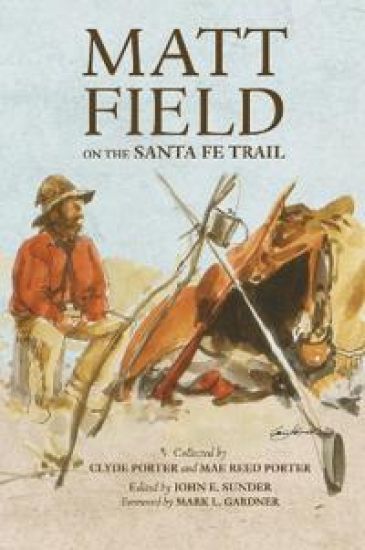
Matt Field on the Santa Fe Trail

Matt Field on the Santa Fe Trail

Matthew C. Field; Clyde Porter; Mae Reed Porter; Mark L. Gardner

University of Oklahoma Press
1995
nidottu
In 1839 a journalist for the New Orleans Picayune, Matthew C. Field, joined a company of merchants and tourists headed west on the Santa Fe Trail. Leaving Independence, Missouri, early in July ""with a few wagons and a carefree spirit,"" Field recorded his vivid impressions of travel westward on the Santa Fe Trail and, on the return trip, eastward along the Cimarron Route. Written in verse in his journal and in eighty-five articles later published in the Picayune, Field's observations offer the modern reader a unique glimpse of life in the settlements of Mexico and on the Santa Fe Trail.
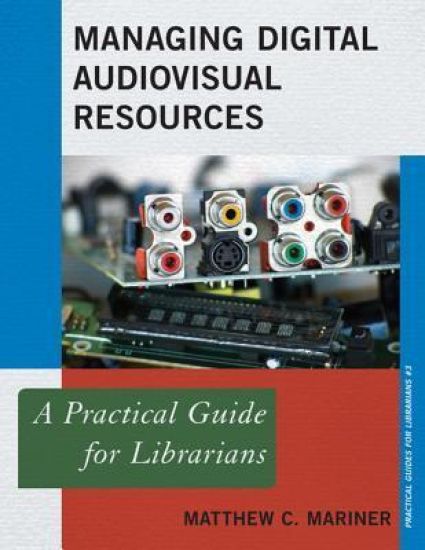
Managing Digital Audiovisual Resources

Managing Digital Audiovisual Resources

Matthew C. Mariner

Rowman Littlefield Publishers
2014
nidottu
The demand from library users for audiovisual materials and remote access combined with the unceasing deterioration and inaccessibility of many audiovisual formats requires libraries to adapt their collections to meet current and future demands. While this changing landscape of digitization and resource management may seem daunting, it represents an opportunity to bolster a library’s relevancy and competitiveness. Managing Digital Audiovisual Resources fills a gap as a single concise guide for real world basics, broad concepts, and practical needs from technologies to collections to promotion. The easy-to-read book is geared towards the ongoing management of digital audiovisual resources, presenting real world scenarios and ways to think through balancing all of the many factors and needs for these collections, dealing with limited resources, materials with different levels of significance, materials facing different levels of preservation risk, factors for decision making, and resources for other options. The book takes a procedural and example-rich approach to the management of digital audiovisual resources. It covers: ·the selection of resources for digitization; · how to manage digitization of physical audiovisual collections; ·how to select the best platforms for preservation and presentation; and, · how to market collections once they are accessible. Among other useful features, this guide will provide readers with: ·Illustrated digitization workflows; ·Comprehensive lists and illustrated descriptions of equipment and formats; ·Real-world case studies; ·Common U.S. copyright situations; and ·Resources for further study and assistance.
A Companion to Kant's Critique of Pure Reason

A Companion to Kant's Critique of Pure Reason

Matthew C. Altman

Westview Press Inc
2007
nidottu
Immanuel Kant's groundbreaking Critique of Pure Reason inaugurated a new way of understanding the world that continues to impact philosophy to the present day. With clear explanations and numerous examples, A Companion to Kant's Critique of Pure Reason takes students step by step through the book in a way that captures their interest without sacrificing depth or intellectual rigor. Although it is informed by recent Anglo-American scholarship, the Companion focuses on Kant's own arguments rather than secondary texts and scholarly debates that may otherwise distract from what Kant himself is attempting. The Companion first places the Critique in its historical and philosophical context before addressing the three main parts of the book in order: the Transcendental Aesthetic, the Transcendental Analytic, and the Transcendental Dialectic. The Companion also briefly explains how Kant continues his investigation into God, freedom, and immortality in the Critique of Practical Reason, and it concludes with an assessment of Kant's importance in the history of modern philosophy. Key features include a glossary of technical terms, with succinct definitions and cross-references, as well as an annotated bibliography of the most important English-language secondary sources on Kant's theoretical philosophy.
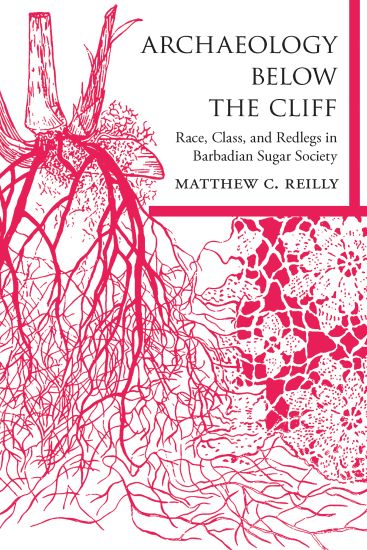
Archaeology Below the Cliff

Archaeology Below the Cliff

Matthew C. Reilly

The University of Alabama Press
2019
sidottu
First book-length archaeological study of a nonelite white population on a Caribbean plantation. Archaeology below the Cliff: Race, Class, and Redlegs in Barbadian Sugar Society is the first archaeological study of the poor whites of Barbados, the descendants of seventeenth-century European indentured servants and small farmers. ""Redlegs"" is a pejorative to describe the marginalized group who remained after the island transitioned to a sugar monoculture economy dependent on the labor of enslaved Africans. A sizable portion of the ""white"" minority, the Redlegs largely existed on the peripheries of the plantation landscape in an area called ""Below Cliff,"" which was deemed unsuitable for profitable agricultural production. Just as the land on which they resided was cast as marginal, so too have the poor whites historically and contemporarily been derided as peripheral and isolated as well as idle, alcoholic, degenerate, inbred, and irrelevant to a functional island society and economy. Using archaeological, historical, and oral sources, Matthew C. Reilly shows how the precarious existence of the Barbadian Redlegs challenged elite hypercapitalistic notions of economics, race, and class as they were developing in colonial society. Experiencing pronounced economic hardship, similar to that of the enslaved, albeit under very different circumstances, Barbadian Redlegs developed strategies to live in a harsh environment. Reilly's investigations reveal that what developed in Below Cliff was a moral economy, based on community needs rather than free-market prices. Reilly extensively excavated households from the tenantry area on the boundaries of the Clifton Hall Plantation, which was abandoned in the 1960s, to explore the daily lives of poor white tenants and investigate their relationships with island economic processes and networks. Despite misconceptions of strict racial isolation, evidence also highlights the importance of poor white encounters and relationships with Afro-Barbadians. Historical data are also incorporated to address how an underrepresented demographic experienced the plantation landscape. Ultimately, Reilly's narrative situates the Redlegs within island history, privileging inclusion and embeddedness over exclusion and isolation.
Making the Frontier Man

Making the Frontier Man

Matthew C Ward

UNIVERSITY OF PITTSBURGH PRESS
2024
sidottu
For western colonists in the early American backcountry, disputes often ended in bloodshed and death. Making the Frontier Man examines early life and the origins of lawless behavior in Pennsylvania, Virginia, Kentucky, and Ohio from 1750 to 1815. It provides a key to understanding why the trans-Appalachian West was prone to violent struggles, especially between white men. Traumatic experiences of the Revolution and the Forty Years War legitimized killing as a means of self-defense—of property, reputation, and rights—transferring power from the county courts to the ordinary citizen. Backcountry men waged war against American Indians in state-sponsored militias as they worked to establish farms and seize property in the West. And white neighbors declared war on each other, often taking extreme measures to resolve petty disputes that ended with infamous family feuds. Making the Frontier Man focuses on these experiences of western expansion and how they influenced American culture and society, specifically the nature of western manhood, which radically transformed in the North American environment. In search of independence and improvement, the new American man was also destitute, frustrated by the economic and political power of his elite counterparts, and undermined by failure. He was aggressive, misogynistic, racist, and violent, and looked to reclaim his dominance and masculinity by any means necessary.
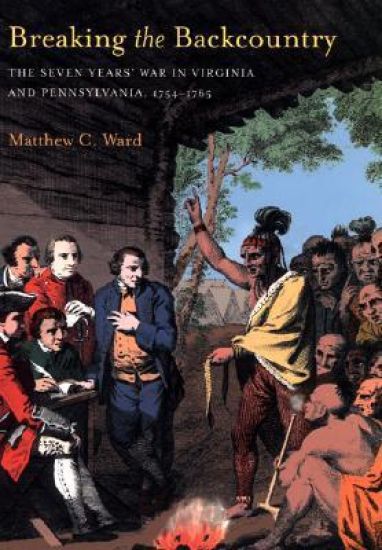
Breaking The Backcountry

Breaking The Backcountry

Matthew C. Ward

University of Pittsburgh Press
2004
nidottu
Even as the 250th anniversary of its outbreak approaches, the Seven Years' War (otherwise known as the French and Indian War) is still not wholly understood. Most accounts tell the story as a military struggle between British and French forces, with shifting alliances of Indians, culminating in the British conquest of Canada. Scholarly and popular works alike, including James Fennimore Cooper's Last of the Mohicans, focus on the action in the Hudson River Valley and the St. Lawrence Seaway. Matthew C. Ward tells the compelling story of the war from the point of view of the region where it actually began, and whose people felt the devastating effects of war most keenly-the backcountry communities of Virginia and Pennsylvania.Previous wars in North America had been fought largely on the New England and New York frontiers. But on May 28, 1754, when a young George Washington commanded the first shot fired in western Pennsylvania, fighting spread for the first time to Virginia and Pennsylvania. Ward's original research reveals that on the eve of the Seven Years' War the communities of these colonies were isolated, economically weak, and culturally diverse. He shows in riveting detail how, despite the British empire's triumph, the war brought social chaos, sickness, hunger, punishment, and violence, to the backcountry, much of it at the hands of Indian warriors.Ward's fresh analysis reveals that Indian raids were not random skirmishes, but part of an organized strategy that included psychological warfare designed to make settlers flee Indian territories. It was the awesome effectiveness of this “guerilla” warfare, Ward argues, that led to the most enduring legacies of the war: Indian-hating and an armed population of colonial settlers, distrustful of the British empire that couldn't protect them. Understanding the horrors of the Seven Years' War as experienced in the backwoods thus provides unique insights into the origins of the American republic.
The Maintenance Costs of Aging Aircraft
The U.S. Air Force is grappling with the challenge of aging fleets and the optimal time to replace them. This monograph examines commercial aviation data to draw inferences about aging aircraft that may be relevant to the Air Force. It focuses on "aging effects"-i.e., how aircraft maintenance costs change as aircraft grow older. Although commercial aircraft clearly differ from military aircraft, the aging-effect estimates might help the Air Force to project changing maintenance costs over time.