Kirjojen hintavertailu. Mukana 11 244 527 kirjaa ja 12 kauppaa.

Kirjahaku

Etsi kirjoja tekijän nimen, kirjan nimen tai ISBN:n perusteella.

1000 tulosta hakusanalla Maurice

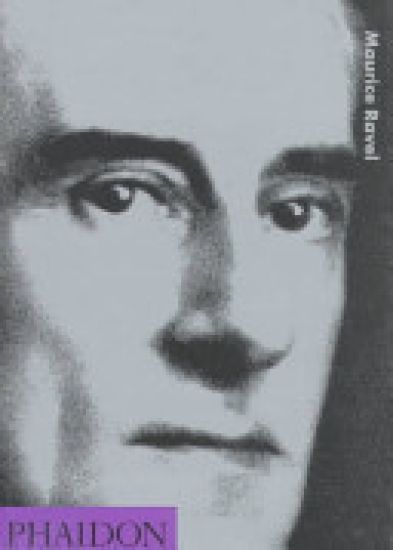
Maurice Ravel

Maurice Ravel

Gerald Larner

Phaidon Press Ltd
1996
pokkari
Much of the music of Maurice Ravel (1875-1937) is among the most accessible of any written in the last hundred years; the man, however, was notoriously difficult to get to know. In Maurice Ravel, Gerald Larner aims to trace the development of the composer's personality not only through events in his life and in the society around him but also through his music, which is more revealing in this respect than is generally believed. This beautifully crafted book offers many fresh insights into the life and work of this enigmatic composer.
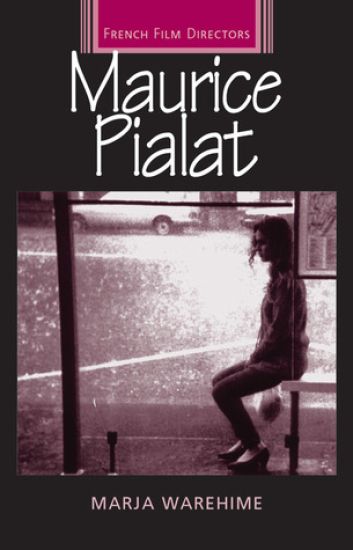
Maurice Pialat

Maurice Pialat

Marja Warehime

Manchester University Press
2011
nidottu
One of the most gifted directors of the post New Wave, Maurice Pialat is frequently compared to such legendary filmmakers as Jean Renoir and Robert Bresson. A quintessentially realist filmmaker, who, like Bresson, was also trained as a painter, Pialat’s particular form of realism influenced an entire generation of young filmmakers in the 1990s. This volume is the first book-length study of Pialat’s cinema in English. It provides an introduction to a complex and difficult director, who saw himself as a marginal and marginalised filmmaker, but whose films are deeply rooted in French society and culture. Pialat was long considered the only major filmmaker to portray ‘la France profonde’, the heart of France - the people who, as he put it, ‘take the subway’. Taken as a whole, Pialat’s work can be seen both as an oblique autobiography and the portrait of a fundamental institution - the family - over several generations.
Maurice PalZologue

Maurice PalZologue

Irwin Halfond

University Press of America
2007
nidottu
This study is intended as the first biography of Maurice Paléologue, an important figure in the diplomatic history of the Third French Republic. He has never received adequate recognition or biographical attention for his role in the events surrounding the immediate outbreak of World War I and French policy towards Russia and the Balkans in 1920. This book brings to the surface the possibility of a powerful behind-the-scenes influence exerted by Paléologue to initiate and/or execute policy decisions of a controversial nature. It examines documents from the British Foreign Office and the French Foreign Ministry that were used extensively from 1907 to 1917 when Paléologue emerged from the inner depths of the departmental apparatus of the Quai d'Orsay. The material is important in illuminating and analyzing two virtually unknown chapters in Paléologue's career: his Ambassadorship to Bulgaria and his efforts to shape a comprehensive war aims agreement while at St. Petersburg. Extensive use has been made of Paléologue's varied writings, as well. Because Paléologue's thoughts and actions were consistent with one another, an analysis of the writers' ideas yields a fuller understanding of the diplomat's motives. Such a comparison between ideas and their realization is of vital significance in explaining why Paléologue engaged in intrigue, obfuscation, and insubordination in the various diplomatic posts he held. Through this analysis the reader is provided with a cohesive theory and interpretation of Paléologue's life.
Maurice Tourneur

Maurice Tourneur

Harry Waldman

McFarland Co Inc
2008
pokkari
Maurice Tourneur (1876-1961), the French and American director, actor, and theatrical manager, is the focus of this work. He began in France during the years 1912-1914, and then spent 1914-1926 in New Jersey and Hollywood, directing more than 50 films, using his French interests and talents to help shape the industry, and bringing "stylization" to the screen.
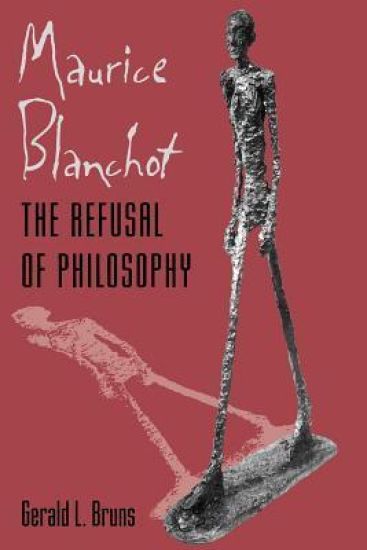
Maurice Blanchot:

Maurice Blanchot:

Gerald L. Bruns

Johns Hopkins University Press
2005
nidottu
As a novelist, essayist, critic, and theorist, Maurice Blanchot has earned tributes from authors as diverse as Jacques Derrida, Giles Deleuze, and Emmanuel Levinas. But their praise has told us little about what Blanchot's work actually says and why it has been so influential. In the first comprehensive study of this important French writer to appear in English, Gerald Bruns ties Blanchot's writings to each other and to the works of his contemporaries, including the poet Paul Celan. Blanchot belongs to the generation of French intellectuals who came of age during the 1930s, survived the Occupation, and flourished during the quarter century or so after World War II. He was one of the first French intellectuals to take a systematic interest in questions of language and meaning. His focus in the mid-1930s on extreme situations-death, madness, imprisonment, exile, revolution, catastrophe-anticipated the later interest of the existentialists. Like Nietzsche, Wittgenstein, and Adorno, Blanchot was a self-conscious writer of fragments, and he has given us one the most developed investigations that we have on the fragment as a kind of writing. In a series of close readings, Bruns addresses the philosophical and political questions that have surrounded Blanchot and his writings for decades. He describes what is creative in Blanchot's readings of Heidegger's controversial works and examines Blanchot's conception of poetry as an inquiry into the limits of philosophy, rationality, and power.
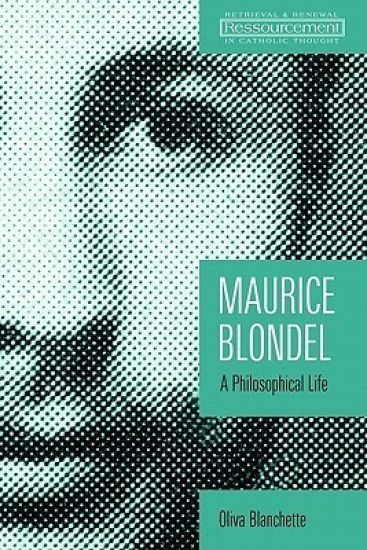
Maurice Blondel

Maurice Blondel

Oliva Blanchette

William B Eerdmans Publishing Co
2010
nidottu
French philosopher Maurice Blondel had a tremendous impact on both philosophy and religion over the first half of the twentieth century. He was at once a postmodern critical philosopher and a devout traditional Catholic, trying not only to reconcile these two seemingly disparate factors in his own mind, but also to prove to others that the two must go together. / In the first critical examination of the philosopher's life Oliva Blanchette tells the story of Blondel's stormy life confronting an Academy dismissive of religion and a Religion uncomfortable with rational philosophy. This book not only follows his biographical history, but also presents his systematic philosophy, from the beginning of his journey to the culmination found in Philosophical Exigencies of Christianity, the book for which he signed the publishing contract the day before he died. / Maurice Blondel is part of the Ressourcement: Retrieval and Renewal in Catholic Thought series, edited by David L. Schindler.