Kirjahaku
Etsi kirjoja tekijän nimen, kirjan nimen tai ISBN:n perusteella.
1000 tulosta hakusanalla Menon Vinith

Vallathol Narayana Menon
VDM Publishing House
2010
nidottu
Observera att förlaget som ger ut denna produkt baserar innehållet i sina produkter på fria källor som Wikipedia. Boken är med stor sannolikhet endast ett utdrag ur dessa informationskällor, alltså inte en vanlig bok i den bemärkelsen.

Vyloppilli Sreedhara Menon
VDM Publishing House
2010
nidottu
Observera att förlaget som ger ut denna produkt baserar innehållet i sina produkter på fria källor som Wikipedia. Boken är med stor sannolikhet endast ett utdrag ur dessa informationskällor, alltså inte en vanlig bok i den bemärkelsen.

Mambillikalathil Govind Kumar Menon
OmniScriptum
2026
pokkari


Studienarbeit aus dem Jahr 2005 im Fachbereich Philosophie - Philosophie der Antike, Universit t Leipzig, Sprache: Deutsch, Abstract: Im Menon entwickelt Platon einen Dialog zwischen seinem Lehrer Sokrates und dem Sophistensch ler Menon. Wie auch im "Protagoras" steht die Frage nach dem Wesen der Tugend im Mittelpunkt des Gespr chs. Anhand dieses Dialogs lassen sich wichtige Methoden und Aspekte der sokratischen Philosophie aufzeigen: der sokratische Dialog, die sokratische Erkenntnistheorie und das Hypothesisverfahren. Ziel dieser Hausarbeit wird es sein, diese wesentlichen Punkte herauszuarbeiten. Es werden also folgende Fragen gestellt: Durch welche Methode gelangt man zur Erkenntnis? Wie ist Erkenntnis berhaupt m glich? Inwiefern die im Menon deutlich werdenden philosophischen Positionen dem historischen Sokrates zugeschrieben werden k nnen oder vielmehr Ausdruck der Gedankenwelt Platons sind, ist in der Literatur umstritten. Charles H. Kahn weist ebenfalls auf die Problematik der sich widersprechenden Standpunkte des Sokrates in den sokratischen Dialogen Platons hin. In dieser Hausarbeit sollen aber nur die im Menon vertretenen Positionen erl utert werden, daher finden diese Forschungsfragen zwar Erw hnung, auf sie kann aber nicht gesondert eingegangen werden.
Das sokratische Gespräch - Mäeutik erklärt anhand des Menon-Dialogs
Sophie Peper
Grin Publishing
2009
pokkari

Hinduchayayulla Muslim Purushan stories by Indu Menon
Chintha Publishers
2025
pokkari
.,,,,, .... . . . . .
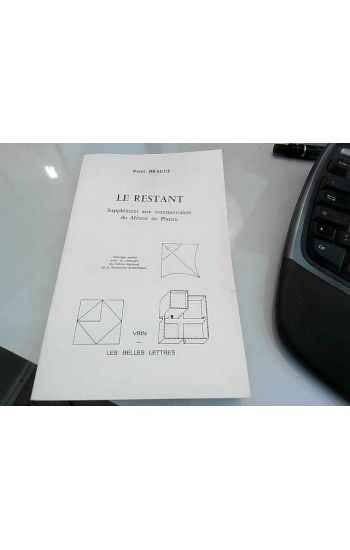
Le Restant: Supplement Aux Commentaires Du Menon de Platon
Remi Brague
Librarie Philosophique J. Vrin
1978
nidottu
Que reste-il a dire sur le Menon? Quel dialogue de Platon semble mieux connu? Une methode renouvelee permet seule de montrer que les passages les plus celebres ne nous ont pas livre tous leurs secrets, et que ceux sur lesquels le regard glisse doivent au contraire retenir l'attention. L'interpretation ici proposee refuse de separer forme et contenu: si Platon a ecrit des dialogues, et non des traites, il devait avoir ses raisons. Le sens d'un dialogue ne se limite pas a celui des repliques d'un seul personnage. Socrate n'est pas le porte-parole de Platon. Platon ne parle jamais en son propre nom. C'est le dialogue tout entier qui est l'enseignement, dans son plan, dans ses personnages, dans sa mise en scene. Elle refuse de supposer le sujet du dialogue: personne ne sait ce qu'est la vertu . C'est le dialogue qui doit appprendre ce qu'elle est. Elle refuse de se laisser imposer des passages classiques - la torpille, la reminiscence - entre lesquels il n'y aurait que du remplissage. Elle refuse d'expliquer les choix de Platon pour tel personnage, telle date, telle situation, par le renvoi positiviste a des faits exterieurs a la pensee reflechie du philosophe. Elle refuse d'ignorer les recentes decouvertes sur l'enseignement oral de Platon et en retrouve les principales doctrines dans le contenu, mais aussi la forme du texte. Elle demontre ainsi sur l'exemple d'un dialogue la fecondite d'une methode applicable a l'ensemble de l'oeuvre ecrite de Platon.

La Quarta Parte Delle Rime Alla Rustica Di Menon, Magagno, E Begotto (1583)
Giovanni Battista Maganza; Agostino Rava; Bartolomeo Rustichello
KESSINGER PUBLISHING, LLC
2009
nidottu
Snell, F: Menon Oder Versuch in Gesprachen (1789)
Friederich Wilhelm Daniel Snell
KESSINGER PUBLISHING, LLC
2009
nidottu
Die Rekonstruktion und Einschätzung des Tugendbegriffs in Platons Dialog "Menon". Eine Annäherung an den Tugendbegriff
Cedric Braun
Grin Publishing
2015
pokkari

At the Crossing of Seven Winds: L.Ayliffe D.J.Brick F.Frosini D.Hine G.Italyanskaya M.Menon A.Sze
Daniel J. Brick; Leah Ayliffe; Diane Hine
Independently Published
2018
nidottu
Nature is wild and eagles and wolves will never be lovers. But certainly Poetry can overcome every obstacle and translates our dreams, desires, passions, .. in images that evoke even a new, different Universe It fulfills the very nature of poetry that we 7 poets publish our poems in a common anthology and witness how these diverse poems reflect each other, relate to each other, amplify each other This Anthology of Poetry collects 72 poems from 7 Authors living in 7 different Countries of the World. As Fabrizio Frosini puts it: When I first proposed this idea for a book to my Minnesotan friend Daniel Brick, we decided together to open it to other "voices of poetry" from different parts of our troubled world. Maybe we put it a bit too emphatically, like "voices of poetry conveying the joy of creativity," to point out the real issues of human passions mediated through poetry. Yet, Poetry is a sum of hope and despair. It is a sum of wishes, hopes, dreams, inspirations, wanderings on the wings of Imagination. It is a long flight our hearts and minds took, revisiting reality, memories, expectations. Life itself is revisited through the multicolored glasses of poetry. As Dylan Thomas wrote: "These poems, with all their crudities, doubts, and confusions, are written for the love of Man" and, I add, they are written out of the joy of creativity, even when created in the darkest moments of despairing depression. Everyone who reads our poetry enters our own Universe -even if for a while. Through Poetry, we all -Authors and Readers- are in touch.

Keine ausf hrliche Beschreibung f r "Gorgias, Theaitetos, Menon Euthydemos" verf gbar.
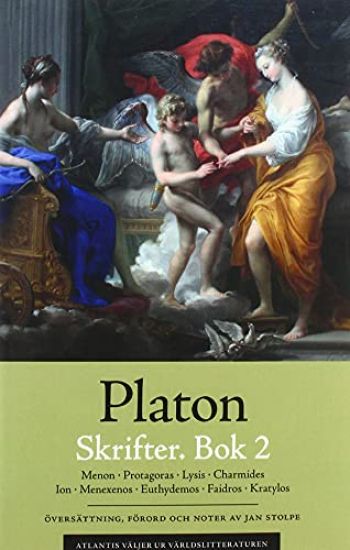
Skrifter. Bok 2, Menon ; Protagoras ; Lysis ; Charmides ; Ion ; Menexenos ; Euthydemos ; Faidros ; Kratylos
Platon
Bokförlaget Atlantis AB
2018
nidottu
Den andra boken av planerade sex med Platons samlade skrifter i ny översättning från det grekiska originalet av Jan Stolpe. Bok 2 innehåller nio olika dialoger, varav flera hör till Platons mest berömda och lästa. I Menon hävdar Sokrates att själen är odödlig och att även en okunnig slav äger insikter som han kan återerinra sig. I Protagoras diskuterar Sokrates begreppet dygd. Lysis och Charmides avhandlar vänskap och besinning, i Ion diskuterar man diktkonsten, Euthydemos är en drift med allsköns debattknep och intellektuella förförarkonster, och i Menexenos gör Sokrates en mördande parodi på ett patriotiskt standardtal. Faidros innehåller oförglömligt visionära bilder av kärleken, och Kratylos, som inte funnits på svenska på nära hundra år, är en halsbrytande diskussion om språket och orden. Förord, noter och litteraturhänvisningar av Jan Stolpe.
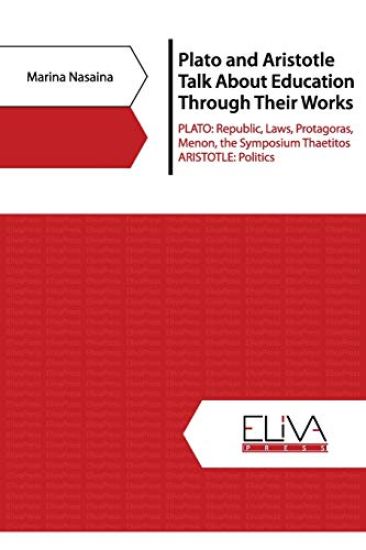
Plato and Aristotle Talk about Education Through Their Works: PLATO: Republic, Laws, Protagoras, Menon, The Symposium Thaetitos. ARISTOTLE: Politics
Marina Nasaina
Eliva Press
2020
nidottu
Plato, through the dialogues of Republic, Laws, Protagoras, Menon, The Symposium and Theetitos, links inherently education with state stability. The proper functioning of the state machinery presupposes education and seeks the first foundation of political and social stability. The role of education at the social and political level is enormous, since it believes that the political instability of its time, the corruption of institutions and morals should be addressed through a political and social reform, based in particular on a rigorous control in the field of education. Aristotle, on the other hand, in his Politics connects the state, which has the greatest responsibility for the proper education of the citizens, with education. The main purpose of education for Aristotle is to create people with quality character. Virtue is not for the philosopher a personal success of man but is the result of a group effort of socialization that is conquered within organized society and is inextricably linked to political society. After all, education must teach young people the necessary knowledge for their daily lives and everything that is necessary to make a person more moral. Thus, the ultimate goal of education is the formation of a quality character along with the parallel and equal practice of moral and mental virtue, which will lead society collectively to happiness.