Kirjojen hintavertailu. Mukana 11 699 587 kirjaa ja 12 kauppaa.

Kirjahaku

Etsi kirjoja tekijän nimen, kirjan nimen tai ISBN:n perusteella.

1000 tulosta hakusanalla Michael D Fayer

Signalers and Receivers

Signalers and Receivers

Michael D. Greenfield

Oxford University Press Inc
2002
sidottu
In most terrestrial and aquatic habitats, the vast majority of animals transmitting and receiving communicative signals are arthropods. This book presents the story of how this important group of animals use pheromones, sound, vibration, and light for sexual and social communication. Because of their small to minute body size most arthropods have problems sending and receiving acoustic and optical information, each of which have their own severe constraints. Because of these restraints they have developed chemical signaling which is not similarly limited by scale. Presenting the latest theoretical and experimental findings from studies of signaling, it suggests that close parallels between arthropods and vertebrates reflect a very limited number of solutions to problems in behavior that are available within the confines of physical laws.
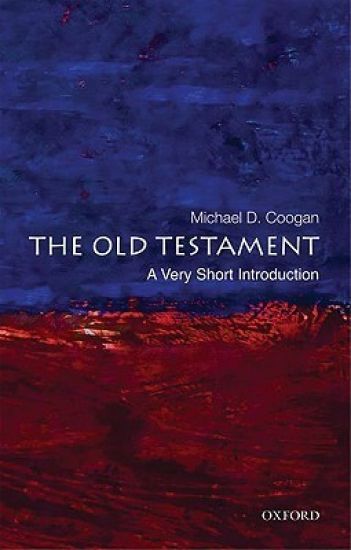
The Old Testament

The Old Testament

Michael D. Coogan

Oxford University Press Inc
2008
nidottu
Eminent biblical scholar Michael D. Coogan offers here a wide-ranging and stimulating exploration of the Old Testament, illuminating its importance as history, literature, and sacred text. Coogan explains the differences between the Bible of Jewish tradition (the "Hebrew Bible") and the Old Testament of Christianity, and also examines the different contents of the Bibles used by Roman Catholics, Eastern Orthodox Christians, and Protestants. He looks at the rise of modern biblical scholarship as well as the recovery of ancient Near Eastern literatures and their significance for biblical interpretation. One particularly interesting section examines three principal characters of the Old Testament--Abraham, Deborah, and David--illuminating important themes connected with them, such as Abraham and covenant and David as poet and warrior. Coogan explores the use of invented dialogue and historical fiction in the Old Testament, the presence of mythic elements in apparently historical accounts, and the relationship of ancient Israelite myths to those of their neighbors. The book considers the Old Testament's idea of divine justice, especially in Ecclesiastes and Job, and looks at notions of the afterlife in the ancient Near East and in ancient Israel. Coogan highlights the significance of the history and literature of the Old Testament and describes how non-biblical evidence, such as archaeological data and texts, has placed the Old Testament in a larger and more illuminating context. The book also discusses law and ritual in the Bible as well as the biblical understandings of prophecy. Here then is a marvelous overview of one of the great pillars of Western religion and culture, a book whose significance has endured for thousands of years and which remains vitally important today for Jews, Christians, and Muslims worldwide. ABOUT THE SERIES: The Very Short Introductions series from Oxford University Press contains hundreds of titles in almost every subject area. These pocket-sized books are the perfect way to get ahead in a new subject quickly. Our expert authors combine facts, analysis, perspective, new ideas, and enthusiasm to make interesting and challenging topics highly readable.
A Reader of Ancient Near Eastern Texts

A Reader of Ancient Near Eastern Texts

Michael D. Coogan

Oxford University Press Inc
2012
nidottu
In A Reader of Ancient Near Eastern Texts: Sources for the Study of the Old Testament, leading biblical scholar Michael D. Coogan presents a collection of texts that introduce students to the larger world surrounding the Old Testament. Dating from the third millennium BCE to the turn of the era, the readings have been carefully selected from the most accurate sources and arranged by genre and place of origin. They provide historical correlations to people and events mentioned in the Bible; parallels to biblical genres, motifs, institutions, and concepts; and windows into the lives of ordinary people. The texts are enhanced by chapter and reading introductions, extensive biblical references, and illustrations. Package this anthology with Michael D. Coogan's The Old Testament: A Historical and Literary Introduction to the Hebrew Scriptures, Second Edition (OUP, 2010) or A Brief Introduction to the Old Testament: The Hebrew Bible in Its Context, Second Edition (OUP, 2011) for use in your course and save your students 20%. Please contact your Oxford University Press Sales Representative at 800.280.0280 for details.
On the Fringe

On the Fringe

Michael D. Gordin

Oxford University Press Inc
2021
sidottu
Everyone has heard of the term "pseudoscience", typically used to describe something that looks like science, but is somehow false, misleading, or unproven. Many would be able to agree on a list of things that fall under its umbrella-- astrology, phrenology, UFOlogy, creationism, and eugenics might come to mind. But defining what makes these fields "pseudo" is a far more complex issue. It has proved impossible to come up with a simple criterion that enables us to differentiate pseudoscience from genuine science. Given the virulence of contemporary disputes over the denial of climate change and anti-vaccination movements--both of which display allegations of "pseudoscience" on all sides-- there is a clear need to better understand issues of scientific demarcation. On the Fringe explores the philosophical and historical attempts to address this problem of demarcation. This book argues that by understanding doctrines that are often seen as antithetical to science, we can learn a great deal about how science operated in the past and does today. This exploration raises several questions: How does a doctrine become demonized as pseudoscientific? Who has the authority to make these pronouncements? How is the status of science shaped by political or cultural contexts? How does pseudoscience differ from scientific fraud? Michael D. Gordin both answers these questions and guides readers along a bewildering array of marginalized doctrines, looking at parapsychology (ESP), Lysenkoism, scientific racism, and alchemy, among others, to better understand the struggle to define what science is and is not, and how the controversies have shifted over the centuries. On the Fringe provides a historical tour through many of these fringe fields in order to provide tools to think deeply about scientific controversies both in the past and in our present.
Tinsel and Rust

Tinsel and Rust

Michael D. Dwyer

OXFORD UNIVERSITY PRESS INC
2025
sidottu
Tinsel and Rust tells the story of Hollywood's role in the shaping of the Rust Belt in the United States. During the 1970s and 1980s, filmic representations of shuttered auto plants, furloughed millworkers, and decaying downtowns in the industrial heartland contributed to pervasive narratives of American malaise and decline--informing the wider cultural view of these cities and their people. Author Michael D. Dwyer untangles the complicated relationship between Hollywood and the Rust Belt, exploring how the sociocultural image of the region has become a tool to tell stories about America's mythic past, degraded present, and potential futures. Dwyer offers a reading in twofold: through the conventional lens of film and cultural studies, and through an interdisciplinary lens that pulls in elements of cultural geography and urban studies to understand the ways in which Americans learned to interpret the cities and towns of the industrial Midwest. Each chapter spotlights a different Rust Belt city--Johnstown, Chicago, Cleveland, Pittsburgh, and Detroit--and considers how films and filmmaking processes helped shape audiences' cultural understanding of those cities. Over the course of the book, Dwyer also examines several films which offer notable representations of the Rust Belt, including Slap Shot, The Blues Brothers, Major League, The Perks of Being a Wallflower, and It Follows. Finally, the volume highlights how in more recent years, cities like Pittsburgh, Detroit, and Cleveland have all attempted to remake their public image and revitalize their economies through film and media production.
Tinsel and Rust

Tinsel and Rust

Michael D. Dwyer

OXFORD UNIVERSITY PRESS INC
2025
nidottu
Tinsel and Rust tells the story of Hollywood's role in the shaping of the Rust Belt in the United States. During the 1970s and 1980s, filmic representations of shuttered auto plants, furloughed millworkers, and decaying downtowns in the industrial heartland contributed to pervasive narratives of American malaise and decline--informing the wider cultural view of these cities and their people. Author Michael D. Dwyer untangles the complicated relationship between Hollywood and the Rust Belt, exploring how the sociocultural image of the region has become a tool to tell stories about America's mythic past, degraded present, and potential futures. Dwyer offers a reading in twofold: through the conventional lens of film and cultural studies, and through an interdisciplinary lens that pulls in elements of cultural geography and urban studies to understand the ways in which Americans learned to interpret the cities and towns of the industrial Midwest. Each chapter spotlights a different Rust Belt city--Johnstown, Chicago, Cleveland, Pittsburgh, and Detroit--and considers how films and filmmaking processes helped shape audiences' cultural understanding of those cities. Over the course of the book, Dwyer also examines several films which offer notable representations of the Rust Belt, including Slap Shot, The Blues Brothers, Major League, The Perks of Being a Wallflower, and It Follows. Finally, the volume highlights how in more recent years, cities like Pittsburgh, Detroit, and Cleveland have all attempted to remake their public image and revitalize their economies through film and media production.
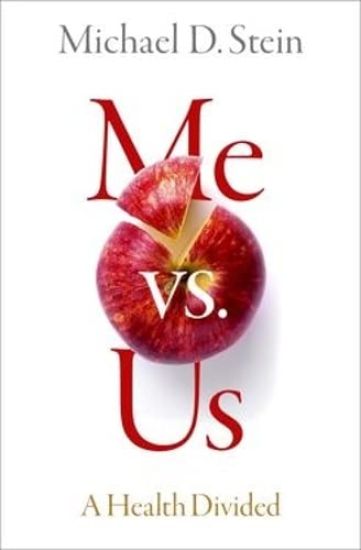
Me vs. Us

Me vs. Us

Michael D. Stein

OXFORD UNIVERSITY PRESS INC
2022
sidottu
How can we care so much about health care yet so little about public health? Before Covid-19, public health programs constituted only 2.5 percent of all US health spending, with the other 97.5 percent going towards the larger health care system. In fact, the United States spends on average $11,000 per citizen per year on health care, but only $286 per person on public health. It seems that Americans value health care, the medical care of individuals, over public health, the well-being of collections of people. In Me vs. Us, primary care doctor and public health advocate Michael Stein takes a hard, insightful look at the larger questions behind American health and health care. He offers eight reasons why our interest in the technologies and delivery of health care supersedes our interest in public health and its focus on the core social, economic, and environmental forces that shape health. Stein documents how public health has continually "lost out" to medicine--from a loss in funding and resources to how we view our personal priorities--and suggests how public health may hold the solutions to our most concerning crises, from pandemics to obesity to climate change. Me vs. Us concludes that individual and public health are inseparable. In the end, Stein argues, we need to recover and sharpen our sense of health based on a reverent appreciation of both perspectives.
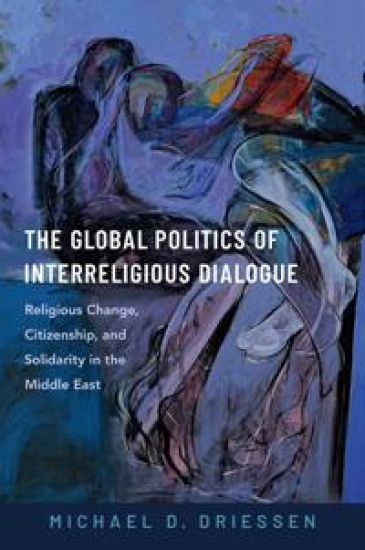
The Global Politics of Interreligious Dialogue

The Global Politics of Interreligious Dialogue

Michael D. Driessen

OXFORD UNIVERSITY PRESS INC
2023
sidottu
Over the last thirty years, governments across the globe have formalized new relationships with religious communities through their domestic and foreign policies and have variously sought to manage, support, marginalize, and coopt religious forces through them. Many scholars view these policies as evidence of the "return of religion" to global politics although there is little consensus about the exact meaning, shape, or future of this political turn. In The Global Politics of Interreligious Dialogue, Michael D. Driessen examines the growth of state-sponsored interreligious dialogue initiatives in the Middle East and their use as a policy instrument for engaging with religious communities and ideas. Using a novel theoretical framework and drawing on five years of ethnographic fieldwork, Driessen explores both the history of interreligious dialogue and the evolution of theological approaches to religious pluralism in the traditions of Roman Catholicism and Sunni Islam. He analyzes state-centric accounts of interreligious dialogue and conceptualizes new ideas and practices of citizenship, religious pluralism, and social solidarity that characterize dialogue initiatives in the region. To make his case, Driessen presents four studies of dialogue in the Middle East--the Focolare Community in Algeria, the Adyan Foundation in Lebanon, KAICIID of Saudi Arabia, and DICID of Qatar--and highlights key interreligious dialogue declarations produced in the broader Middle East over the last two decades. Compelling and nuanced, The Global Politics of Interreligious Dialogue illustrates how religion operates in contemporary global politics, offering important lessons about the development of alternative models of democracy, citizenship, and modernity.
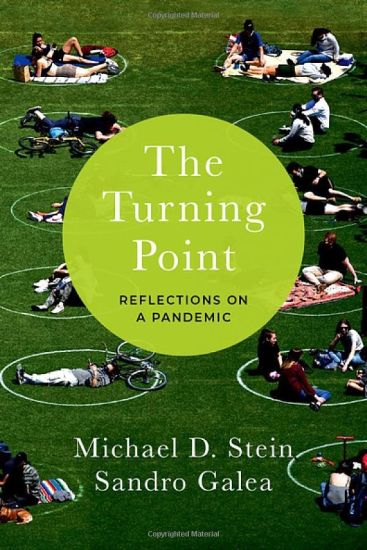
The Turning Point

The Turning Point

Michael D. Stein; Sandro Galea

OXFORD UNIVERSITY PRESS INC
2024
nidottu
In the early years of COVID-19, Americans witnessed the intersection of a global pandemic, an economic collapse, and civil unrest that galvanized the country and the world and ushered in an era of unprecedented disruption. Three years later, we can begin to reflect on the experience of the pandemic and ask ourselves how the lessons of that experience can inform a healthier present and future. The Turning Point: Reflections on a Pandemic examines the first years of COVID-19 through the lens of population health, revealing a critical turning point in our engagement with key public health issues. Through a series of short, provocative essays, the authors leverage their experience as prominent public health leaders to untangle the social, economic, environmental, and political forces at work in our response to the pandemic. Combining cutting-edge data with philosophical insights, these bold and revelatory essays encourage us to broaden and sharpen our vision of health and renegotiate policies that can allow health to flourish in extraordinary-and ordinary-times.
The Global Politics of Interreligious Dialogue

The Global Politics of Interreligious Dialogue

Michael D. Driessen

OXFORD UNIVERSITY PRESS INC
2025
nidottu
Over the last thirty years, governments across the globe have formalized new relationships with religious communities through their domestic and foreign policies and have variously sought to manage, support, marginalize, and co-opt religious forces through them. Many scholars view these policies as evidence of the "return of religion" to global politics although there is little consensus about the exact meaning, shape, or future of this political turn. In The Global Politics of Interreligious Dialogue, Michael D. Driessen examines the growth of state-sponsored interreligious dialogue initiatives in the Middle East and their use as a policy instrument for engaging with religious communities and ideas. Using a novel theoretical framework and drawing on five years of ethnographic fieldwork, Driessen explores both the history of interreligious dialogue and the evolution of theological approaches to religious pluralism in the traditions of Roman Catholicism and Sunni Islam. He analyzes state-centric accounts of interreligious dialogue and conceptualizes new ideas and practices of citizenship, religious pluralism, and social solidarity that characterize dialogue initiatives in the region. To make his case, Driessen presents four studies of dialogue in the Middle East--the Focolare Community in Algeria, the Adyan Foundation in Lebanon, KAICIID of Saudi Arabia, and DICID of Qatar--and highlights key interreligious dialogue declarations produced in the broader Middle East over the last two decades. Compelling and nuanced, The Global Politics of Interreligious Dialogue illustrates how religion operates in contemporary global politics, offering important lessons about the development of alternative models of democracy, citizenship, and modernity.
Mathematics as a Science of Patterns

Mathematics as a Science of Patterns

Michael D. Resnik

Clarendon Press
1997
sidottu
Mathematics as a Science of Patterns is the definitive exposition of a system of ideas about the nature of mathematics which Michael Resnik has been elaborating for a number of years. In calling mathematics a science he implies that it has a factual subject-matter and that mathematical knowledge is on a par with other scientific knowledge; in calling it a science of patterns he expresses his commitment to a structuralist philosophy of mathematics. He links this to a defence of realism about the metaphysics of mathematics--the view that mathematics is about things that really exist. Resnik's distinctive philosophy of mathematics is here presented in an accessible and systematic form: it will be of value not only to specialists in this area, but to philosophers, mathematicians, and logicians interested in the relationship between these three disciplines, or in truth, realism, and epistemology.
Mathematics as a Science of Patterns

Mathematics as a Science of Patterns

Michael D. Resnik

Oxford University Press
1999
nidottu
Mathematics as a Science of Patterns is the definitive exposition of a system of ideas about the nature of mathematics which Michael Resnik has been elaborating for a number of years. In calling mathematics a science he implies that it has a factual subject-matter and that mathematical knowledge is on a par with other scientific knowledge; in calling it a science of patterns he expresses his commitment to a structuralist philosophy of mathematics. He links this to a defence of realism about the metaphysics of mathematics--the view that mathematics is about things that really exist. Resnik's distinctive philosophy of mathematics is here presented in an accessible and systematic form: it will be of value not only to specialists in this area, but to philosophers, mathematicians, and logicians interested in the relationship between these three disciplines, or in truth, realism, and epistemology.
The Greek Gods in Modern Scholarship

The Greek Gods in Modern Scholarship

Michael D. Konaris

Oxford University Press
2015
sidottu
The nineteenth century is a key period in the history of the interpretation of the Greek gods. The Greek Gods in Modern Scholarship examines how German and British scholars of the time drew on philology, archaeology, comparative mythology, anthropology, or sociology to advance radically different theories on the Greek gods and their origins. For some, they had been personifications of natural elements, for others, they had begun as universal gods like the Christian god, yet for others, they went back to totems or were projections of group unity. The volume discusses the views of both well-known figures like K. O. Müller (1797-1840), or Jane Harrison (1850-1928), and of forgotten, but important, scholars like F. G. Welcker (1784-1868). It explores the underlying assumptions and agendas of the rival theories in the light of their intellectual and cultural context, laying stress on how they were connected to broader contemporary debates over fundamental questions such as the origins and nature of religion, or the relation between Western culture and the 'Orient'. It also considers the impact of theories from this period on twentieth- and twenty-first-century scholarship on Greek religion and draws implications for the study of the Greek gods today.
Elections, Parties, Democracy

Elections, Parties, Democracy

Michael D. McDonald; Ian Budge

Oxford University Press
2005
sidottu
This bold venture into political theory and comparative politics combines traditional concerns about democracy with modern analytical methods. It asks how contemporary democracies work, an essential stage in asking how they can be justified. An answer to both questions is found in the idea of the median mandate. The voter in the middle - the voice of the majority - empowers the centre party in parliament to translate his or her preferences into public policy. The median mandate provides a unified theory of democracy - pluralist, consensus, majoritarian, liberal, and populist - by replacing each qualified 'vision' with an integrated account of how representative institutions work. The unified theory is put to the test with comprehensive cross-national evidence covering 21 democracies from 1950 through to 1995. This exciting book will be of interest to specialists and general readers alike, representing as it does a reaffirmation of traditional democratic practice in an uncertain and threatening world. Comparative Politics is a series for students and teachers of political science that deals with contemporary government and politics. The General Editors are Max Kaase, Professor of Political Science, Vice President and Dean, School of Humanities and Social Science, International University, Bremen, Germany; and Kenneth Newton, Professor of Comparative Politics, University of Southampton. The series is published in association with the European Consortium for Political Research.
Religion and Democratization

Religion and Democratization

Michael D. Driessen

Oxford University Press Inc
2014
sidottu
Religion and Democratization is a comparative study of how regime types and religion-state arrangements frame questions of religious and political identities in Muslim and Catholic societies. The book proposes a theory for modeling the dynamics of "religiously friendly democratization " processes in which states institutionally favor specific religious values and organizations and allow religious political parties to contest elections. Religiously friendly democratization has a transformative effect on both the democratic politics and religious life of society. As this book demonstrates, it affects the political goals of religious leaders and the political salience of the religious identities of religious individuals. In a religiously charged national setting, religiously friendly democratization can generate more support for democracy among religious actors. By embedding religious ideas and values into its institutions, however, it also mediates the effects of secularization on national religious markets, creating more favorable conditions for the emergence of public religions and new trajectories of religious life. The book anchors its theoretical claims in case studies of Italy and Algeria, integrating original qualitative evidence and statistical data on voters' political and religious attitudes. It also considers the dynamics of religiously friendly democratization across the Muslim world today, through a comparative analysis of Tunisia, Morocco, Turkey and Indonesia. Finally, the book examines the theory's wider relevance through a large-N quantitative analysis, employing cross-national databases on religion-state relationships created by Grim and Finke and Fox.
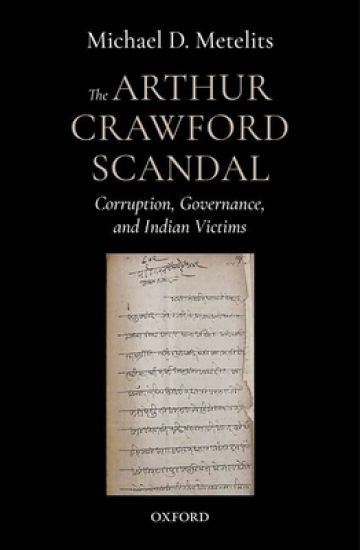
The Arthur Crawford Scandal

The Arthur Crawford Scandal

Michael D. Metelits

OUP India
2020
sidottu
The Arthur Crawford Scandal explores how 19th century Bombay tried a British official for corruption. The presidency government persuaded Indians, government officials, to testify against the very person who controlled their career, by offering immunity from legal action and career punishment. A criminal conviction of Crawford's henchman established the modus operandi of a bribery network. Subsequent efforts to intimidate Indian witnesses led to litigation at the high court level, resulting in a political pressure campaign in London based on biased press reports from India. These reports evoked questions in the House of Commons; questions became demands that Indians witnesses against Crawford be fired from government service. The Secretary of State for India and the Bombay Government negotiated about the Indian witnesses' fate. At first the Secretary of State accepted Bombay Government proposals. But the press campaign against the Indian witnesses eventually led the Secretary of State to order the Government of India, in consultation with the Government of Bombay, to pass a law ordering those officials who paid Crawford willingly, to be fired. Those who whom the Bombay Government determined were extorted, were not to be fired. Both groups retained immunity from further actions at law. Thus Bombay won a victory that almost saved its original guarantee of immunity: those who were fired were to receive their salary (along with periodic step increases) until they reached retirement age, at which time they would receive a pension. However, this "solution" did little to overcome the stigma and suffering of the fired officials
Colonial Copyright

Colonial Copyright

Michael D. Birnhack

Oxford University Press
2012
sidottu
When the British Empire enacted copyright law for its colonies and called it colonial, or Imperial, copyright, it had its own interests in mind. Deconstructing the imperial policy regarding copyright offers a startling glimpse into how this law was received in the colonies themselves. Offering the first in-depth study from the point of view of the colonized, this book suggests a general model of Colonial Copyright as it was understood as the intersection of legal transplants, colonial law, and the particular features of copyright, especially authorship. Taking as a case study the story of Mandate Palestine (1917-1948), the book details the untold history of the copyright law that became the basis of Israeli law, and still is the law in the Palestinian Authority. It queries the British motivation in enacting copyright law, traces their first, indifferent reaction, and continues with the gradual absorption into the local legal and cultural systems. In the modern era copyright law is at the forefront of globalization but this was no less true when colonial copyright first emerged. By shining a light on the introduction and reception of copyright law in Mandate Palestine, the book illuminates the broader themes of copyright law: the questions surrounding the concept of authorship; the relationship between copyright and the demands of progress; and the complications of globalization.
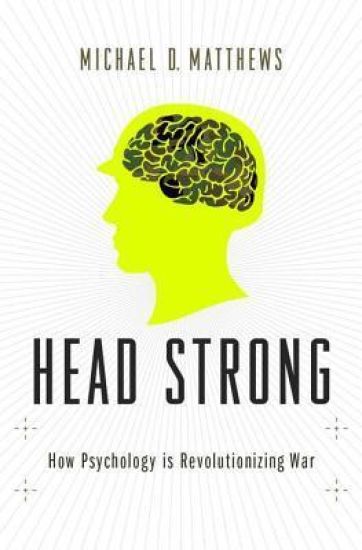
Head Strong

Head Strong

Michael D. Matthews

Oxford University Press Inc
2014
sidottu
Psychology is the science that will determine who wins and who loses the wars of the 21st century, just as physics ultimately led the United States to victory in World War II. Changes in the world's political landscape coupled with radical advances in the technology of war will greatly alter how militaries are formed, trained, and led. Leadership under fire - and the traits and skills it requires - is also changing. Grant, Lee, Pershing, Patton - these generals would not succeed in 21st century conflicts. In Head Strong: Psychology and Military Dominance in the 21st Century, Michael D. Matthews explores the many ways that psychology will make the difference for wars yet to come, from revolutionary advances in soldier selection and training to new ways of preparing soldiers to remain resilient in the face of horror and to engineering the super-soldier of the future. These advancements will ripple out to impact on the lives of all of us, not just soldiers. Amputees will have "intelligent" life-like prosthetics that simulate the feel and function of a real limb. Those exposed to trauma will have new and more effective remedies to prevent or treat post-traumatic stress disorder. And a revolution in training - based heavily in the military's increasing reliance on immersive simulations - will radically alter how police, fire, and first-responder personnel are trained in the future. At its heart, war is the most human of endeavors. Psychology, as the science of human behavior, will prove essential to success in future war. Authored by a West Point military psychologist, this book is one of the first to expose us to the smarter wars, and the world around them, to come.
Scientific Babel: How Science Was Done Before and After Global English
English is the language of science today. No matter which languages you know, if you want your work seen, studied, and cited, you need to publish in English. But that hasn't always been the case. Though there was a time when Latin dominated the field, for centuries science has been a polyglot enterprise, conducted in a number of languages whose importance waxed and waned over time--until the rise of English in the twentieth century. So how did we get from there to here? How did French, German, Latin, Russian, and even Esperanto give way to English? And what can we reconstruct of the experience of doing science in the polyglot past? With Scientific Babel, Michael D. Gordin resurrects that lost world, in part through an ingenious mechanism: the pages of his highly readable narrative account teem with footnotes--not offering background information, but presenting quoted material in its original language. The result is stunning: as we read about the rise and fall of languages, driven by politics, war, economics, and institutions, we actually see it happen in the ever-changing web of multilingual examples. The history of science, and of English as its dominant language, comes to life, and brings with it a new understanding not only of the frictions generated by a scientific community that spoke in many often mutually unintelligible voices, but also of the possibilities of the polyglot, and the losses that the dominance of English entails. Few historians of science write as well as Gordin, and Scientific Babel reveals his incredible command of the literature, language, and intellectual essence of science past and present. No reader who takes this linguistic journey with him will be disappointed.
Strained Relations

Strained Relations

Michael D. Bordo; Owen F. Humpage; Anna J. Schwartz

University of Chicago Press
2015
sidottu
Drawing on a trove of previously confidential data, Strained Relations reveals the evolution of US policy regarding currency market intervention, and its interaction with monetary policy. The authors consider how foreign-exchange intervention was affected by changing economic and institutional circumstances - most notably the abandonment of the international gold standard - and how political and bureaucratic factors affected this aspect of public policy.