This title is part of UC Press's Voices Revived program, which commemorates University of California Press’s mission to seek out and cultivate the brightest minds and give them voice, reach, and impact. Drawing on a backlist dating to 1893, Voices Revived makes high-quality, peer-reviewed scholarship accessible once again using print-on-demand technology. This title was originally published in 1977.
This is a study of the life of Margaret Beaufort, mother of Henry VII and foundress of two Cambridge colleges. It is at once the first biography of Lady Margaret to explore the full range of archival sources, and one of the best-documented studies of any late-medieval woman. Lady Margaret’s early experiences of the medieval ‘marriage market’ anticipated the turbulent political world in which she reached maturity. Deeply involved in the Wars of the Roses, and conspirator against Richard III, she was to become the foundress of one of England’s greatest ruling dynasties. Her considerable wealth, much of it owed to her son’s triumph, was used to finance education at Oxford and Cambridge, and her lasting memorials are the Cambridge colleges of Christ’s and St John’s. Behind her activities as both politician and benefactress can be discerned a vigorous, sometimes ruthless, but always enterprising personality, which left a deep impression on her contemporaries. This is a biography of unusual character which brings to life an extraordinary personality under a great variety of aspects, illuminating in depth the political, social, ecclesiastical and academic history through the life of one of the most remarkable women of the age.
The clear structure of psalm groups in Psalms 107-150 can be interpreted as signaling a renewed hope in the royal/Davidic promises. Each psalm group of Book V is organized around a theme or key word that is related to the royal/Davidic hope in the earlier sections of the Psalter: Psalms 107-118; Psalm 119; Psalms 120-137; Psalms 138-145; Psalms 146-150. These words and themes figure prominently at the major seam psalms of the Psalter – Psalms 1-2 and 89. Thus, the content and subject matter at the end of the Psalter is integrally related to the content and subject matter at the beginning. The editorial-critical method used by Snearly is an extension of the method used by David M. Howard, Jr. in The Structure of Psalms 93-100. Snearly also draws from recent insights in the fields of poetics and text-linguistics in order to establish a linguistically based foundation for reading the Psalter as a unified text. The methodology emphasizes parallel features, with special focus on key-word links. This method advances editorial criticism by not only discerning links within a group but also showing that those links do not occur with the same frequency outside of the group.
The clear structure of psalm groups in Psalms 107-150 can be interpreted as signaling a renewed hope in the royal/Davidic promises. Each psalm group of Book V is organized around a theme or key word that is related to the royal/Davidic hope in the earlier sections of the Psalter: Psalms 107-118; Psalm 119; Psalms 120-137; Psalms 138-145; Psalms 146-150. These words and themes figure prominently at the major seam psalms of the Psalter – Psalms 1-2 and 89. Thus, the content and subject matter at the end of the Psalter is integrally related to the content and subject matter at the beginning. The editorial-critical method used by Snearly is an extension of the method used by David M. Howard, Jr. in The Structure of Psalms 93-100. Snearly also draws from recent insights in the fields of poetics and text-linguistics in order to establish a linguistically based foundation for reading the Psalter as a unified text. The methodology emphasizes parallel features, with special focus on key-word links. This method advances editorial criticism by not only discerning links within a group but also showing that those links do not occur with the same frequency outside of the group.
Al considerar las mayores oportunidades para el crecimiento y la innovaci n, al igual que los retos innumerables entrelazados que enfrentar n las nuevas actividades espaciales, la Security World Foundation brinda este Manual para Nuevos Actores en el Espacio con la esperanza de que asistir n a todos los nuevos participantes ambiciosos, ya sea gubernamental o no gubernamental, al planificar y al realizar las actividades espaciales de una forma segura y sostenible.
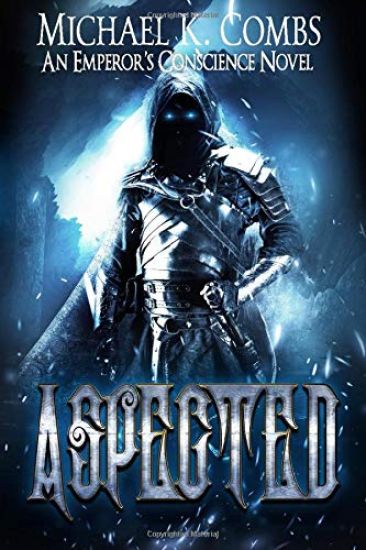
Would you become a monster to save those you love?Evanar Hostric dreams of being a Guardian, but his magic is not like the others at the Temple. It is darker, hungrier, and comes at a terrible cost.His comfortable life is upended by a group of new students which leads to a dreadful encounter and Evan doubting his dream. He resolves to leave it behind in favor of a more peaceful path when an attack on all he loves forces him to choose: Let them die or become the monster he was meant to be.Aspected is the prequel to The Emperor's Conscience series by Michael K. Combs. If you like dark magic and conflicted antiheroes, you'll love this introduction to the world of The Emperor's Conscience, where sometimes a monster's morality is your only hope.
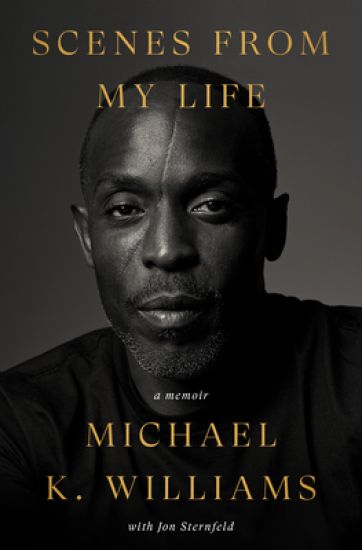
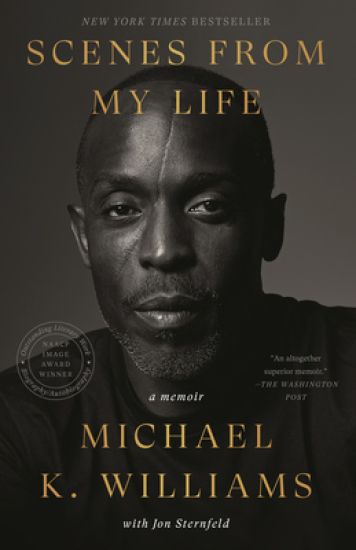
NEW YORK TIMES BESTSELLER - WINNER OF THE NAACP IMAGE AWARD - A "gripping, revelatory" (NPR) memoir of hard-won success, struggles with addiction, and a lifelong mission to give back--from the late iconic actor beloved for his roles in The Wire, Boardwalk Empire, and Lovecraft Country "Williams's cool rasp leaps off every page, his story told in the direct yet impassioned language that defined his greatest characters."--Vulture ONE OF THE BEST BOOKS OF THE YEAR: The New York Times, NPR, The Root When Michael K. Williams died on September 6, 2021, he left behind a career as one of the most electrifying actors of his generation. From his star turn as Omar Little in The Wire to Chalky White in Boardwalk Empire to Emmy-nominated roles in HBO's The Night Of and Lovecraft Country, Williams inhabited a slew of indelible roles that he portrayed with a rawness and vulnerability that leapt off the screen. Beyond the nominations and acclaim, Williams played characters who connected, whose humanity couldn't be denied, whose stories were too often left out of the main narrative. At the time of his death, Williams had nearly finished a memoir that tells the story of his past while looking to the future, a book that merges his life and his life's work. Mike, as his friends knew him, was so much more than an actor. In Scenes from My Life, he traces his life in whole, from his childhood in East Flatbush and his early years as a dancer to his battles with addiction and the bar fight that left his face with his distinguishing scar. He was a committed Brooklyn resident and activist who dedicated his life to working with social justice organizations and his community, especially in helping at-risk youth find their voice and carve out their future. Williams worked to keep the spotlight on those he fought for and with, whom he believed in with his whole heart. Imbued with poignance and raw honesty, Scenes from My Life is the story of a performer who gave his all to everything he did--in his own voice, in his own words, as only he could.
NEW YORK TIMES BESTSELLER - WINNER OF THE NAACP IMAGE AWARD - A "gripping, revelatory" (NPR) memoir of hard-won success, struggles with addiction, and a lifelong mission to give back--from the late iconic actor beloved for his roles in The Wire, Boardwalk Empire, and Lovecraft Country "Williams's cool rasp leaps off every page, his story told in the direct yet impassioned language that defined his greatest characters."--Vulture ONE OF THE BEST BOOKS OF THE YEAR: The New York Times, NPR, The Root When Michael K. Williams died on September 6, 2021, he left behind a career as one of the most electrifying actors of his generation. From his star turn as Omar Little in The Wire to Chalky White in Boardwalk Empire to Emmy-nominated roles in HBO's The Night Of and Lovecraft Country, Williams inhabited a slew of indelible roles that he portrayed with a rawness and vulnerability that leapt off the screen. Beyond the nominations and acclaim, Williams played characters who connected, whose humanity couldn't be denied, whose stories were too often left out of the main narrative. At the time of his death, Williams had nearly finished a memoir that tells the story of his past while looking to the future, a book that merges his life and his life's work. Mike, as his friends knew him, was so much more than an actor. In Scenes from My Life, he traces his life in whole, from his childhood in East Flatbush and his early years as a dancer to his battles with addiction and the bar fight that left his face with his distinguishing scar. He was a committed Brooklyn resident and activist who dedicated his life to working with social justice organizations and his community, especially in helping at-risk youth find their voice and carve out their future. Williams worked to keep the spotlight on those he fought for and with, whom he believed in with his whole heart. Imbued with poignance and raw honesty, Scenes from My Life is the story of a performer who gave his all to everything he did--in his own voice, in his own words, as only he could.
In seeking to end negative life behaviors, such as alcohol and drug addiction, the individual needs a viable plan and a path for finding and building on the true personal responsibilities, strengths and life goals, needed to effectively achieve productive self recovery. CPR will help in this life change process, as the individual works towards recovery through the hourly repetition of good positive thoughts and productive decision making skills, while also working to eliminate the negative thoughts and behaviors that have been hindering one's own chance at "the good life". CPR will work with, guide and strengthen the individual while teaching how to achieve recovery in the now, as the objective of recovery is the building up of personal strengths, skills and responsibilities, through today's decision making efforts. Throughout CPR you will find that positive, productive current life goals will guide the life change process and that this change will be possible, through hard work and believing in oneself, while taking hold of one's life changing recovery decisions.
How violent events and autocratic parties trigger democratic changeHow do democracies emerge? Shock to the System presents a novel theory of democratization that focuses on how events like coups, wars, and elections disrupt autocratic regimes and trigger democratic change. Employing the broadest qualitative and quantitative analyses of democratization to date, Michael Miller demonstrates that more than nine in ten transitions since 1800 occur in one of two ways: countries democratize following a major violent shock or an established ruling party democratizes through elections and regains power within democracy. This framework fundamentally reorients theories on democratization by showing that violent upheavals and the preservation of autocrats in power—events typically viewed as antithetical to democracy—are in fact central to its foundation.Through in-depth examinations of 139 democratic transitions, Miller shows how democratization frequently follows both domestic shocks (coups, civil wars, and assassinations) and international shocks (defeat in war and withdrawal of an autocratic hegemon) due to autocratic insecurity and openings for opposition actors. He also shows how transitions guided by ruling parties spring from their electoral confidence in democracy. Both contexts limit the power autocrats sacrifice by accepting democratization, smoothing along the transition. Miller provides new insights into democratization’s predictors, the limited gains from events like the Arab Spring, the best routes to democratization for long-term stability, and the future of global democracy.Disputing commonly held ideas about violent events and their effects on democracy, Shock to the System offers new perspectives on how regimes are transformed.
How violent events and autocratic parties trigger democratic changeHow do democracies emerge? Shock to the System presents a novel theory of democratization that focuses on how events like coups, wars, and elections disrupt autocratic regimes and trigger democratic change. Employing the broadest qualitative and quantitative analyses of democratization to date, Michael Miller demonstrates that more than nine in ten transitions since 1800 occur in one of two ways: countries democratize following a major violent shock or an established ruling party democratizes through elections and regains power within democracy. This framework fundamentally reorients theories on democratization by showing that violent upheavals and the preservation of autocrats in power—events typically viewed as antithetical to democracy—are in fact central to its foundation.Through in-depth examinations of 139 democratic transitions, Miller shows how democratization frequently follows both domestic shocks (coups, civil wars, and assassinations) and international shocks (defeat in war and withdrawal of an autocratic hegemon) due to autocratic insecurity and openings for opposition actors. He also shows how transitions guided by ruling parties spring from their electoral confidence in democracy. Both contexts limit the power autocrats sacrifice by accepting democratization, smoothing along the transition. Miller provides new insights into democratization’s predictors, the limited gains from events like the Arab Spring, the best routes to democratization for long-term stability, and the future of global democracy.Disputing commonly held ideas about violent events and their effects on democracy, Shock to the System offers new perspectives on how regimes are transformed.
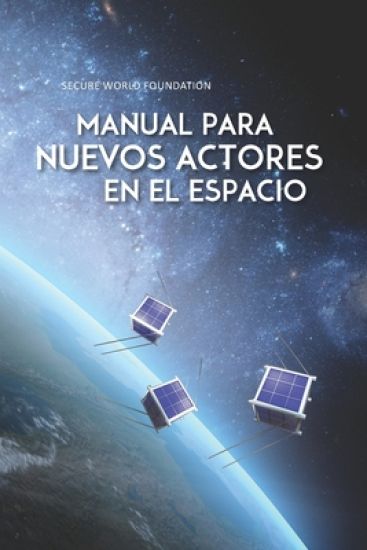
Space is rapidly changing. Every year, more numerous and more diverse actors embark on increasingly novel, innovative, and disruptive ventures in outer space. They are joining the more than 70 states, commercial companies, and international organizations currently operating over 1,500 satellites in Earth orbit.The prospects are bright; accessing and exploring outer space now require less capital investment, less time, and fewer people than ever before. However, this rapid pace of growth and change exists in a complex landscape of legal, regulatory, political, technical, and administrative issues. New actors in space face a steep learning curve and will stress existing institutions and governance frameworks. Additionally, the inherently difficult and fragile nature of the space environment means that accidents or mistakes in space might affect us all.In considering the great possibilities for growth, innovation, and in light of the myriad and interlinked challenges new space activities will confront, the Secure World Foundation offers this Handbook for New Actors in Space in the hopes that it will assist all aspiring new entrants - whether governmental or non-governmental - in planning and conducting space activities in a safe and sustainable manner.
The history of Daniel Island lies just beneath the surface. Revealed in half-buried artifacts and forgotten manuscripts, it is uncovered piece by piece in the stories and legacies of agriculture and industry, recreation and development. Occupied by Etiwan Indians long before the founding of nearby Charlestown in 1670, the land known as Ittiwan Island and its inhabitants were shaped by changesthroughout the Lowcountry and the world beyond. Their lime, timber, and bricks helped build the city. Local cotton and indigo spread throughout the world. Livestock and vegetable farming prospered, eventually replaced by Guggenheim's hunting preserve and cattle farm. Daniel Island today builds upon this past as it grows into a vibrant new community.
On August 22, 1485, at Bosworth Field, Richard III fell, the Wars of the Roses ended, and the Tudor dynasty began. The clash is so significant because it marks the break between medieval and modern; yet how much do we really know about this historical landmark? Michael K. Jones uses archival discoveries to show that Richard III's defeat was by no means inevitable and was achieved only through extraordinary chance. He relocates the battle away from the site recognized formore than500 years. With startling detail of Henry Tudor's reliance on French mercenaries and a new account of the battle action, the author turns Shakespeare on its head, painting an entirely fresh picture of the dramatic life and death of Richard III, England's most infamous monarch."