Kirjojen hintavertailu. Mukana 11 342 296 kirjaa ja 12 kauppaa.

Kirjahaku

Etsi kirjoja tekijän nimen, kirjan nimen tai ISBN:n perusteella.

876 tulosta hakusanalla Michaelangelo Rodriguez

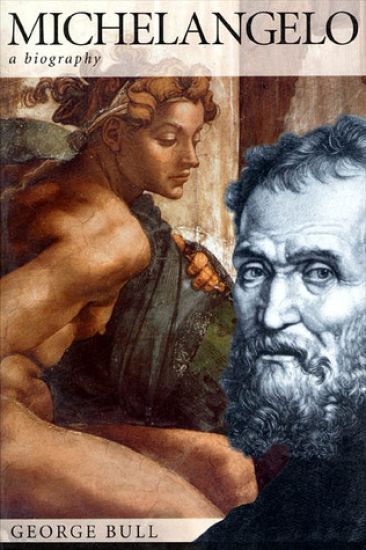
Michelangelo: A Biography

Michelangelo: A Biography

George Bull

St. Martin's Griffin
1998
nidottu
Much has been written about the paintings and sculptures of Michelangelo, arguably the greatest artist of the Renaissance. But what about the man? In this revealing look at the Florentine genius, acclaimed author George Bull traces the life and spiritual quest of Michelangelo, drawing a fuller portrait of the man himself. In all his work, Michelangelo impressed his contemporaries as a forceful personality, a divine genius endowed with "terrabilita," or intense emotional power. Often portrayed as a solitary and austere figure, he in fact enjoyed a wide range of friendships. And it is those whom he loved and hated, served or resisted, who are presented here-- from his family and fellow artists to the popes, nobles, and rulers of Europe. George Bull presents the life of Michelangelo in the round, bringing before the reader a towering genius whose versatility and originality are constantly being rediscovered.
Michelangelo

Michelangelo

Howard Hibbard; Shirley G. Hibbard

Routledge
2019
sidottu
In this masterly, Howard Hibbard relates Michelangelo's art to his life and to the times in which he lived, relying on the earliest biographies and the latest scholarly research as well as on Michelangelo's own letters and poems. What emerges is both a perspective appraisal of his work and a revealing life history of the man who was arguably the greatest artist of all time.
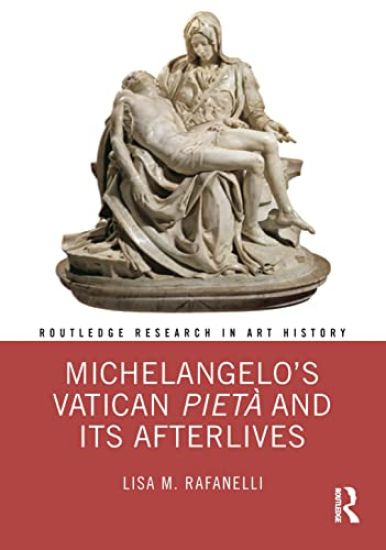
Michelangelo’s Vatican Pietà and its Afterlives

Michelangelo’s Vatican Pietà and its Afterlives

Lisa M. Rafanelli

TAYLOR FRANCIS LTD
2022
sidottu
This book offers a fresh perspective on Michelangelo’s well-known masterpiece, the Vatican Pietà, by tracing the shifting meaning of the work of art over time.Lisa M. Rafanelli chronicles the object history of the Vatican Pietà and the active role played by its many reproductions. The sculpture has been on continuous view for over 500 years, during which time its cultural, theological, and artistic significance has shifted. Equally important is the fact that over its long life it has been relocated numerous times and has also been reproduced in images and objects produced both during Michelangelo’s lifetime and long after, described here as artistic progeny: large-scale, unique sculpted variants, smaller-scale statuettes, plaster and bronze casts, and engraved prints.The book will be of interest to scholars working in art history, Renaissance studies, early modern studies, religion, Christianity, and theology.
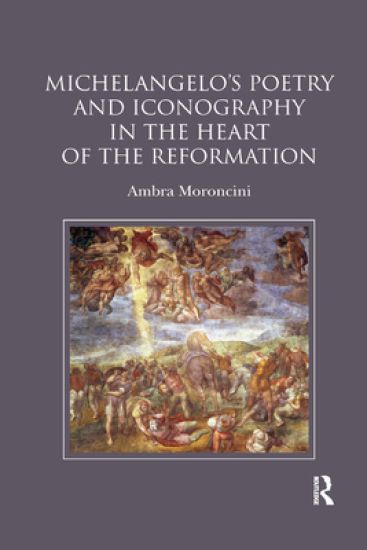
Michelangelo's Poetry and Iconography in the Heart of the Reformation
Contextualizing Michelangelo’s poetry and spirituality within the framework of the religious Zeitgeist of his era, this study investigates his poetic production to shed new light on the artist’s religious beliefs and unique language of art. Author Ambra Moroncini looks first and foremost at Michelangelo the poet and proposes a thought-provoking reading of Michelangelo’s most controversial artistic production between 1536 and c.1550: The Last Judgment, his devotional drawings made for Vittoria Colonna, and his last frescoes for the Pauline Chapel. Using theological and literary analyses which draw upon reformist and Protestant scriptural writings, as well as on Michelangelo’s own rime spirituali and Vittoria Colonna’s spiritual lyrics, Moroncini proposes a compelling argument for the impact that the Reformation had on one of the greatest minds of the Italian Renaissance. It brings to light how, in the second quarter of the sixteenth century in Italy, Michelangelo’s poetry and aesthetic conception were strongly inspired by the revived theologia crucis of evangelical spirituality, rather than by the theologia gloriae of Catholic teaching.
Michelangelo

Michelangelo

WW Norton Co
1996
nidottu
Each volume includes all the necessary materials for the comprehensive study of a work of art: An illustration section showing the complete work of art, details, preliminary studies, and iconographic sources;An introductory essay by the editor;Documents and literary sources;Critical essays from the art-historical literature.
Michelangelo

Michelangelo

Routledge
2001
sidottu
Tavistock Press was established as a co-operative venture between the Tavistock Institute and Routledge & Kegan Paul (RKP) in the 1950s to produce a series of major contributions across the social sciences. This volume is part of a 2001 reissue of a selection of those important works which have since gone out of print, or are difficult to locate. Published by Routledge, 112 volumes in total are being brought together under the name The International Behavioural and Social Sciences Library: Classics from the Tavistock Press. Reproduced here in facsimile, this volume was originally published in 1955 and is available individually. The collection is also available in a number of themed mini-sets of between 5 and 13 volumes, or as a complete collection.
Michelangelo

Michelangelo

Adrian Stokes

Routledge
2001
nidottu
Adrian Stokes was one of the twentieth century's finest and most discriminating writers on art. Of over twenty works of art criticism, Michelangelo was considered by Lawrence Gowing to be the most complete he ever wrote, presenting an understanding of the great artist that no one subsequently could afford to ignore. Stokes brings to bear in this work not only twenty-five years' study and appreciation of Italian Renaissance art and of aesthetics, but also a unique psychological perspective, as he explains in his introduction, which enables him to uncover the depths of the artist's personality. The subtlety of feeling and profound knowledge of sculpture which Sir Herbert Read admired in Stokes's work is also combined with a literary style perfected through his own poetry and criticism. Presenting a unique survey of his subject's literary as well as his artistic legacy, Stokes succeeds, as no other has before or since, in his aim of bringing Michelangelo's greatness into nearer view.
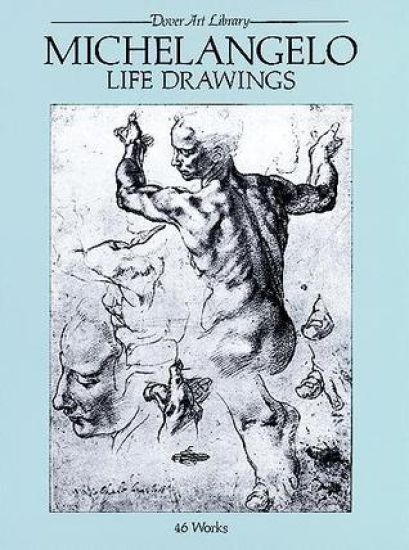
Michelangelo Life Drawings

Michelangelo Life Drawings

Michelangelo Michelangelo

Dover Publications Inc.
2003
nidottu
Throughout his long life, Michelangelo Buonarroti (1475-1564) never ceased to practice drawing with pen, pencil, or chalk. In the 60 years of creative activity encompassed by this volume, the artist produced scores of sketches, drawings, and studies -- nudes, heads, figure studies, Madonnas, anatomical drawings, studies of children and animals, mythical representations, and religious works. This book reproduces 46 of his finest drawings, embodying most of his artistic themes and techniques, and executed in his characteristic media of pen and ink, and red and black chalk. The extraordinary strength, grace, and clarity of his renderings are beautifully illustrated on every page.The compositions, carefully reproduced on fine-quality paper, range from youthful studies modeled after ancient sculpture and early Renaissance frescoes to the otherworldly religious creations of his old age. Many are preliminary drawings executed in connection with some of his most important commissions: the marble David of 1501-04; the famous cartoon of 1504 for the projected fresco in the Palazzo Vecchio, The Battle of Cascina; the paintings on the vaulted ceiling of the Sistine Chapel, executed 1508-12; and the imposing fresco of The Last Judgment in the same chapel, executed 1535-14; as well as several of the more highly finished allegorical presentation drawings of the early 1530s. In some cases, e.g. The Battle of Cascina, the drawings are all that remain of a lost masterpiece. All drawings are accompanied by brief descriptive captions including date, medium, size, and current location.
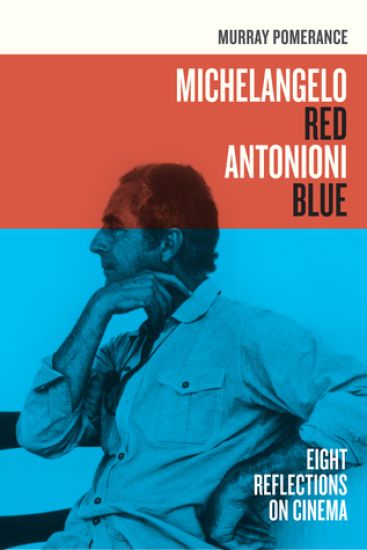
Michelangelo Red Antonioni Blue

Michelangelo Red Antonioni Blue

Murray Pomerance

University of California Press
2011
pokkari
Michelangelo Antonioni, who died in 2007, was one of cinema's greatest modernist filmmakers. The films in his black and white trilogy of the early 1960s - "L'avventura," "La Notte," "L'eclisse" -are justly celebrated for their influential, gorgeously austere style. But in this book, Murray Pomerance demonstrates why the color films that followed are, in fact, Antonioni's greatest works. Writing in an accessible style that evokes Antonioni's expansive use of space, Pomerance discusses "The Red Desert," "Blow-Up," "Professione: Reporter (The Passenger)," "Zabriskie Point," "Identification of a Woman," "The Mystery of Oberwald," "Beyond the Clouds," and "The Dangerous Thread of Things" to analyze the director's subtle and complex use of color. Infusing his open-ended inquiry with both scholarly and personal reflection, Pomerance evokes the full range of sensation, nuance, and equivocation that became Antonioni's signature.
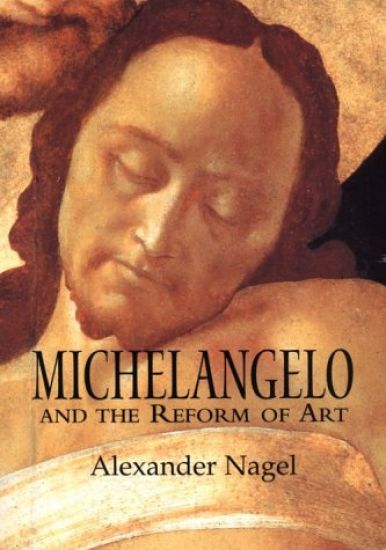
Michelangelo and the Reform of Art

Michelangelo and the Reform of Art

Alexander Nagel

Cambridge University Press
2000
sidottu
Michelangelo was acutely conscious of living in an age of religious crisis and artistic change, and for him the two issues were related. Michelangelo and the Reform of Art explores Michelangelo’s awareness of artistic tradition as a means of understanding his relation, as a devoutly Christian artist, to the profound religious uncertainty of the sixteenth century. Concentrating on Michelangelo’s lifelong preoccupation with the image of the dead Christ, Alexander Nagel studies the artist’s associations with reform-minded circles in early sixteenth-century Italy, and reveals his sustained concern over the fate of religious art in his own day. Within the context of reform, Michelangelo’s art reflects an artistic and religious culture where self-conscious archaism mingles with aggressive innovation, and ambivalence regarding the role of images yields radical aesthetic experimentation. A reassessment of Michelangelo’s work, this revisionist study sheds new light on High Renaissance and Mannerist art as a whole.
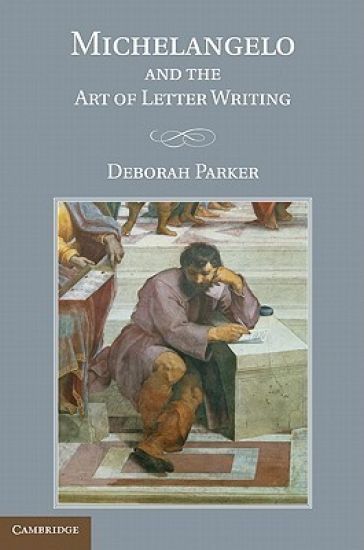
Michelangelo and the Art of Letter Writing

Michelangelo and the Art of Letter Writing

Deborah Parker

Cambridge University Press
2010
sidottu
Michelangelo's extant correspondence is the most abundant of any artist. Spanning 67 years, it comprises roughly 1,400 letters, of which 500 were written by Michelangelo himself. Biographers and art historians have combed the letters for insight into Michelangelo's views on art, his contractual obligations, and his relationships. Literary scholars have explored parallels between the letters and Michelangelo's poetry. Nevertheless, this is the first book to study the letters for their intrinsically literary qualities. In this volume, Deborah Parker examines Michelangelo's use of language as a means of understanding the creative process of this extraordinary artist. His letters often revel in witticisms, rhetorical flourishes, and linguistic ingenuity. Close study of his mastery of words and modes of self-presentation shows Michelangelo to be a consummate artist who deploys the resources of language to considerable effect.
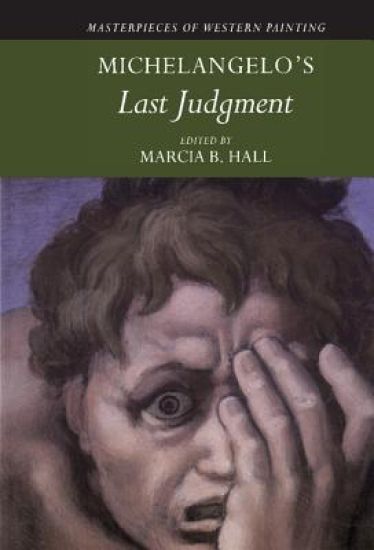
Michelangelo's 'Last Judgment'

Michelangelo's 'Last Judgment'

Cambridge University Press
2004
sidottu
Michelangelo's Last Judgment was the most criticized and discussed painting of the sixteenth century. The subject of the Last Judgment has been a barometer of cultural mood throughout history. It can be interpreted, as Michelangelo did, as the moment when mortals attain immortal bliss or, in more unsettled times, as the terrifying moment when we face the justice of the Lord and are found wanting. The painting must hold in tension admonition and celebration. Michelangelo created his fresco in the final flowering of Renaissance humanism. Four years after its unveiling, the Council of Trent began meeting and the Counter-Reformation was under way. Caught on the cusp of a major shift of values, Michelangelo and his fresco were praised by lovers of art and condemned by conservative churchmen who sought a tool with which to exhort the wavering faithful, tempted to defect to Protestantism. This book explores the context, both historical and biographical, in which the fresco was created and the debates about the style and function of religious art that it generated.
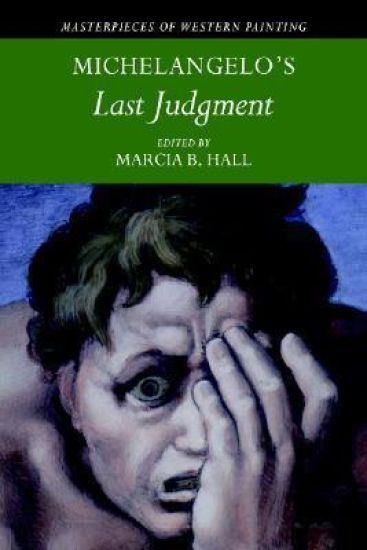
Michelangelo's 'Last Judgment'

Michelangelo's 'Last Judgment'

Cambridge University Press
2004
pokkari
Michelangelo's Last Judgment was the most criticized and discussed painting of the sixteenth century. The subject of the Last Judgment has been a barometer of cultural mood throughout history. It can be interpreted, as Michelangelo did, as the moment when mortals attain immortal bliss or, in more unsettled times, as the terrifying moment when we face the justice of the Lord and are found wanting. The painting must hold in tension admonition and celebration. Michelangelo created his fresco in the final flowering of Renaissance humanism. Four years after its unveiling, the Council of Trent began meeting and the Counter-Reformation was under way. Caught on the cusp of a major shift of values, Michelangelo and his fresco were praised by lovers of art and condemned by conservative churchmen who sought a tool with which to exhort the wavering faithful, tempted to defect to Protestantism. This book explores the context, both historical and biographical, in which the fresco was created and the debates about the style and function of religious art that it generated.
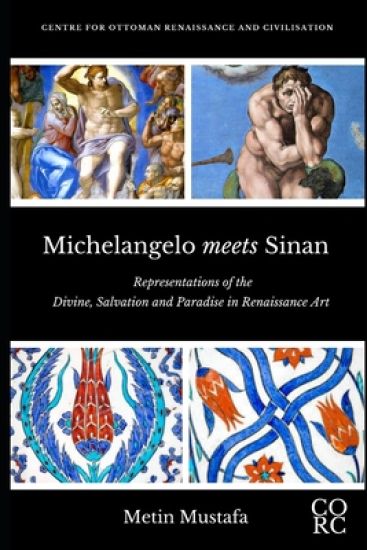
Michelangelo meets Sinan

Michelangelo meets Sinan

Metin Mustafa

Centre for Ottoman Renaissance and Civilisation
2021
pokkari
This book aims to re-orient the narrative of Sinan's use of the fine art of Iznik ini (tiles) within the context of the Renaissance humanist paradigm. The study compares the fine art of Iznik ini of the Mosque of Rustem Pasha (1560-61) by the Ottoman imperial architect and artist Sinan, with the monumental buon' fresco of one of the giants of the Renaissance-Michelangelo's Last Judgement in the Sistine Chapel in the Vatican (1541). The alternative reading of these two works, as undertaken in this study, looks beyond the grand-scale production of the two works in order to examine the allegorical message they convey. Such a comparison underpins the Mediterranean zeitgeist exemplified by the early modern art of Italy and Ottoman Istanbul in the sixteenth century. Inspired by their respective religious and intellectual traditions, the works of Michelangelo and Sinan converge thematically. Close analysis of the two works from anagogical and eschatological paradigms based on the religious themes alluded to in the New Testament and the Qur'an respectively: 'Salvation', 'Act of Judgement', 'Self-reflection' and 'Predestination' including the Isra and Mi'raj narratives of Prophet Muhammad influencing Dante's (d. 1321) Divine Comedy, establish the meeting point between Michelangelo and Sinan. Furthermore, applying the Sufi humanist, Ibn Arabi's (1165-1240) theophanic (visible manifestations of God to humankind) experience of the Divine, and the Jungian theory of religious symbolisms providing a deeper sense of meaning to one's existence, the book establishes a link between the art of Michelangelo and Sinan. From these perspectives the pan-European notion of the Renaissance begins to dissipate and instead offers a more inclusive understanding of the period in discussion. Therefore, the underpinning of this argument promotes the broadening of our understanding of the shared heritage in the Mediterranean during the sixteenth century.