Kirjahaku
Etsi kirjoja tekijän nimen, kirjan nimen tai ISBN:n perusteella.
1000 tulosta hakusanalla Michel Lefebvre

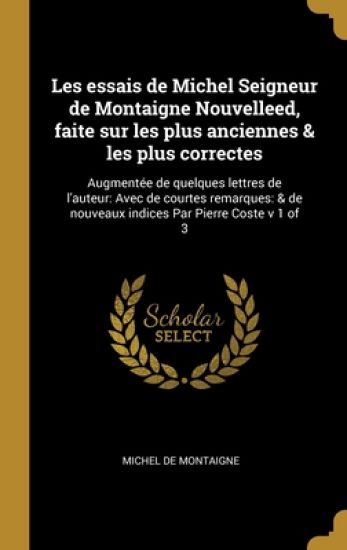
Les essais de Michel Seigneur de Montaigne Nouvelleed, faite sur les plus anciennes & les plus correctes
Michel Montaigne
Wentworth Press
2018
pokkari
Les essais de Michel Seigneur de Montaigne Nouvelleed, faite sur les plus anciennes & les plus correctes
Michel Montaigne
Wentworth Press
2018
sidottu
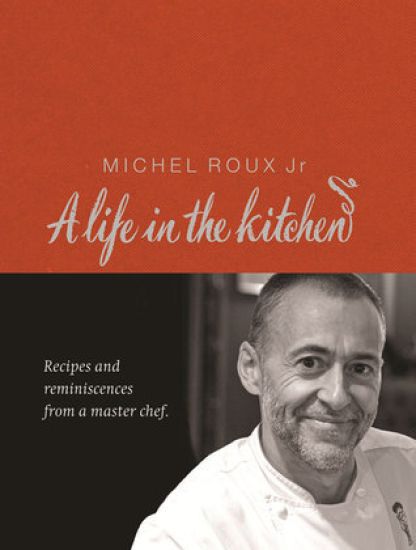
The life - and life behind the scenes - of one of Britain's best-known chefs.The Roux family is the most influential family associated with food in Britain. Through their various restaurants (Le Gavroche, Waterside Inn, Brasserie Roux) and catering services they have trained many of Britain's top chefs. Albert and Michel Sr brought French high cuisine to Britain in the sixties, much of the produce being brought twice weekly from France by Michel's mother in the family car. Michel grew up in an environment of respect for fine food and ingredients, of never settling for second best, and of traditional French family excursions to find wild food. He tells the story of what it was like to grow up as part of this close-knit family. He left school at 16 to start his first apprenticeship with Maitre Patissier Hellegourarche in Paris. He then worked with Alain Chapel at Mionnay before doing his mililtary service at the Elysee Palace cooking for Presidents Giscard d'Estaing and Francois Mitterand. After a stint cooking at the Mandarin Hotel in Hong Kong and catering in London, he took over the running of Le Gavroche in 1994.
Michel Saint-Denis and the Shaping of the Modern Actor
Jane Baldwin
Praeger Publishers Inc
2003
sidottu
In a career that spanned more then four decades and four countries, Michel Saint-Denis-actor, director, teacher, and theorist-was a major force in twentieth-century theatre. Baldwin chronicles his life and career, which was characterized by frequent beginnings, triumphs, and disasters. Although the times, the artistic currents, and the places changed, Saint-Denis's ambition remained consistent: to create a permanent company dedicated to theatrical experiment coupled with school. While this aspiration was never fully realized, the result of his failure was to have a more lasting effect on the theatre. Always on the move, he implanted his theatre practice internationally through the creation of innovative drama schools and his own teaching. In this long-overdue assessment, Saint-Denis's contribution to the stage is brought to light in vivid detail.Making the case that the Saint-Denis's innovations, ideas, and vision are present in current theatrical practice, Baldwin resurrects this important figure and examines a life and career that had almost been forgotten. Thirty-five years after his death, the author contends his influence can still be seen in the drama schools he created-the London Theatre Studio, the Old Vic School, the Ecole Superieure d'Art Dramatique, the National Theatre School of Canada, the Juilliard Drama Division-and in the spirit behind much that was accomplished at England's National Theatre, Royal Shakespeare Company, and Royal Court. This consideration casts new light on this important figure and reveals the extent of his role in the shaping of modern theatre and dramatic arts.
Michel-Jean Sedaine (1719-1797)
Routledge
2019
sidottu
Originally published in 2000, this book highlights the interst Sedaine's life and work is now, belatedly, provoking in many scholarly disciplines. If Sedaine speaks today to literary history, theatre history and opera studies, it is because he possessed a multivalent vision, one which accounts for both his past neglect and is present rediscovery. Like many others, he believed that the established, 'official' genres needed to be reformed; unlike many, he made it his business to transform the actual language and operation of the theatre arts he practised. Until late eighteenth-century opera and drama in France become better understood, Sedaine's immense importance for the development of Romantic opera and theatre risks remaining generally concealed; to reveal something of this importance is one main reason for publishing the present volume.This book includes chapters on Sedaine and the question of genre, the representation of the female in the dramas of Sedaine, and the words, gestures and other signs in the era of Sedaine.
Michel-Jean Sedaine (1719-1797)
Routledge
2020
nidottu
Originally published in 2000, this book highlights the interst Sedaine's life and work is now, belatedly, provoking in many scholarly disciplines. If Sedaine speaks today to literary history, theatre history and opera studies, it is because he possessed a multivalent vision, one which accounts for both his past neglect and is present rediscovery. Like many others, he believed that the established, 'official' genres needed to be reformed; unlike many, he made it his business to transform the actual language and operation of the theatre arts he practised. Until late eighteenth-century opera and drama in France become better understood, Sedaine's immense importance for the development of Romantic opera and theatre risks remaining generally concealed; to reveal something of this importance is one main reason for publishing the present volume.This book includes chapters on Sedaine and the question of genre, the representation of the female in the dramas of Sedaine, and the words, gestures and other signs in the era of Sedaine.
This book explores the theoretical contribution of Michel Foucault to the fields of criminology, law, justice and penology. It surveys both the ways in which the work of Foucault has been applied in criminology, but also how his work can be used to understand and explain contemporary issues and policies. Moreover, this book seeks to dispel some of the common misconceptions about the relevance of Foucault’s work to criminology and law. Mariana Valverde clearly explains the insights that Foucault’s rich body of work provides about different practices found in the fields of law, security, justice, and punishment; and how these insights have been used or could be used to understand and explain issues and policies that Foucault himself did not write about, including those that had not yet emerged during his lifetime.Drawing on key texts by Foucault such as Discipline and Punish, and also lectures he gave at the College de France and Louvain Criminology Institute which offer a more nuanced account of the development of criminal justice, Mariana Valverde offers the essential text on Foucault and his contribution and continued relevance to criminology. This book will be important reading for students and scholars of criminology, law, sociolegal studies, security studies, political theory and sociological theory.
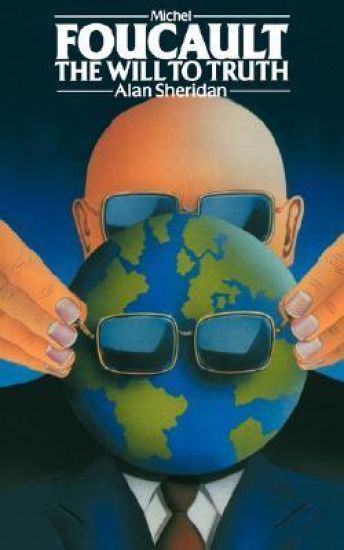
First Published in 2004. Michel Foucault: The Will to Truth is the first full-length study of Foucault in any language. It covers the whole of his work to date, including material unavailable in English, and provides invaluable information on recent French intellectual history. Foucault emerges as an essential thinker for our time: his 'political anatomy' implies a radical critique not only of established intellectual positions, and social institutions, but also most of the alternatives offered by the opposition.
It is impossible to imagine contemporary critical theory without the work of Michel Foucault. His radical reworkings of the concepts of power, knowledge, discourse and identity have influenced the widest possible range of theories and impacted upon disciplinary fields from literary studies to anthropology. Aimed at students approaching Foucault's texts for the first time, this volume offers:* an examination of Foucault's contexts* a guide to his key ideas* an overview of responses to his work* practical hints on 'using Foucault'* an annotated guide to his most influential works* suggestions for further reading.Challenging not just what we think but how we think, Foucault's work remains the subject of heated debate. Sara Mills' Michel Foucault offers an introduction to both the ideas and the debate, fully equipping student readers for an encounter with this most influential of thinkers.
It is impossible to imagine contemporary critical theory without the work of Michel Foucault. His radical reworkings of the concepts of power, knowledge, discourse and identity have influenced the widest possible range of theories and impacted upon disciplinary fields from literary studies to anthropology. Aimed at students approaching Foucault's texts for the first time, this volume offers:* an examination of Foucault's contexts* a guide to his key ideas* an overview of responses to his work* practical hints on 'using Foucault'* an annotated guide to his most influential works* suggestions for further reading.Challenging not just what we think but how we think, Foucault's work remains the subject of heated debate. Sara Mills' Michel Foucault offers an introduction to both the ideas and the debate, fully equipping student readers for an encounter with this most influential of thinkers.
In investigating the major works of Michel Foucault, Barry Smart focuses on the analysis of the relations of power and knowledge and modes of objectification through which human beings are made subjects; and addresses controversial issues concerning the state and resistance to power. The development of Foucault's work from the early text on madness to the final studies of sexuality, and the question of the work's methodological value and status as a form of critical analysis, are reviewed comprehensively. Barry Smart's detailed discussion of the contribution of Foucault's work to social analysis and research will promote fresh interest in the stimulating originality of Foucault's project.

This is the first full-length study in English of Michel Leiris's work. Frequently cited as a central figure in contemporary French culture, Leiris was an outstanding writer whose double career as ethnographer and creative writer places him at important points of intersection within French cultural history. Seán Hand explores Leiris's active participation in some of the most striking intellectual and artistic movements of the twentieth century: surrealism in the twenties, ethnography in the thirties and existentialism in the forties. Hand locates his writing in these different contexts in relation to the major artistic, political and philosophical concepts of the period. He goes on to argue that Leiris's multi-volume autobiography La Règle du jeu stands as the model form of self-enquiry in the twentieth century. More broadly, Hand explores Leiris's continuing obsession with the notion of 'presence'. Informed by recent critical theories, Hand offers a multi disciplinary approach to this intriguing writer.
Michel de Montaigne, the inventor of the essay, has always been acknowledged as a great literary figure but has never been thought of as a philosophical original. This book treats Montaigne as a serious thinker in his own right, taking as its point of departure Montaigne's description of himself as 'an unpremeditated and accidental philosopher'. Whereas previous commentators have treated Montaigne's Essays as embodying a scepticism harking back to classical sources, Ann Hartle offers an account that reveals Montaigne's thought to be dialectical, transforming sceptical doubt into wonder at the most familiar aspects of life. This major reassessment of a much admired but also much underestimated thinker will interest a wide range of historians of philosophy as well as scholars in comparative literature, French studies and the history of ideas.
Michel Foucault's Archaeology of Scientific Reason
Gary Gutting
Cambridge University Press
1989
sidottu
This book is an important introduction to the critical interpretation of the work of the major French thinker Michel Foucault. Through comprehensive and detailed analyses of such important texts as The History of Madness in the Age of Reason, The Birth of the Clinic, The Order of Things, and The Archaeology of Knowledge, Professor Gutting provides a lucid exposition of Foucault’s ‘archaeological’ approach to the history of thought - a method for uncovering the ‘unconscious’ structures that set boundaries on the thinking of a given epoch. The book also casts Foucault in a new light, relating his work to two major but neglected influences: Gaston Bachelard’s philosophy of science and Georges Canguilhem’s history of science. This perspective yields a new and valuable understanding of science, balancing and complementing the more common view that he was primarily a social critic and theorist. An excellent guide for those first approaching Foucault’s work, the book will also be a challenging interpretation and evaluation for those already familiar with his writings.

Michel Foucault's Archaeology of Scientific Reason
Gary Gutting
Cambridge University Press
1989
pokkari
This book is an important introduction to the critical interpretation of the work of the major French thinker Michel Foucault. Through comprehensive and detailed analyses of such important texts as The History of Madness in the Age of Reason, The Birth of the Clinic, The Order of Things, and The Archaeology of Knowledge, Professor Gutting provides a lucid exposition of Foucault’s ‘archaeological’ approach to the history of thought - a method for uncovering the ‘unconscious’ structures that set boundaries on the thinking of a given epoch. The book also casts Foucault in a new light, relating his work to two major but neglected influences: Gaston Bachelard’s philosophy of science and Georges Canguilhem’s history of science. This perspective yields a new and valuable understanding of science, balancing and complementing the more common view that he was primarily a social critic and theorist. An excellent guide for those first approaching Foucault’s work, the book will also be a challenging interpretation and evaluation for those already familiar with his writings.
This is the first full-length study in English of Michel Leiris's work. Frequently cited as a central figure in contemporary French culture, Leiris was an outstanding writer whose double career as ethnographer and creative writer places him at important points of intersection within French cultural history. Seán Hand explores Leiris's active participation in some of the most striking intellectual and artistic movements of the twentieth century: surrealism in the twenties, ethnography in the thirties and existentialism in the forties. Hand locates his writing in these different contexts in relation to the major artistic, political and philosophical concepts of the period. He goes on to argue that Leiris's multi-volume autobiography La Règle du jeu stands as the model form of self-enquiry in the twentieth century. More broadly, Hand explores Leiris's continuing obsession with the notion of 'presence'. Informed by recent critical theories, Hand offers a multi disciplinary approach to this intriguing writer.

Michel de Montaigne, the inventor of the essay, has always been acknowledged as a great literary figure but has never been thought of as a philosophical original. This book treats Montaigne as a serious thinker in his own right, taking as its point of departure Montaigne's description of himself as 'an unpremeditated and accidental philosopher'. Whereas previous commentators have treated Montaigne's Essays as embodying a scepticism harking back to classical sources, Ann Hartle offers an account that reveals Montaigne's thought to be dialectical, transforming sceptical doubt into wonder at the most familiar aspects of life. This major reassessment of a much admired but also much underestimated thinker will interest a wide range of historians of philosophy as well as scholars in comparative literature, French studies and the history of ideas.