
Kirjahaku
Etsi kirjoja tekijän nimen, kirjan nimen tai ISBN:n perusteella.
1000 tulosta hakusanalla Mikhail Chekhov
This first comparative study of the philosophers and literary critics, Walter Benjamin and Mikhail Bakhtin, focuses on the two thinkers' conceptions of experience and form, investigating parallels between Bakhtin's theories of responsibility, dialogue, and the novel, and Benjamin's theories of translation, montage, allegory, and the aura.
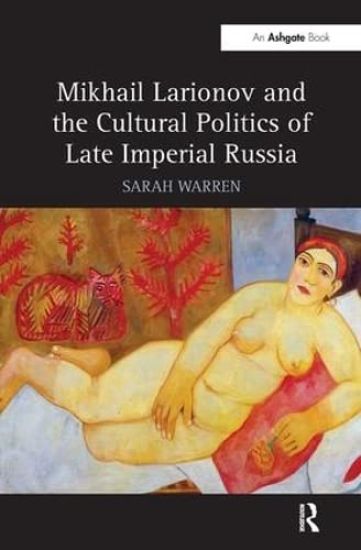
Mikhail Larionov and the Cultural Politics of Late Imperial Russia
Sarah Warren
Ashgate Publishing Limited
2013
sidottu
In the turbulent atmosphere of early twentieth-century Tsarist Russia, avant-garde artists took advantage of a newly pluralistic culture in order to challenge orthodoxies of form as well as social prohibitions. Very few did this as effectively, or to as broad an audience, as Mikhail Larionov. This groundbreaking study examines the complete range of his work (painting, book illustration, performance, and curatorial work), and demonstrates that Larionov was taking part in a broader cultural conversation that arose out of fundamental challenges to autocratic rule. Sarah Warren brings the culture of late Imperial Russia out of obscurity, highlighting Larionov's specific interventions into conversations about nationality and empire, democracy and autocracy, and people and intelligentsia that colonized all areas of cultural production. Rather than analyzing Larionov's works within the same interpretive frameworks as those of his contemporaries in France or Germany-such as Matisse or Kirchner-Warren explores the Russian's negotiations with both nationalism and modernism. Further, this study shows that Larionov's group exhibitions, public debates, and face-painting performances were more than a derivative repetition of the techniques of the Italian Futurists. Rather, these activities were the culmination of his attempt to create a radical primitivism, one that exploited the widespread Russian desire for an authentic collective identity, while resisting imperial efforts to appropriate this revivalism to its own ends.
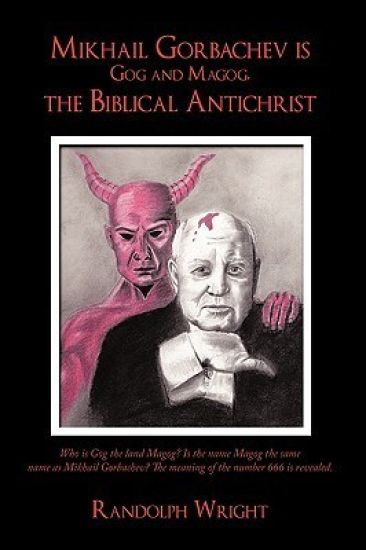
Mikhail Gorbachev is Gog and Magog, the Biblical Antichrist
Randolph Wright
AuthorHouse
2010
pokkari
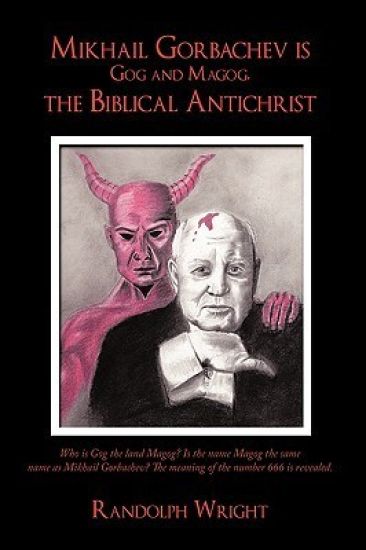
Mikhail Gorbachev is Gog and Magog, the Biblical Antichrist
Randolph Wright
AuthorHouse
2010
sidottu
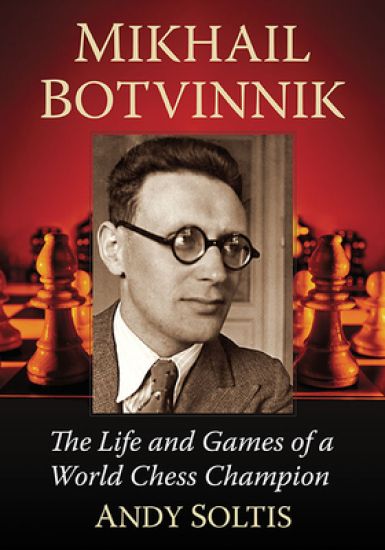
The games of Mikhail Botvinnik, world chess champion from 1948 to 1963, have been studied by players around the world for decades. But little has been written about Botvinnik himself. This book explores his unusual dual career--as a highly regarded scientist as well as the first truly professional chess player--as well as his complex relations with Soviet leaders, including Josef Stalin, his bitter rivalries, and his doomed effort to create the perfect chess-playing computer program. The book has more than 85 games, 127 diagrams, twelve photographs, a chronology of his life and career, a bibliography, an index of openings, an index of opponents, and a general index.
Mikhail Bakhtin’s Heritage in Literature, Arts, and Psychology
Lexington Books
2018
sidottu
Art and Answerability, the work that would become Mikhail Bakhtin’s literary manifesto, was first published in Den Iskusstva (The Day of the Art) on September 13, 1919. Mikhail Bakhtin’s Heritage in Literature, Arts, and Psychology: Art and Answerability celebrates one hundred years of Bakhtin’s heritage. This unique book examines the heritage of Mikhail Bakhtin in a variety of disciplines. To articulate the enduring relevance and heritage of the varied works of Bakhtin, sixteen scholars from eight countries have come together, and each has brought his/her unique perspective to the subject. Bakhtin’s work in aesthetics, moral philosophy, linguistics, psychology, carnival, cognition, contextualism, and the history and theory of the novel are present here, as understood by a wide variety of distinguished scholars.
Mikhail Bakhtin’s Heritage in Literature, Arts, and Psychology
Lexington Books
2020
nidottu
Art and Answerability, the work that would become Mikhail Bakhtin’s literary manifesto, was first published in Den Iskusstva (The Day of the Art) on September 13, 1919. Mikhail Bakhtin’s Heritage in Literature, Arts, and Psychology: Art and Answerability celebrates one hundred years of Bakhtin’s heritage.This unique book examines the heritage of Mikhail Bakhtin in a variety of disciplines. To articulate the enduring relevance and heritage of the varied works of Bakhtin, sixteen scholars from eight countries have come together, and each has brought his/her unique perspective to the subject. Bakhtin’s work in aesthetics, moral philosophy, linguistics, psychology, carnival, cognition, contextualism, and the history and theory of the novel are present here, as understood by a wide variety of distinguished scholars.

Mikhail Frunze and the Unified Military Doctrine
U. S. Army Command and General Staff Col
Createspace Independent Publishing Platform
2016
nidottu

It is 1933 and Mikhail Bulgakov's enviable career is on the brink of being dismantled. His friend and mentor, the poet Osip Mandelstam, has been arrested, tortured, and sent into exile. Meanwhile, a mysterious agent of the secret police has developed a growing obsession with exposing Bulgakov as an enemy of the state. To make matters worse, Bulgakov has fallen in love with the dangerously outspoken Margarita. Facing imminent arrest, infatuated with Margarita, he is inspired to write his masterpiece. A novel about the consequences of love for one of history's most enigmatic literary figures.
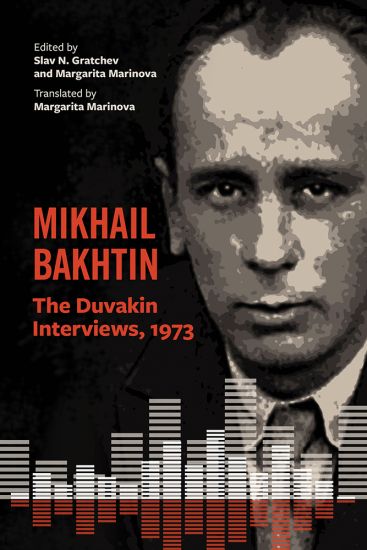
Whenever Bakhtin, in his final decade, was queried about writing his memoirs, he shrugged it off. Unlike many of his Symbolist generation, Bakhtin was not fascinated by his own self-image. This reticence to tell his own story was the point of access for Viktor Duvakin, Mayakovsky scholar, fellow academic, and head of an oral history project, who in 1973 taped six interviews with Bakhtin over twelve hours. They remain our primary source of Bakhtin’s personal views: on formative moments in his education and exile, his reaction to the Revolution, his impressions of political, intellectual, and theatrical figures during the first two decades of the twentieth century, and his non-conformist opinions on Russian and Soviet poets and musicians. Bakhtin's passion for poetic language and his insights into music also come as a surprise to readers of his essays on the novel. One remarkable thread running through the conversations is Bakhtin's love of poetry, masses of which he knew by heart in several languages. Mikhail Bakhtin: The Duvakin Interviews, 1973, translated and annotated here from the complete transcript of the tapes, offers a fuller, more flexible image of Bakhtin than we could have imagined beneath his now famous texts. Published by Bucknell University Press. Distributed worldwide by Rutgers University Press.
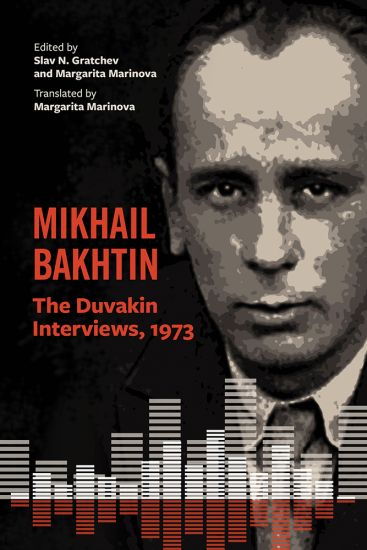
Whenever Bakhtin, in his final decade, was queried about writing his memoirs, he shrugged it off. Unlike many of his Symbolist generation, Bakhtin was not fascinated by his own self-image. This reticence to tell his own story was the point of access for Viktor Duvakin, Mayakovsky scholar, fellow academic, and head of an oral history project, who in 1973 taped six interviews with Bakhtin over twelve hours. They remain our primary source of Bakhtin’s personal views: on formative moments in his education and exile, his reaction to the Revolution, his impressions of political, intellectual, and theatrical figures during the first two decades of the twentieth century, and his non-conformist opinions on Russian and Soviet poets and musicians. Bakhtin's passion for poetic language and his insights into music also come as a surprise to readers of his essays on the novel. One remarkable thread running through the conversations is Bakhtin's love of poetry, masses of which he knew by heart in several languages. Mikhail Bakhtin: The Duvakin Interviews, 1973, translated and annotated here from the complete transcript of the tapes, offers a fuller, more flexible image of Bakhtin than we could have imagined beneath his now famous texts. Published by Bucknell University Press. Distributed worldwide by Rutgers University Press.
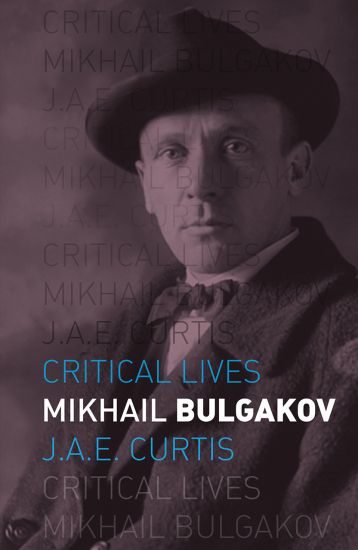
Mikhail Bulgakov (1891–1940) has become the most popular Russian writer of the twentieth century, even though his works were banned for decades after his death due to the repressive Soviet censorship of literature. His great novel, The Master and Margarita (published only in 1973), was written in complete secrecy during the 1930s for fear of the writer being arrested and shot. In her revelatory new biography J.A.E. Curtis provides a fresh account of Bulgakov’s idyllic childhood and youth in Kiev, which was swept away in the turmoil of the First World War, the Russian Revolution and Civil War.Early biographies of Bulgakov were limited in scope by the difficulty of gaining access to archives in the ussr in the 1970s and ’80s. Since that time archives have become more accessible, and Curtis makes use of newhistorical documents, tracing Bulgakov’s absolute determination to establish himself as a writer in Bolshevik Moscow, his three marriages and his triumphs as a dramatist in the 1920s. They also reveal how he struggled to defend his art and preserve his integrity in Russia, and the intensely close interest Stalin took in Bulgakov’s work, personally weighing up each time whether his plays should be permitted or banned.Based upon many years of research, and taking in previously unpublished family papers and Soviet Politburo discussions, this is an absorbing account of the life and work of one of Russia’s most inventive and exuberant novelists and playwrights.
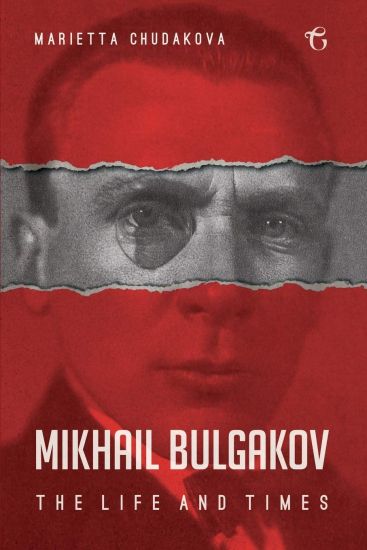
Marietta Chudakova is an expert on Soviet literature and on the works of Mikhail Bulgakov in particular. Her biography of Bulgakov was first published in 1988 and remains the most authoritative and comprehensive study of the writer's life ever produced. It has received acclaim for the journalistic style in which it is written: the author draws on unpublished manuscripts and early drafts of Bulgakov's novels to bring the writer to life. She also explores archive documents and memoirs written by some of Bulgakov's contemporaries so as to construct a comprehensive and nuanced portrait of the writer and his life and times. Marietta Chudakova casts light on Bulgakov's life with an unrivalled eye for detail and a huge amount of affection for the writer and his works.Mikhail Bulgakov: The Life and Times will be of particular interest to international researchers studying Mikhail Bulgakov's life and works, and is recommended to a broader audience worldwide. Translated from the Russian by Huw Davies.Published by arrangement with ELKOST Intl. Literary Agency.Published with the support of the Institute for Literary Translation, Russia.Introduction (c) 2019, J.A.E. Curtis.Proofreading by Kevin Bridge.Publishers Maxim Hodak & Max Mendor.
Marietta Chudakova is an expert on Soviet literature and on the works of Mikhail Bulgakov in particular. Her biography of Bulgakov was first published in 1988 and remains the most authoritative and comprehensive study of the writer's life ever produced. It has received acclaim for the journalistic style in which it is written: the author draws on unpublished manuscripts and early drafts of Bulgakov's novels to bring the writer to life. She also explores archive documents and memoirs written by some of Bulgakov's contemporaries so as to construct a comprehensive and nuanced portrait of the writer and his life and times.
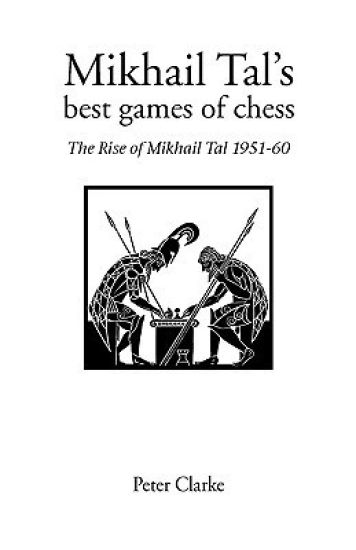
Mikhail Tal took the chess world by storm when he blasted a path through the titans of the global chess board - Fischer, Smyslov, Keres, Petrosian - and seized the crown of the mighty Botvinnik. Tal sacrificed as if there were no tomorrow and the very greatest were humbled and smashed by his whirlwind tactics.
Morphy, Charousek, Pillsbury, Fischer...the history of chess is illuminated by shooting stars who burn briefly across the chess firmament, only to vanish without trace. The parabolic career of the Latvian genius Mikhail Tal conforms all too well to this astonishing pattern. As a virtually unknown student in 1957 Tal swept aside the revered phalanxes of Soviet Grandmasters and ultimately annihilated the Red Czar of Soviet chess himself - Mikhail Botvinnik - all within a mere three year period.

All the Everyman Chess books are organized in a structured style and are also presented in a series of levels. The styles encompass Openings (O); Games Collections ((G); and Training (T). The levels are arranged as follows: Children [C]; Novice (N); Club (C); and Advanced (A).