Kirjojen hintavertailu. Mukana 12 390 323 kirjaa ja 12 kauppaa.

Kirjahaku

Etsi kirjoja tekijän nimen, kirjan nimen tai ISBN:n perusteella.

1000 tulosta hakusanalla Mk Goldwin

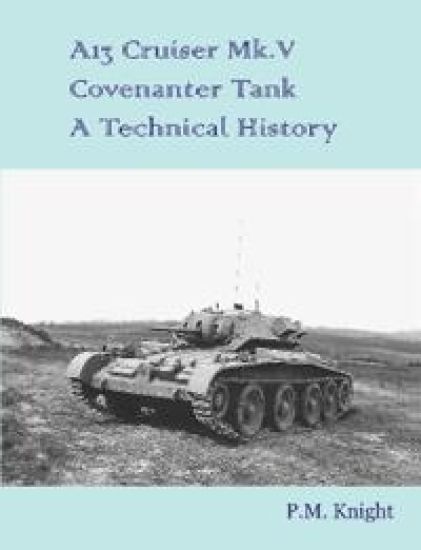
A13 Cruiser Mk.V Covenanter Tank A Technical History
The Covenanter was intended to be the main equipment of the Armoured Divisions during the early years of the Second World War, and was a generally reliable tank that was well suited to its primary task of home defence. Due to a rather convoluted series of events, mainly involving material shortages, it would not see service overseas, and as Britain's strategic circumstances evolved it would increasingly be used as a training tank. If the Covenanter's active service was relatively uneventful, its development life was the very opposite, with two drastically different variants of the original machine being created, and constant refinement being undertaken while it was in the hands of its users. The Covenanter was reflective of the many blind spots in the British Army's pre-war thinking as regards Armoured Fighting Vehicles, and from its travails much practical experience was gained that benefited subsequent tank designs.
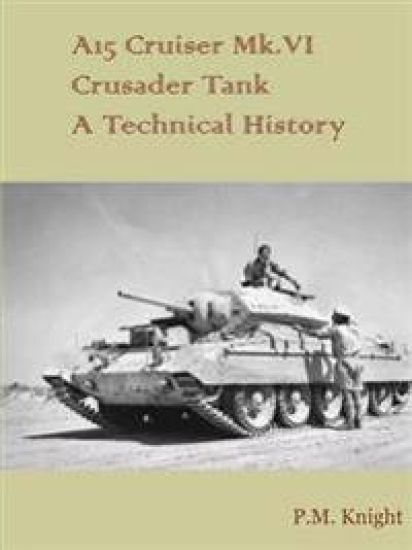
A15 Cruiser Mk.vi Crusader Tank A Technical History
There can be few tanks that have proved as controversial in their deployment as the Crusader, a tank that was invested with high hopes on its entry into service in 1941. This book investigates in unprecedented detail the issues that impinged on its service life. Drawing extensively on original archive sources, a new perspective is drawn on both the employment of the tank itself, and on British tank development of the era. The complex story that unfolds encompasses many interwoven and sometimes contradictory threads, allowing the author to reach both perceptive and surprising conclusions.
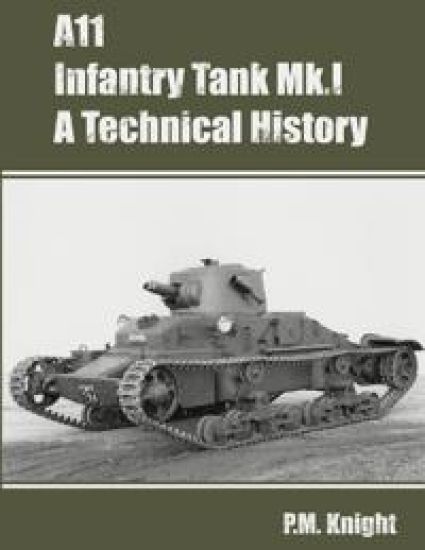
A11 Infantry Tank Mk.I A Technical History
The Infantry Tank Mk.I was birthed nefariously under the pseudonym of Matilda due to the various intrigues that afflicted the War Office's tank development organisation in the pre-war era. These in turn were caused by pecunious circumstances and the strong differences in the ideas favoured by the major proponents of armour policy. Designed as a small two-man tank to accompany the infantry during assaults on prepared positions, it was soon rendered obsolete by its successor, which would more famously adopt the Matilda name. However, delays in producing the Infantry Tank Mk.II would see the Mk.I be shipped to France in volume, where it would fight a significant action in delaying the German advance, this being both the height of its achievements and its swansong.
Factory-Original Jaguar Mk I & Mk II

Factory-Original Jaguar Mk I & Mk II

Nigel Thorley

Herridge Sons Ltd
2017
sidottu
Jaguar founder Sir William Lyons had a terrific hit on his hands when he launched the 'compact' 2.4 Litre sports saloon in 1956. Motorists loved it, and those wanting more thrills were soon offered the 'hot' 120mph 3.4 Litre a year later. Both were replaced in 1960 by the Mark II models, which added a 3.8 Litre, and from there the range was developed and expanded with the long-booted S-Type of 1964, the 4.2 Litre 420 of 1967, and the final 240/340 models of 1968. Alongside there were the Daimler V8 and Sovereign models. The success of this family of cars can be attributed to Lyons's faultless instinct for what buyers wanted and his unerring eye when it came to styling his cars. And of course there was the fabulous six-cylinder XK engine which powered all Jaguars from 1948 through to 1985, with the equally inspired V8 in the Daimler. All these cars have enjoyed an exalted classic status for years, and the matter of originality has become more and more important to owners and prospective owners today. Here Nigel Thorley, the unrivaled expert on the cars who has been writing about them for more than 30 years, provides all the information that can be expected from books in our acclaimed Factory-Original series. Model by model, with hundreds of specially commissioned colour photographs of outstanding examples of the cars, he gives all the details of correct original factory specifications and equipment in all departments, right down to the tool kit.
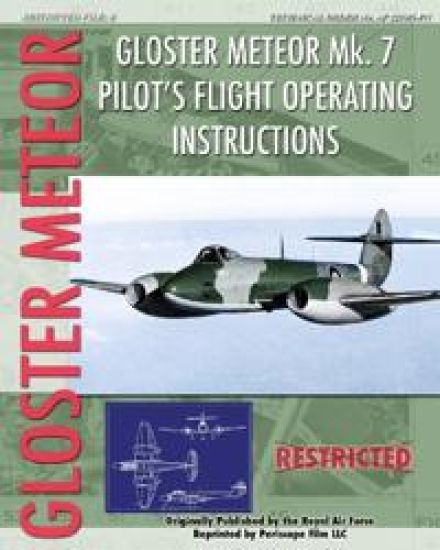
Gloster Meteor Mk. 7 Pilot's Flight Operating Instructions
Designed by Gloster's brilliant chief engineer George Carter, the Meteor was Britain's first operational jet, and the first such aircraft in Allied inventory. The Meteor was an outgrowth of intensive r&d work conducted by Frank Whittle, inventor of the turbojet in 1929. The Meteor featured an all-metal fuselage, and straight wings with mid-mounted engine pods. The F1 version could achieve a speed of 417 mph at 10,000 feet, and entered service in June 1944. During WWII, it flew primarily as an interceptor against German V-1 "buzz bombs". Australian pilots flew it in combat during the Korean War, and Israel employed it during the Suez Crisis. The Meteor, in one variant form or another, remained in active service as a recon and training aircraft into the 1970s. Originally printed by Gloster and the Royal Air Force in 1957, this Mark 7 handbook provides a fascinating glimpse inside the cockpit of the trainer version of the Meteor. Originally confidential military information, this manual was declassified long ago and is here reprinted in book form.
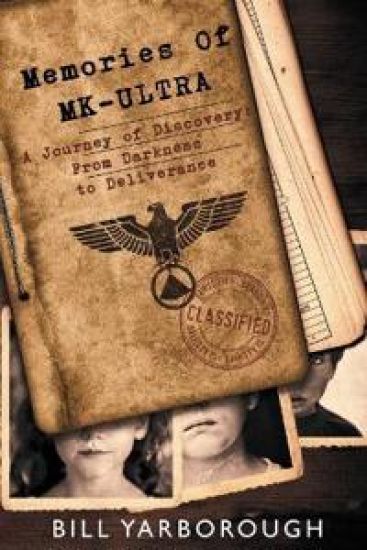
Memories of MK-Ultra

Memories of MK-Ultra

Bill Yarborough

Mindstir Media
2024
pokkari
Inspired by the Author's Actual ExperiencesThe mystery of what they endured as children took a lifetime to unravel.MK-ULTRA, a covert CIA mind-control program, forces Tommy, Beth, and Curtis Matthews to take part in life-altering experiments during the late 1950s. The experience dramatically impacts their lives, but they don't remember any of it-at least not right away.As Beth, Tommy, and Curtis Matthews come of age through the turbulent 60s and into the 80s, invisible strings pull them toward their preordained destinies.Dr. Rudolph Holtzmann, the Nazi-trained psychiatrist in charge of their CIA program, harbors a secret agenda to turn Tommy into a future world leader, but Holtzmann's work is compromised by dangerous forces surrounding him and by one of his experimental subjects, an indigenous boy with shamanic gifts.When the MK-ULTRA program is aborted, the siblings are left deeply damaged without access to the memories that can free them. It takes Curtis's psychotic breakdown and Beth's startling vision to open up the pathways to their buried past. These developments lead to the detective work of Lynn Snyder, a diligent therapist-but will it be enough to unravel the hidden tapestry of deception?The first book of a trilogy, Memories of MK-ULTRA opens a window into the multiple dimensions of the human mind and soul and forces us to question memory, identity, and the fragile concept of the truth.
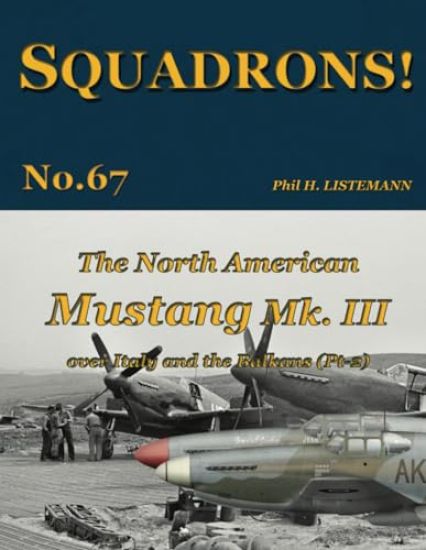
The North American Mustang Mk. III over Italy and the Balkans (Pt-2)
The North American Mustang is certainly one of the legendary fighters of the Second World War. The aircraft can be split into two 'families', the Allison-powered and Merlin-powered. The RAF Marks I and II belong to the first category, while all subsequent marks belong to the second. The change of engine made the aircraft perform far better at higher altitudes. The Merlin 61 (with the two-stage supercharger) provided significantly improved results above 15,000 feet and was without compare above 20,000 feet. All this without sacrificing range. This was a key point as, in 1942, the RAF was looking for a long-range escort fighter, a role the Spitfire, whatever the mark, could not fulfill with complete satisfaction from the British Isles. The British conducted an experimental programme with the new engine on various test-beds (known within the RAF as the Mustang X) while the Americans were doing the same thing on their side. The Americans first discovered the best way to pair the Merlin and the airframe and, after the first flight of the XP-51B on 30 November 1942, the future of the P-51B was guaranteed. The British ordered hundred of Mustang IIIs (denomination given to both P-51B and P-51C) and they served in Western Europe and in Italy. In Italy up to May 1945, six squadrons were totally equipped with the type, No. 3 RAAF, No. 5 SAAF, and RAF 112, 213, and 249 Squadrons, while, just after the war, other units (RAF 250, 260, and the Australian 450) received a mix of Mustang IIIs and IVs. This first part will develop the operational usage of Nos 112, 213 and 260 Squadrons. Close to 30 photos and 5 colour profiles illustrate this part. (Part 1 is developed in SQUADRONS 40)