To the calculated, logical or even general "thinker" trust doesn't exist; hence it's the first step to failure. Loaning trust should be more of a bluff and ironically the gamble would be in the hands of the "trustworthy" but a gamble risk a lost cause. Certainly the "trustful" as well as the seemingly "trustworthy" are eventually doomed once the variables are involved. One is bound to lose, the other winds momentarily but with the price of betrayal being death who really lost?
Brought to you by the founders of the Keystone Mastermind Alliance, Suck It Buttercup highlights the top ten excuses people give for not succeeding, particularly in their careers and businesses. This quick and fun read lets you realize what barriers are holding you back and it also provides practical steps for overcoming those barriers. In simple terms, Suck It Up, Buttercup is a tough love guide to getting out of your own way. Each chapters offers dual insight from authors Liz M Lopez and Tracie Thompson giving readers a 360 perspective. Liz offers a more nurturing voice with a focus on mindset and practicing fierce accountability to build your dreams. Tracie offers a most street-wise, practical voice that makes you face and overcome self-imposed limitations. Ten quick chapters cover business milestones from building your business, setting your target market, finding new clients, overcoming the fear of sales, communicating your value, all the way to profitably selling your business when it's time to cash out. As a bonus, all readers get access to a digital workbook with actions steps for each of the ten barriers shattered in the book. Together, the two unique voices help readers understand that they are not alone and that there is power in overcoming your excuses and fears. It can be sassy at times, yet every word is meant to help professionals and business owners take deliberate steps toward building the success they deserve.
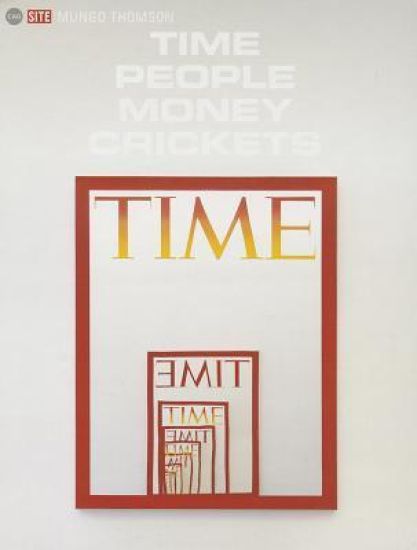
Mungo Thomson (born 1969) is a Los Angeles–based artist whose work explores mass culture and cosmology. Thomson’s work addresses the small, everyday voids that exist within culture--the gaps, digressions and mistakes that are an inevitable part of institutions and everyday life. The artist’s first catalogue overview, Time People Money Crickets consists of a selection of nine works in a range of media including film, video, artist’s books and installations. The publication is inspired by 1960s popular science compendiums.
An invaluable primer to the world of investing Money Lessons from a Money Manager speaks directly to the individual who wants to manage their own investment portfolio just like a professional portfolio manager would. Written by portfolio manager William Thomason, this comprehensive guide provides professional investment advice on how to identify, research and ultimately purchase profitable investments. The book covers such subjects as fundamental analysis, understanding financial statements and financial ratios, when to buy and sell, portfolio construction and various investment strategies that readers can use to manage their own money just like a professional portfolio manager. Easy to read and informative, this book is a valuable resource for readers looking to take their first steps in the world of professional portfolio management for themselves.
Are you searching for a proven, step-by-step system which allows you to make passive income streams automatically - with hardly any experience? Are you ready to begin making passive income, but have no idea where to start?The idea of passive income is simple. You do some work once and generate income for years passively. Passive income is present, and thousands of people already are making money passively They aren't ways to turn your time into money directly. Instead, they are methods to plant seeds which means that your money shall grow, when you're sleeping or at the park walking your dog even. In other words, even when you're not out trying to create money actively.It's all about the idea of passive income. As being a farmer who vegetation a crop tends the harvests and fields the produce, you can plant monetary seeds which will produce income.It takes some ongoing build up front and some maintenance on the way, but in the event that you plant passive income seeds that match your climate you may bring in a nice harvest.Passive income differs from attained portfolio and income in many ways. Passive income is thought as a stream of income gained with little effort generally, and it is known as progressive passive income when there is usually little effort needed from the average person receiving the passive income to be able to grow the blast of income. Making passive income isn't unrealistic. But it isn't easy either. It takes effort and time to build a business that will later make you money regularly without spending a lot of time in front of your personal computer.But the significant problem is that most people are not ready to take their business compared to that level plus they quit fast.Earn thousands of dollars every month with these proven ideas. Discover what you should know about generating income online and achieving financial freedom with these top 10 income generating strategies and ideas.
Based on thousands of never-before translated letters and unpublished sources, Jackie Wullschläger's enthralling biography is the first account of Monet's turbulent private life and how it determined his expressive, sensuous, sensational painting. Deeply moving, it immerses us in that passionate experience, transforming our understanding of the man, his art and the fullness of his achievement.
The first comprehensive examination of the painter’s formative years, tracing the evolution of Monet’s early style and personal ambitions that drove the rest of his career This elegant volume is the first to be devoted to the young genius of Claude Monet (1840–1926). Bringing together the greatest paintings from his early career—including his first Salon-exhibited work, the Kimbell Art Museum’s La Pointe de la Hève at Low Tide; Déjeuner sur l’Herbe (Luncheon on the Grass) and The Magpie from the Musée d’Orsay; and The Green Wave and La Grenouillère from the Metropolitan Museum of Art—it features essays by distinguished scholars, focusing on the evolution of Monet’s own distinctive mode of painting. Through the 1860s, the young painter absorbed and transformed a variety of influences, from the lessons of the Barbizon school and his mentor Boudin to the challenges posed by his friends Manet, Pissarro, Renoir, and Sisley. Artistic innovation and personal ambition shaped the work of the celebrated impressionist painter from the very start of his long and illustrious career.Distributed for the Kimbell Art MuseumExhibition Schedule:Kimbell Art Museum (10/16/16–01/29/17)Fine Arts Museums of San Francisco (02/25/17–05/29/17)
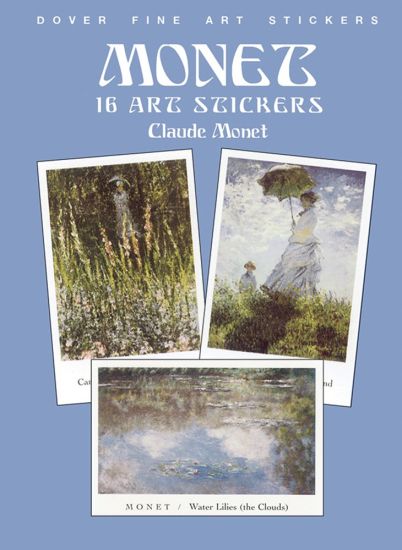
Sixteen vibrantly colored subjects by one of the greatest of Impressionists: Water Lilies (the Clouds), The Stroll, Camille Monet and Her Son Jean, The Highway Bridge at Argenteuil, The Water Lily Garden, Girls in a Boat, 10 others.
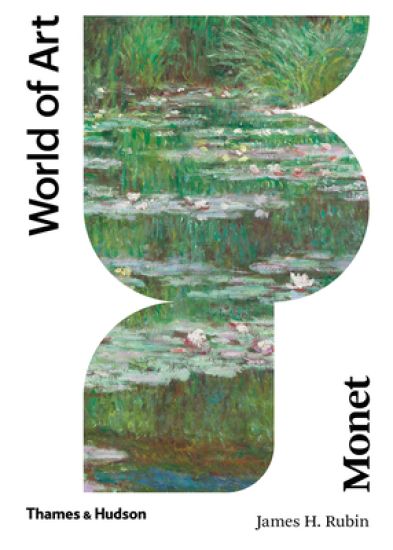
Claude Monet (1840–1926) is one of the most admired and famous painters of all time, and the architect of Impressionism: a revolution that gave birth to modern art. His technique – painting out of doors, at the seashore or in the city streets – was as radically new as his subject matter, the landscapes and middle-class pastimes of a newly industrialized Paris. Painting with an unprecedented immediacy and authenticity, Monet claimed that his work was something new: both natural and true. In this new introductory study, James H. Rubin – one of the world’s foremost specialists in 19th-century French art – traces the development of Monet’s practice, from his early work as a caricaturist to the late paintings of waterlilies and his garden at Giverny. Rubin explores the cultural currents that helped to shape Monet’s work: the utopian thought that gave rise to his politics; his interest in Japanese prints, gardening, and trends in the decorative arts; and his relationship with earlier French landscape painters as well as such contemporaries as Manet and Renoir.
In 1874 Claude Monet's painting Impression, Sunrise caused uproar among the critics and a revolution in painting. His inventiveness was inexhaustible: with paintings of haystacks, poplars and, finally, the enchanting water-lilies of Giverny, Monet captured light in all its fleeting qualities. At last, almost blind – 'I fear the dark more than death' – he feverishly produced near-abstract landscapes of water and reflection, a vision of nature that paved the way for the art of our own times. Including hundreds of beautiful reproductions and contemporary illustrations, comprehensive text, documentary witness accounts and letters, this pocket-sized book is perfect both for the lover of Monet and of the history of Impressionism.
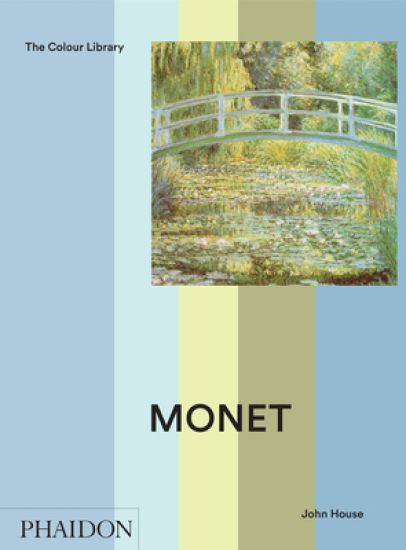
Impressionism took its name from the title of a painting that Claude Monet (1840-1926) exhibited in 1874. More than any other artist, Monet was the creator of the Impressionist vision, which has so forcefully shaped the way in which he habitually see nature today. For sixty years he continuously explored ways of translating his experiences into paint, in pictures that take us from the bustling life of Paris in the 1860s to the seclusion of his own water-garden, which he painted in his last years.John House’s introduction to Monet’s life and work presents a sequence of dazzling illustrations that chart the artist’s progress as he became increasingly preoccupied with colour and atmospheric effect, and the direct studies of nature gave way to paintings of greater richness and harmony, in which the play of varied colours replaced the conventional drawing and modelling of forms.


![The Secret of the British Constitution and Empire; With a Solution of the Political Problem and a Treatise on Paper Money. [By J. Thomson.]](/covers/9781241080815.jpg)