

Kirjahaku
Etsi kirjoja tekijän nimen, kirjan nimen tai ISBN:n perusteella.
1000 tulosta hakusanalla Mosina Jordan

Justo Molina, Por Las Pampas y Los Andes (1804-1805)
Norberto Mollo
Eae Editorial Academia Espanola
2012
pokkari
Sindrom Mostina-Jembri: Osoznanie i ätika priswoeniq imen sindromam
Aamir Al-Mosawi
Sciencia Scripts
2021
nidottu

Tredje och sista boken om Orestes, hans syster Elektra, klasskompisen Malin och den försvunna flickan Mesina. Det har det gått några månader sedan Mesina försvann med Stjärnuret när de får veta att den elaka mannen Eigir har vaknat och försvunnit från sjukhuset. Orestes försöker knäcka kodade mejl han snappar upp från Eigir, allt för att få veta mer om hans kommande planer. Malin har i hemlighet ingått en pakt med Mesina och på så sätt fått veta att en tredje del krävs för att Stjärnuret ska fungera. Men är Mesina att lita på, nu när Eigir har vaknat? Hemliga koder, chiffer och ledtrådar för berättelsen framåt, precis som i de tidigare böckerna. Precis ett år efter att den första boken börjar, på Valborgsmässoafton, möter Malin Eigir igen och får äntligen svar på vad som hänt.Fina vinjetter och chiffer gjorda av Lotta Geffenblad.

Kakkosluokkalainen Mia auttelee läheisiään ja yhteisöään aina kun pystyy. Eräänä päivänä Mia isoisä loukkaa itsensä ulkoillessaan paikallisen kaatopaikkana käytetyn tontin luona. Mia saa idean: miksei kamalasta roskatontista voisi tehdä kaunista puistoa, josta olisi iloa kaikille? Mia on kuitenkin luopua ideastaan, kun se tyrmätään kaupungintalolla. Mutta epävarmuuden ja pettymyksen keskellä Mia löytää rohkeutta yrittää uudelleen - koska jonkun on uskallettava tehdä aloite! Muutos alkaa yhdestä pienestä ihmisestä.New York Times bestseller -listan ykköseksi noussut Mia Molina, maailman parantaja on osa inspiroivaa lastenkirjasarjaa, joka kannustaa lapsia tutustumaan maailmaan rohkeasti ja tekemään töitä unelmiensa eteen.Andrea Beaty on chicagolainen kirjailija, joka on kirjoittanut lukuisia rakastettuja lastenkirjoja.David Roberts on lontoolainen kuvittaja, jonka riemastuttavan upea kuvitus herättää henkiin Beatyn nerokkaat hahmot.”Andrea Beatyn verraton rytmikäs kerronta ja David Robertsin upea, yksityiskohtainen kuvitus pitävät pienet lukijat liimattuna kirjaan. Täydellinen.” - The BookTrust“Mahtava lastenkirja osoittaa, että kaikki on mahdollista, kun uskot itseesi ja tähtäät korkealle.”- Toppsta review


Rahman Morina
VDM Verlag Dr. Muller Aktiengesellschaft Co. KG
2010
nidottu
Observera att förlaget som ger ut denna produkt baserar innehållet i sina produkter på fria källor som Wikipedia. Boken är med stor sannolikhet endast ett utdrag ur dessa informationskällor, alltså inte en vanlig bok i den bemärkelsen.

Yadier Molina
VDM Publishing House
2010
nidottu
Observera att förlaget som ger ut denna produkt baserar innehållet i sina produkter på fria källor som Wikipedia. Boken är med stor sannolikhet endast ett utdrag ur dessa informationskällor, alltså inte en vanlig bok i den bemärkelsen.

Rafael Molina Sanchez
VDM Publishing House
2010
nidottu
Observera att förlaget som ger ut denna produkt baserar innehållet i sina produkter på fria källor som Wikipedia. Boken är med stor sannolikhet endast ett utdrag ur dessa informationskällor, alltså inte en vanlig bok i den bemärkelsen.
Giulietta Masina
OmniScriptum
2026
nidottu

Alfred Molina
OmniScriptum
2026
pokkari

José Molina (baseball)
OmniScriptum
2026
pokkari
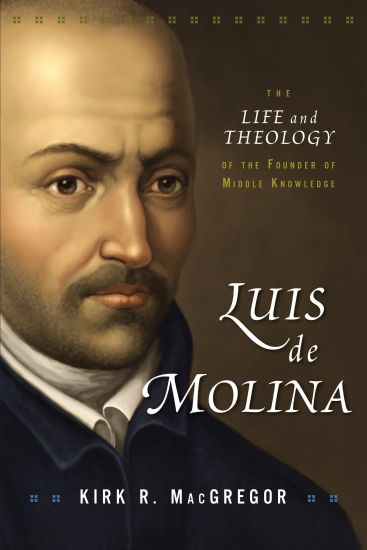
When Luis de Molina died in Madrid in 1600, he had every reason to believe he was about to be anathametized by Pope Clement VIII. The Protestant Reformation was splitting Europe, tribunals of the Inquisition met regularly in a dozen Spanish cities, and the Pope had launched a commission two years earlier to investigate Molina’s writings.Molina was eventually vindicated, though the decision came seven years after his death. In the centuries that followed Molina was relegated to relatively minor status in the history of theology until a renaissance of interest in recent years. His doctrine of God’s “middle knowledge,” in particular, has been appropriated by a number of current philosophers and theologians, with apologist William Lane Craig calling it “one of the most fruitful theological ideas ever conceived.”In Luis de Molina: The Life and Theology of the Founder of Middle Knowledge, author Kirk R. MacGregor outlines the main contours of Molina’s subtle and far-reaching philosophical theology, covering his views on God’s foreknowledge, salvation and predestination, poverty and obedience, and social justice. Drawing on writings of Molina never translated into English, MacGregor also provides insight into the experiences that shaped Molina, recounting the events of a life fully as dramatic as any of the Protestant Reformers.With implications for topics as wide-ranging as biblical inerrancy, creation and evolution, the relationship between Christianity and world religions, the problem of evil, and quantum indeterminacy, Molina’s thought remains as fresh and relevant as ever. Most significantly, perhaps, it continues to offer the possibility of a rapprochement between Calvinism and Arminianism, a view of salvation that fully upholds both God’s predestination and human free will.As the first full-length work ever published on Molina, Kirk MacGregor’s Luis de Molina provides an accessible and insightful introduction for scholars, students, and armchair theologians alike.
Tirso de Molina: The Trickster of Seville and the Stone Guest
Aris Phillips Ltd
1986
nidottu
Tirso de Molina was, with Lope de Vega and Calderon, one of the great dramatists of 17th century Spain, which produced a theatre as vital rich and as varied as its Elizabethan counterpart. The Trickster of Seville is thoroughly representative of the drama of Spain's Golden Age: a drama of fast-moving action which set its face against classical precepts, broke the unities of time and place, cheerfully mixed the serious and the comic, combined main and sub-plots, and cultivated Spanish subjects and Spanish characters. In this respect Tirso's Don Juan is of course, the most famous character in the drama of the Golden Age, as well as the first of a long line which extends through Mozart and Moliere to the 20th century.
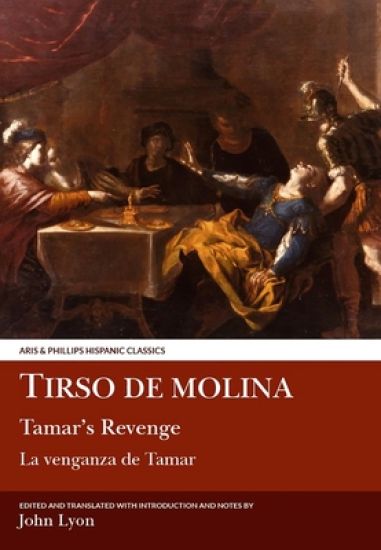
Tirso de Molina: Tamar's Revenge
Aris Phillips Ltd
1998
nidottu
The story comes from the Second Book of Samuel and tells of the incestuous passion of Amnon, David's eldest son, for his half-sister, Tamar and the subsequent murder of Amnon by his brother Absolom. Amnon's lust is set in the context of complementary passions of ambition and revenge, reflected in Absolom and Tamar respectively. The play explores King David's conflict between justice and mercy when confronted with these tragic events. It is a work of constantly changing perspectives in which tragedy and comedy, instead of being simply juxtaposed, are blended in a highly original way. Tirso's play is one of the earliest treatments of a theme that has continued to be an inspiration for such modern writers as the novelist Dan Jacobson in The Rape of Tamar and the dramatist Peter Shaffer in Jonadab . Spanish text with facing-page translation, commentary and notes.

Tirso de Molina: Damned for Despair
Aris Phillips Ltd
1986
sidottu
Fray Gabriel TUllez, who wrote under the pen-name of Tirso de Molina, is the third great dramatist (with Lope de Vega and Calder¾n) of the 17th century Spanish theatre. If Lope heads all the rest for sheer inventive vitality and Calder¾n for well-wrought poetic and intellectual substance, Tirso is supreme as a creator of character. Best known for his Trickster of Seville, the original Don Juan play, he produced others no less remarkable, of which Damned for Despair is one of the greatest. Paulo, the hermit whose obsession with his own salvation drives him to rebel against God, and Enrico, the Neapolitan gangster, drawn to repentance in spite of himself, are creations just as memorable as Don Juan Tenorio. Their strangely linked destinies make for a spiritual and psychological drama of extraordinary intensity and continuing relevance.

Tirso de Molina: Damned for Despair
Aris Phillips Ltd
2010
nidottu
Fray Gabriel TUllez, who wrote under the pen-name of Tirso de Molina, is the third great dramatist (with Lope de Vega and Calder¾n) of the 17th century Spanish theatre. If Lope heads all the rest for sheer inventive vitality and Calder¾n for well-wrought poetic and intellectual substance, Tirso is supreme as a creator of character. Best known for his Trickster of Seville, the original Don Juan play, he produced others no less remarkable, of which Damned for Despair is one of the greatest. Paulo, the hermit whose obsession with his own salvation drives him to rebel against God, and Enrico, the Neapolitan gangster, drawn to repentance in spite of himself, are creations just as memorable as Don Juan Tenorio. Their strangely linked destinies make for a spiritual and psychological drama of extraordinary intensity and continuing relevance.

Tirso de Molina: Don Gil of the Green Breeches
Aris Phillips Ltd
1991
sidottu
Tirso de Molina enjoys enduring popularity as a writer of irreverent comedies, though his critical reputation as a major dramatist rests largely on his more serious works. Don Gil of the Green Breeches as befits a high farce is much concerned with disguise, mistaken identity, role-reversal, ghosts, and trousers! Dona Juana, jilted by her lover Don Martin, follows him to Madrid, where, under the assumed name of Don Gil, he is courting the wealthy Dona Ines. Dressed as a man in a distinctive pair of green breeches, Dona Juana also masquerades as Don Gil. Don Martin is outwitted by his transvestite rival, who wrecks his schemes like a maleficent will-'o-the-wisp before leading him, shell-shocked, to the altar! In his lively, accurate and fluent line-by-line verse translation of this play Gordon Minter admirably conveys the unique flavour of Tirso's sparkling wit. Additionally, in his stimulating Introduction and Commentary he argues that this effervescent drama deliberately subverts the Don Juan legend to show that the Trickster of Seville's female counterpart can be just as resourceful and predatory when the restoration of her honour is at stake. The further revelation that Don of the Green Breeches has unobtrusively and unnoticed contributed an important strand to subsequent European versions of the Don Juan legend completes a scholarly reappraisal of the significance of a work too often regarded as little more than a highly amusing dramatic confection.

Tirso de Molina: Don Gil of the Green Breeches
Aris Phillips Ltd
1991
nidottu
Tirso de Molina enjoys enduring popularity as a writer of irreverent comedies, though his critical reputation as a major dramatist rests largely on his more serious works. Don Gil of the Green Breeches as befits a high farce is much concerned with disguise, mistaken identity, role-reversal, ghosts, and trousers! Dona Juana, jilted by her lover Don Martin, follows him to Madrid, where, under the assumed name of Don Gil, he is courting the wealthy Dona Ines. Dressed as a man in a distinctive pair of green breeches, Dona Juana also masquerades as Don Gil. Don Martin is outwitted by his transvestite rival, who wrecks his schemes like a maleficent will-'o-the-wisp before leading him, shell-shocked, to the altar! In his lively, accurate and fluent line-by-line verse translation of this play Gordon Minter admirably conveys the unique flavour of Tirso's sparkling wit. Additionally, in his stimulating Introduction and Commentary he argues that this effervescent drama deliberately subverts the Don Juan legend to show that the Trickster of Seville's female counterpart can be just as resourceful and predatory when the restoration of her honour is at stake. The further revelation that Don of the Green Breeches has unobtrusively and unnoticed contributed an important strand to subsequent European versions of the Don Juan legend completes a scholarly reappraisal of the significance of a work too often regarded as little more than a highly amusing dramatic confection.
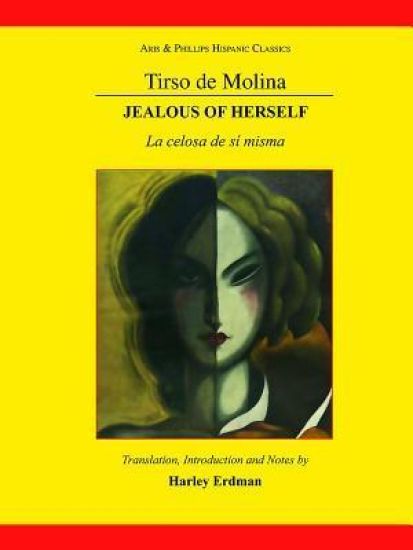
Tirso de Molina: Jealous of Herself
Aris Phillips Ltd
2012
nidottu
Tirso de Molina's Jealous of Herself (c. 1622-23) is an ingenious comedy of disguise and deception, set in the streets, plazas and fashionable apartments of early 17th-century Madrid. Nearly forgotten for almost 400 years, the play is starting to gain attention today for its very modern perspective on male desire and the difficult situation placed on women who must live up to an ideal fantasy projected onto them. Much like another product of early 17th-century Spain, Miguel de Cervantes's world-famous novel Don Quixote , Jealous of Herself follows a lofty-minded man who worships an idealised image of a woman. It then shows us a world that gets turned upside down when other characters end up playing into this fantasy. Unlike Don Quixote, however, Jealous of Herself shifts its attention from the dreamer to the dreamed that is, to the individual trapped in and torn apart by this fantasy, the young woman, Dona Magdalena. Her internal conflict, the fact that she finds herself jealous of herself, ultimately becomes the axis of the play. Jealous of Herself is also a lively, wonderful piece of theatre. Written by a highly inventive playwright at a time when the Spanish theatre was at its peak, it has fascinating lead characters, verbal dexterity, rapid-fire wit and a strong sense of mood and place. Carefully structured, it builds relentlessly, climaxing with two great set-piece scenes that deserve to be on any list of great Renaissance-era stage moments. Until now, the play, whose Spanish title is La celosa de si misma , has been unavailable to English-language readers and audiences. This book is the first-ever English translation.