Kirjojen hintavertailu. Mukana 11 447 331 kirjaa ja 12 kauppaa.

Kirjahaku

Etsi kirjoja tekijän nimen, kirjan nimen tai ISBN:n perusteella.

1000 tulosta hakusanalla Mukerjee R.

Probability Matching Priors: Higher Order Asymptotics

Probability Matching Priors: Higher Order Asymptotics

Gauri Sankar Datta; Rahul Mukerjee

Springer-Verlag New York Inc.
2004
nidottu
Probability matching priors, ensuring frequentist validity of posterior credible sets up to the desired order of asymptotics, are of substantial current interest. They can form the basis of an objective Bayesian analysis. In addition, they provide a route for obtaining accurate frequentist confidence sets, which are meaningful also to a Bayesian. This monograph presents, for the first time in book form, an up-to-date and comprehensive account of probability matching priors addressing the problems of both estimation and prediction. Apart from being useful to researchers, it can be the core of a one-semester graduate course in Bayesian asymptotics. Gauri Sankar Datta is a professor of statistics at the University of Georgia. He has published extensively in the fields of Bayesian analysis, likelihood inference, survey sampling, and multivariate analysis. Rahul Mukerjee is a professor of statistics at the Indian Institute of Management Calcutta. He co-authored three other research monographs, including "A Calculus for Factorial Arrangements" in this series. A fellow of the Institute of Mathematical Statistics, Dr. Mukerjee is on the editorial boards of several international journals.
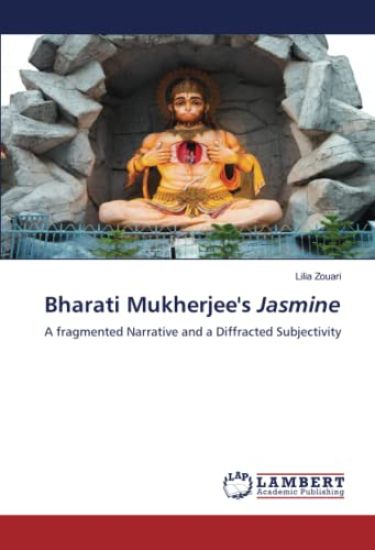
Bharati Mukherjee

Bharati Mukherjee

Emmanuel S. Nelson

Routledge
2017
sidottu
The twelve essays that form this book, first published in 1993, interpret Bharati Mukherjee’s oeuvre from a variety of critical perspectives. The authors’ approaches range from the biographical to the poststructuralist, from cultural analysis to comparative commentary to deconstructive reading. Such diversity in the contributors’ theoretical stances and interpretive strategies enables this collection of essays to serve a key purpose: to offer not only multiple but conflicting perspectives on Mukherjee’s art and achievement.
Bharati Mukherjee

Bharati Mukherjee

Emmanuel S. Nelson

Routledge
2018
nidottu
The twelve essays that form this book, first published in 1993, interpret Bharati Mukherjee’s oeuvre from a variety of critical perspectives. The authors’ approaches range from the biographical to the poststructuralist, from cultural analysis to comparative commentary to deconstructive reading. Such diversity in the contributors’ theoretical stances and interpretive strategies enables this collection of essays to serve a key purpose: to offer not only multiple but conflicting perspectives on Mukherjee’s art and achievement.
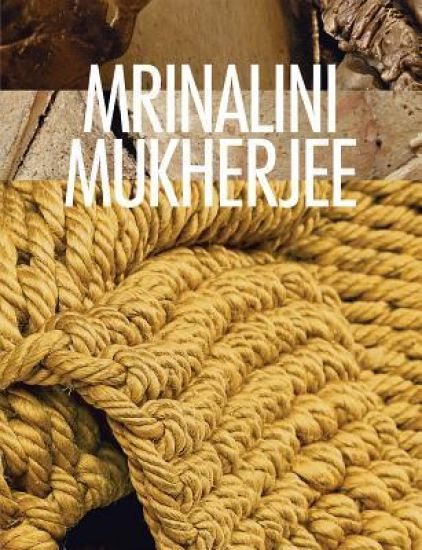
Mrinalini Mukherjee

Mrinalini Mukherjee

Shanay Jhaveri

Shoestring Publishers
2019
pokkari
This revelatory monograph explores the work of Indian sculptor Mrinalini Mukherjee (1949-2015). Committed to sculpture, Mukherjee worked most intensively with fiber, making significant forays into ceramic and bronze toward the middle and latter half of her career. Within her immediate artistic milieu in post-independent India, Mukherjee was one of the outlier artists whose art remained untethered to the dominant commitments of painting and figural storytelling. Her sculpture was sustained by a knowledge of traditional Indian and historic European sculpture, folk art, modern design, local crafts and textiles. Knotting was the principal gesture of Mukherjee's technique, evident from the very start of her practice. Working intuitively, she never resorted to a sketch, model or preparatory drawing. Probing the divide between figuration and abstraction, Mukherjee would fashion unusual, mysterious, sensual and, at times, unsettlingly grotesque forms, commanding in their presence and scale. In retrospect, Mukherjee's artistic output appears iconoclastic, singular, calling out for assessment and analysis across multiple registers, as well as for an account of why, in hindsight, it was relegated to the margins. Within these pages are deliberations on Mukherjee's place within both an Indian and a more international art history, and her work's relationship to other fiber-art practices from the mid to late 20th century. This book will introduce Mukherjee to a new generation of scholars, art historians and artists.
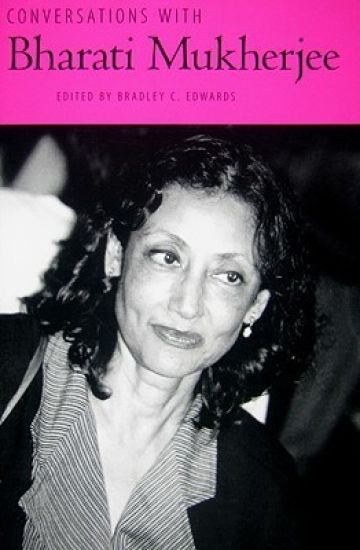
Conversations with Bharati Mukherjee

Conversations with Bharati Mukherjee

University Press of Mississippi
2009
nidottu
The first naturalized citizen to win the National Book Critics Circle Award, Bharati Mukherjee (b. 1940), born into a rigid hierarchy as a Bengali Brahmin and raised in the elite of Calcutta society, joined the American masses by choice. This journey from a privileged yet circumscribed life to one of free will and risk supplied the experiences she has turned into literature.From her first interview, originally published over three decades ago in her native tongue Bengali in the Calcutta journal Desh and appearing here for the first time in English, to an in-depth interview in 2007 granted specifically for this collection, this volume provides a candid look at the woman who has been called the grande dame of diasporic Indian literature.
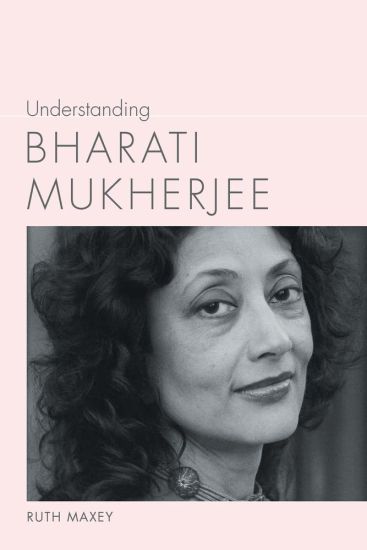
Understanding Bharati Mukherjee

Understanding Bharati Mukherjee

Ruth Maxey

University of South Carolina Press
2019
sidottu
Bharati Mukherjee was the first major South Asian American writer and the first naturalized American citizen to win the National Book Critics Circle Award. Born in Kolkata, India, she immigrated to the United States in 1961 and went on to publish eight novels, two short story collections, two long works of nonfiction, and numerous essays, book reviews, and newspaper articles. She was professor emerita in the Department of English at the University of California, Berkeley, until her death in 2017. In Understanding Bharati Mukherjee, Ruth Maxey discusses Mukherjee's influence on younger South Asian American women writers, such as Jhumpa Lahiri and Chitra Divakaruni. Mukherjee's powerful writing also enjoyed popular appeal, with some novels achieving best-seller status and international acclaim; her 1989 novel Jasmine was translated into multiple Languages. One of the earliest writers to feature South Asian Americans in literary form, Mukherjee reflected upon the influence of non-European immigrants to the United States, following passage of the Immigration and Nationality Act of 1965, which abolished the quota system. Her vision of a globalized, interconnected world has been regarded as prophetic, and when Mukherjee died, diverse North American writers--Margaret Atwood, Joyce Carol Oates, Russell Banks, Michael Ondaatje, Ann Beattie, Amy Tan, and Richard Ford--came forward to praise her work and its importance. Understanding Bharati Mukherjee is the first book to examine this pioneering author's complete oeuvre and to identify its legacy. Maxey offers new insights into widely discussed texts and recuperates overlooked works, such as Mukherjee's first and last published short stories, her neglected nonfiction, and her many essays. Critically situating both well-known and under-discussed texts, this study analyzes the aesthetic and ideological Complexity of Mukherjee's writing, considering her sophisticated, erudite, multilayered use of intertextuality, especially her debt to cinema. Maxey argues that understanding the range of formal and stylistic strategies in play is crucial to grasping Mukherjee's work.
Understanding Bharati Mukherjee

Understanding Bharati Mukherjee

Ruth Maxey

UNIVERSITY OF SOUTH CAROLINA PRESS
2022
pokkari
2021 Choice Outstanding Academic TitleBharati Mukherjee was the first major South Asian American writer and the first naturalized American citizen to win the National Book Critics Circle Award. Born in Kolkata, India, she immigrated to the United States in 1961 and went on to publish eight novels, two short story collections, two long works of nonfiction, and numerous essays, book reviews, and newspaper articles. She was professor emerita in the Department of English at the University of California, Berkeley, until her death in 2017. In Understanding Bharati Mukherjee, Ruth Maxey discusses Mukherjee's influence on younger South Asian American women writers, such as Jhumpa Lahiri and Chitra Divakaruni. Mukherjee's powerful writing also enjoyed popular appeal, with some novels achieving best-seller status and international acclaim; her 1989 novel Jasmine was translated into multiple languages. One of the earliest writers to feature South Asian Americans in literary form, Mukherjee reflected upon the influence of non-European immigrants to the United States, following passage of the Immigration and Nationality Act of 1965, which abolished the quota system. Her vision of a globalized, interconnected world has been regarded as prophetic, and when Mukherjee died, diverse North American writers—Margaret Atwood, Joyce Carol Oates, Russell Banks, Michael Ondaatje, Ann Beattie, Amy Tan, and Richard Ford—came forward to praise her work and its importance. Understanding Bharati Mukherjee is the first book to examine this pioneering author's complete oeuvre and to identify its legacy. Maxey offers new insights into widely discussed texts and recuperates overlooked works, such as Mukherjee's first and last published short stories, her neglected nonfiction, and her many essays. Critically situating both well-known and under-discussed texts, this study analyzes the aesthetic and ideological complexity of Mukherjee's writing, considering her sophisticated, erudite, multilayered use of intertextuality, especially her debt to cinema. Maxey argues that understanding the range of formal and stylistic strategies in play is crucial to grasping Mukherjee's work.
The Editing of Savitri: Issues-Discussions-Notes-Memoirs: A Letter from Jugal Kishore Mukherjee

The Editing of Savitri: Issues-Discussions-Notes-Memoirs: A Letter from Jugal Kishore Mukherjee

Jugal Kishore Mukherjee

Createspace Independent Publishing Platform
2018
nidottu
I have very attentively scrutinised every one of the 1795 listed "corrections" for the entire Savitri, studying each one in relation to its immediate as well as overall context. This has confirmed my earlier fears. I have been by now able to demonstrate that before being sent to the press the Table of Corrections indeed needed a second re-appraisal; for, it is now recognised that at least some of the listed "corrections" - if not many, many - could by no means be incorporated into the body of Savitri. The spell of initial complacency is broken and I am satisfied that my labour of love has been vindicated. I said "at least some". In fact, the number is quite large. Then what's the use of 'correcting' a hundred 'transmission errors' if at the same time we introduce on our own thirty new "errors" arising out of hasty judgment or misjudgment? And this misjudgment has been on many counts. One failed to take into consideration the fact that the altered contexts necessitated some alterations in punctuations / capitalisation, etc.