
Kirjahaku
Etsi kirjoja tekijän nimen, kirjan nimen tai ISBN:n perusteella.
1000 tulosta hakusanalla Navid Modiri
Haunting Water is fiction about sea events and tragedies. A sea story of loss, revenge, and the nature of power. It is a world within a world that is told from a unique yet familiar perspective that relates to all people. It is not a ghost story nor a pirate story, though the time setting is about the 1850s.
What connects Shiite passion plays with Brecht?s drama? Which of Goethe?s poems were inspired by the Quran? How can Ibn Arabi?s theology of sighs explain the plays of Heinrich von Kleist? And why did the Persian author Sadeq Hedayat identify with the Prague Jew Franz Kafka? ?One who knows himself and others will here too understand: Orient and Occident are no longer separable?: in this new book, the critically acclaimed author and scholar Navid Kermani takes Goethe at his word. He reads the Quran as a poetic text, opens Eastern literature to Western readers, unveils the mystical dimension in the works of Goethe and Kleist, and deciphers the political implications of theatre, from Shakespeare to Lessing to Brecht. Drawing striking comparisons between diverse literary traditions and cultures, Kermani argues for a literary cosmopolitanism that is opposed to all those who would play religions and cultures against one another, isolating them from one another by force. Between Quran and Kafka concludes with Kermani?s speech on receiving Germany?s highest literary prize, an impassioned plea for greater fraternity in the face of the tyranny and terrorism of Islamic State. Kermani?s personal assimilation of the classics gives his work that topical urgency that distinguishes universal literature when it speaks to our most intimate feelings. For, of course, love too lies ?between Quran and Kafka?.
What connects Shiite passion plays with Brecht?s drama? Which of Goethe?s poems were inspired by the Quran? How can Ibn Arabi?s theology of sighs explain the plays of Heinrich von Kleist? And why did the Persian author Sadeq Hedayat identify with the Prague Jew Franz Kafka? ?One who knows himself and others will here too understand: Orient and Occident are no longer separable?: in this new book, the critically acclaimed author and scholar Navid Kermani takes Goethe at his word. He reads the Quran as a poetic text, opens Eastern literature to Western readers, unveils the mystical dimension in the works of Goethe and Kleist, and deciphers the political implications of theatre, from Shakespeare to Lessing to Brecht. Drawing striking comparisons between diverse literary traditions and cultures, Kermani argues for a literary cosmopolitanism that is opposed to all those who would play religions and cultures against one another, isolating them from one another by force. Between Quran and Kafka concludes with Kermani?s speech on receiving Germany?s highest literary prize, an impassioned plea for greater fraternity in the face of the tyranny and terrorism of Islamic State. Kermani?s personal assimilation of the classics gives his work that topical urgency that distinguishes universal literature when it speaks to our most intimate feelings. For, of course, love too lies ?between Quran and Kafka?.
This book ventures into the world beyond Lampedusa: the crisis belt that stretches from Kashmir across Pakistan and Afghanistan to the Arab world and beyond, to the borders and coasts of Europe. Celebrated author Navid Kermani reports from a region which is our immediate neighbour, despite all too often being depicted as remote and distant from our daily concerns. Kermani has visited the places where no CNN transmitter truck is parked and yet smouldering fires threaten world peace. In his widely praised, wonderfully agile and careful prose, he reports on NATO's war in Afghanistan and the underside of globalization in India, on the civil war in Syria and the struggle of Shiites and Kurds against the 'Islamic State' in Iraq. He was the only Western reporter present at the suppression of the mass protests in Tehran, travelled with Sufis through Pakistan, talked with Grand Ayatollah Sistani in Najaf, and observed the disastrous Mediterranean refugee route in Lampedusa. Kermani's gripping reports allow us to understand a world in turmoil, to share the suspense and the suffering of the people in it. As if by magic, he brings individual lives and situations to life so vividly that complex and seemingly distant problems of world politics suddenly appear crystal clear. Our world too lies beyond Lampedusa.
This book ventures into the world beyond Lampedusa: the crisis belt that stretches from Kashmir across Pakistan and Afghanistan to the Arab world and beyond, to the borders and coasts of Europe. Celebrated author Navid Kermani reports from a region which is our immediate neighbour, despite all too often being depicted as remote and distant from our daily concerns. Kermani has visited the places where no CNN transmitter truck is parked and yet smouldering fires threaten world peace. In his widely praised, wonderfully agile and careful prose, he reports on NATO's war in Afghanistan and the underside of globalization in India, on the civil war in Syria and the struggle of Shiites and Kurds against the 'Islamic State' in Iraq. He was the only Western reporter present at the suppression of the mass protests in Tehran, travelled with Sufis through Pakistan, talked with Grand Ayatollah Sistani in Najaf, and observed the disastrous Mediterranean refugee route in Lampedusa. Kermani's gripping reports allow us to understand a world in turmoil, to share the suspense and the suffering of the people in it. As if by magic, he brings individual lives and situations to life so vividly that complex and seemingly distant problems of world politics suddenly appear crystal clear. Our world too lies beyond Lampedusa.
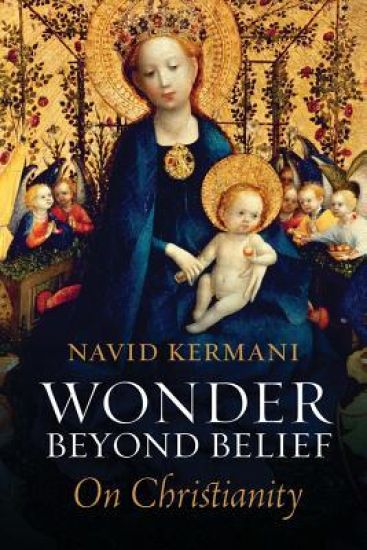
What happens when one of Germany’s most important writers, himself a Muslim, immerses himself in the world of Christian art? In this book, Navid Kermani is awestruck by a religion full of sacrifice and lamentation, love and wonder, the irrational and the unfathomable, the deeply human and the divine – a Christianity that today’s Christians rarely speak of so earnestly, boldly and enthusiastically. With the open-minded curiosity of a non-believer – or rather a believer in another faith – Kermani engages with Christian art in its great richness and diversity. The result is an enchanting reflection which reinvests in Christianity both its spectacular beauty and its terror. Kermani struggles with the cross, falls in love at the sight of Mary, experiences the Orthodox Mass and appreciates the greatness of St Francis. He teaches us to see the questions of our present-day lives in the pictures of old masters such as Botticelli, Caravaggio and Rembrandt – not with lectures on art history or theology, but with an intelligent eye for the essential details and the underlying relations to seemingly remote worlds, to literature and to mystical Islam. Kermani’s poetic school of seeing draws us in as we are carried along by his unique perspective on Christianity, rekindling our interest in great art at the same time. We are captivated by his unique and brilliant Islamic reading of the West.
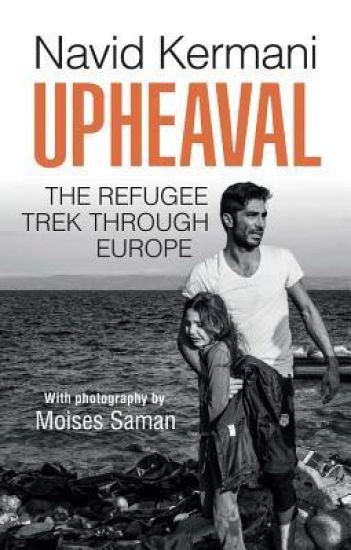
By foot, in buses, prison vans and trains, a steady stream of refugees traveled from the Greek island of Lesbos into Europe. In the autumn of 2015, award-winning writer Navid Kermani decided to accompany them on the "Balkan route." In this perceptive account from the front line of the "refugee crisis," Kermani shows how a seemingly distant world in which war and conflict rage has suddenly collided with our own. Kermani describes the situation on the Turkish west coast where thousands of refugees live in the most desperate conditions, waiting to take the perilous journey across the Mediterranean. Then, on Lesbos, he observes the culture shock amongst those who have survived the ordeal by sea. He speaks to aid workers and politicians, but most importantly of all to the refugees themselves, asking those who have come from Syria, Iraq, Afghanistan and elsewhere what has driven them to risk everything and embark on the long and treacherous journey to Europe. With great sensitivity Kermani reveals, often through small details, the cultural and political upheaval that has caused people to uproot their lives, and at the same time shining a light on Europe's inadequate and at times openly hostile response to the refugees. Interspersed with powerful images by the acclaimed photographer Moises Saman, Upheaval is a much-needed human account of a crisis we cannot ignore.
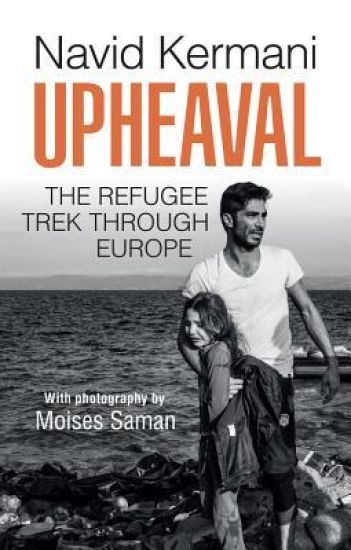
By foot, in buses, prison vans and trains, a steady stream of refugees traveled from the Greek island of Lesbos into Europe. In the autumn of 2015, award-winning writer Navid Kermani decided to accompany them on the "Balkan route." In this perceptive account from the front line of the "refugee crisis," Kermani shows how a seemingly distant world in which war and conflict rage has suddenly collided with our own. Kermani describes the situation on the Turkish west coast where thousands of refugees live in the most desperate conditions, waiting to take the perilous journey across the Mediterranean. Then, on Lesbos, he observes the culture shock amongst those who have survived the ordeal by sea. He speaks to aid workers and politicians, but most importantly of all to the refugees themselves, asking those who have come from Syria, Iraq, Afghanistan and elsewhere what has driven them to risk everything and embark on the long and treacherous journey to Europe. With great sensitivity Kermani reveals, often through small details, the cultural and political upheaval that has caused people to uproot their lives, and at the same time shining a light on Europe's inadequate and at times openly hostile response to the refugees. Interspersed with powerful images by the acclaimed photographer Moises Saman, Upheaval is a much-needed human account of a crisis we cannot ignore.
Between Germany and Russia is a region strewn with monuments to the horrors of war, genocide and disaster – the bloodlands where the murderous regimes of Hitler and Stalin unleashed the violence that scarred the twentieth century and shaped so much of the world we know today. In September 2016 the German-Iranian writer Navid Kermani set out to discover this land and to travel along the trenches that are now re-emerging in Europe, from his home in Cologne through eastern Germany to the Baltics, and from there south to the Caucasus and to Isfahan in Iran, the home of his parents. This beautifully written travel diary, enlivened by conversations with the people Kermani meets along the way, brings to life the tragic history of these troubled lands and shows how this history leaves its traces in the present. It will be of great interest to anyone concerned with current affairs and with the events that have shaped, and continue to shape, the world in which we live today.
Between Germany and Russia is a region strewn with monuments to the horrors of war, genocide and disaster – the bloodlands where the murderous regimes of Hitler and Stalin unleashed the violence that scarred the twentieth century and shaped so much of the world we know today. In September 2016 the German-Iranian writer Navid Kermani set out to discover this land and to travel along the trenches that are now re-emerging in Europe, from his home in Cologne through eastern Germany to the Baltics, and from there south to the Caucasus and to Isfahan in Iran, the home of his parents. This beautifully written travel diary, enlivened by conversations with the people Kermani meets along the way, brings to life the tragic history of these troubled lands and shows how this history leaves its traces in the present. It will be of great interest to anyone concerned with current affairs and with the events that have shaped, and continue to shape, the world in which we live today.
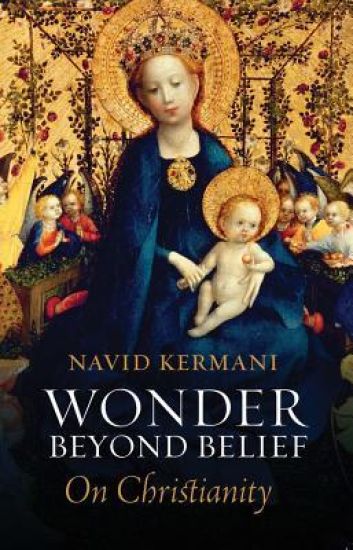
What happens when one of Germany’s most important writers, himself a Muslim, immerses himself in the world of Christian art? In this book, Navid Kermani is awestruck by a religion full of sacrifice and lamentation, love and wonder, the irrational and the unfathomable, the deeply human and the divine – a Christianity that today’s Christians rarely speak of so earnestly, boldly and enthusiastically. With the open-minded curiosity of a non-believer – or rather a believer in another faith – Kermani engages with Christian art in its great richness and diversity. The result is an enchanting reflection which reinvests in Christianity both its spectacular beauty and its terror. Kermani struggles with the cross, falls in love at the sight of Mary, experiences the Orthodox Mass and appreciates the greatness of St Francis. He teaches us to see the questions of our present-day lives in the pictures of old masters such as Botticelli, Caravaggio and Rembrandt – not with lectures on art history or theology, but with an intelligent eye for the essential details and the underlying relations to seemingly remote worlds, to literature and to mystical Islam. Kermani’s poetic school of seeing draws us in as we are carried along by his unique perspective on Christianity, rekindling our interest in great art at the same time. We are captivated by his unique and brilliant Islamic reading of the West.
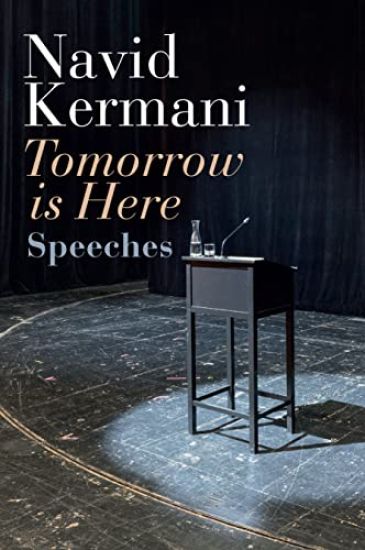
Navid Kermani is not only one of Germany’s most distinguished writers and public intellectuals, he is also an outstanding public speaker who mesmerizes audiences with his well-crafted sentences and turns of phrase. Whether he is speaking about the plight of refugees or delivering a eulogy at his father’s graveside, Kermani finds words that surprise his listeners, enlighten them, provoke them, disturb them or move them to tears. As a German of Iranian descent whose parents settled in Germany, Kermani is particularly sensitive to the issues raised by migration and the perceived tensions between Islam and the West. His speeches are a powerful demonstration of how much we stand to gain by adhering to the values of openness, tolerance and mutual respect for the beliefs and practices of those from other cultures who live among us.
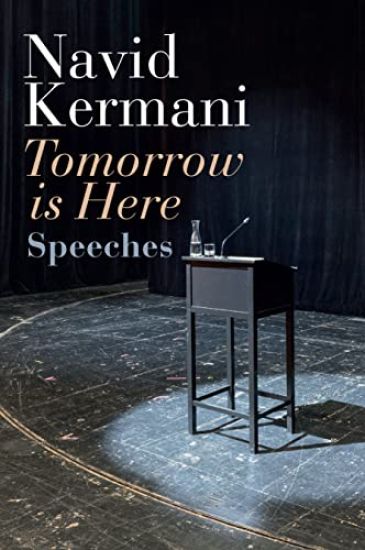
Navid Kermani is not only one of Germany’s most distinguished writers and public intellectuals, he is also an outstanding public speaker who mesmerizes audiences with his well-crafted sentences and turns of phrase. Whether he is speaking about the plight of refugees or delivering a eulogy at his father’s graveside, Kermani finds words that surprise his listeners, enlighten them, provoke them, disturb them or move them to tears. As a German of Iranian descent whose parents settled in Germany, Kermani is particularly sensitive to the issues raised by migration and the perceived tensions between Islam and the West. His speeches are a powerful demonstration of how much we stand to gain by adhering to the values of openness, tolerance and mutual respect for the beliefs and practices of those from other cultures who live among us.
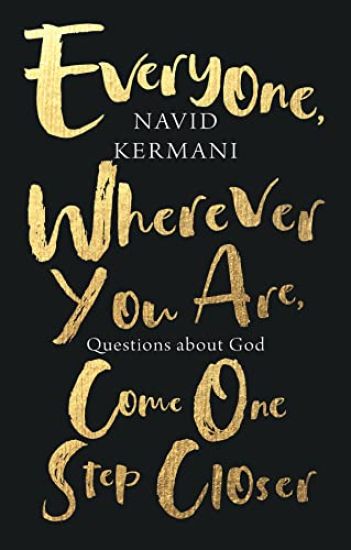
‘When your grandpa was in hospital, he asked me one night to promise him that, when he had gone from us, I would teach you Islam – our Islam: the Islam I grew up with … In that dark, impersonal room, he was thinking of you.’ This is why one father began to teach his daughter night after night not only about his own religion, but about that which unites all believers, about God and death, about love and the infinity that surrounds us. This highly personal book is not only a magical literary masterpiece, but also a rich resource of knowledge, and this because Navid Kermani dares to venture into the darkness in order to give expression to our confusion. And because his way of talking, his openness, his knowledge which derives from his immersion in two cultures, are so unique, so light and so deep.

Navid Kermani is one of the outstanding public intellectuals of his generation. Not one for drawing hard and fast conclusions, his style of thought is probing, observant, often straying from well-trodden paths and always peering beyond the present moment to trace connections and grasp the bigger picture. Well known for his prize-winning novels and major works of non-fiction, Kermani has also gained widespread acclaim as a journalist, displaying a rare political sensitivity which manages to illuminate what politicians fail to see and to seek out solutions where all appears hopeless. This volume brings together his brilliantly perceptive writing from the last thirty years, on topics ranging from terror in the Middle East to Russia’s invasion of Ukraine. As a record of Kermani’s uniquely compassionate curiosity, this absorbing book is a welcome antidote to the confusion and despair that stalks global politics today.
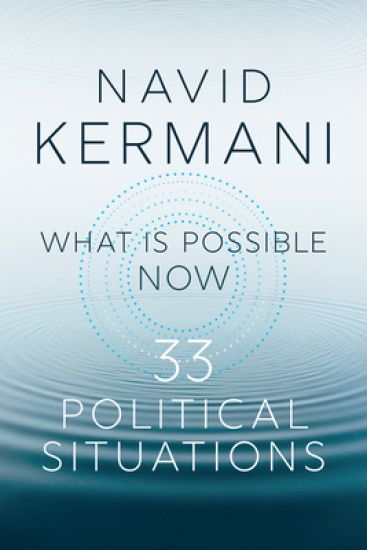
Navid Kermani is one of the outstanding public intellectuals of his generation. Not one for drawing hard and fast conclusions, his style of thought is probing, observant, often straying from well-trodden paths and always peering beyond the present moment to trace connections and grasp the bigger picture. Well known for his prize-winning novels and major works of non-fiction, Kermani has also gained widespread acclaim as a journalist, displaying a rare political sensitivity which manages to illuminate what politicians fail to see and to seek out solutions where all appears hopeless. This volume brings together his brilliantly perceptive writing from the last thirty years, on topics ranging from terror in the Middle East to Russia’s invasion of Ukraine. As a record of Kermani’s uniquely compassionate curiosity, this absorbing book is a welcome antidote to the confusion and despair that stalks global politics today.
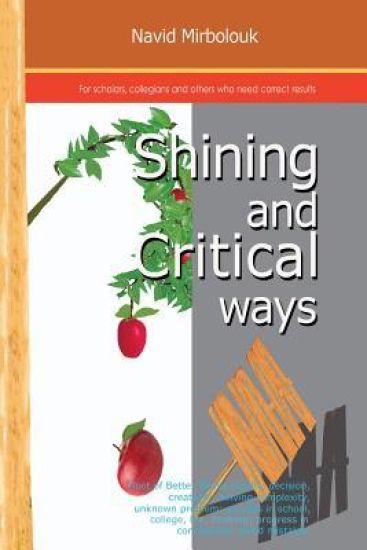
Shining and Critical ways: Problem Solving for Young Adult/College Student; How to Avoid Mistakes; Einstein Tool; Better result in Decision Makin
Navid Mirbolouk
Createspace Independent Publishing Platform
2017
nidottu
This book believes that; 1- A live Operating System (OS) can be defined for the mind. Characteristics of each OS is to work uniformly, manage other events. If such OS acts correctly and doesn't interfere in our personal affairs, it will definitely push conclusions, decision making, problem solving, creativity, and success in the right direction. Animals and plants also have a kind of OS, which is an "instinct" type or "natural selection". Similarly, we all have a personal version of OS. 2- If we have a faulty OS, it will become a big obstacle to improve itself. What standards do the tools of an OS have? 3- Solving all social problems can be compared to solving a math problem. What mistakes are made in this direction? So, the root of many mistakes can be found. Based on the above, the mind OS tools are presented in chapters 1 and 2 and mistakes in chapter3. Indirectly, we can understand that the younger we are (teenage and young), the more useful this book will be, although we will need such things forever. The difference between our mind OS and what computers have, is a few things. One that we can't buy it, no matter how rich we are. Another is that this is not inherent and is based on our education and experience and the experiences of others throughout life. One of them is all kinds of books. Here the more these experiences have come out of the tough conditions, they can be more valuable. There is a public belief but a mistake that thinks IQ can be a good OS and play a role instead. To better understand, suppose that we are a car. In this case, our IQ is the light of the headlights that illuminates more space for us in the dark and driving skills is the same OS that takes a long time through practical experiences, and training that can best utilize our IQ. A person with a top IQ can also make stupid mistakes. All of the above is found in this book. For example, a person with a high IQ has had very difficult experiences and has achieved the desired result, another has had great and global success. They moved on the SHINING WAYS. On the other hand, a person with a high IQ has made very stupid mistakes. Here, he or she has moved on the CRITICAL WAYS. We can imagine that all this can be done by one person. What is more important in this book is that we use our IQ best, whatever it is. If the content of this book is properly implemented, there will be a self-confidence that is unbelievable. In that case, we must be careful not to lead to pride.
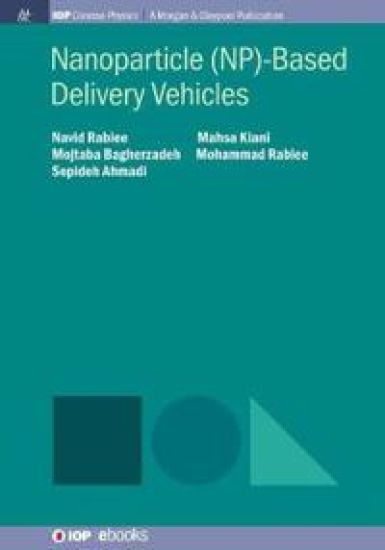
Nanoparticle (NP)-Based Delivery Vehicles
Navid Rabiee; Mahsa Kiani; Mojtaba Bagherzadeh; Mohammad Rabiee; Sepideh Ahmadi
Morgan Claypool Publishers
2019
nidottu
Gene therapy as a potential method for treatment of genetic disorders and other malignancies as well as treatment of many cancers has attracted a great amount of attention in recent years.Current research focuses on stable and smart drug/gene delivery systems, including controlled release. Smart nanostructures have been considered as a promising approach when applied to drug and gene delivery systems, and could solve the problems related to the inefficient transfer of medication to the affected cells.