
Kirjahaku
Etsi kirjoja tekijän nimen, kirjan nimen tai ISBN:n perusteella.
1000 tulosta hakusanalla Neil Thomas

Before I begin, I have constructed an MS Access database using MS Office 2010 containing over 100,000 thousand defined Italian words and if you find some words not defined then go to deepl translator and copy and paste words. This database eases the burden for finding Italian words tremendously while decoding. I use this strategy while decoding Italian words. First I divide the total dash & dot count by 2.5 to get the average length of the Italian word, then I search through the database by setting it to ascending, current document, whole field, all and match case. The average word length helps me identify the likely Italian word. I proceed to type in either dashes & dots, dashes or just dots to find the Italian words which may fit the narrative or a label from the Voynich Manuscript. If you purchase the book I will give you access to download the database from a link, simply notify me from email.The Voynich Manuscript (VMS) has plagued my mind since 2008 when I first discovered it online. I have tried many options towards figuring out what language and cipher is at the heart of its inner workings. Likewise, I have published several books about its content and honestly I stated that I believed I had solved the VMS. Deep down, I began to feel more had to be done by me, because those ciphers I produced in retrospect were erroneous. Also at the time I really believed that the VMS's text was created in the 15th Century. However, I have come full circle and this cipher which I created has found evidence to the contrary of the texts time of creation; furthermore I have found its provenance with it. The angst I have felt over the years of feelings of failure have been sidelined by this unique way of decoding the text and it is a modern forgery.
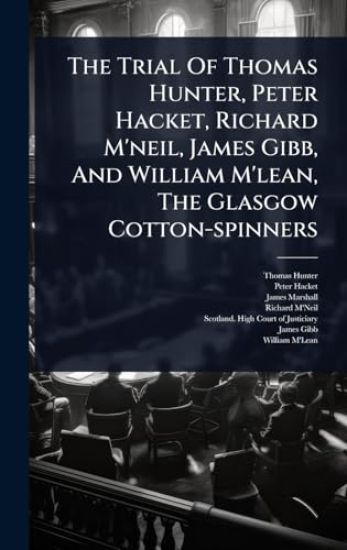
The Trial Of Thomas Hunter, Peter Hacket, Richard M'neil, James Gibb, And William M'lean, The Glasgow Cotton-spinners
Thomas Hunter; Peter Hacket; James Marshall
Hutson Street Press
2025
sidottu

The Trial Of Thomas Hunter, Peter Hacket, Richard M'neil, James Gibb, And William M'lean, The Glasgow Cotton-spinners
Thomas Hunter; Peter Hacket; James Marshall
Hutson Street Press
2025
pokkari
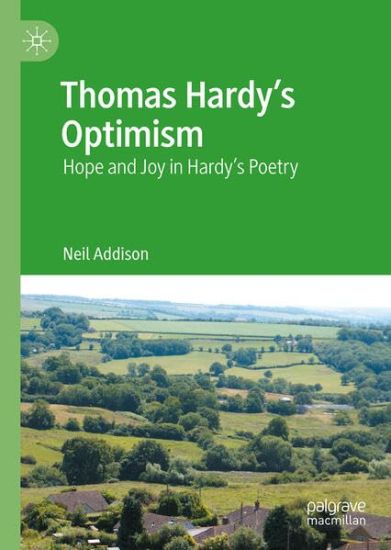
What do the works of Thomas Hardy offer us apart from tragedy? This book intends to answer that question, providing a groundbreaking reading of Hardy’s poetry that reveals a hitherto critically neglected optimism. In doing so it seeks to challenge the dominant view of Hardy’s work as pessimistic. It aims to demonstrate that Hardy’s poetry contains a surprising amount of hope and joy which, when examined critically, reveals to us a new and brighter view of his philosophy. Hardy’s poetry is naturally more condensed than his fiction, and his poems function as individual thought acts in which personal moments are more pronounced and sustained. These thought acts enable him to emphasise moods that are not merely pessimistic but joyous and hopeful. Such optimistic examples are not anomalies. Rather, pleasures such as dancing, music, eating and celebration perform a significant counterbalancing function across Hardy’s collection of over 900 poems. In fully acknowledging these important brighter aspects, we can see Hardy’s complex poetry as balancing an acute and profound understanding of life’s hardships with an equally significant awareness and celebration of its pleasures.
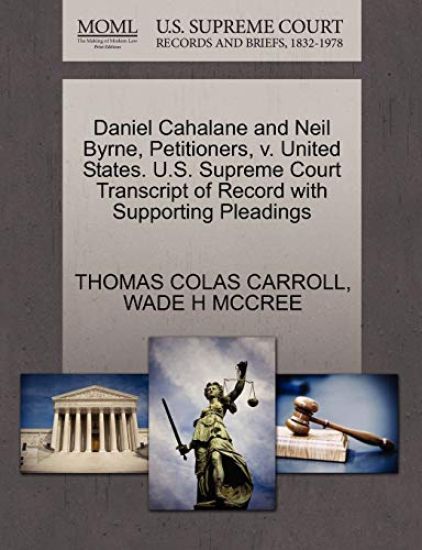
Daniel Cahalane and Neil Byrne, Petitioners, V. United States. U.S. Supreme Court Transcript of Record with Supporting Pleadings
Thomas Colas Carroll; Wade H McCree
Gale, U.S. Supreme Court Records
2011
pokkari

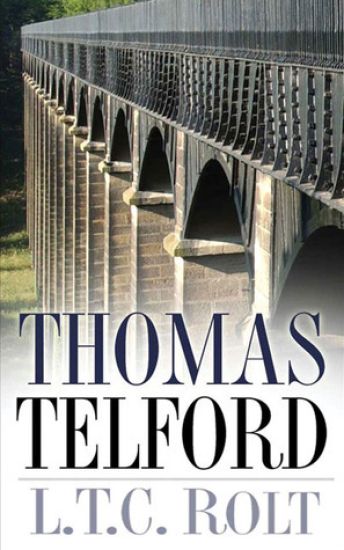
Thomas Telford, the son of a shepherd, was born in Westerkirk, Scotland in 1757. At the age of 14, he was apprenticed to a stonemason. He worked for a time in Edinburgh and in 1792, he moved to London where he was involved in building additions to Somerset House. Two years later, he found work at Portsmouth dockyard. In 1787, he became surveyor of public works for Shropshire. By this time, Telford had established a good reputation as an engineer and in 1790 was given the task of building a bridge over the River Severn at Montford. This was followed by a canal that linked the ironworks and collieries of Wrexham with Chester and Shrewsbury. This involved building an aqueduct over the River Dee. On the Pontcysyllte Aqueduct, Telford used a new method of construction consisting of troughs made from cast-iron plates and fixed in masonry.After the completion of the Ellesmere Canal Telford moved back to Scotland where he took control of the building of Caledonian Canal. Other works by Telford include the Menai Suspension Bridge (1819-1826) and the Katherine's Docks (1824-1828) in London. Telford was also an important road builder. He was responsible for rebuilding the Shrewsbury to Holyhead road and the North Wales coast road between Chester and Bangor. During his life, Telford built more than 1,000 miles of road, including the main road between London and Holyhead. Thomas Telford died in 1834.
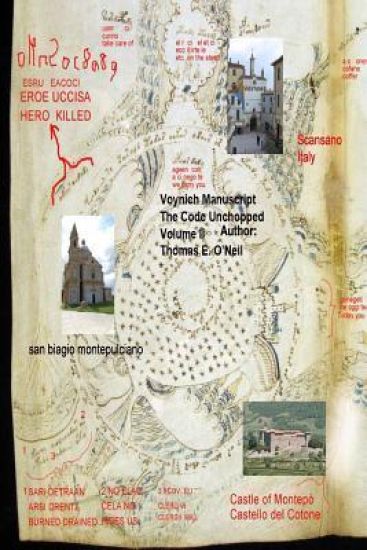
Voynich Manuscript the Code Unchopped Volume II
Thomas Edward O'Neil
Createspace Independent Publishing Platform
2014
nidottu
Introduction: The idea to solve the Voynich came to me when I first looked at the glyphs of the entire MS-408 when I first came across it online around 2009. It was a complete mystery and I desperately wanted to know what was behind the so called curtain of the code; like anyone else who has witnessed its very intense complex structure. A starting point for me was the astrology (Folio 67r) wheel and putting together a cipher to break it down. My understanding of astrology helped too and the wheel seldom had tarot side to it included. I counted the glyphs of the Voynich code that were similar and would number them in their perspective place marks. This enabled me to have at least a baseline for the highest and lowest number of Voynich letters to establish which alphabet I would have to find and match it up too. I tried Spanish first, because of the number of vowels and it did not pan out. Well French and German did not work either. Finally, my cipher unraveled nine words from the Rosetta Wheel (Folio 57v) in Italian and then I targeted the Astrology section with amazing results.My decrypting method included this scenario. First I went online and found a great Italian anagram engine which I inputted my cipher into so that it would rearrange the letters into readable Italian. Then I ran a string of sentences together that followed logic and well magic happened. It (Folio 58r) was a mind blowing experience for me knowing that I was making sense out of MS-408.
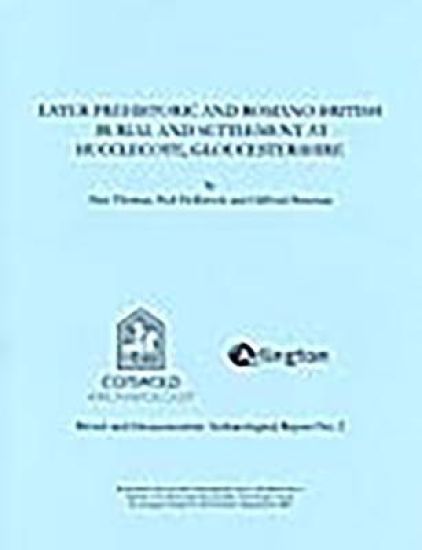
Later Prehistoric and Romano-British Burial and Settlement at Hucclecote, Gloucestershire
Alan Thomas; Neil Holbrook; Clifford Bateman
Cotswold Archaeological Trust Ltd
2003
nidottu
Excavations in advance of the construction of the Gloucester Business Park Link Road, Hucclecote, in 1998 revealed alluvium deposited by the Horsbere Brook, in places up to 2m deep. Radiocarbon dating demonstrates that the alluvium had been deposited by the 12th century BC. Three or four Middle Bronze Age cremation burials were probably part of a flat cemetery, the site subsequently occupied by a Late Bronze Age or Early Iron Age settlement which contained in excess of four post-built roundhouses. In the 1st century AD a settlement that contained a number of probable mass-walled roundhouses was constructed. It was extensively reorganised in the early 2nd century when a series of ditched enclosures were linked to Ermin Street by a 320m-long trackway. A small cemetery of 12 inhumations is noteworthy as it demonstrates that the Late Iron Age tradition of burial by crouched inhumation persisted into the 2nd century AD. Several of the burials were accompanied by grave goods, and one of the males suffered from a very rare form of dwarfism to his forearms, a condition that would have been obvious to his contemporaries. The settlement continued in use until the late 3rd or early 4th century, although the trackway ditches continued to accumulate material into the later 4th century. The trackway and enclosures appear to have survived as visible earthworks into the medieval period as their orientation influenced the alignment of medieval field systems.
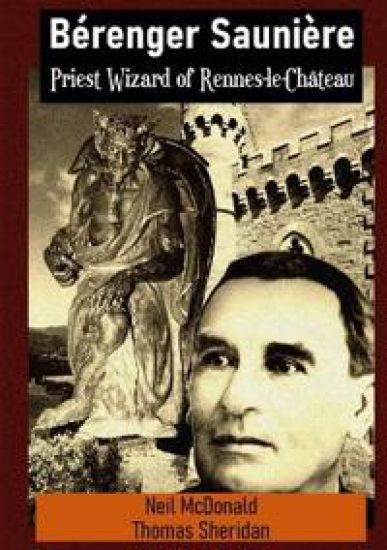
Bérenger Saunière Priest Wizard of Rennes-le-Château
Neil McDonald; Thomas Sheridan
Lulu.com
2024
pokkari
Neil McDonald has had a deep personal connection to Rennes-le-Ch teau and has been running tours to the area, studying the story and landscape deeply, as well as writing about it for many years. Thomas Sheridan, using his extensive knowledge of the occult and that of secret societies, as well as his understanding of the mysteries of the landscape, dove-tails his own insights into the story. The two men's combined research and discoveries have unearthed a spectacular new understanding of Rennes-le-Ch teau and the story of the Abb Fran ois B renger Sauni re.
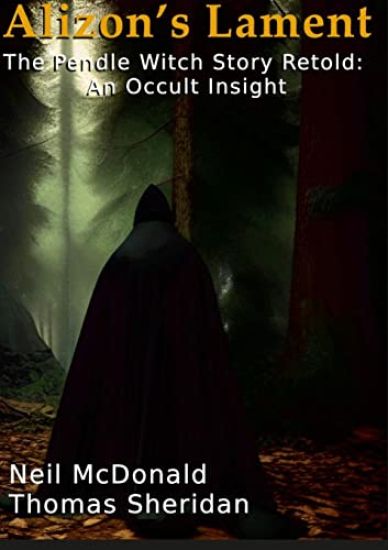
Alizon's Lament The Pendle Witch Story Retold
Neil McDonald; Thomas Sheridan
Lulu Press Inc
2023
pokkari
Neil McDonald was born and bred in Lancashire and has had a long fascination with the Pendle Witch Story and hs been running tours on the subject for many years. Thomas Sheridan is an expert in Irish Folklore and both authors have studied the occult
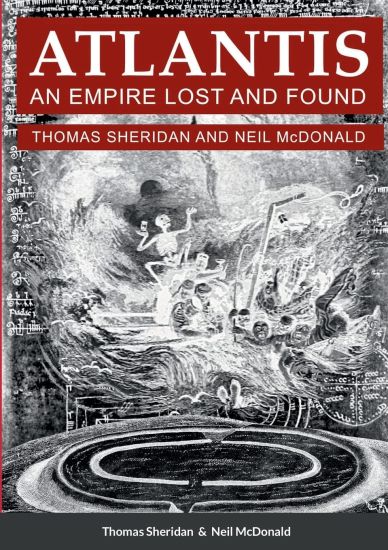
Thomas Sheridan and Neil McDonald have many years experience visiting and studying megalithic sites around Europe. Thomas is an expert in Irish Folklore and related subjects and Neil in the Western Mysteries, the Cathars and has run 'Megalithic Tours', for two decades. The Goal of this book is to provide a new look into the subject of Atlantis and the megalithic sites of Britain and Ireland and to provide fresh ideas to stimulate thought and to move the subject forward.

The real story that inspired the BBC drama, The GoldOn Saturday, 26 November 1983, an armed gang stole gold bullion worth almost £26 million from the Brink's-Mat security depot near London's Heathrow Airport. It was the largest robbery in world history, and only the start of an extraordinary story. For forty years, myths and legends have grown around the Brink's-Mat heist and the events that followed.The heist led to a wave of international money laundering, provided dirty money that helped fuel the London Docklands property boom, caused seismic changes in both British crime and policing, and has been linked to a series of deaths that continued until 2015.The Gold is the conclusion of extensive research and includes exclusive testimony from one of the original robbers who gives his version of events for the first time. The result is the astonishing true story of the robbery of the century.

The real story that inspired the BBC drama, The GoldOn Saturday, 26 November 1983, an armed gang stole gold bullion worth almost £26 million from the Brink's-Mat security depot near London's Heathrow Airport. It was the largest robbery in world history, and only the start of an extraordinary story. For forty years, myths and legends have grown around the Brink's-Mat heist and the events that followed.The heist led to a wave of international money laundering, provided dirty money that helped fuel the London Docklands property boom, caused seismic changes in both British crime and policing, and has been linked to a series of deaths that continued until 2015.The Gold is the conclusion of extensive research and includes exclusive testimony from one of the original robbers who gives his version of events for the first time. The result is the astonishing true story of the robbery of the century.

This is a full color book about the adventures of Ollie the Ostrich, intended for children 3 through ages 7. Ollie deals with his home the egg shell and a peephole with some exciting encounters. Ollie has a yearning to break free of his shell and see the world. Ollie's journey takes him all the way to the Pyramids to find his lost friend AL. Finally Ollie introduces kids to a maze, alphabet, basic arithmetic and farewell to next time.